Please ensure Javascript is enabled for purposes of website accessibility

Meet Arizona’s Power 50

Welcome to the inaugural Power 50.

These are the state’s most important people — those who hold the power and wield the influence to shape the landscape of Arizona now and in the future. From legislative leaders and behind-the-scenes strategists to business moguls and grassroots changemakers, this inaugural list goes beyond titles to spotlight the individuals who make things happen. Whether they wield power from the Capitol, a courtroom, the halls of higher education — or sometimes from the shadows — these are the players to watch.

While this is by no means an exhaustive ranking of Arizona’s most impactful leaders, this list serves as a reference point and highlights those actively steering the political agenda. We hope it sparks discussion about Arizona’s future.

But you shouldn’t get too caught up in the rankings. The difference between No. 14 and No. 35 probably isn’t really that great.

This list will evolve annually. As a reader, you can be a part of it. Liked the direction we went in? Let us know. Didn’t see someone you believe should be on the list? Tell us about them.

We look forward to continuing to engage with you on these and other key players — and issues — shaping the state.

Thank you for reading the Arizona Capitol Times.

Teri Hayt, Managing Editor. 


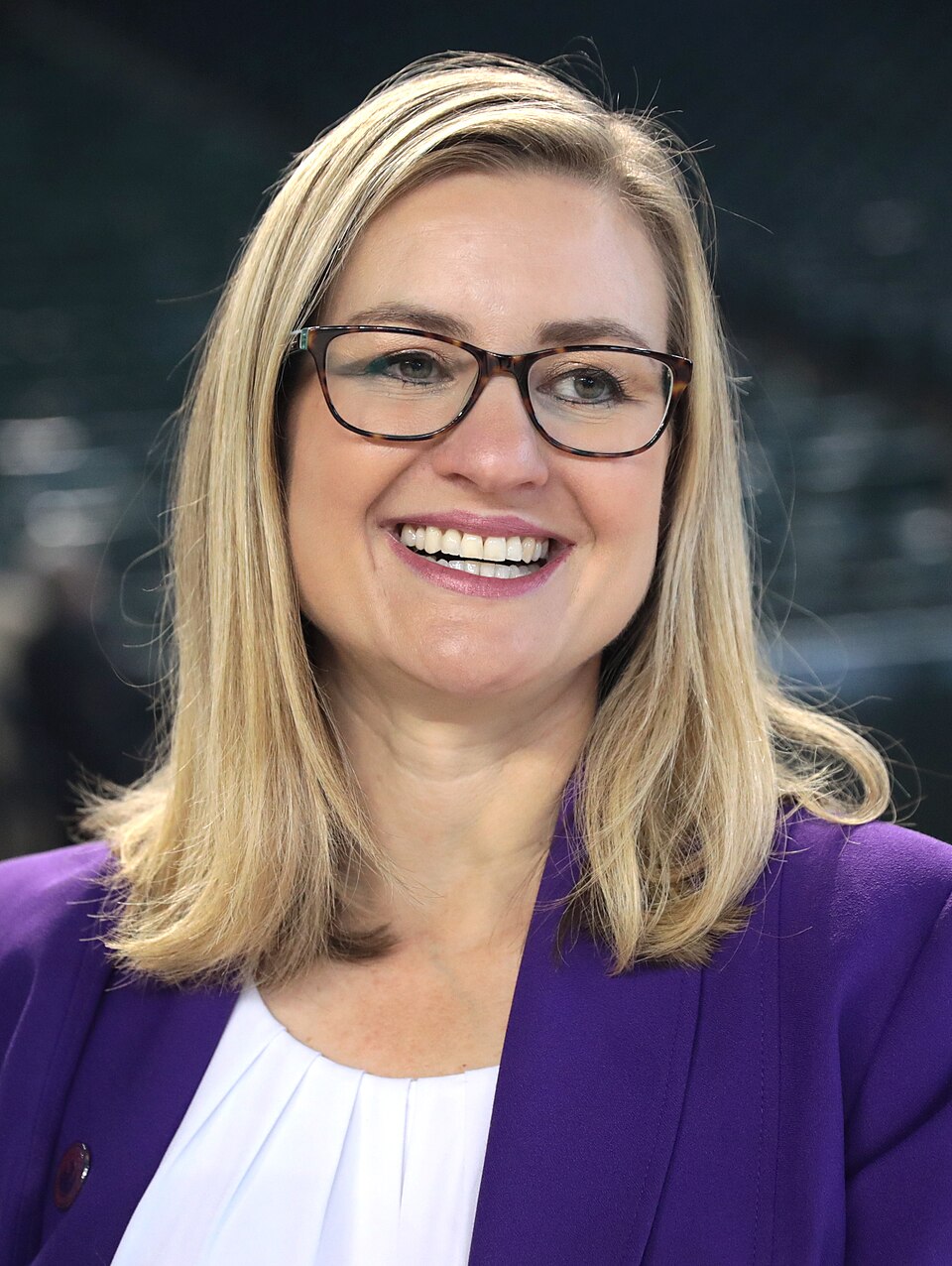
  1. (AP Photo/Ross D. Franklin)

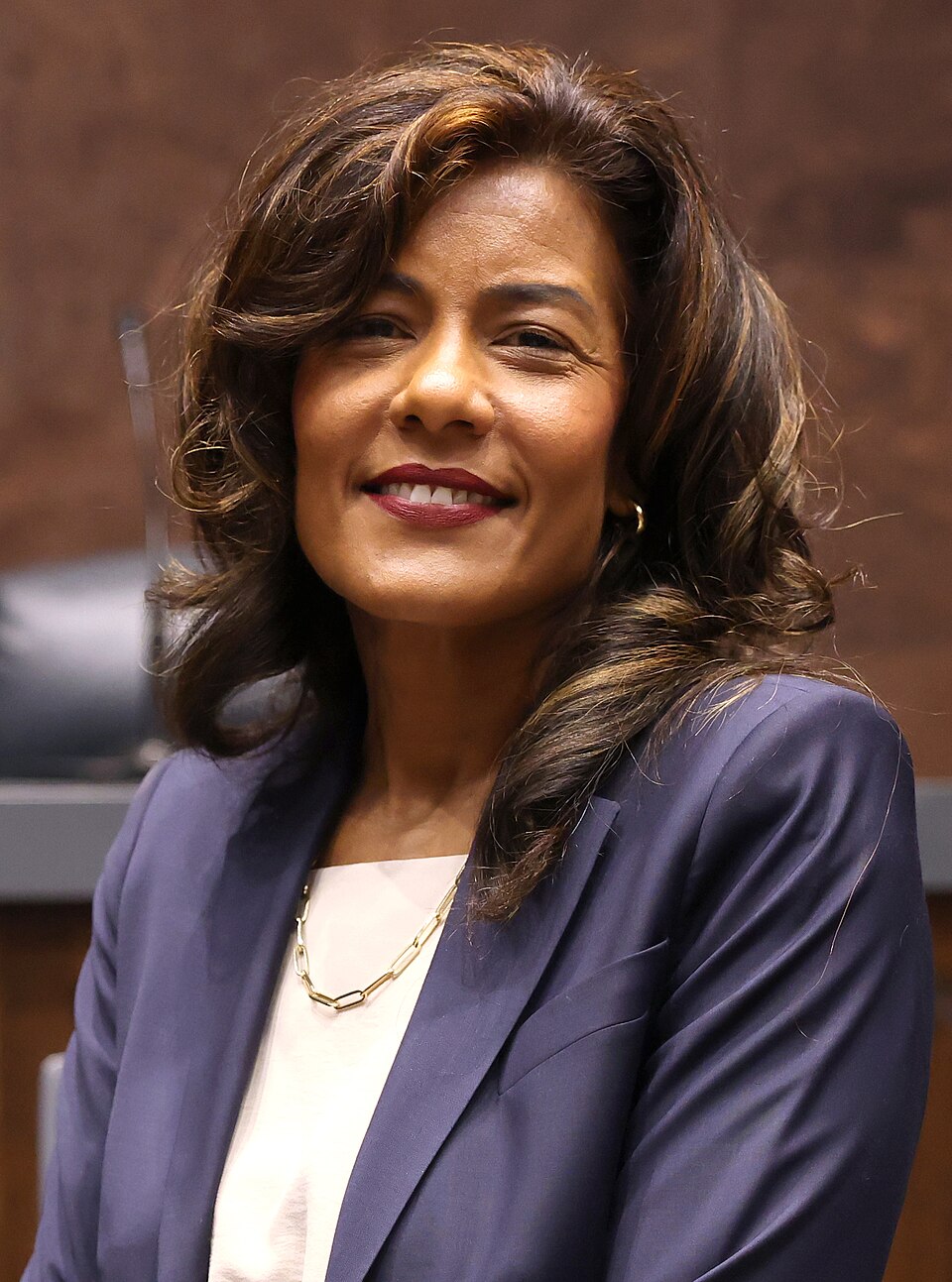
    Gov. Katie Hobbs: As the first Democrat elected governor of Arizona in nearly two decades, Hobbs has ushered the state through a new era of divided government. While sparring with the Republican-controlled Legislature over the last three years, she broke the state’s veto record twice, narrowly avoided a historic government shutdown and managed to see a few of her own priorities cross the finish line. Hobbs, a frequent punching bag for Republicans, is celebrated by fellow Democrats for signing a repeal of the state’s near-total abortion ban, quashing the most extreme Republican legislation and increasing access to health care and other essential services. The governor will lead the top of the ticket for Democrats in the state in 2026 when she seeks a second and final term on the ninth floor.


  1. Attorney General Kris Mayes: As the state’s chief law enforcement officer, Mayes stands as a Democratic bastion and counterweight to state and federal Republican policy. Since taking office in 2023, her focus has remained steady on enforcing stronger consumer protections, combating the fentanyl crisis, and targeting fraud in the state school choice program. Mayes has waded into, or decidedly stepped out of, political battles. After she refused to defend the state’s 15-week abortion law, the courts struck it down as unconstitutional. She also initiated the prosecution of the 2020 “alternate” presidential electors and is pursuing novel water litigation using public nuisance law. At the federal level, her office joined more than two dozen lawsuits against the Trump administration and saved the state an estimated $1.5 billion in federal funds. She is seeking reelection in 2026. 


  1. President Donald Trump: When Trump returned to the White House last November, Arizona was one of the key states to deliver him a victory. His influence was evident in the policies proposed by state Republican lawmakers, who reiterated their support for the president throughout the last legislative session. And Republican lawmakers have shaped much of their policies around his agenda, including bills calling for state law enforcement agencies to support federal immigration enforcement efforts, ending diversity, equity and inclusion initiatives at universities and government agencies and reducing the size of government.


  1. Sen. Warren Petersen: Petersen, R-Gilbert, is preparing for his last legislative session as Senate president before he embarks on his campaign for state attorney general. On the campaign trail, he has touted his conservative bona fides and involvement in more than 80 lawsuits, prompting some to refer to him as the “de facto” attorney general. Petersen has either led or joined legal action in numerous issues, including the drafting of the state’s Election Procedures Manual, the Arizona Motion Picture Production Program and litigation over Arizona’s Save Women’s Sports Act. Petersen has also helped lead the Republican effort to advance President Donald Trump’s agenda at the state Legislature and has met with members of the president’s administration in the last session.


  1. Rep. Steve Montenegro: As one of the most experienced members of the Arizona Legislature, Rep. Montenegro, R-Goodyear, was elected by his Republican colleagues as House Speaker for the 2025 and 2026 legislative sessions. Montenegro was first elected to the Arizona House in 2008 and served in the chamber until 2017, when he unsuccessfully ran for Congress in a special election in 2018. He returned to the Legislature in 2023 and became the state’s first Latino speaker. Despite some close calls in his first session as speaker, Montenegro has led the chamber to a bipartisan budget and ensured Arizona’s Division of Developmental Disabilities received emergency funding to keep services available for about 60,000 Arizonans.


  1. Secretary of State Adrian Fontes: Fontes rode in on a blue wave in 2022 to continue a legacy of Democratic control at the Secretary of State’s Office that began with Gov. Katie Hobbs’ in 2019. A widely-respected elections expert, having steered Arizona’s largest county through the contentious and unprecedented 2020 election cycle during his time as Maricopa County recorder, Fontes uses his unapologetic air and commanding voice to fend off challenges to the security and effectiveness of Arizona’s election system. Known for his political ambitions, he has contemplated runs for governor and Congress in the last year, but will run for reelection in 2026 alongside the other top Democrats in the state.


  1. (Gage Skidmore/Flickr)

    Superintendent of Public Instruction Tom Horne: A seasoned politician, Horne returned to the Arizona Department of Education in 2023 as superintendent after serving in the same position from 2003 to 2011 and serving as attorney general between 2010 and 2015. He took the helm at the dawn of the universal expansion of the Empowerment Scholarship Account program — the state’s school choice program, which has grown to more than 90,000 enrollees from around 12,000. Horne has trained the department to focus on ensuring greater academic outcomes and stronger school safety — chiefly by deploying more armed police officers on school campuses. He’s come back to familiar crusades from his first term, too. He litigated to ensure that students learning English are taught in English and serves as the current presidential administration’s muscle in enforcing the ban on diversity, equity and inclusion and critical race theory. As he looks ahead to his next term, Horne will face Republican Treasurer Kimberly Yee to keep his seat. 


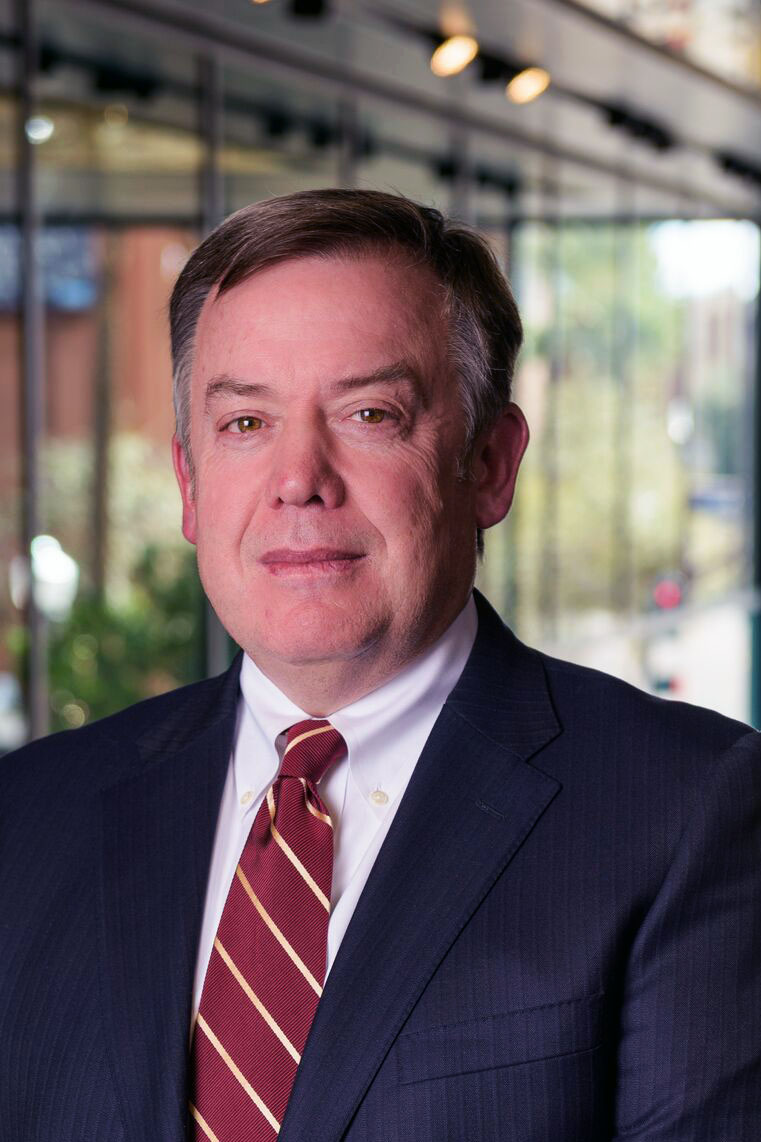
  1. Michael Crow: While many see the president of Arizona State University since 2002 as simply the leader of the state’s largest public university, some see him for what he really is — the unofficial king of Tempe, Arizona. Under his leadership, ASU campuses in Tempe and beyond have evolved into some of the most innovative public universities in the United States. His vision has not only significantly expanded ASU’s enrollment but also increased its impact on Arizona’s economy, workforce development and global reputation. Crow has championed university partnerships with local industries and governments, aligning ASU’s programs with Arizona’s economic needs in its technology, sustainability and health care sectors. In 2024 alone, the university reported a $6.1 billion impact on the Arizona economy. Beyond academia, Crow has been an influential voice in Arizona’s public policy, science and education reform. His forward-thinking leadership continues to shape the state’s educational and economic landscape, making him a key figure for the state’s continued growth and progress. 


  1. U.S. Sen. Ruben Gallego: Gallego became the first Latino to represent Arizona in the Senate after he was elected in November 2024. Gallego has sought to make a national impact since taking office and he spent considerable portions of 2025 travelling to Pennsylvania, Iowa and New Hampshire to support other Democratic candidates, engage with voters and discuss the issues facing the Democratic Party. The national spotlight has fueled rumors of a 2028 presidential run. His high-profile Senate committee assignments reflect his commitment to border security, energy, housing and Arizona’s veterans, ensuring he remains an influential voice within the national conversation on these important state and national issues. A U.S. Marine Corps combat veteran, he has advocated for Medicaid expansion, veterans’ issues and protecting the state’s water supply throughout his legislative career.


  1. U.S. Sen. Mark Kelly: Not to be confused with his twin brother and astronaut Scott Kelly, Arizona’s senior senator has made his own meteoric rise through the Democratic Party after first being elected to the Senate in 2020. Briefly rumored to be Kamala Harris’s 2024 running mate, Kelly was a key bipartisan voice in the $52 billion CHIPS and Science Act in 2022 that brought many microchip manufacturing jobs to Arizona. He has now set his sights on congressional reforms, including banning stock trading by members of Congress and ending corporate political action committees.


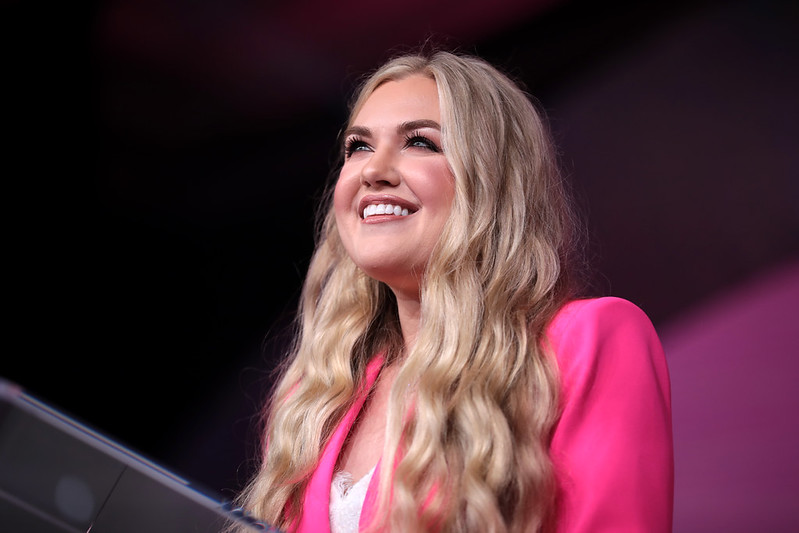
  1. Erika Kirk (Gage Skidmore/Flickr)

    Erika Kirk: Kirk has emerged as an influential figure in Arizona following the death of her husband, Charlie Kirk. After his assassination, she was unanimously appointed CEO and chair of Turning Point USA, one of the most influential conservative youth organizations in the country. Her leadership now carries not only political significance but also emotional and symbolic weight as she steps into the public eye amid national attention and personal loss. A former Miss Arizona USA raised in Scottsdale, Erika Kirk has long-standing ties to the state. Her influence is rooted not just in politics, but in faith-based media, where she has built a platform around Christian values and conservative messaging. With Turning Point’s national headquarters based in Phoenix, her leadership places Arizona at the center of a growing youth political movement. She is now seen as a unifying and strategic voice for a major segment of conservative America.


  1. Charlie Kirk (Gage Skidmore/Flickr)

    Charlie Kirk (posthumously): Republican candidates and conservative activists in Arizona who align with the youth-MAGA/Turning Point ecosystem still benefit from the network that Charlie Kirk helped build. Kirk’s work, as founder of Turning Point USA, a nonprofit that advocates for conservative politics on high school, college and university campuses, helped propel young conservative and Christian students at Arizona’s universities to mobilize, register and debate in favor of conservative politics and has played an undeniable role in solidifying Arizona as an important battleground state for national political debate. That influence has forced Democrat and moderate campaigns across the state to rethink their political strategy to account for this new, highly mobilized Republican base. And while the dynamic has changed since Kirk’s passing, the institutional momentum he created through youth chapters, activist culture and voter registration drives has only been emboldened by a new symbolic memorialization of his politics and character among his supporters. 


  1. (Gage Skidmore/Flickr)

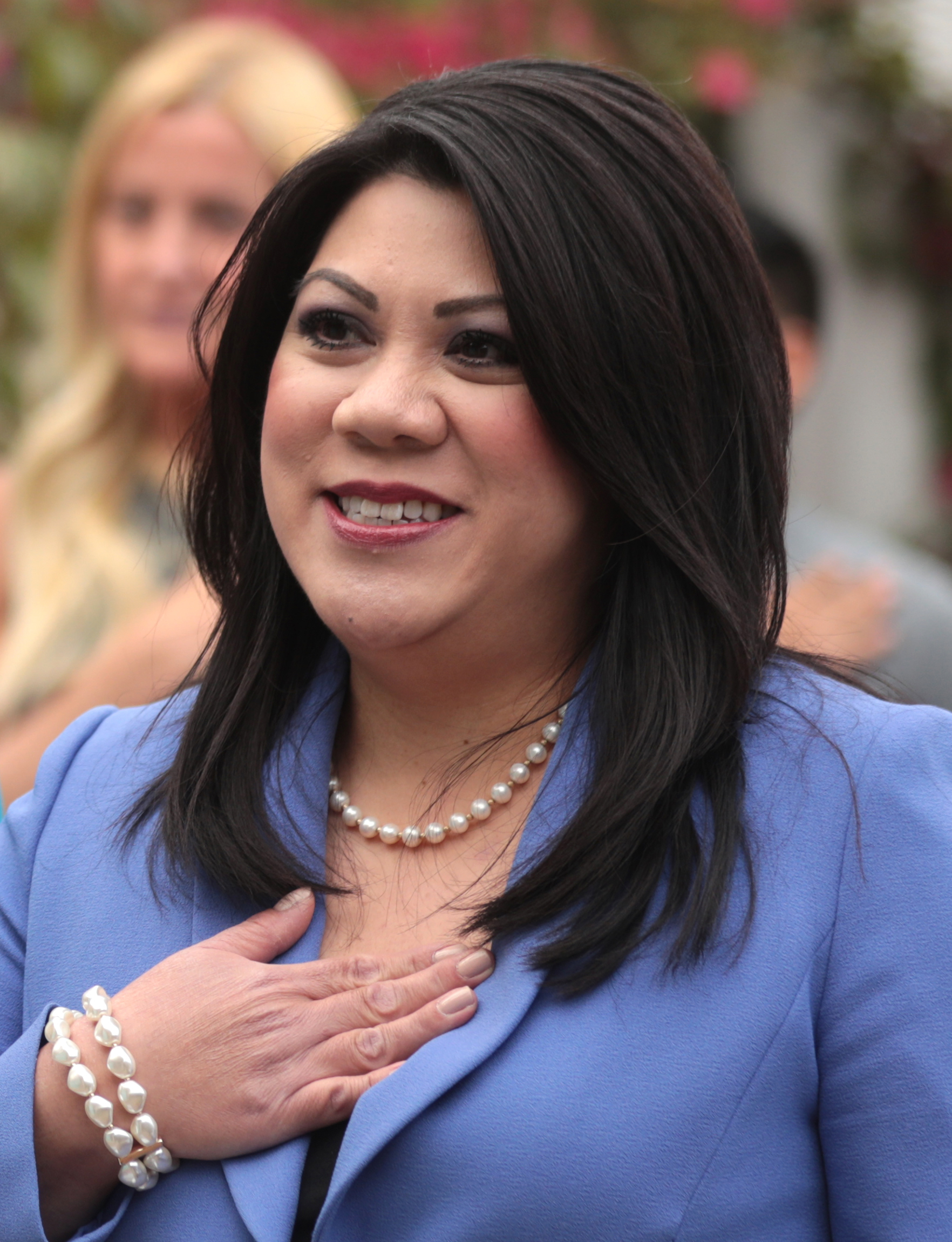
    Kimberley Yee: Approaching eight years as head of the Treasurer’s office, Yee has maintained steadfast control while growing the state’s cash reserves. Since being elected in 2018, she has doubled assets under management to $30.2 billion from $15.4 billion. She oversaw a record high in total distributions, boasting $6 billion since taking office. Under her tenure, she’s also seen the Permanent Land Endowment Trust Fund increase by about $4 billion. Yee was the first Chinese American Republican woman to win statewide office, the first Asian American woman elected to the Arizona Legislature and the second woman to serve as Senate Majority Leader. Now, Yee looks to lodge a challenge against incumbent Superintendent Tom Horne.


  1. (Gage Skidmore/Flickr)

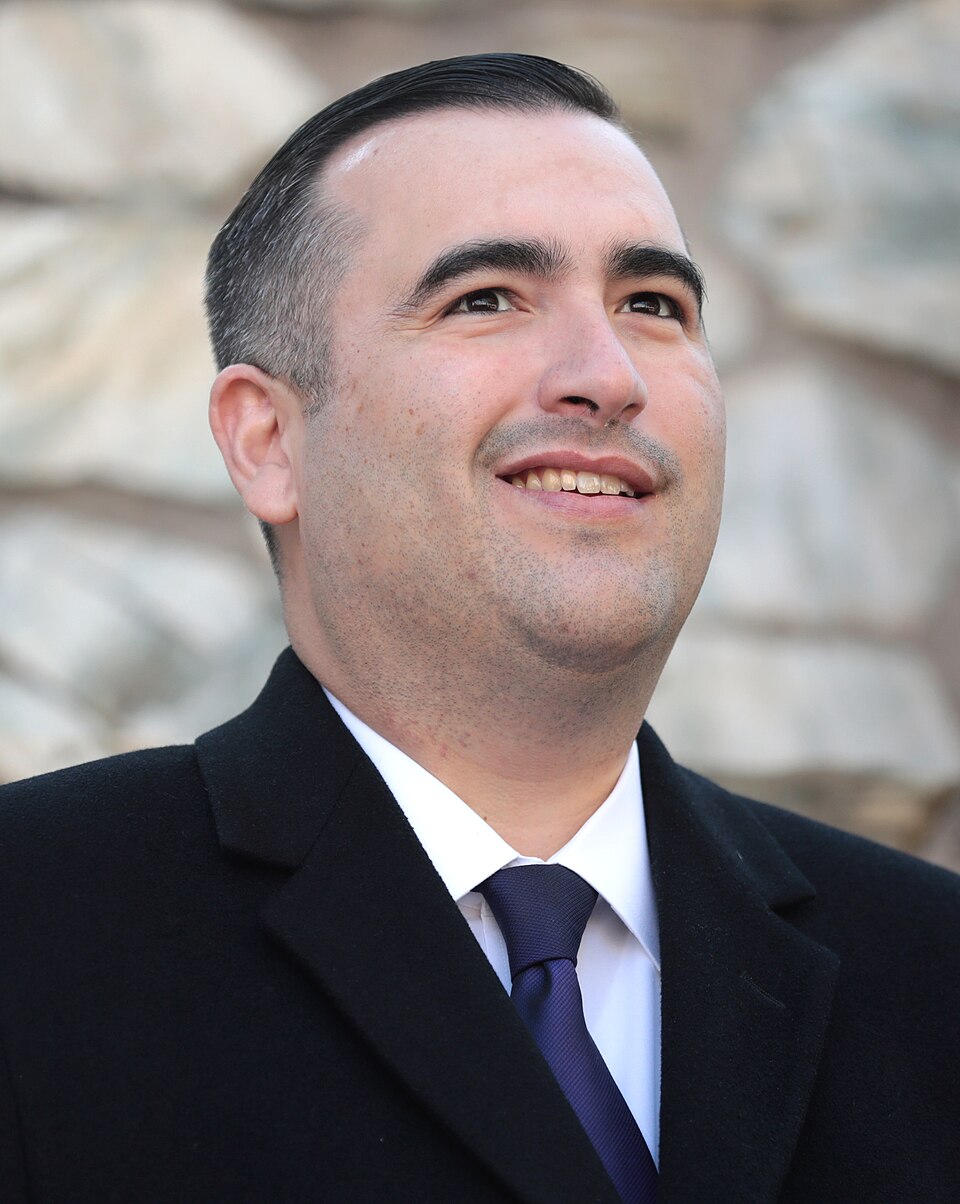
    Sen. T.J. Shope: Shope, R-Coolidge, sponsored one of the few bills passed into law on June 30 that sought to address two of the state’s biggest issues — water conservation and housing development. The Ag-to-Urban legislation, which garnered bipartisan support, will allow farmers to sell agricultural land and the accompanying water rights to developers to boost the state’s housing supply and preserve groundwater. Shope, who serves as chair of the Senate Natural Resources committee, has been a vocal advocate for the Colorado River negotiations and for ensuring Arizona isn’t shortchanged during the discussions. 


  1. Sen. Jake Hoffman: As chairman of the Senate Director Nominations Committee and the Arizona Freedom Caucus, Hoffman, R-Queen Creek, has emerged as one of the most influential Republicans in the Legislature. Hoffman’s leadership of the nominations committee has put him at odds with Democratic Gov. Katie Hobbs. The committee has rejected several of Hobbs’ agency director nominees, although more were approved this past session. As Freedom Caucus chair, Hoffman has recruited and endorsed a number of Republican candidates for state and national offices and wields considerable influence within the party.


  1. Rep. Julie Willoughby: After being appointed by the Maricopa County Board of Supervisors to the Statehouse to replace expelled lawmaker Liz Harris in 2023, Willoughby, R-Chandler, has quickly climbed the ranks of the House GOP caucus. When House lawmakers were running out of time to address a funding shortfall for the Division of Developmental Disabilities this year, Willoughby was among the lawmakers advocating for Arizonans who depended on the program, going against a House GOP proposal that was vetoed by the governor and working with House Democrats to find a solution just days before funding expired. Willoughby is now running for the state Senate next year and has positioned herself as one of the most influential lawmakers at the Legislature.


  1. U.S. Rep. Andy Biggs: With eight-years of experience in a deep-red Congressional District 5, Biggs officially jumped into Arizona’s gubernatorial race earlier this year. The congressman quickly picked up an endorsement from Trump and the late leader of Turning Point USA, Charlie Kirk. Biggs is a former leader of the Congressional Freedom Caucus and a member of the powerful House Judiciary and Oversight Committee. He also brings state legislative chops to the table, having served in the Legislature for 14 years, including as Senate President for four of those years. 


  1. U.S. Rep. Yassamin Ansari: Arizona’s youngest representative in Congress is already having an impact in D.C. Ansari was named the president of the House Democratic freshman class at the beginning of the 119th U.S. Congress after she narrowly emerged from Arizona’s 2024 Democratic primary race for its third Congressional district by just more than 40 votes. The former Phoenix vice mayor is the youngest woman in Congress and the first Iranian American Democrat in the U.S. House. Ansari, a member of the House Natural Resources Committee and the House Oversight Committee, has stood staunchly opposed to the Trump administration’s immigration policy with surprise oversight visits to Immigration and Customs Enforcement detention facilities, calling for better living conditions for detained individuals. 


  1. Rep. Gail Griffin: One of the Capitol’s worst-kept secrets is that no water policy gets through the Legislature without Griffin’s seal of approval. The chairwoman of the House Natural Resources, Energy and Water Committee has held the role in various forms since her career as a state lawmaker began in 1997 and she has frustrated both Democrats and Republicans seeking a bipartisan update to Arizona’s rural groundwater law. Griffin, R-Hereford, has long opposed Active Management Areas in the state and has advocated for alternative solutions, which she says give rural communities greater local control and flexibility over groundwater management, but she has presented a roadblock to the governor’s efforts to regulate groundwater pumping in rural parts of the state.


  1. Terry Goddard: Goddard serves as president of the Central Arizona Project board, which sets taxes and policies for the canal system that brings Colorado River water to homes throughout the state. A power player in negotiations over future use of the Colorado River, Goddard — a former Phoenix mayor, two-term attorney general and three-time gubernatorial candidate, is an unwavering advocate for Arizona’s future.


  1. Gina Swoboda: Swoboda stepped into the role of Republican Party chair in 2024 to help deliver the state to President Donald Trump and increase GOP seats in the Arizona House and Senate. The party turned out to be the greatest swing state margin for Trump and raised $20 million, with the majority of the money used to directly contact voters. Trump endorsed Swoboda in her original bid for party chair and in her reelection, and she also received support from state and federal lawmakers. In July, Swoboda was hired by the state House of Representatives to help craft elections policy after working in the Arizona Senate as an elections consultant, where she served for three legislative sessions.


  1. Regina Romero: Tucson’s first Latina mayor may have started her mayoral career in 2019, but she is no amateur. She spent nearly 20 years on the Tucson City Council — the first woman to ever hold the position. She has been an advocate for progressive policies in Tucson, supporting affordable housing projects and serving as the co-chair of Mayors against Illegal Guns. Having won reelection in 2023, Romero has gained traction within the Democratic Party and was the only mayor invited by the White House in 2024 during former President Joe Biden’s administration to join a federal delegation in Mexico for the inauguration of Mexico’s President Claudia Sheinbaum.


  1. Kate Gallego: Gallego, the mayor of Phoenix, has represented city residents for more than a decade. After first being sworn in to the city council in 2014, she became the city’s second female mayor in 2019 and has served in the position for more than half a decade. Gallego has set a goal to make Phoenix the most sustainable desert city in the U.S. She has led efforts to build electric vehicle charging infrastructure throughout the city and established an Office of Heat Response and Mitigation to address the extreme summer temperatures that residents face. Gallego pushed back this year against lawmakers who wanted to fund renovations at Chase Field to keep the Arizona Diamondbacks in town and helped negotiate the final version of the bill.


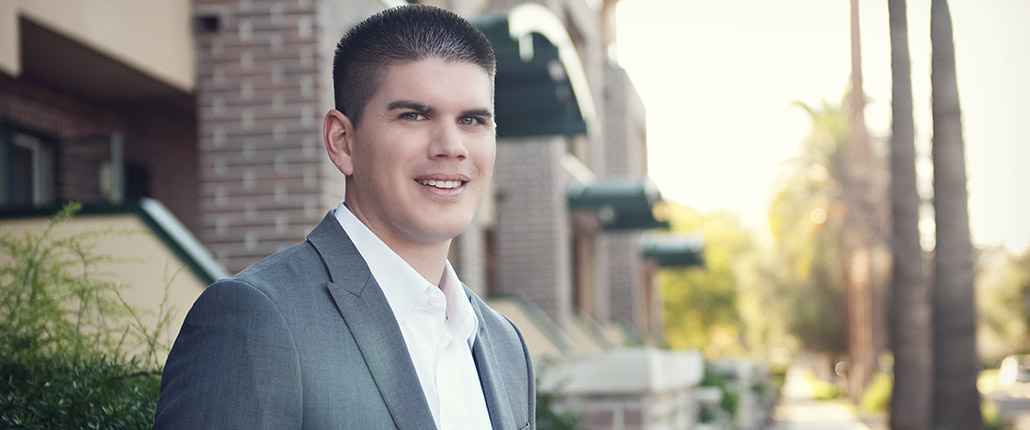
  1. Thomas Galvin: The new chairman of Maricopa County Board of Supervisors has made his mark as the leader of the nation’s fourth most populous county. Elected chairman in January, Galvin announced ambitious goals, including bringing back the Arizona Coyotes after the NHL team left for Utah in 2024. Fed up with the nation routinely waiting for word on the county’s vote tally on presidential election nights, Galvin has also helped lead Republican efforts to change state law to deliver faster election results. He also spearheaded a nearly $500,000 independent review of the county’s election processes and procedures to address complaints of recent election administration from 2020 and 2022.


  1. Tom Buschatzke: As director of the Arizona Department of Water Resources, Buschatzke serves as the state’s chief negotiator on Colorado River guidelines and the protector of its water supply. Buschatzke started his career in water as an intern in the department he would eventually lead, and is now a widely-respected policy expert who can be found taking part in every meaningful conversation about Arizona water. Most recently, Buschatzke has used his authority to enact groundwater pumping restrictions in rural areas, create new active management areas in dwindling basins and usher in new state laws allowing farmland to be converted for residential use. 


  1. John Boelts: As president of the Arizona Farm Bureau, Boelts is a leading voice in groundwater management policy discussions for rural areas. Last session, he supported a measure from Sen. Tim Dunn that would’ve imposed a series of restrictions intended to preserve groundwater in Gila Bend, Hualapai Valley and the Willcox Groundwater Basin. Boelts has advocated for policies that strike a balance between establishing conservation measures to preserve groundwater and ensuring property owners’ water-use rights. He is also a generational farmer who owns Desert Premium Farms in Yuma. 


  1. Lea Márquez Peterson: Márquez Peterson is the longest-serving member of the Arizona Corporation Commission and the only statewide elected official who resides in southern Arizona. She became the first Hispanic woman in a statewide position after Gov. Doug Ducey appointed her to the commission in 2019. Now in her final term, Márquez Peterson wants to increase transparency and awareness of the commission’s work, which primarily revolves around regulating the state’s major public utility companies. When she finishes her tenure, Márquez Peterson will no doubt be recruited by Republicans to run for any number of high-profile seats at the state or federal level.


  1. Nick Ponder: Ponder, the senior vice president for governmental affairs at HighGround Public Affairs Consultants, has emerged as an authority on two of the state’s most pressing issues — groundwater and affordable housing. As a lobbyist representing the League of Arizona Cities and Towns, he testified on the proposed Arizona Starter Homes Act. Ponder also represented rural counties and cities in discussions on groundwater management policy.


  1. Danny Seiden: As president and CEO of the Arizona Chamber of Commerce and Industry, Seiden has tirelessly worked to bolster the state’s economy and businesses. Seiden brings a public policy background to the role, having served as former Gov. Doug Ducey’s deputy chief of staff after helping run his 2014 gubernatorial campaign. Seiden is a familiar face at the Arizona Capitol, where he can often be found chatting with lawmakers and testifying on legislation impacting the business community. Most recently, Seiden and his team at the Arizona Chamber of Commerce helped ink a deal for stadium upgrades to the Arizona Diamondbacks’ Chase Field.


  1. Stephen Roe Lewis: A strong voice for Arizona’s tribal communities, the Gila River Indian Community governor has helped find solutions for long-standing issues facing the community. Lewis helped organize the opening of a managed aquifer recharge site, which has helped the community secure access to water and serves as a key cultural identity achievement. He’s prioritized youth educational opportunities and veteran support, and he was one of Arizona’s 2020 presidential electors. Lewis is in his third term as governor and serves as the National Congress of American Indians’ secretary.


  1. Brenda Burman: Burman leads the Central Arizona Project as its first female general manager where she is tasked with sustainably managing the 336-mile canal system that distributes Colorado River water to Arizonans. In 2017, Burman became the first female commissioner of the U.S. Bureau of Reclamation after previous water policy roles in the U.S. Department of the Interior, The Nature Conservancy and U.S. Sen. Jon Kyl’s office. She is also an attorney with experience in Native American water rights, making her a strong asset for Arizona’s water policy community.


  1. Sandra Watson: Watson is the president and CEO of the Arizona Commerce Authority, a state agency dedicated to bringing companies, jobs and capital to the state. She is one of the state’s longest-serving agency heads, having been appointed to her role when the ACA was created in 2011. Watson and the ACA have been credited with helping Arizona become a semiconductor manufacturing hub, bringing countless jobs and investments to the state.


  1. Tom Savage: Lawmakers have grown accustomed to seeing Savage in the halls of the House and Senate for nearly a decade. Savage, who joined the League of Arizona Cities and Towns as a legislative associate in 2016, now serves as the League’s legislative director and represents cities at the Capitol for a wide range of issues. Before joining the League, Savage worked as a House staffer and helped research policy issues for the Agriculture, Water and Lands, and Energy, Environment and Natural Resources committees.


  1. Jen Marson: As executive director of the Arizona Association of Counties, Marson’s expertise encompasses property taxes, elections, public records, criminal justice, law enforcement, justice, superior courts, education and then some. Her experience working in multiple government jurisdictions makes her the go-to person to take the stand at any number of committee hearings for counties across the state. As a certified election office, Marson has fought against election mistrust and misinformation for years. She continues to be recognized for her work, having won the Arizona Capitol Times’ Best Government Lobbyist award two years in a row. 


  1. Buu Nygren: A self-described carpenter, public servant and father, Nygren has spent the past two years constructing a better future for Arizona’s tribal communities as the president of the Navajo Nation. But his tenure has not been without problems, he faced a recall petition but a Navajo Nation investigation cleared Nygren of the accusations. Despite the investigation, his long term vision and steady commitment to his people did not falter. He is one of the more powerful and influential cultural and political leaders in the state. His priorities include access to water, modern infrastructure, affordable housing, and a thriving economy for tribal lands. To that end, Nygren was instrumental in negotiating with Hopi and San Juan Paiute leaders to secure a historic water rights settlement between the tribes. He also made clever use of the American Rescue Plan Act to secure more than $500 million in funding for infrastructure projects. A steadfast defender of Navajo sovereignty, he has worked to protect tribal lands from the transportation of uranium from the Pinyon Plain Mine south of the Grand Canyon. 


  1. Arizona Supreme Court Justice Clint Bolick: Bolick, first appointed to the court in 2016 by Gov. Doug Ducey, fought an effort to remove him from the bench over his vote to keep a statewide abortion ban in place. Despite a coordinated and funded campaign against his candidacy, Bolick kept his seat with 58% of the vote. He continues to advocate for an independent judiciary and further civic education on the state’s judicial retention system, especially as the race attracts more political and campaign interest each year. Before ascending to the state’s high court, Bolick served as the vice president for litigation at the Goldwater Institute and as the president and general counsel for the Alliance for School Choice, where he advocated for school choice, private property rights, freedom of speech and federalism. 


  1. (Gage Skidmore/Flickr)

    Arizona Supreme Court Justice Maria Elena Cruz: Cruz, the newest member of the Arizona Supreme Court, brings a wealth of experience from rural Arizona and is the first Latina and Black justice to serve on the court. Cruz started her career as a prosecutor at the Yuma County Attorney’s Office, pivoted to criminal defense, and then worked in family and criminal law as a solo practitioner. She has worked as a judge pro tem for the Cocopah Indian Tribe, as a superior court judge and as a presiding judge in Yuma County. Before her ascent to the state high court, she served on the Arizona Court of Appeals for eight years. Hobbs chose Cruz in January after a lengthy nomination process, slotting her to fill the vacancy left by former Chief Justice Robert Brutinel. 


  1. (Gage Skidmore/Flickr)

    Karrin Taylor Robson: After a loss in the 2022 Republican gubernatorial primary, Robson has continued her fight to become Arizona’s governor. Robson is an attorney and land use consultant who has dabbled in lobbying and public service, including a stint on the Arizona Board of Regents. For the 2026 gubernatorial primary, she rebranded from an old-guard Republican backed by critics of President Donald Trump to a “MAGA” darling with the president’s endorsement. Robson is hoping her self-funded campaign war chest and lifelong conservative values are enough to make her Gov. Katie Hobbs’ challenger next year.


  1. Andy Gaona: As the governor’s go-to outside counsel and a leading election attorney in the state, Gaona has sparred in court over election contests in 2020 and 2022, served as the go-to voice on campaign finance, ballot access and the inner workings of elections, and drafted and defended a host of voter initiatives over the past 10 years. He waded into and successfully defended the statewide initiative to enshrine a right to abortion, a measure to legalize marijuana and the funding fix for Arizona schools under Proposition 123. He continues to serve as a partner at Coppersmith Brockelman, where he co-leads the election and political practice with the governor’s former general counsel, Sambo “Bo” Dul. 


  1. (Photo by Jon Willey/Arizona Diamondbacks)

    Ken Kendrick: Kendrick, a Paradise Valley resident, is more than just a baseball fan, he’s Arizona’s MVP for anything related to the Arizona Diamondbacks. Kendrick has played a pivotal role in intergovernmental relations between the state’s premier professional baseball team and its government. He was pivotal in negotiating a bill that authorized up to $500 million in public funding for stadium renovations, effectively securing the team’s future in the state and establishing an enormous tax base for Phoenix residents. Moreover, through the Ken Kendrick Grand Slam Awards and the Arizona Diamondbacks Foundation, Kendrick has contributed significantly to Arizona philanthropy, providing nearly $2 million in funding to Arizona nonprofits between 2024 and 2025. His work to renovate youth sports fields in places like Arcadia and South Mountain, and his work in the Give Back Jersey Program to supply Diamondbacks-themed apparel and uniforms to thousands of young athletes in Arizona, have both contributed significantly to the health and well-being of Arizona’s youth sports leagues. 


  1. Rick Smith: Smith, the founder and CEO of Axon, has solidified his status as an influential leader of one of Arizona’s most prominent companies. Axon is known for developing the Taser, body cameras and other safety technology. The homegrown company flexed its lobbying muscles last session when a ballot referendum threatened to derail the construction of its global headquarters in north Scottsdale. Smith rallied with dozens of employees and worked with lawmakers to garner support for a bill that would allow the company to complete the project. He accomplished his goal when Gov. Katie Hobbs signed a law that cleared a path for the company to proceed with its plans. 


  1. (Gage Skidmore/Flickr)

    Michael Bidwill: Following the death of his father in 2019, Bidwill has worked to keep ownership of the Arizona Cardinals in the Bidwill family. He took over as the team’s president in 2006 and helped create State Farm Stadium in Glendale, which has brought an economic surge to the area and hosted multiple Super Bowls and large events, including the 2025 Memorial for Charlie Kirk and Taylor Swift’s Eras Tour in 2023. With an estimated net worth of $1.4 billion, Bidwill has taken an interest in engagement with the NFL and has held various committee roles, including the league’s Conduct Committee and the Player-Owner Committee. In 2016, he was inducted into the National Football Foundation Leadership Hall of Fame.


  1. Jenny Clark: As founder of Love Your School, a multi-state school choice advocacy and support organization, Clark continues to be the first line of defense in strengthening, growing and defending school choice options in the state. Her main focus continues to be the Empowerment Scholarship Account program, with resources and one-on-one support for families to sign up, obtain disability diagnoses, and secure funding for the child to attend private school or create a tailored homeschool option. But her work does not end there. She’s assisted families with disabilities in navigating the public school system and in obtaining tax credit scholarships through School Tuition Organizations. She served on the State Board of Education from 2022 to 2025, appointed by former Gov. Doug Ducey. 


  1. Marisol Garcia: Garcia leads the premier labor union for more than 22,000 Arizona public school educators and has continually gone to the mat for all school employees at the local, state and federal levels. During her tenure as president of the Arizona Education Association, Garcia has transformed the union into a more visible, organized presence in political battles and public school education advocacy. Garcia has pushed for paying all school employees through the continuation of Proposition 123, a school funding measure relying on the state land trust fund. She’s fought for educators in her own district, the Isaac Elementary School District, amid a financial crisis. And she, of course, leads the charge in securing additional funding for schools across the state while fighting against what she calls “unfunded mandates”— education policies without a proper fiscal note. Garcia was first elected as Arizona Education Association president in 2022 and was reelected in May 2025. 


  1. John Ward: Ward, executive director of Empowerment Scholarship Accounts at the Arizona Department of Education, assumed responsibility for a program hurtling toward a $1 billion price tag, with 91,000 enrollees and growing. Prior to his current role, Ward served as the chief auditor for the department and a manager at the Arizona Auditor General’s office. He’s continued to walk a tightrope, ensuring no misspending of state funds while maintaining enough flexibility for families — a dance that continues to bring him equal doses of praise and criticism from state school choice advocates and program participants. 


  1. Tammy McLeod: While some plant seeds to grow trees, McLeod, through her leadership of the Flinn Foundation, plants seeds that grow industries. She has remained a mobilizing and industrious philanthropist in Arizona’s higher education community for almost a decade. McLeod has led Arizona’s bioscience sector to tremendous growth in funding, wages and jobs. Her work on the Flinn Foundation’s Arizona Bioscience Roadmap, which sets the state’s strategy for fostering growth in the industry, created the blueprint for the last decade of growth in Arizona’s bioscience community. Moreover, her work to update that roadmap for implementation in 2025 will set the course for the billion-dollar industry through the next decade. 


  1. Elizabeth S. Chatham: While some make their names by who they attack, others make theirs for who they protect. The latter is the case for Chatham, Arizona’s premier immigration attorney, community leader and diversity advocate. Named one of the “Most Influential Women in Arizona Business” by AZ Big Media in 2025, Chatham has built a legacy in Arizona through her legal work for Fortune 500 companies, startups, universities and more. She has dedicated herself to helping the state’s at-risk populations navigate complex U.S. immigration laws, including visa card applications, green card strategies, naturalization and more. Chatham’s work bridges the gap between Arizona’s government and its immigrant communities, and her legal expertise has made her an influential figure in Arizona’s business and political communities. 


  1. Jessica Nuñez (Via Facebook.com)

    Jessica Nuñez: While many would crumble and fall in the face of family tragedy, Nuñez proves that some are still willing to stand up and fight for what they know is right for their family. Nuñez rose to prominence in Arizona in 2024 and 2025 through her advocacy work after her teenage daughter, Alicia Navarro, went missing in 2019. While Navarro resurfaced four years later, her disappearance lit a fire under her mother. Even after their reunion, Nuñez’s powerful message of “never lose hope and always fight” resonated widely across the nation, prompting new calls for support for neurodivergent youth, missing children, online safety and mothers in advocacy. 


  1. Monica Villalobos: Villalobos brings people, data and power together. As CEO of the Arizona Hispanic Chamber of Commerce, she’s a strong advocate for Hispanics across the state. And she’s not just a figurehead. Villalobos is actively shaping Arizona’s economic landscape by working with government leaders and co-chairing key committees, like the one that helped Gov. Katie Hobbs build her administration. Through the Chamber’s annual DATOS report, she gives business and political leaders clear insight into the growing power of Arizona’s Hispanic market. She’s also a connector, building bridges between communities, companies and policymakers. With deep roots in both business and academia, she’s actively using her platform to open doors for others. 


  1. Robin Reed (posthumously): Reed earned his reputation by who he elevated. As CEO of the Black Chamber of Arizona, he worked tirelessly to open doors for Black-owned businesses, pushing for real access to funding, partnerships and opportunity across Arizona. He didn’t just talk about equity — he rolled up his sleeves and worked to build it. Reed’s influence reached far beyond business. He mentored leaders, advised nonprofits, and sat on boards that shaped Arizona’s education and community development. He was a key figure in bringing the state together across racial, class and industry lines. He always focused on how to make Arizona stronger and more inclusive. What made him truly powerful wasn’t just his resume — it was his character. People listened to Reed because he spoke with wisdom, led with heart, and always followed through. 

Arizona schools face $866M funding risk over DEI training standards

Key Points:
  • Arizona schools chief Tom Horne wants to revise teacher training standards due to federal funding concerns
  • President Trump’s order requires states to remove “diversity, equity, and inclusion” references from programs receiving federal funds
  • Arizona’s teacher standards may need to be revised to comply with federal directives

Fearing a loss of federal dollars, a state schools chief, Tom Horne, wants the Board of Education to immediately begin revising the standards used to train teachers in Arizona.

Horne says an order issued by President Trump on the first day of his presidency requires states to scrub any references to “diversity, equity, and inclusion” from programs that receive federal funds. And he contends there are items in Arizona’s professional teaching standards that could run afoul of that edict.

More to the point, Horne says it places about $866 million in federal dollars at risk.

But education board members are not quite as anxious to rush into changing the rules.

At an Oct. 27 meeting, several said they had serious questions, including who would be on the committee Horne wants to appoint to review the existing rules to ferret out provisions the Trump administration might find offensive.

So board members put off a decision on crafting new rules until their December meeting. Horne, however, warned the delay could prove financially hazardous.

“I’m fearful that if we act too slowly we may get caught in a situation where we can’t get it done in time and we’re facing the ax from the federal government,” he said.

Less clear is whether there’s actually anything in the existing rules that would endanger federal dollars and what changes might be needed.

One possibility deals with current standards for learning environments.

Sid Bailey, an associate school superintendent, pointed out that one of these requires teachers to manage the environment “to actively and equitably engage learners by organizing, allocating, and coordinating the resources of time, space, and learner’s attention.” He told the board that it may be necessary to excise the words “and equitably” to comply with the presidential directive.

Then there’s a provision saying teachers should communicate in a way that demonstrates respect and responsiveness “to the cultural backgrounds and differing perspectives learners bring to the learning environment.”

All that verbiage, Bailey said, may have to go. And that, he said, is why the rule-making process must begin with a committee to scour this and all the rules.

“I’m not a prophet and can’t predict what we would come up with,” Bailey said. But he said that the rule-making process — and a study by a committee named by Horne’s department — would propose revising language “that’s no longer aligned with current federal directives.”

Arizona’s standards are not unique to the state.

The state board here adopted what is known as InTASC in 2011. That’s short for the Interstate Teachers Assignment and Support Consortium, which uses the standards to guide education and professional development for teachers across the country.

In essence, the idea is to ensure teachers have the knowledge and ability to help all students learn.

Bailey told board members that the 2011 revisions to InTASC — the ones adopted by the Arizona board — included key changes, including an emphasis on personalized learning, the integration of 21st-century skills, and “support for diverse student needs.”

He said he and other Department of Education employees have since met with the deans at the colleges of education at the three state universities.

“All university deans agreed that the teaching standards that they teach do not align with federal mandates and need adjustment,” Bailey said.

The only thing is, the universities also must align their standards for preparing new teachers with the rules of the state Board of Education. And the purpose of drafting new rules — what Horne wants — would be to ensure that Arizona’s teacher training rules align with federal rules to avoid losing federal dollars.

Not everyone on the board is convinced they need to rush to address that fear.

“I just want to make sure that we’re not a solution in search of a problem,” said Daniel Coor, president of Arizona Western College, who sits on the state Board of Education.

Bailey said that’s not the case.

“We’ve got evidence that our universities, two of them, have already been challenged by the federal government, that are concerned with their course curriculum,” he said.

And there’s more.

One is a “Dear Colleague” letter that went out in February to all state education agencies from Craig Trainor, acting assistant secretary for civil rights from the U.S. Department of Education, detailing how his office is interpreting the law to make it illegal to use race in making any decisions. And he said there are other “insidious” ways that DEI programs keep students from fully participating in school life.

“The (Education) Department will no longer tolerate the overt and covert racial discrimination that has become widespread in this nation’s educational institutions,” Trainor wrote.

And then there is an April request from the feds that the state must certify it is not using DEI, with a reminder of financial penalties for failure to comply.

In an interview with Capitol Media Services, Horne said he agrees that some of the rules need to go — regardless of the possible loss of federal dollars.

Consider the one that says teachers should respect “cultural backgrounds and differing perspectives learners bring to the learning environment.” Horne called that unnecessary.

“They’re teaching academics,” he said. “And all kids, as individuals, can learn academics.”

The problem, Horne said, is how that guideline is interpreted and implemented.

“When they are culturally sensitive, they dumb down the requirements for the minority kids,” he said.

“Minority kids can learn just as well as other kids,” Horne continued. “And you don’t need to treat them differently.”
And what’s wrong with ensuring that teachers “actively and equitably engage learners”?

Horne acknowledged that, at one time, “equitable” was a positive word.

“It meant ‘fair,’ ” he said.

“Now, with the ‘woke’ philosophies, ‘equity’ no longer means ‘fair,’ it means ‘equal results by race,”’ Horne said. “And if you have equal results by race, you’re rewarding people for what race they belong to rather than what they’ve accomplished individually.”

Monday’s vote puts off the board’s decision until December on whether to start reviewing the rules — and not just the ones Bailey cited during the meeting.

Kathleen Wiebke, a public member of the board, said she understood Horne’s desire to move forward immediately. But she said she wasn’t ready to push ahead now.

“I do think there are a lot of questions,” Wiebke said. “And what I don’t want to do is start working on these standards and then have them changed again.”
Horne acknowledged he has no idea when the U.S. Department of Education will return and start demanding proof that all traces of DEI have been removed from regulations and policies.

GOP leaders squabble over school district’s financial woes

Key Points: 
  • Treasurer rejects $3 million advance for school district, cites mismanagement 
  • State superintendent disagrees, claims district is entitled to funds under state law 
  • District asks for reconsideration, blames high enrollment growth

Despite approval from the state Department of Education, Arizona Treasurer Kimberly Yee rejected a school district’s request for a $3 million cash advance to offset a deficit, alleging potential mismanagement and future financial instability. 

Yee claimed “grave concern” over alleged “gross financial mismanagement” at Nadaburg Unified School District, located in Wittman in Maricopa County, and pushed for an audit and potential receivership given lopsided revenues and deficit.

State Superintendent of Public Instruction Tom Horne disagreed with the move to withhold the cash advance as the district was entitled to funds under state law. 

The move puts Yee and Horne at odds over how to handle school districts in financial turmoil, as the two face-off in the 2026 Republican primary for superintendent of public instruction. And a request for additional review ropes in the district, the Joint Legislative Audit Committee, the auditor general and the State Board of Education.

“As Arizona’s Treasurer and a taxpayer watchdog, I am seriously concerned that an advancement of funds now will only compound the District’s deficit and harm the financial stability of the District for years to come,” Yee said in a statement. 

On July 31, the NUSD Governing Board alerted state officials to a $5 million estimated cash deficit, citing a low ending fund balance from the prior fiscal year and decreased property tax collections. 

The district then requested a $3 million advance of state aid funding to cover expenses through December, under a state law that allows early payment if sufficient funding, demonstrated financial need, and a sign-off from the state superintendent, treasurer and director of the state Department of Administration are present. 

The request only got an OK from the Department of Education. A spokesperson for the Arizona Department of Administration stated that they were notified of the request, but it was never formally submitted to the department for review and approval. 

Yee rejected the request on Sept. 24 and wrote the district had failed to provide any information on the necessity of expenses or any measures taken to reduce current spending to the bare minimum to sustain school operations. 

She claimed the deficit could be “indicative of gross financial mismanagement,” noting the FY2026 total budgeted local revenues sit at $1.7 million, which would make the projected deficit near triple the total amount of revenue the district expects to receive. 

This is an alarming trend of financial instability,” Yee wrote.

Beyond notifying the district, Yee asked the Joint Legislative Audit Committee to issue a recommendation that the Arizona Auditor General’s Office conduct a special investigation of the district’s financials and requested the State Board of Education to consider any future findings from the auditor general to potentially appoint a receiver. 

Sen. Mark Finchem, chair of JLAC, and co-chair Rep. Matt Gress did not respond to a request for comment. Auditor General Lindsay Perry confirmed the office had received and is reviewing the letter. 

According to the January 2025 school district financial risk analysis by the Auditor General’s Office, NUSD was not listed as one of the highest risk districts but did have three red flags given a declining general fund operating reserve ratio, operating margin ratio and fund balance. 

Yee reserved the right to reconsider and asked for a more detailed explanation of the necessary expenses, funding sources and spending decisions that led to the cash advance request, as well as their impact on the ability to manage expenses within the last fiscal year. 

In departure from Yee, Horne said Yee’s denial of advance state aid was “pretty irresponsible.” 

“I disagree with her,” Horne said. “The district has had unexpectedly fast growth, and cash advances are fairly common. They are entitled to it under the formulas.” 

NUSD Superintendent Aspasia Angelou asked Yee to reconsider on similar grounds. 

According to the auditor general, Nadaburg saw a 12.9% increase in weighted student count over the past year and a 100% increase over the past four years. 

In a letter, Angelou said the “exponential enrollment growth” within the district was an exacerbating factor in the financial strain. 

“This growth has placed extraordinary demands on our classrooms, facilities, transportation services, and staffing, all of which remain focused on delivering high-quality education to our students,” Angelou wrote. “As a result, our resources are stretched during the critical period between July 1 and the dates when property tax revenues are deposited to the district in January each year.”

She added that the district disagreed with Yee’s “financial mismanagement” charge and pointed to efforts to restructure operations and eliminate administrative positions. 

“The ultimate risk in delaying or politicizing this decision is not borne by district leadership but by the students and families we serve, who rely on stable and uninterrupted school operations,” Angelou wrote. 

Feud between 2 GOP officials clouds English leaner issue

Key Points:
  • State schools chief Tom Horne seeks recusal of Justice Bill Mongomery
  • Current case involves legal method for teaching English
  • Both officials faced off in 2010 over an alleged election violation

A decade-old political spat between two Republicans could affect whether one Supreme Court justice can decide the legal way to teach English in Arizona schools to those who are not fluent.

In a surprise move, state Superintendent of Public Instruction Tom Horne has asked Justice Bill Montgomery to sit this case out. Horne’s attorney, Dennis Wilenchik, said it’s all because of actions by Montgomery when he was Maricopa County attorney — actions that, at the time, involved possible criminal charges against Horne.

That case, involving allegations of violations of campaign finance law in Horne’s 2010 campaign for attorney general, eventually ended up being dismissed. But Wilenchik said the history of that case should mean Montgomery should step aside.

A spokesman for Montgomery said on Sept. 4 that he had not yet seen Horne’s motion.

Strictly speaking, it would be up to him to make the decision whether to recuse himself from this case. There are no rules or procedures that allow the other six justices on the court to force him out.

But Montgomery has, at least once in the past, agreed to step aside. He agreed — after first refusing — to sit out a hearing about the legality of a 2023 law that said abortions are legal through the first 15 weeks of pregnancy after it was noted he had made disparaging comments about Planned Parenthood, one of the parties in the case.

What’s at issue here is quite different.

Horne contends a 2000 voter-approved law spells out that the only method of teaching English is through immersion programs. Several school districts disagree, saying they are following rules enacted by the state Board of Education which allows bilingual or dual-language programs.

The case has reached the state’s high court because both a trial judge and the Court of Appeals have concluded that Horne lacks legal standing to sue the districts. They also dismissed his claim against Gov. Katie Hobbs and Attorney General Kris Mayes, whom he accused of encouraging the schools to break the law.

Wilenchik, in his new legal filing, does not specifically charge that Montgomery is biased against Horne. But he said the history between the two of them is enough to justify the motion for the justice to step aside.

All this goes back to Horne’s 2010 bid for attorney general and the money spent to get him elected by what was billed as an independent campaign committee supporting his election.

Nothing in state law prohibits any group from conducting a separate campaign for or against a candidate. But the law says these must be independent, with no coordination between the candidate and those running the committee.

An FBI report said that Horne actively directed the fundraising of Business Leaders for Arizona, what was supposed to be an independent campaign run by Kathleen Winn. And that committee spent more than $500,000 on ads attacking Felecia Rotellini, the Democratic foe whom he defeated.

Under normal circumstances, Ken Bennett, who was secretary of state when the complaint was filed after the election, would have sent it to the attorney general. But Bennett, saying there was a conflict, sent it instead to Montgomery.

“Justice Montgomery, then Maricopa County attorney, held a press conference in which he announced to the public that Tom Horne … had deliberately violated the campaign finance law by coordinating with an independent campaign,” Wilenchik wrote. He said that Montgomery then sent the case to a hearing officer, but retained the right to overrule what that person found.

Wilenchik said the hearing officer didn’t rule on the charges but concluded that Montgomery was “not the proper person to be pursuing the case against Mr. Horne.” Montgomery fought that, only to have Maricopa County Superior Court Judge John Rea rule in 2013 that Bennett had no right to decide unilaterally to send the case to Montgomery.

That sent the case to Yavapai County where a different hearing officer found there was no evidence of coordination.

Wilenchik said in his motion seeking Montgomery’s recusal that he needed to detail that history.

With or without Montgomery’s participation, the Supreme Court has yet to decide whether to hear Horne’s appeal of the lower court rulings.

Horne’s battle with the schools, the governor and the attorney general have proved to be costly.

In a new order, the Court of Appeals ordered Horne to pay more than $41,000 in legal fees incurred by attorneys hired by the governor to defend herself, another $33,042 for Mayes’ legal fees and $17,226 for the lawyers for the school districts.

All that is on top of $120,000 that Horne owes in legal fees after losing the case in Maricopa County Superior Court.

In the end, though, that is going to be paid by Arizona taxpayers since Horne sued — and continues to sue — in his capacity as superintendent of public instruction.

The earlier issue with Montgomery in the 2023 abortion case arose after it was revealed that in 2015, while still Maricopa County attorney, he said Planned Parenthood “encourages the very behavior that leads to STDs (sexually transmitted disease) and abortions,” adding that their business model relies on it.

And then there was a 2017 statement saying “Planned Parenthood is responsible for the greatest generational genocide known to man.”

Montgomery, in a statement to Capitol Media Services, said his comments while county attorney are irrelevant because they came before then-Gov. Doug Ducey tapped him in 2019 for the Supreme Court. He also insisted he could fairly judge the case.

But Montgomery reversed course a week later, saying that “additional information related to the parties and respective counsel has come to my attention warranting that I recuse myself from any further deliberations in this matter.” He did not spell out what that “additional information” was.

Tom Horne urges Arizona Supreme Court to back English language teaching mandate

Key Points:
  • Arizona schools chief Tom Horne seeks legal authority to enforce English immersion
  • Horne wants Arizona Supreme Court to uphold 2000 law requiring English instruction
  • Horne also seeks to reverse a $120,000 legal fee imposed on him

State schools chief Tom Horne is making a last-ditch effort to get the legal go-ahead to force school districts to use only “structured English immersion” to teach the language to students who are not proficient.

In a new filing, Horne wants the Arizona Supreme Court to rule that he has inherent authority to enforce a 2000 voter-approved law which spells out that “all children in Arizona public schools shall be taught English by being taught in English, and all children should be placed in English language classrooms.”

And he also wants to be able to sue Gov. Katie Hobbs and Attorney General Kris Mayes, who he contends have “aided and abetted” school districts that are allegedly ignoring that law.

So far, though, Horne has been unable to get his day in court. Both a trial judge and the state Court of Appeals said his objections to what the schools are doing are legally irrelevant because nothing in state law authorizes him to enforce what he believes is the law.

And his claims against the governor and attorney general have fared no better, with the appellate judges saying neither has any actual authority over what schools teach.

Central to the issue is Proposition 203, the 2000 ballot measure that was designed to prescribe only one acceptable method of teaching English to those coming from homes where that is not the predominant language. That method involves putting new “English language learners,” as they are referred to in state law, in a class together for four hours a day where they are taught English.

Horne said that mandate makes sense.

“It gives them the amount of English instruction that they need,” he told Capitol Media Services. “And for beginners, they do need four hours so that they can learn English quickly and then succeed academically.”

But that practice caused concern among some education officials who said separating these youngsters from their peers was a form of segregation. They also argued that the system meant these students were not getting instruction in their other subjects.

So in 2019, state lawmakers agreed to allow the state Board of Education to adopt and approve alternate “research-based” models that involve two hours a day of English instruction, giving schools more flexibility in how to schedule that time. It also allows classes mixed with both students whose native language is not English as well as those from homes where English is not the primary language spoken.

Based on that, the board concluded — backed by Mayes — that one of the acceptable alternatives is a 50-50 “dual language model,” where students can both learn English but also keep up with their peers on other subjects.

Horne filed suit in 2023 against the districts, the governor and the attorney general.

He cites data from the Creighton Elementary School District, one of those he sued for using a dual language approach, which he said shows the rate of English language learners becoming proficient in one year “at the pathetically low rate of 5.1%.” By contrast, Horne cited five districts using structured English immersion which had rates ranging from 23.9% to 33.0%.

But so far, he has been unable to make his arguments about the legal and educational merits of English immersion. That’s because courts have said if anyone has the ability to sue over what schools are doing, it is the state Board of Education, not he as superintendent of public instruction. And the board has not sued.

Horne, through attorney Dennis Wilenchik, said that makes no legal sense.

He told the justices that Arizona law says it is the schools chief who determines whether school districts and charter schools are complying with laws dealing with English language learners.

“So, under the interpretation of the Court of Appeals, the superintendent is duty-bound to go to a district and say, ‘You’re complying with state laws applicable to English language learners,'” wrote Dennis Wilenchik, who is representing Horne.

“But the district can say, ‘We’re going to continue doing what we’re doing and what are you going to do about it?” he continued. “That is the case now unless this court grants review.”

Conversely, Horne said if he knows that districts are not complying with the law but does nothing there could be penalties if it were determined “that his failure to implement the law was willful and repeated.”

And what of the 2019 law?

Horne contends none of that specifically mentions bilingual or dual-language instruction.

But even if it did, he said, the Arizona Constitution forbids the Legislature from tinkering with anything approved by voters unless the measure “furthers the purpose” of the original measure. And allowing districts to ignore the mandate for structured English immersion, he said, does not.

That, then, leaves his argument to the state’s high court as to why he should be able to sue both Mayes and Hobbs.

Horne said Mayes issued a legal opinion that empowered districts to put students into dual language programs, even without seeking a waiver from the immersion instruction from their parents.

And Hobbs?

“It was her advocacy for dual language, even though it was illegal, that helped the districts decide to violate the law,” Horne said.

“After all, if the governor is for it, how bad can it be?” he continued. “Instead of advocating for illegal action, the governor should have been calling on the attorney general to enforce the law.”

Horne has another request for the justices.

He wants them to reverse the decision by Maricopa County Superior Court Katherine Cooper, who was the first judge to toss his case, that he pay $120,000 to those he sued. And the state Court of Appeals not only upheld that order but said the defendants also can seek reimbursement for what they spent on the appeal.

Either way, it’s the taxpayers on the hook. Horne said because he sued in the name of the Department of Education, it is that agency — and not he — which owes the money.

State superintendent commits to funding armed officers at schools

Key Points: 
  • Federal funding freeze jeopardizes school resource officer pay 
  • State superintendent vows to come up with funds in the interim 
  • Department keeps focus on number of armed officers on campus

State Superintendent of Public Instruction Tom Horne committed to backing pay for armed officers on school campuses amid a freeze on federal dollars from the U.S. Department of Education.

It’s a small check to pick up, but the latest move aligns with the department’s ongoing goal to increase the number of school resource officers on school campuses and retain them there. 

Earlier this month, the U.S. Department of Education froze upward of $124 million in grant funding in the state – including a pause on $25 million directed to Student Support and Academic Enrichment, or Title IV. 

Title IV funds encompass student services, professional development, educational resources and equipment, and select personnel salaries. 

As part of the eligible funds, local education agencies can use Title IV-A for school safety, which, among other safety measures, encompasses payment for school resource officers. 

About eight school resource officer positions around the state are funded entirely by Title IV funds, totaling around $70,000 in demand from the state school safety budget to cover the costs. 

The state’s School Safety Grant Program is valued at approximately $80 million, with 818 schools across 14 counties awarded funds. 

According to the department, there were 190 armed officers on campus when Horne took office, compared to 572 now.  

“I pushed very hard for schools to adopt police officers and to expand the program,” Horne said.  

As it stands now, the department gives preference to schools looking to hire a police officer and use leftover funds for counselors, Horne said. Between 2023 and 2025, the number of counselors and social workers in Arizona schools increased from 565 to 630. 

This legislative session, the department and lawmakers worked to expand the scope of the school safety grantees as well, though again with a focus on officers. 

House Bill 2074 (school safety; proposals; assessments; plans) sponsored by Rep. Matt Gress, R-Phoenix, includes school safety officers, or off-duty officers, and retired law enforcement officers as eligible grantees. 

It also creates training requirements, requires participating schools to prepare emergency response plans and school safety assessments, allows for alternative uses of funds for safety tools and infrastructure and exempts school blueprints and floorplans from the public record. 

Although the law now expands the grant, the question remains whether state funding will be maintained in the next session. 

“The program has grown, and we’re in the third year of a three year cycle,” Horne said. “So hopefully we do it next year, and we’re expecting more demand for police officers than we’ve had. We’re going to ask the Legislature to increase the amount of school safety money.”

And again, though a comparatively small draw from the department’s budget, there is still the question of whether the federal government plans to free up the funding for the eight or so school resource officers paid with federal funds. 

“School safety is not negotiable,” Horne said. “There is enough state money to make sure all these positions are funded, and no campus that already has an officer on site will lose that position.”

Arizona appeals court rejects bid to force English immersion

Key Points:
  • Court rules Horne lacks legal power to enforce English teaching
  • State Board of Education has sole authority to approve teaching models
  • Judge Paul McMurdie argues in favor of school district autonomy

State schools chief Tom Horne has no legal power to force school districts to use only “structured English immersion” to teach the language to students who are not proficient, the Court of Appeals has decided.

In a new ruling on July 17, the judges said it is the state Board of Education that has the authority to decide what methods of teaching English are acceptable. And the board, against the wishes of Horne, has provided a variety of other options.

But Judge Paul McMurdie, writing for the unanimous three-judge panel, said the school chief’s objections are legally irrelevant. He said nothing in state law specifically authorizes Horne to go to court to enforce what he says is the law.

In making his case, Horne sued not only various school districts that he contends are breaking the law but also both Gov. Katie Hobbs and Attorney General Kris Mayes. But neither have any actual authority over the English language program and what schools teach, according to McMurdie.

Horne said this isn’t the end of his fight to force schools to use what he said voters approved in 2000, saying he is weighing an appeal to the state Supreme Court.

And, if nothing else, he noted that his wife, Carmen, is representing parents — who he believes do have standing — in a separate case over how English is taught. But Horne acknowledged that case, too, is on appeal after being thrown out of court.

But, for the moment, the law Horne doesn’t like remains in effect — and is now on the hook for the legal fees of everyone he sued.

Central to the case is Proposition 203, a 2000 measure that was approved by voters which spells out that “all children in Arizona public schools shall be taught English by being taught in English, and all children should be placed in English language classrooms.”

But school officials in several districts have relied on a 2019 law which allowed the state board to adopt and approve alternate “research-based” models that involve two hours a day, giving schools more flexibility in how to schedule that time. It also allows classes mixed with both students whose native language is not English as well as those from homes where that is not the case.

Based on that, the board concluded — backed by Mayes — that one of the acceptable alternatives is a 50-50 “dual language model,” where students can both learn English but also keep up with their peers on other subjects.

Horne, for his part, argues that studies have shown it is more effective to have students learn English quickly by being immersed in language lessons, even if they fall behind their peers. And, more to the legal point, he contends that the 2019 law is unconstitutional because it is being interpreted to amend the 2000 ballot measure.

That’s based on the fact that the Arizona Constitution forbids lawmakers from altering what voters have approved unless it “furthers the purpose” of the original law. And the state schools chief said that cannot be the case because the purpose of Proposition 203 “is that children be taught in English for the entire school day, in order for them to quickly become proficient in English.”

But the Court of Appeals ignored all that, instead focusing on whether Horne should even be in court.

“The superintendent has no independent policy-making authority,” McMurdie wrote. “His authority is limited to executing, under the direction of the board, the policies that have been decided on by the board.”

The judge noted it is the board — not the schools chief — that has express authority to contract, sue and be sued.

McMurdie acknowledged that the superintendent is responsible for identifying “English learners” and overseeing the funding by the Department of Education funding, administration and monitoring role.

“But the superintendent has no role in determining the instructional models available to schools,” the judge said. “The Board (of Education) alone is allowed to adopt and approve lawful structured English immersion and non-structured English immersion education models for the schools’ use.”

Then there’s that issue of whether Horne had legal “standing” to sue Mayes and Hobbs in the first place.

In the first case, the schools chief sued the attorney general because she issued a legal opinion that the state board — and not Horne — has sole authority over English immersion models. And he sued Hobbs claiming that the governor “has been touting dual language even though she knows, or should know, that is contrary to law.”

McMurdie pointed out that Arizona law provides such standing only to those who have a legitimate interest in the controversy. Beyond that, it requires that someone filing suit must allege a personal injury traceable to the conduct of those being sued.

That, said the court, doesn’t exist here.

“The superintendent has not alleged that he has or will suffer an injury by the attorney general’s written opinion,” McMurdie said.

Nor was the appellate court impressed by the claims against the governor.

McMurdie acknowledged that the Arizona Constitution, as Horne points out, does require that all laws be “faithfully executed.” And her duties also include appointing members of the Board of Education beyond Horne who serve based on his position.

“But the superintendent’s pleading seeks no relief for the governor’s exercise of her duties and powers,” the court noted. “He simply complains that she has publicly supported the 50-50 model.”

McMurdie called it “speculative” that the governor could use her power to force the board to take an action to side with Horne.

The court also separately said he has no standing to sue the school districts that have chosen the 50-50 model.

Finally, McMurdie said even if he and his colleagues were to conclude that Horne is entitled to sue, they could not declare the 50-50 model illegal.

“The most we could do would be to reverse the dismissal and permit the Superior Court to decide the merits,” he said, the first court that dismissed his lawsuit last year.

In that case, Maricopa County Superior Court Katherine Cooper ordered Horne to pay $120,000 in legal fees to those he sued. The appeals court on July 17 not only upheld that order but said that the defendants now can seek reimbursement for what they spent on the appeal.

Horne said because he sued in the name of the Department of Education, it is that agency — and not he — who owes the money. 

Not everyone agrees with Horne’s contention that English immersion is the best method to teach the language.

There was an effort in 2020 to put a measure on the ballot to replace Proposition 203 with a requirement for public schools to provide dual language programs for both native and non-native English speakers. And it spelled out that schools must provide “effective and appropriate instructional methods.”

“This is a simple bill that says all the kids should have the equal chance to learn,” said John Fillmore, then a Republican representative from Apache Junction.

The problem, Fillmore said, is that when students are confined to classrooms where English is the only thing being taught, they are not keeping up with their counterparts who are in classes learning math, science and other subjects. That, he said, means they end up “being held back.”

And Fillmore said his measure would create something else: an opportunity for students who come to school knowing only English to pick up a second language.

It was approved by the House Education Committee on a 10-1 margin but died when it could not get the required hearing by the Rules Committee which was chaired by Anthony Kern, then a state representative out of Glendale.

Yee says she’ll challenge Horne for state school superintendent

Key Points:
  • Horne angered the Freedom Caucus members when he denied some reimbursements
  • The fight for GOP nominee comes as lawmakers debate whether and how to continue Prop. 123
  • Yee complained about student achievement but offered no solutions

Unable to seek reelection, state Treasurer Kimberly Yee now wants to become the top education official in Arizona.

Yee said on May 28 she believes she could do a better job as superintendent of public instruction than fellow Republican Tom Horne. A state lawmaker before being elected treasurer in 2018 — she can serve only two four-year terms — Yee said students in Arizona are falling behind academically.

However, what appears to be driving her race — and that of supporters at a press conference — is Horne’s refusal to allow some parents who are receiving state funded vouchers to make expensive purchases he claims are not academically justified.

Horne has been a consistent supporter of vouchers, both for parents to use for tuition at private and parochial schools, as well as those engaged in various forms of home schooling. But he has run afoul of some voucher supporters after the Department of Education, which he runs, denied reimbursement to parents for items such as a $5,000 Rolex watch, a $24,000 golf simulator and even a vasectomy testing kit.

And it was that issue that led Sen. Jake Hoffman, chairman of the Arizona Freedom Caucus, a group of conservative Republicans, to ask Yee to run.

Yee said Horne had no right to deny the expenses.

“I believe in school choice and an educational free marketplace,” she said.

More to the point, Yee said that the law that created vouchers — formally known as Empowerment Scholarship Accounts — limits the ability of Horne or any other state school chief to overrule what a parent concludes is or is not an appropriate need for a child.

“As long as the state superintendent and Department of Education follow that law, I would be supportive,” she said.

And if the law is not clear?

“I believe the state superintendent, if there’s any question on how to administer the program, should not be making those exclusive decisions on his own,” Yee said. “He needs to go back to the legislative process which is appropriate and work with the Legislature to additionally add those protections.”

Anyway, she said, the examples that Horne and others have cited of improper expenses are just 0.01% of the total nearly $1 billion spent on vouchers.

Horne, for his part, said he and his agency are following the law. And that, he said, is based on two principles: is the expenditure for a legitimate purpose and is it at a reasonable cost?

In a prepared statement, Horne said the fact that the Parent Handbook doesn’t specifically bar the questioned expenses does not mean he is powerless to reject them.

“In writing a handbook, who could predict that someone would ask for a $5,000 Rolex watch?” he said.

“If the department had granted all requests as urged by the department’s adversaries, it would’ve been big news, the public would have reacted, and the survivability of the program would be in question,” Horne said. “Because the department strongly favors parental choice, the survivability of the program is a high priority.”

He also pointed out that any parent, denied reimbursement for an expense, can seek review by a hearing officer and, ultimately, the state Board of Education. Horne said none of those appeals have succeeded.

But Horne made it clear he recognizes the objections to the decisions his agency has made, not just from parents but also from some lawmakers.

“The department has been engaged with legislative leadership to reach a compromise,” he said. “And it is anticipated that a revised Parent Handbook proposal that is more favorable will result.”

At her press conference, Yee also complained that student achievement has faltered under Horne’s leadership and that many students who had been in schools prior to the COVID-19 pandemic had not returned, which she attributed to the Department of Education. But Yee offered no concrete proposals for how she would change that.

The fight to be the GOP nominee comes as state lawmakers debate whether and how to continue Proposition 123. Approved by voters in 2016, it has provided an additional approximately $350 million a year for K-12 education by making additional withdrawals from a special trust account.

That measure expires this year. And lawmakers have agreed to absorb that additional $350 million into the regular state budget.

Both Republicans and Democratic Gov. Katie Hobbs want the additional trust fund withdrawals to continue, providing additional dollars to public schools.

But GOP lawmakers now want the measure to extend the withdrawals to also include a constitutional protection for vouchers. Hobbs, for her part, has declared that to be a non-starter.

Yee declined to take a stance on the GOP plan to link the issues, saying she hasn’t seen the details.

“I’ll take a look at what that proposal looks like going forward,” she said.

But Yee, in her position as treasurer — the person who oversees the trust account — already has registered one objection to the concept.

As crafted by Republicans, it would continue the current practice of withdrawing 6.9% each year from the “corpus” of the trust. That overrides the basic law which sets the annual withdrawal at 2.5%.

Yee, for her part, said it would be more prudent to take out less.

“I continue to advocate for the 4% to 4.5% distribution rate which is the industry norm for an endowment such as this,” she said.

“We don’t want to raid the program,” Yee continued. “We certainly don’t want to touch the corpus of the trust.”

So far, though, Republicans and the governor have pointed out that the trust continued to grow in the past decade even with Prop. 123 using a 6.9% withdrawal rate. Yee said if they insist on continuing to use that figure for the extension, there need to be “triggers” to lower the distribution if there is a change in the economy that endangers the financial soundness of the trust.

Supt. Horne supports Rodney Glassman for attorney general in 2026

As the former Attorney General and current Arizona Superintendent of Public Instruction, I know the critical importance of the Attorney General’s job. Its role is to defend Arizona law and protect Arizonans. Our current Attorney General is failing to do the job.

Prior to winning her election statewide, by less than 300 votes, Attorney General Kris Mayes had never prosecuted a single criminal or billed an hour as a private sector attorney. She was objectively unqualified for the job.

Arizona Department of Education, ESA, Empowerment Scholarship Account, private schools, charter schools, transgender, bathrooms
Arizona Superintendent of Public Instruction Tom Horne

She has no understanding of the duties of the Attorney General. Those are to defend Arizona laws when challenged as unconstitutional, and to defend Arizona departments when they are sued.  She violated both duties when she refused to defend a law prohibiting biological boys from competing in girls’ sports.  She claimed a conflict of interest but disagreeing with a position is not a conflict of interest.  Attorneys General routinely defend laws they disagree with as I did.  If they don’t want to argue the case, they typically have had their solicitor general do it.

Another example is litigating to stop enforcement of an initiative overwhelmingly passed by  the voters to require English language learners to be in structured English immersion rather than bilingual education. This showed a total failure to respect Arizona laws and the authoritative will of the voters. Arizona deserves an Attorney General who actually worked as an attorney. An Attorney General who is a seasoned prosecutor to support our law enforcement, an experienced litigator to enforce our laws and protect families, and someone who embodies the same commitment to family as the Arizonans they work for. 

That is why I agreed to be chairman of the campaign for 2026 of candidate for Attorney General Rodney Glassman, an Air Force prosecutor and Lieutenant Colonel in the United States Air Force Judge Advocate General Corps, a private sector attorney, husband, father, and community volunteer leader to run for Attorney General in 2026. 

Rodney has served for almost two decades as an Air Force JAG prosecutor. He’s prosecuted drug dealers, financial crimes, and fought for victims of sexual assault. He knows how damaging the government’s attacks have been on local police officers. He’s built a successful private sector law practice, collecting millions of dollars for his clients and he’s married to his law school sweetheart and is an active father to his two daughters.

Like Ronald Reagan, President Trump, and many Arizonans, Rodney used to be a Democrat. He registered as a Republican on June 16, 2015, the day that Donald Trump first announced his candidacy for President. In law school Rodney was elected and served on the Tucson City Council. He possesses a unique combination of strong litigation experience and a successful private sector legal background, along with a commitment to family, community and serving others that will make him an excellent Attorney General.

Rodney Glassman will protect Arizonans, support law enforcement, and defend our laws. He will be an incredible ally in my fight to eliminate Critical Race Theory, protect our girls, and empower parents. That’s why I urge Republicans across the state to join me to support Rodney Glassman for Attorney General.

Tom Horne is the Arizona Superintendent of Public Instruction and may be reached at tomhorne2824@gmail.com

You don't have credit card details available. You will be redirected to update payment method page. Click OK to continue.