Sign In



 Free Newsletter
Year: 2026
Arizona Capitol Times — November 27, 2026
Trump will visit Phoenix semiconductor manufacturer next week
President Donald Trump will visit a growing semiconductor manufacturing facility in Phoenix next week for a groundbreaking ceremony.
The president will headline and deliver remarks at a new multi-billion-dollar facility at the Taiwan Semiconductor Manufacturing Company on Friday, Dec. 4, a White House official said.
“The need for this facility comes at a time when surging global need for high-performance computing, super intelligence and mobile connectivity continues to expand exponentially,” the official said in an email.
The event will feature TSMC suppliers, customers, business partners and officials from government and academia, according to the White House. A spokesperson for Democratic Gov. Katie Hobbs did not respond to a Wednesday inquiry about whether she plans to attend.
The offices of Arizona’s Democratic senators, Mark Kelly and Ruben Gallego, did not immediately respond to questions about whether they will attend.
Trump was last in Arizona on Oct. 14, when he held a midterms rally in Bullhead City.
TSMC has been in Phoenix since 2020, when the Taiwan-based company chose the city for its first advanced U.S. semiconductor manufacturing facility. The company produces chips for smartphones, electric vehicles and aerospace technology, and in July announced plans to expand the Arizona campus.
A TSMC spokesperson confirmed Trump will attend an “expansion celebration” but said they could not immediately provide further details on the event.
TSMC works closely with Nvidia, the California-based technology company whose founder and CEO, Jensen Huang, resigned and then was reinstated this month amid revelations he had an affair with a woman whom U.S. officials suspected of being a Chinese intelligence asset.
The two companies have collaborated to advance and accelerate microchip production. TSMC Chairman and CEO C.C. Wei recently described their relationship as “a long-standing partnership rooted in advancing the technologies that make the next generation of computing possible.”
Trump supported Huang’s reinstatement. He wrote on social media Monday that Nvidia’s board of directors “made the correct and proper decision” to return Huang to his CEO post, and that the government has no reason to believe his leadership would be a threat to national security.
Political groups prepare for a fight over gun regulation
Key Points:
-
Gun regulation bills like “Christian’s Law” may now have a pathway to becoming law with a Democratic trifecta
-
Gun advocacy groups are preparing to litigate against potential new laws
-
Gun regulation advocacy groups want secure firearm storage laws with stricter background checks and red flag laws
Gun regulation advocates hope bills like “Christian’s Law” will have a better chance of passing under the new Democratic leadership in the Legislature.
House Bill 2578, sponsored by Rep. Nancy Gutierrez, D-Tucson, would establish criminal penalties if a minor accesses an unsecured firearm and causes a death or serious physical injury to another person.
The bill gets its name from Christian Petillo, a 15-year-old who died in 2021 when he attended a sleepover at his friend’s house and died from an accidental shooting involving an unsecured firearm.
“We know we can’t bring Christian home, but we can help protect the next child and family from suffering such a preventable tragedy,” Petillo’s parents Bruce Petillo and Claire Petillo wrote in an open letter to Arizona lawmakers.
In recent years, Republicans have blocked gun safety regulation bills from appearing before legislative committees.
Even “red flag” laws proposed by former Republican Gov. Doug Ducey that would temporarily remove firearms from people deemed to be a risk to themselves and to others have been unable to get through the GOP-led Legislature. Now, the political dynamics at the Capitol have changed.
Playing offense, instead of defense
Democrats have introduced Christian’s Law in multiple legislative sessions. They tried to circumvent the House Judiciary Committee in 2026 by attaching it as an amendment to a Republican bill that would have required age-appropriate firearm safety instruction for K-12 students in public and charter schools.
“We are constantly playing defense,” said Val Voll, the lead for Moms Demand Action’s Phoenix chapter. “Not only are the commonsense, safe gun bills not progressing, but bad gun bills continued to be introduced year after year.”
Lora Newton, Arizona’s co-lead for Moms Demand Action, said the organization primarily hopes to see Christian’s Law passed in the upcoming session, but it’ll also support laws that could disarm domestic abusers and strengthen background checks.
Arizona Public Health Association Director Will Humble also advocated for Christian’s Law and said he believes it would be popular among independents.
“It doesn’t take anyone’s firearm away,” Humble said. “You are responsible criminally and civilly for the bad things that happen because of your sloppy storage of the firearm.”
A Nov. 12 Gallup poll found that 54% of independent voters favor stricter gun laws, down from a high of 64% in 2019. Almost 90% of Democrats and 16% of Republicans supported stricter gun laws.
Expect a political fight
Any attempt to enact stricter gun laws will face opposition.
Charles Heller, a Tucson radio host and co-founder of the Arizona Citizens Defense League, told the Arizona Capitol Times on Monday that the organization’s litigation shop will be busy once Democrats take the majority.
He dismissed the idea of finding common ground with lawmakers on gun regulation bills, pointing to the Arizona Constitution’s words: “the right of the individual citizen to bear arms in defense of himself or the state shall not be impaired.”
“We’re going to act on principle, based on law, no matter who doesn’t,” Heller said.
Following the election, the National Rifle Association’s Institute for Legislative Action stated in a news release that it is preparing for Democrats to introduce measures that would restrict certain semiautomatic firearms and magazines, establish background checks on firearm transfers, mandate concealed carry permits and training, and establish waiting periods for firearm purchasers.
“We will vigorously oppose legislation that threatens the Second Amendment, challenge all efforts to restrict the rights of law-abiding Arizonans, and stand firm in defense of the constitutional freedoms we have fought to protect,” the NRA-ILA stated in a Nov. 6 news release.
What will Gov. Hobbs do?
Gov. Katie Hobbs vetoed several gun-related bills introduced by Republican lawmakers during her first term, including measures that would allow parents to bring loaded firearms onto school campuses or give students age-appropriate gun safety training.
But in the last legislative session, Hobbs also signed House Bill 2763 from Rep. Quang Nguyen, R-Prescott Valley, which requires the Arizona Game and Fish Commission to seek lawmakers’ approval before closing a state-owned shooting range.
The bill was designed to keep the Ben Avery Shooting Facility in north Phoenix from closing. Nguyen told the Arizona Capitol Times after Hobbs signed the bill that he didn’t consider the bill to be a Second Amendment issue since it only dealt with access to shooting facilities. Still, only Republicans supported the measure before it reached Hobbs’ desk.
Senate Majority Chief of Staff Josh Kredit told the Arizona Capitol Times that Republicans are going into the next session wondering what exactly Democrats’ legislative agenda will look like, but he expects the governor to be a moderating voice among Democrats.
“I think she does want to stay in that lane,” Kredit said.
Medicaid work requirement reprieve comes with more work for states
States rushing to roll out new Medicaid work requirements are grappling with a new twist: an optional six-month enforcement delay that could prevent wrongful coverage losses but also create more...
Get 24/7 political news coverage and access to events honoring top political professionals
Reproductive rights groups call on Democrats to repeal Arizona abortion laws
Key Points:
-
Democrats aren’t expected to continue defending against lawsuits challenging the state’s abortion laws
-
Other policy groups like the Center for Arizona Policy are attempting to defend those laws in place of Republican lawmakers
-
Some policy advocates say Democrats should repeal the laws while they’re in the majority.
This upcoming session, the new Democratic legislative majority will have to decide how to address the state’s remaining abortion regulations and whether to expand reproductive rights.
Voter approval of Proposition 139 in 2024 enshrined a constitutional right to an abortion in Arizona, but a number of statutory restrictions remain on the books. Both the American Civil Liberties Union of Arizona and the Center for Reproductive Rights have filed lawsuits to strike down those pre-existing laws, arguing they conflict with Prop 139.
While the Republican-led Legislature defended those legacy restrictions, the incoming Democratic majority has signaled it will not spend state resources defending them. Some public health advocates say the Legislature should be even more proactive, instead of waiting for the courts to decide these issues.
“There’s these lawsuits in place about laws that are clearly no longer constitutional,” said Arizona Public Health Association Director Will Humble. “Let’s just get them off the table and repeal those laws.”
House Democrats in the last legislative session sponsored House Bill 2653, which would repeal multiple restrictions on abortion, including the state’s 15-week abortion ban and related criminal reporting requirements.
Meanwhile, Sens. Kiana Sears, D-Mesa, and Sally Ann Gonzales, D-Tucson, sponsored Senate Bills 1219 and 1220, which would repeal laws that establish fetal rights and parental consent for a minor seeking an abortion.
Gov. Katie Hobbs supported those efforts. She also called on lawmakers in 2024 to stop the state’s collection of abortion data and to pass a “Right to Contraception Act,” proposed by several Democrats with Senate Bill 1396 in the last session.
“After Arizonans enshrined the right to abortion into our constitution, the Republican-controlled legislature spent precious time, resources, and taxpayer money working to upend the will of the voters,” said former state Rep. Athena Salma, the director of Arizona campaigns for Reproductive Freedom for All, in a Nov. 4 statement. “With this trifecta, voters have made it crystal clear: They want leaders who will respect our right to make our own decisions about our bodies, families, and futures.”
A 2024 poll conducted by Noble Predictive Insights found that just under half of Arizona respondents supported access to an abortion under certain circumstances, while another 40% said abortion should be legal under any circumstance. Nearly 62% of voters supported Prop 139.
With the new Democratic legislative majority, the Center for Arizona Policy, Arizona Right to Life, and Choices Pregnancy Centers are parties to a motion filed Tuesday by the Thomas More Society asking the Arizona Court of Appeals whether it may continue defending the laws in court in place of the Legislature.
“A duly enacted law should not lose its defense because an election changed who speaks for the Legislature,” said Peter Breen, executive vice president and head of litigation at the Thomas More Society. “Intervention exists for exactly this situation: When no one left in a case will defend a law, those with a direct stake in it can step in. Our clients have that stake. Thomas More Society is honored to stand with them.”
But anti-abortion groups like the Center for Arizona Policy have other legislative opportunities. In a Nov. 12 webinar, the organization’s leaders expressed disappointment that the Legislature will flip, but said they can work with Democrats toward bipartisan goals.
Center for Arizona Policy has supported online safety regulations designed to protect children, like Arizona’s online age-verification requirement for explicit websites, as well as policies including screen time limits for children in the classroom.
“When we were in those meetings, we were in with Republicans and Democrats,” Center for Arizona Policy Vice President of Advocacy Leisa Brug said. “Children being harmed online isn’t the concern of necessarily one party.”
Jadee Rohner on cotton’s resilience in an always changing Arizona
Jumping from a career in education to representing cotton producers across the state might seem an unlikely transition, but Jadee Rohner has found she just went from teaching students to...
Get 24/7 political news coverage and access to events honoring top political professionals
Our neighborhoods might get relief … at long last!
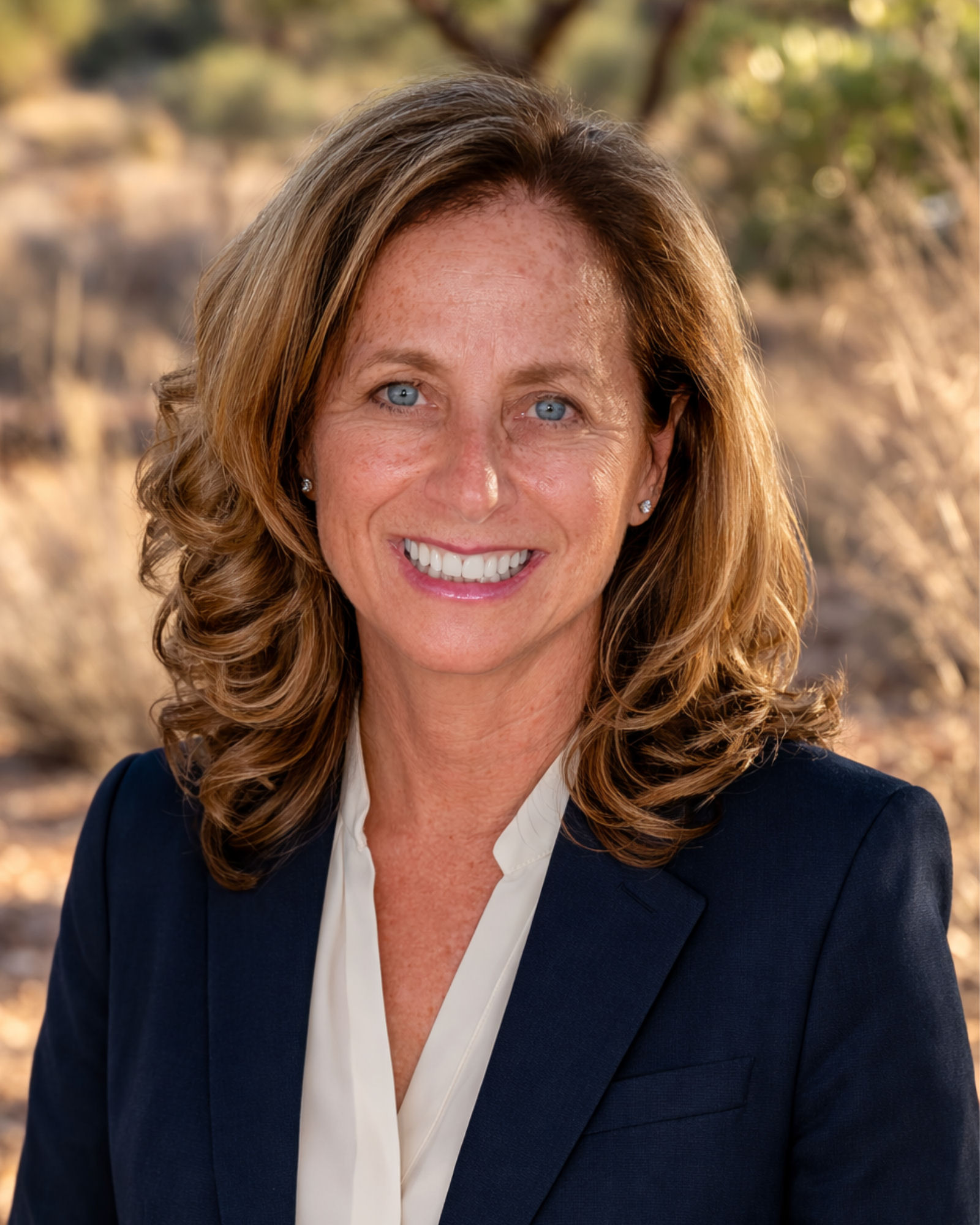
With Arizona’s newly elected legislative majority, we finally have an opportunity to restore Scottsdale’s ability to regulate short-term rentals (STRs), address neighborhood impacts, and protect residents. This is one of my top priorities, and I will continue working with a coalition of stakeholders to make it happen.
The state’s controversial SB 1350, which took effect in 2017, unleashed a largely unregulated industry into residential neighborhoods. The damage was swift. Regional data tracked the rapid conversion of long-term housing into vacation rentals, with Scottsdale alone seeing more than 5,000 homes converted to short-term rentals.
The consequences have been significant: higher rents, rising home prices, fewer families, declining enrollment in neighborhood schools, and increased demands on city services—with costs falling on local taxpayers, not STR operators. STRs have also increased demands on Scottsdale police, who responded to 665 calls for service at STRs during the first seven months of 2026.
Rather than vibrant communities, residents find themselves living among a revolving stream of short-term guests while their beautifully designed midcentury modern neighborhoods are drastically altered by remodels aimed at maximizing guest capacity.
During my time on the Scottsdale City Council, we have fought hard to restore local control and reclaimed important enforcement authority. Whenever the Arizona Legislature granted cities an additional enforcement tool, Scottsdale promptly updated its ordinances and put those tools to work protecting residents. Unfortunately, legislative leaders repeatedly blocked efforts to meaningfully restore local control.
With a new legislative majority in 2027, there is an opportunity to turn the page.
Restoring local control would allow Scottsdale to levy registration fees and violation fines to cover administration and enforcement, taking the financial burden off residents. Cities also need authority to limit overnight occupancy to two adults per bedroom and establish meaningful “Three Strikes, You’re Out” policies that hold operators accountable for their guests.
Arizona cannot solve its housing crisis while thousands of homes operate as unregulated hotels. Reasonable local control over short-term rentals is a practical, balanced solution that supports housing affordability, neighborhood stability, and economic fairness.
I look forward to working with state and local leaders to establish common-sense regulations, and I’m confident we can get this done for communities across Arizona.
Solange Whitehead serves on the Scottsdale City Council.
The unfinished work of social needs data

Collecting data on social drivers of health, such as patients’ access to affordable housing or healthy food, is no longer the formidable task it was even a few years ago. Today, the challenge is turning that data into action.
For example, data from Medicaid patients across my home state of Arizona presents a clear view of how social drivers of health affect access to care and health outcomes:
- There’s an urgent need for affordable, stable housing, and one emergency shelter is extending its maximum length of stay in response. Nationwide, housing instability is linked to mental health and physical health challenges, from stress and anxiety to exacerbation of existing mental health conditions.
- More than 1.1 million Arizonans struggle with food insecurity, including 1 in 5 children. According to the Arizona Food Bank, the proportion of Arizonans at risk of hunger increased 20% over the past year as enrollment in the Supplemental Nutrition Assistance Program (SNAP) decreased due to funding cuts.
- Meanwhile, tribal communities have routinely struggled to access a vital resource many of us take for granted: running water.
Arizona already has the infrastructure to turn this data into coordinated action and to measure whether a gap actually closed. What is missing is a shared commitment across agencies to use it.
Documentation is only the first step
Medicaid serves the people with the most complex medical, behavioral and social needs. The organizations that respond — from healthcare and public health agencies to community service and faith-based groups — too often run in separate lanes. They have become good at identifying health-related social needs through one-on-one conversations, community health needs surveys and other tools, but that information usually stays siloed within each organization.
For example, a caseworker may learn that a new mother cannot get to her newborn’s medical appointments because she lacks reliable transportation. Unless that caseworker uses the state’s closed-loop referral system, CommunityCares, to document the need and search for an available resource, she might not know that a nearby faith-based organization offers transportation assistance. And unless that referral is made electronically in this shared system, it will be impossible to track whether the mother actually uses the resource. That’s a missed opportunity for assistance that could have near- and long-term implications for the infant’s health.
Documented this way, each referral does more than help one family. Over time, the same records show where needs cluster and which responses work, so the system improves for the next person.
There is power in a big-picture view
The right data infrastructure closes the loop for social needs support instead of stalling after an assessment. In Arizona, when organizations lean into the state’s health information exchange and closed-loop referral system, both statewide services provided by Contexture, to respond to Medicaid members’ needs, we’re seeing improvements in health.
For example, data captured across entities pointed to the need for food assistance for Arizona’s most vulnerable populations. With this information, Mercy Care and Activate Food Arizona launched the Farm Express Mobile Food Program, which brings healthy food directly to the neighborhoods that need it most. To date, more than 100,000 Arizona residents have used Farm Express.
In tribal communities, the risk of going without reliable running water prompted Mercy Care and Fundamental Needs to respond. Together, these organizations equipped communities with water tanks, solar-powered pumps, heaters and graywater gardens. This sustainable solution helps residents reclaim their autonomy.
A more modern way to connect the dots
The tools to determine where health-related social needs exist, make electronic referrals for assistance and confirm when help is received are already widely available. Now, health plans, providers, and community partners must build these steps into their daily work. The standard for progress should be whether we closed a need, not simply whether we recorded it. Only then can we drive substantial improvements in community health.
Tad Gary is CEO of Mercy Care, a managed care organization serving about 400,000 Medicaid and dual-eligible members in Arizona. He also serves on the board of Contexture, a nonprofit healthcare information and technology organization that provides Arizona’s statewide health information exchange.
Water advocates want more investment. The Legislature will be short on funds
Arizona and Trump administration clash over immigrant in-state tuition law
Key Points:
-
The Trump administration wants a federal judge to strike down a 2022 Arizona law allowing certain undocumented students to pay in-state tuition
-
Attorneys for the state argue that the federal government is overstepping its authority
-
More than 51% of Arizona residents voted in favor of the ballot measure authorizing the in-state tuition rate for “Dreamers”
PHOENIX — The Trump administration is asking a federal judge to reject arguments from Arizona state attorneys in support of a law allowing undocumented students to pay in-state tuition, arguing the state has no authority to override federal immigration policy.
In new court filings, Justice Department attorney Garrett Greene said Congress sets policy regarding tuition discounts for non-citizens and that states must comply.
At issue is Proposition 308, a voter-approved 2022 measure granting resident tuition to local high school graduates regardless of immigration status.
Federal prosecutors filed suit in August, pointing to a 1996 federal statute prohibiting states from granting resident tuition rates to undocumented immigrants unless the same benefit is offered to all U.S. citizens regardless of residence.
Because Prop 308 doesn’t extend resident rates to all out-of-state American citizens, federal lawyers contend the law must be voided.
Attorneys for the state presented fresh arguments Friday to U.S. District Court Judge Murray Snow, countering that the Justice Department’s position lacks both legal and logical foundation.
Assistant Attorney General Hayleigh Crawford argued that if federal law trumps the state measure, then the underlying 1996 federal statute the Justice Department cites is itself unconstitutional. She noted that the U.S. Constitution gives Congress “only certain enumerated powers.” Everything else, she added, is reserved for the states.
“Consequently, if no enumerated power authorizes Congress to pass a certain law, that law may not be enacted, even if it would not violate any of the express prohibitions in the Bill of Rights or elsewhere in the Constitution,” Crawford said.
The Department of Justice claims that when Arizona voters approved the 2022 ballot measure, they effectively nullified the federal law. And that, Greene said, represents “an injury to the United States.”
“A sovereign’s core interests include the power to create and enforce a legal code,” he told Snow in the federal government’s latest legal filing. “And a state that administers a program negating a federal statute within its borders nullifies that code.”
Greene said the 1996 law is clearly within the federal government’s power because it addresses immigration. “Congress’ power reaches the status and treatment of aliens, not just the entry and removal,” he said.
Greene also noted that the 1996 law specifically says it was designed “to remove the incentive for illegal immigration provided by the availability of public benefits.”
“A state that hands unlawfully present aliens the very benefit Congress withheld clearly interferes with immigration enforcement,” he told the judge. “Here, Congress itself expressly declared the state policy incompatible with federal law.”
Crawford counters that the 1996 law also had a stated purpose to “encourage self-sufficiency among immigrants, limit their dependence on public assistance, and prevent public benefits from serving as an incentive for illegal immigration.”
Prop 308, she argued, is designed to promote self-sufficiency by providing more affordable education to all Arizona residents, regardless of legal status.
“Indeed, it is hard to imagine a plausible explanation (for the federal case) given that Arizona’s law encourages self-sufficiency through education,” Crawford wrote.
And if nothing else, she said the federal government has not shown any obvious connection between Arizona offering lower college tuition rates and anyone’s decision to immigrate to the U.S. illegally.
“And regardless, Congress cannot define its own authority,” Crawford added.
More than 51% of Arizona voters approved Prop 308 in 2022.
The ballot measure followed a 2012 Obama administration decision to create the Deferred Action for Childhood Arrivals program. It allows people who arrived in this country illegally as children before 2007 — colloquially called “Dreamers” — to remain and even work if they meet certain criteria.
As a result, the Maricopa Community College system and, later, the Arizona Board of Regents agreed to let DACA recipients pay in-state tuition.
But the Arizona Supreme Court ruled in 2018 that Proposition 300, a 2006 ballot measure that denies various public benefits to those not legally in the country, precludes that option — including any form of subsidized tuition. Prop 308 was crafted to create an exception.
Crawford argues that Congress, in enacting the 1996 law, acted illegally because it dictates to states “what a state legislature may and may not do.” And that, she told the judge, makes the federal law unenforceable — at least when it comes to trying to overturn the will of Arizona voters.
DACA still exists, and U.S. Citizenship and Immigration Services is accepting initial applications. But the agency isn’t acting on them, with the program’s legality tied up in federal court.
No date has been set for a hearing on the bid to void the Arizona law.
Arizona’s Hispanic patients cannot afford loopholes in private equity oversight
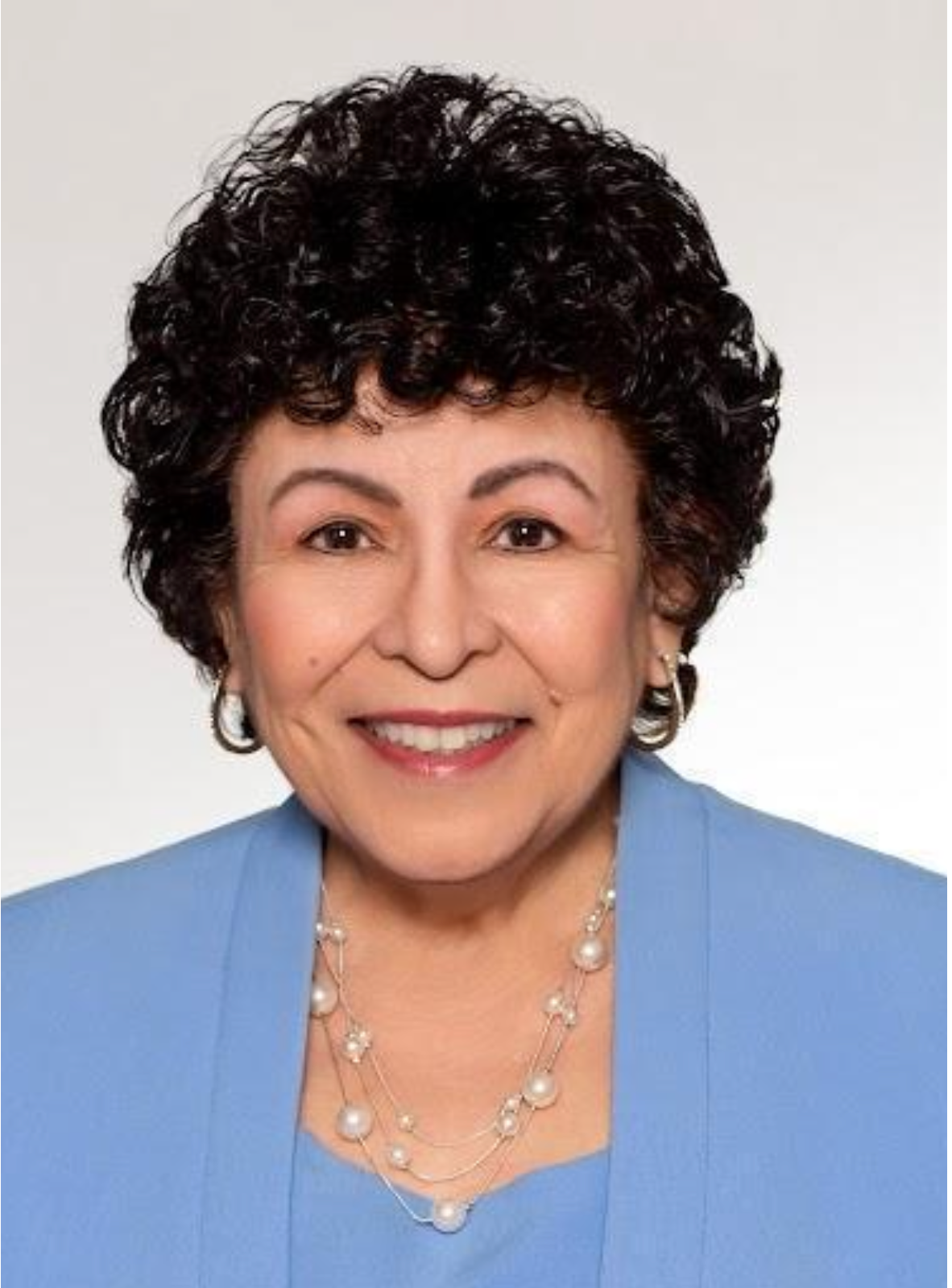
Almost four years ago, a 2-year-old in Yuma, Arizona, died after dentists performed root canals and put crowns on six baby teeth. The parents sued, arguing the procedures weren’t done because their son needed them, but because the company that owned the dental practice overtreated patients to maximize profits.
You would think this tragedy would have sparked change. But it’s still happening in Arizona and across the country, affecting hospitals, nursing homes, dental practices and more, and driven by private equity firms on Wall Street.
With voters handing Democrats in Arizona and across the country a decisive victory in this month’s midterm elections, the party has a mandate and responsibility to take on Wall Street abuses in health care.
The Stop Corporate Takeovers of Physicians Act, introduced by Senator Warren, is an important starting point, but it exempts most hospitals, allowing private equity to keep wreaking havoc.
Democrats should use their new majorities to close that loophole, not settle for legislation that leaves Wall Street with more than a foothold on patient care.
For example, an infusion of private equity capital changed how Steward Health Care’s four Arizona hospitals operated, putting profit maximization front and center, which pushed more patients through emergency departments and increased patient deaths.
This is playing out all over the country.
Wall Street firms, including private equity, are buying up healthcare practices and maximizing profit by any means necessary. In 2024, the AFL-CIO wrote a letter to Senators asking them to do something about consolidation and Wall Street’s role in healthcare.
Since then? Wall Street has only moved faster, logging over 1,000 deals to buy out, acquire, or invest in healthcare practices and offices in 2025 alone.
Arizona is no stranger to this phenomenon. Arizona has the fifth-highest share of hospitals owned by Wall Street, at about 17% of all private hospitals in the state.
The impact of this ownership “model” is serious: Wall Street is notorious for overworking hospital staff, abruptly closing failed assets, and laying people off.
For patients, things look even worse. Patients are more likely to die from inpatient surgeries at Wall Street-owned hospitals than at others.
This is especially concerning for Arizona’s Hispanic community, who make up one-third of the state’s population and already suffer higher health care barriers compared to their white counterparts.
At the National Hispanic Health Foundation (NHHF), we fight to make quality healthcare affordable and accessible to Hispanic families, and the barriers are real. Hispanic adults are 70% more likely to be diagnosed with diabetes, a condition that requires consistent, affordable care and medication to manage. When our elders need long-term care, they are more likely to end up in underperforming nursing homes with inadequate care and insufficient staffing.
NHHF has also spoken out about Hispanic communities’ need for affordable prescriptions and has applauded federal efforts to improve transparency and accountability. But at the state level, lawmakers have been looking at the wrong solutions.
A survey of Arizona seniors by the Alliance for Retired Americans found that only a small number find it very difficult to access or afford their prescription medications. Yet, some states’ solutions will reduce access, rather than expand it. Arkansas and Tennessee have taken steps to force the closure of pharmacies that are part of “vertically integrated” businesses. Thankfully, Arizona has avoided following in their footsteps. Any public policies that decrease access to key medicines should be rejected.
Meanwhile, private equity hospitals aren’t getting enough attention.
Prescription drugs make up only 9% of healthcare spending, while hospitals and physician services account for over 50%. What’s more, hospitals account for 40% of the growth in health care spending, and rather than making patients healthier and safer, it’s padding Wall Street’s pockets.
Arizona is no stranger to the gut jobs private equity firms put hospitals through. In 2024, the AZ Health Department ordered St. Luke’s Behavioral Hospital, owned by Steward Health Care, to shut down operations immediately after multiple violations, including broken air conditioning that left parts of the hospital as hot as 99 degrees.
Even though a Wall Street firm had sold Steward Health Care in 2020, their asset-extraction business model left its Arizona hospitals in dire straits. So much so that Attorney General Kris Mayes opened an investigation into Steward and its private equity ties.
Targeting Wall Street companies that treat hospital ownership as an “asset” only benefits Arizona’s patients, workers, and our health system. It can even save lives.
Arizonans and Americans across the country are looking to Democrats to lower costs, improve health care, and save lives. By regulating Wall Street’s involvement in health care, including hospitals, Senators Warren, Kelly, Gallego, and others can do just that.
Dr. Elena Rios, MD, MSPH, MACP, is president of the National Hispanic Health Foundation, a leading national organization dedicated to transforming the healthcare system through leadership, research, and education to improve Hispanic health.