Sign In
 Free Newsletter

State Senate approves immigration checks in Arizona hospitals
Howard Fischer, Capitol Media Services//February 11, 2026//
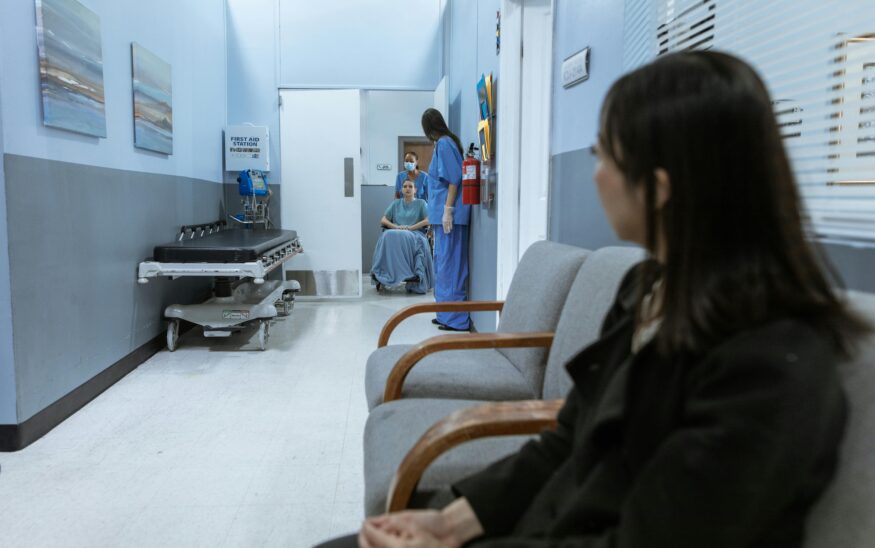
(RDNE stock project / Pexels)
State Senate approves immigration checks in Arizona hospitals
Howard Fischer, Capitol Media Services//February 11, 2026//


Key Points:
-
Arizona state Senate approves measure requiring hospitals to ask patients about immigration status
-
Senator Wendy Rogers’ bill makes answering the question optional
-
Opponents argue the bill may deter undocumented immigrants from seeking medical care
Saying the public deserves to know, the state Senate has approved a measure requiring hospitals that receive public money to ask patients whether they are in the country legally.
Strictly speaking, the proposal by Sen. Wendy Rogers, approved on a 16-13 party-line vote, would not deny care to anyone. The Flagstaff Republican said her SB1051 makes answering the question on the patient admission form optional.
There would be a statement on the form saying that the answer will not affect the patient’s care and that the response will not be reported to immigration authorities.
That provision did not impress Sen. Analise Ortiz.
“Right now we know that no personal information is safe from being given over to ICE who is killing people in the streets, including United States citizens,” said the Phoenix Democrat.
Federal Medicaid officials already have agreed to provide Immigration and Customs Enforcement with information about the identity and location of “aliens” in this country. And ICE is accessing data from the IRS and the Social Security Administration.
But whether risk exists or not, Democrats contend that simply asking the question could lead people to avoid necessary medical care.
Worse yet, said Sen. Sally Ann Gonzales, is that by avoiding treatment for minor — and potentially contagious — diseases, they endanger everyone else. And the Tucson Democrat said that when a patient’s situation becomes dire, treatment will only cost more, because federal law prohibits hospitals from turning away patients who need emergency care.
The hour-long debate provoked heated accusations from both sides.
“This is about intimidation and terrorizing our communities,” said Sen. Lauren Kuby, D-Tempe.
Sen. Catherine Miranda, D-Laveen, called it “just mean.”
Rogers, however, said her measure is crafted simply to help attach a dollar-and-cents figure to at least part of the price tag associated with the medical care of illegal migrants. And she dismissed the claim that just asking the question will cause people to stay away.
“I cannot divine the intentions of fellow human beings,” Rogers said.
“This is an accountancy bill,” she said. “And what its downstream, subjective impact would be is anybody’s guess.”
She drew support from Sen. Jake Hoffman.
“This bill is about understanding the data around the financial burden of illegal aliens in this country, many of whom are dangerous,” said the Queen Creek Republican. Hoffman put the cost nationally at $150 billion, mainly divided up between having to educate the children of those not here legally and providing health care to migrants and their children.
And that, said Hoffman, is about more than just money.
“Hospital systems are burdened because of illegal aliens,” he said. “That means American citizens get a lower quality of care because of that burden,” Hoffman said, “including overcrowded emergency rooms.”
What SB 1051 provides, he said, is the information that constituents want.
“They want to know how much of their hard-earned tax dollars is going to support illegal aliens utilizing and bogging down our hospital system,” he said.
Miranda said the flaw in all that is the belief that such reporting eventually will lead to savings.
“Different ailments are at different levels,” she said.
“If our undocumented population is afraid to go to emergency or the hospitals, then those ailments go to a higher level of concern, which will cost our state money,” Miranda said. “So I’m concerned, first and foremost, about the rising cost of people in fear and not going to the hospital.”
And Kuby said the concerns about the costs of providing care are offset by a study showing that those who are not here legally are paying federal, state and local taxes to the tune of $100 billion a year, which they won’t be eligible to get back in benefits.
Gonzales noted those numbers.
“Instead of asking for reporting and the immigration status, we should be asking the federal government and using that money to provide health care for anybody,” she said. And Gonzales said she also sees the whole issue on a more personal level.
“It’s only going to profile people who look like me,” she said.
Senate Minority Leader Priya Sundareshan, D-Tucson, said that if Hoffman and Republicans are looking for reasons why hospitals are facing financial strain, they should look no further than HR 1, the massive package passed by Congress — with only GOP votes — which cuts funding for Medicaid, which so many hospitals rely on to remain open.
Rogers’ measure, which now goes to the House, faces an uncertain future at best.
Gov. Katie Hobbs vetoed a nearly identical measure last year. She said the legislation was opposed by business leaders, hospitals, and others “who understand that immigration enforcement is best left to federal law enforcement and not health care professionals.”