Sign In
Upcoming Event
 Free Newsletter

Pinal County residents could receive a $300 check if this measure passes
Howard Fischer, Capitol Media Services//March 10, 2026//
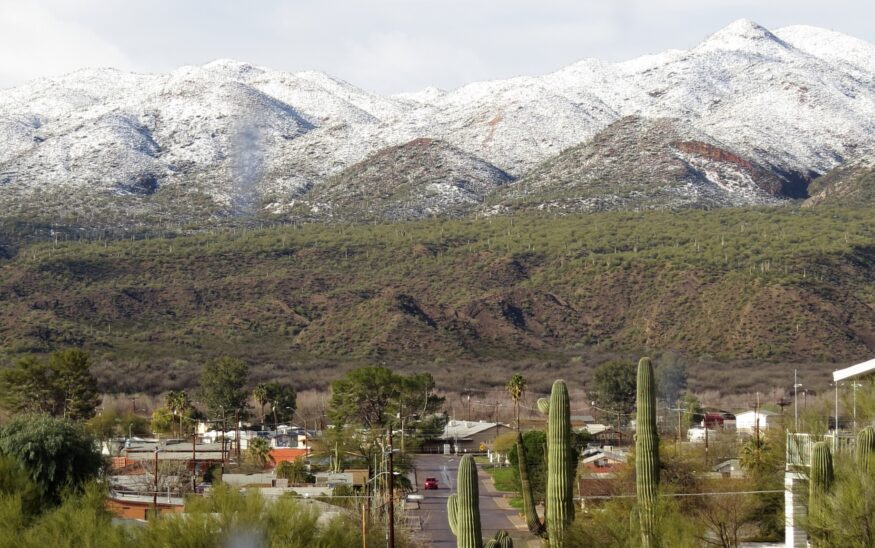
In the heart of the desert, Pinal County is home to scenic views, rugged independence and a storied history of rural living. (Photo courtesy of Pinal County via Facebook)
Pinal County residents could receive a $300 check if this measure passes
Howard Fischer, Capitol Media Services//March 10, 2026//


Key Points:
-
Pinal County residents may get $300 check from state
-
Senate Finance Committee votes to divide up sales tax funds
-
Eligible residents may receive $300 checks starting October 15, 2027
Pinal County taxpayers could get a $300 check from the state.
The Senate Finance Committee voted 3-2 late Monday to divide up what’s left of an illegally imposed sales tax to residents of Pinal County. The measure, known formally as HB 2273, has already been approved by the House and now goes to the full Senate for a vote.
Rep. Teresa Martinez, the legislation’s creator, said the measure still falls a little short of satisfactory for her.
The Casa Grande Republican would instead prefer the $45 million to $50 million tax remainder to go for its intended purpose: road construction and improvement in the county.
Moreover, her HB 2106 would have done exactly that if it was not defeated last week in the House. That leaves Martinez, for the moment, with only HB 2273 remaining.
All this goes back to 2017 when Pinal County voters approved Propositions 416 and 417. The first was a regional transportation plan; the second was a sales tax to pay for it.
Voters approved both.
But there was a legal challenge to the half-cent sales tax based on the fact that it applied only to the first $10,000 of anything purchased, with no additional levy for anything above that. And the Arizona Supreme Court in 2022 voided the tax, calling the two-tiered system illegal.
Under normal circumstances, that requires a refund of the more than $80 million collected to those who paid the taxes.
What’s significant is that Arizona does not have a “sales tax” which is owed by the buyer.
Instead, it has a “transaction privilege tax,” owed by the merchant. And that required the state to offer refunds not to the purchasers — to whom the cost likely was passed on — but to the businesses that collected it between April 2018 and March 2022.
The deadline for businesses to seek refunds from the state Department of Revenue is this coming month.
But Martinez said that many businesses have not sought their share. She said some may have decided the hassle isn’t worth the money while other firms may just not be around anymore.
And that leaves somewhere between that $45 and $50 million unrefunded and sitting in the state treasury.
So the legislation now awaiting action by the full Senate says that anyone whose primary residence was in Pinal County in 2018 through 2024 and who files an income tax return in 2026 is entitled to get a $300 check. And if the taxpayer is dead, the money would go to a surviving spouse or the estate.
Not everyone is happy with the plan.
“It wasn’t going to someone taking a vacation to Hawaii,” said Sen. Vince Leach of the money that was collected. “It wasn’t going to send their kids to day camp for five weeks.”
And he said that’s why people voted for the levy
“Anybody that’s been in Pinal County lately, you will know, and you will admit, that we still have a road problem,” said Leach, a Republican who, while he has a Tucson mailing address, lives in southern Pinal County.
That’s also the assessment of Florence Mayor Keith Eaton.
“We continue to have, as the senator alluded to, tremendous transportation needs.” And Eaton, who also serves on the Pinal Regional Transportation Authority, said given the county’s location in central Arizona, the condition of its roads affect the state as a whole.
So he wants the remaining funds used for transportation projects in the county.
For the moment, that’s not an option with the defeat of Martinez’ original bill to do just that.
Leach said despite that there are ongoing discussions to try to find a way to resurrect that plan.
But he said that, for the moment, this is the only one on the table. And that, said Leach, means he has to support it to keep the issue alive — and ensure that Pinal residents get something.
“One in the hand is worth two in the bush,” he said.
That’s also been the position of Martinez.
Still, even if the rebate is ultimately what becomes law, eligible residents shouldn’t stand by the mailbox waiting for a check.
The legislation says the earliest the funds can go out is Oct. 15, 2027, with all the dollars distributed within a month after that.