Sign In



 Free Newsletter
Arizona grapples with school closures amid K-12 enrollment decline
Jakob Thorington, Arizona Capitol Times//October 20, 2026//

Copper Ridge K-8 is one of two Scottsdale schools that will be closing at the end of the 2026-2027 school year as a result of declining student enrollment (Jakob Thorington/Arizona Capitol Times).
Copper Ridge K-8 is one of two Scottsdale schools that will be closing at the end of the 2026-2027 school year as a result of declining student enrollment (Jakob Thorington/Arizona Capitol Times).
Arizona grapples with school closures amid K-12 enrollment decline
Jakob Thorington, Arizona Capitol Times//October 20, 2026//


Key points:
-
Arizona’s public schools have lost tens of thousands of students since 2016, as declining birth rates, an aging population and rising housing costs reshape school enrollment.
-
Scottsdale Unified School District will close two schools after years of enrollment losses, raising parents’ concerns about the future of neighborhood schools.
-
State policymakers disagree over how much funding, school choice policies and district planning contribute to the closures — and what the state should do to address them.
 Editor’s Note: With K-12 enrollment declining across the country, State Affairs is examining how states are responding to shrinking student populations — and who is bearing the cost. This is part of an ongoing series, “The New School Math,” that digs into the numbers, the causes and the policy responses.
SCOTTSDALE — For April Beauboeuf, a Scottsdale parent, the latest round of school closures in her district raises a worrying question: Will her 11-year-old son’s school be next?
Scottsdale Unified School District’s governing board voted Oct. 6 to close Copper Ridge K-8 and Laguna Prep at the end of the 2026-27 academic year, affecting about 900 students. The decision follows years of declining enrollment in a district that has already considered closing other campuses, including the elementary school Beauboeuf’s son attends.
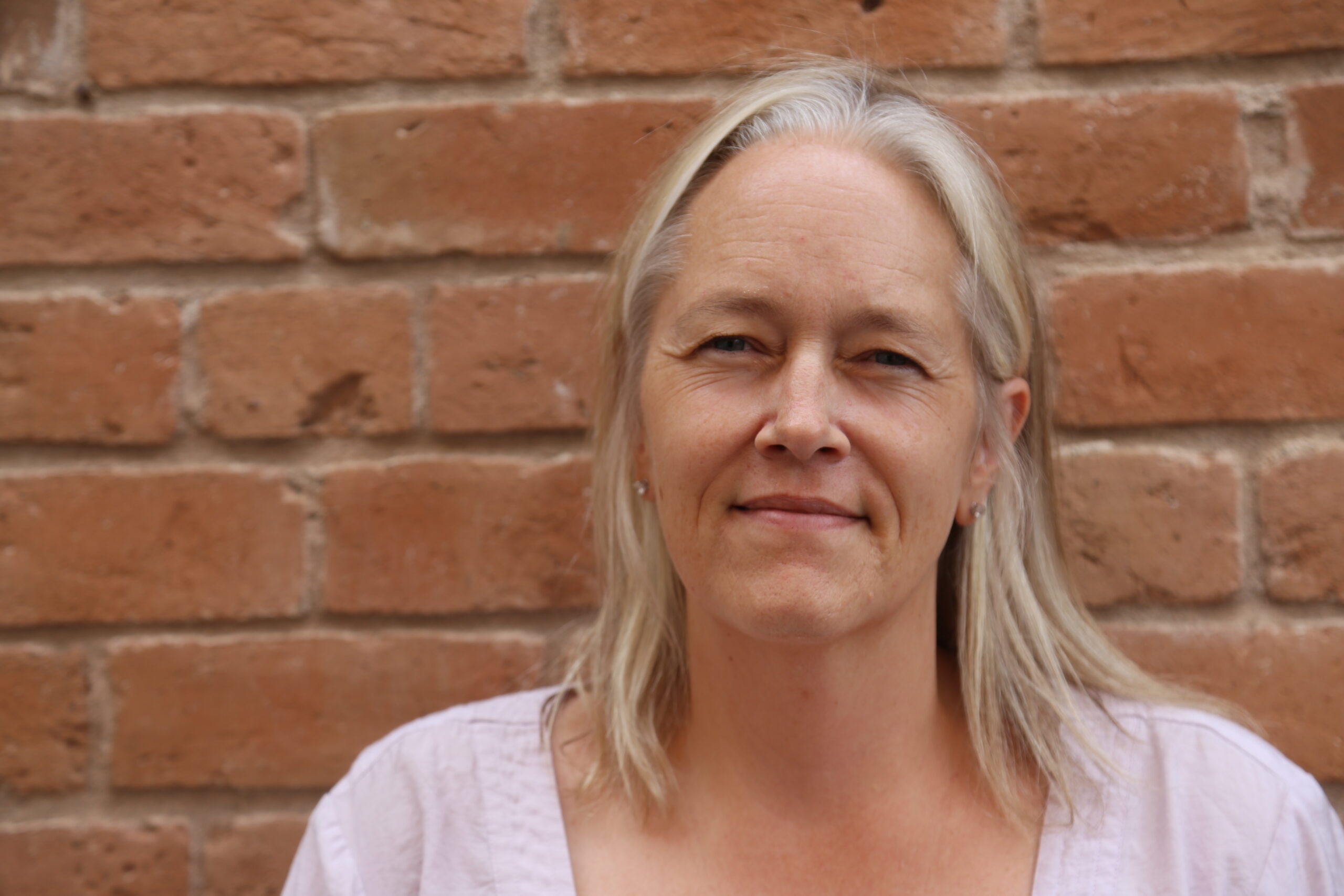
“I’m very worried they’re going to be back at this table in two years,” Beauboeuf told the Arizona Capitol Times. “Given the demographics in North Scottsdale, I’m very worried.”
The closures reflect a broader challenge for Arizona’s public schools, which have lost tens of thousands of students over the last decade. Declining birth rates, an aging population and rising housing costs are leaving some districts with fewer school-age children and increasingly underused buildings.
As enrollment shrinks, state and local policymakers face difficult questions about how to fund schools, manage excess capacity and preserve access to neighborhood campuses — with competing views on the role of school choice and state education spending.
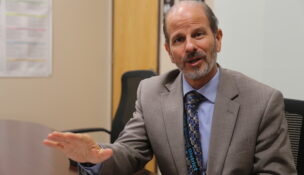
Scottsdale Unified has seen an average annual enrollment decline of 2% since 2010, or about 6,000 students, according to Superintendent Scott Menzel.
That’s enough students to fill 10 elementary schools with a higher head count than most others in the district, Menzel said.
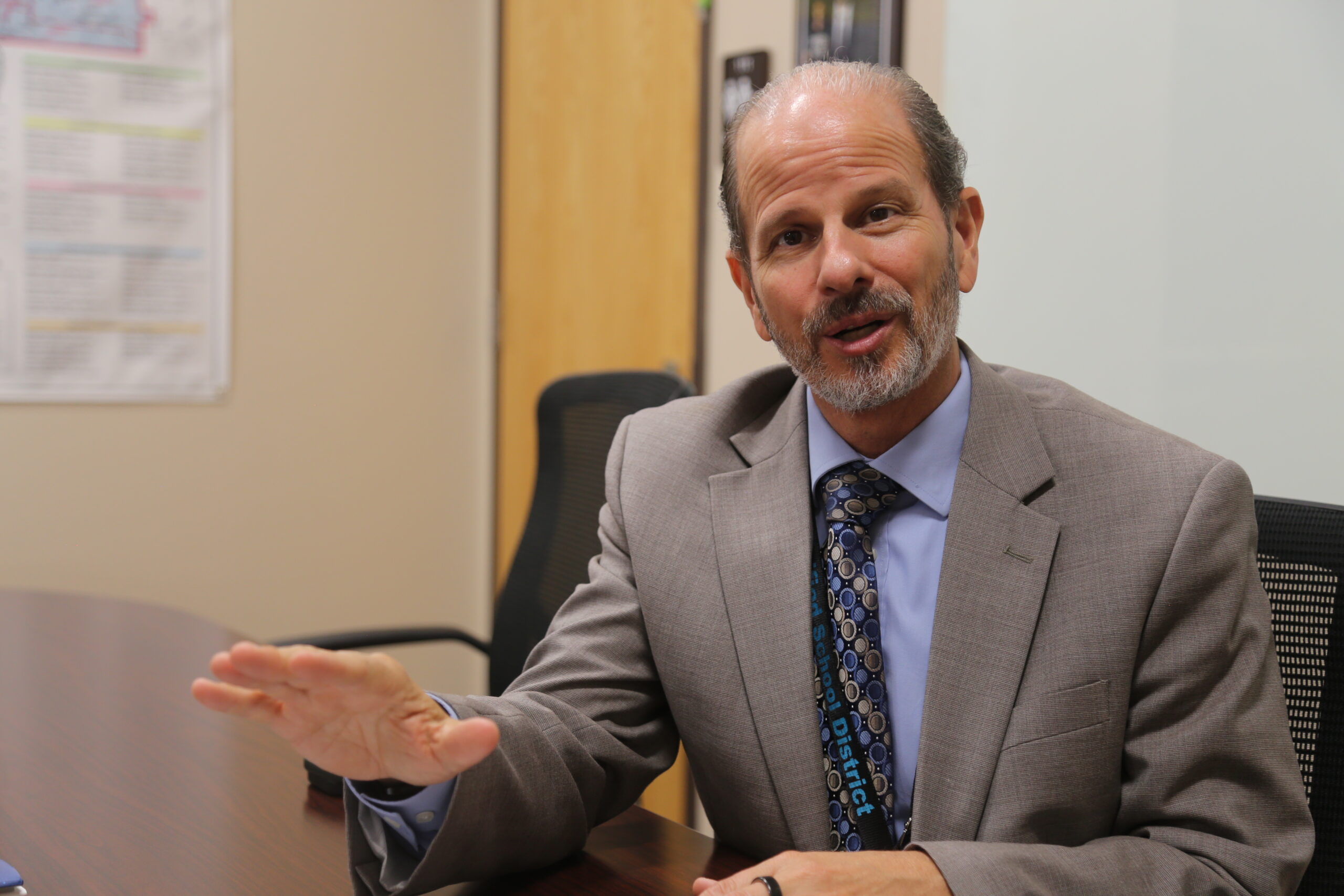
Copper Ridge, for example, was built to hold about 1,500 students but now serves fewer than 400 spanning nine grade levels. Menzel said most of the district’s enrollment decline stems from fewer new parents with school-age children living within the district’s boundaries.
“You have a lot of people who no longer have school-aged children living in communities that once were full,” Menzel said. “The price of housing in Scottsdale continues to go up pretty significantly, so you price many young families out of the market.”
The average home value in Scottsdale exceeded $850,000 in September, according to real estate technology and marketplace company Zillow. The state average was about half that, at about $416,000.
Arizona’s aging population
It’s not just Scottsdale. Arizona public school enrollment has dropped by more than 54,000 students since 2016, according to enrollment data from the Arizona Department of Education through 2025-26. The department has not yet published enrollment data for the current school year.
The decline is especially pronounced among the state’s youngest students. Kindergarten enrollment is down 16% from 2016, when just under 80,000 students were enrolled in public schools, to about 67,000 in the most recent school year.
Arizona State University’s Morrison Institute for Public Policy attributes the decline largely to a drop in the state’s birth rate. Arizona births declined 36% from 2007-2022, the second-largest drop among all states, trailing only Utah.
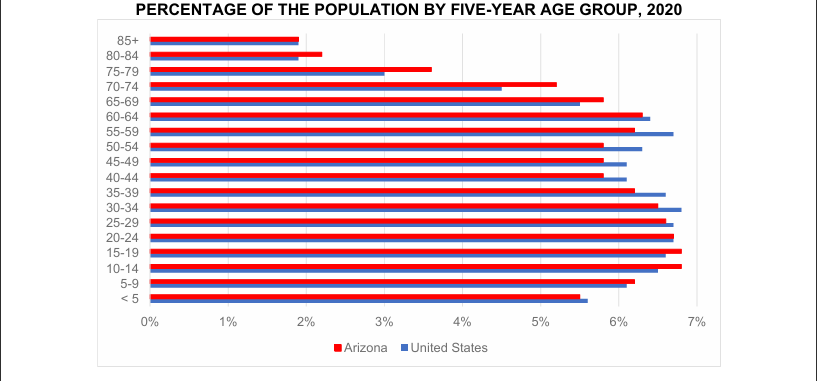
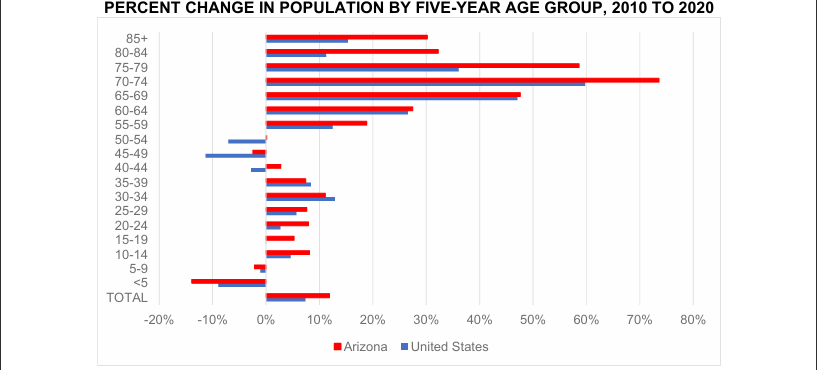
A 2023 report from ASU’s W.P. Carey School of Business, which analyzed U.S. Census data, found that Arizona’s median age increased the most between 2010 and 2020, tied for the highest in the country. Arizona also saw much higher percentage changes in population groups older than 70 than the country over the last decade, according to Census and U.S. Department of Commerce data the business school analyzed.
This is not just an Arizona trend. Nationally, public schools have about 1 million fewer students than a decade ago, a nearly 2% decline since 2014, according to the National Center for Education Statistics.
Alison Cook-Davis, the research director of the Morrison Institute, said several factors have contributed to declining birth rates, including economic factors that delay household formation and decreases in teenage birth rates.
“We’re seeing more [school closures] in older neighborhoods,” Cook-Davis said. “Older neighborhoods have folks that are older. They have already grown their children, and their children are forming their own households, but not necessarily coming back to those older neighborhoods because sometimes the cost is too high.”
In 2025, 22 schools in Arizona closed in districts that all experienced enrollment decline, according to the Common Sense Institute’s school closure tracker. Most of the schools were in districts in the Phoenix metropolitan area.
Beauboeuf said she’s worried the north Scottsdale area may become less attractive to young families as more schools close.
“We are a desert of public schools,” Beauboeuf said. “With Copper Ridge closing down, Desert Canyon is the last rampart in North Scottsdale … I just feel like we’re not doing ourselves any favors by closing schools.”
Can policy address the issue?
School closures have become an issue in the state’s midterm elections. The candidates running for Arizona superintendent of public instruction, Republican Kimberly Yee and Democrat Teresa Leyba Ruiz, have different takes on the problem.
During a Sept. 15 Citizens Clean Elections debate, Ruiz said she was saddened to see the South Phoenix V.H. Lassen Academy of Science and Nutrition in the Roosevelt Elementary School District close in 2025. Ruiz attended the school and credited it for helping her raise her.
Ruiz argued that state policymakers aren’t doing enough to prevent school closures. She blamed the state’s more than $1 billion in funding for the Empowerment Scholarship Account program, which more than 100,000 families use, and its 49th-place ranking on the National Education Association’s per-student spending list. Arizona spends $11,987 per student, while the national average is $17,250.
“When schools close, it is not only devastating to communities and families; it also causes overcrowding in other classrooms,” Ruiz said. “The solution is very simple. Arizona cannot be last in the nation in per-pupil funding.”
During the debate, Yee acknowledged that older communities and a decline in school-aged children drive school closures, and that the cost of living has become a barrier for younger families to move into these areas.
Yee said school districts could do more to address enrollment issues and that some districts have overbuilt infrastructure instead of using district money in the classroom. She said the issue is a priority for her.
“We do need to have some long-term plan on how to ensure school closures are not happening as rapidly as we see them today,” Yee said. “There has to be a solution.”
House Education Committee Chairman Rep. Matt Gress, R-Phoenix, said the state could consider a commission to decide whether to consolidate school districts through a public stakeholder process. He said he hasn’t decided yet whether he supports the idea and wants to discuss it further with his colleagues next session.
“There’s a lot of emotion and feelings, rightfully so, built into these schools,” Gress said. “Having more of a statewide perspective could be what we need to help appropriately size districts so that they can be the most efficient and effective in delivering educational programming.”
ESA’s impact
Arizona’s ESA program expanded in 2022 to allow all parents to receive state funding for any public, charter or private school of their choice. The program also covers other educational expenses and tutoring costs.
About 12,000 students were enrolled in ESAs the year before universal eligibility, and the program has since expanded to about 100,000. In 2025, the public policy research organization RAND determined that about 7% of Arizona’s school-age population enrolled in the ESA program.
The most recent Department of Education quarterly report states that nearly 60% of new universal ESA students came from public schools, a slightly higher share than the prior year. It’s also up 12% from 2024 and 38% from the first year of universal expansion in 2023.
Cook-Davis said the department’s ESA reports suggest some movement from parents switching from public schools to charter districts or private schools. The Morrison Institute’s report recommended that districts use a data-informed, transparent decision-making process to help maintain community trust in school closure decisions.