Sign In



 Free Newsletter
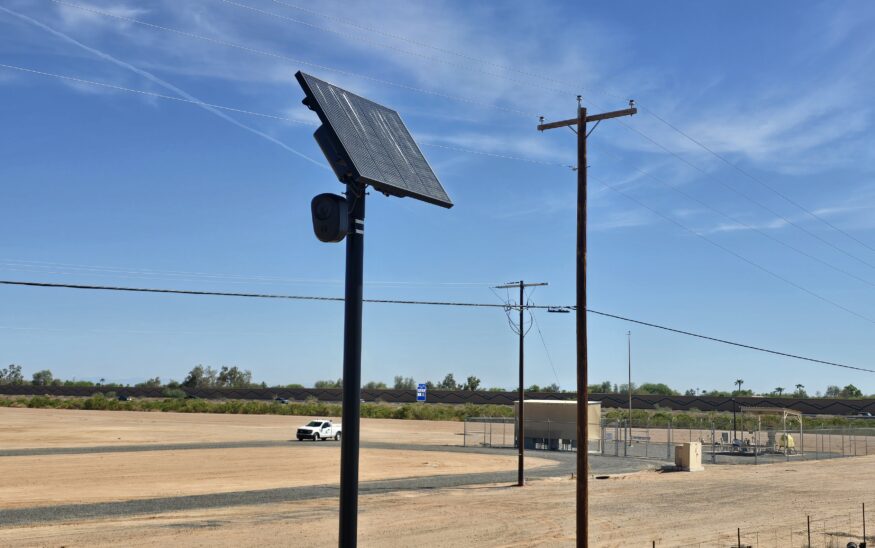


Flock Safety, the leading automated license plate reader camera company at the center of a growing firestorm over privacy, says it is expecting an onslaught of bills in 2027 to regulate the technology — and agrees that further guardrails are needed.
Andrea Korb, Flock’s senior director of policy, said on a webinar hosted by the libertarian-leaning R Street Institute that the company supports “strong legislation state by state” to regulate the cameras.
“There is a lot of fear and concern about this technology right now and we want people to know … your legislature has looked at this and here are the safeguards that have been put in place,” Korb said.
The proliferation of artificial intelligence-powered cameras that capture license plates and vehicles for law enforcement purposes sparked an outcry from the public earlier this year. Flock reportedly has deployed more than 120,000 cameras across 49 states.
A Flock spokesperson did not immediately respond to a request for comment.
About half of states have laws governing automated license plate readers, known as ALPRs, with at least six new laws enacted this year. More bills and proposals to strengthen existing statutes are expected to be introduced in 2027.
“We’re going to see bills everywhere,” Korb said. “I mean this is a hot, hot topic.”
“Legislators are very interested in this,” she added. “Even states that have just passed a very robust law, I’m hearing legislators saying, ‘I’m going to run a bill.’”
The impending legislative blitz comes amid growing alarm about mass surveillance, personal privacy and police misuse of camera technologies. The backlash over the pole-mounted cameras intensified in recent months and quickly became a midterm campaign issue.
The Washington Post published an investigation in August identifying at least 50 instances of police officers inappropriately accessing Flock camera databases.
U.S. Sen. Josh Hawley, R-Mo., held a subcommittee hearing on ALPRs in September, inviting the CEOs of Flock, Axon, Motorola Solutions and Verkada to testify.
A federal judge in Oklahoma suppressed evidence from an ALPR search last month, saying it amounted to a warrantless search and deeming the camera networks “a type of indiscriminate mass surveillance.”
Outrage over the cameras has spawned a DeFlock movement and resulted in dozens of communities abandoning the cameras. Florida Gov. Ron DeSantis, a Republican, banned the cameras from state highways in August.
Read more: Bipartisan revolt against Flock cameras spreads across the states
Flock, which was valued at $8.3 billion in August, has spent at least $2 million on state and federal lobbying since last year and has lobbyists in at least 34 states, according to OpenSecrets.
During the webinar, Korb explained that Flock cameras capture vehicle license plates and characteristics such as make, model and color. Police can receive real-time alerts if a car connected to a crime is detected by a camera. Detectives can also proactively search the Flock database to assist in investigating crimes.
Korb said most images are never accessed, and images are deleted on a rolling basis. The company announced in August it was reducing its default data retention to seven days. Flock is also now proactively alerting police agencies to suspected misuse. By year’s end it will require officers to enter case numbers into their database searches.
But Korb said vendor changes are not enough and that laws are needed.
“There shouldn’t be unfettered access to all vehicles and all cameras for any reason,” Korb said. “That’s where we want to see strong regulations passed.”
Another webinar panelist, Ian Adams, a former police officer and criminology professor at the University of South Carolina who has studied the effectiveness of Flock cameras, said there should be limits on how many people within a police agency can access license plate reader data. He also urged third-party auditing of ALPR technology.
“We have old solutions to this new technology problem,” Adams said. “Third-party auditing, whether that be at the state, national or even nonprofit scale, there’s lots of opportunities there.”
A key point of contention during the webinar was whether state laws should require police to obtain search warrants to query the ALPR databases.
Emily Grimmius, a former prosecutor and privacy policy analyst at Utah-based, libertarian-leaning Libertas Institute, said audits are good for catching problems on the “back end.” But Grimmius said search warrant requirements could prevent civil rights harms on the “front end.”
She cited the case of a Florida woman who was falsely arrested and held for a fatal hit-and-run based on a Flock camera search.
“Our founders never could have imagined the technological world we live in today, and so we don’t have laws necessarily that are on point,” Grimmius said.
Grimmius is working on bipartisan legislation to update Utah’s existing restrictions on license plate readers. The bill, which is part of a broader package of privacy legislation for 2027, would require legislative or council approval before cameras are installed; warrants for searches except in exigent circumstances; regular audits and tougher penalties for misuse.
“It’s not to say that these tools are inherently evil or something like that, that’s not at all what we’re saying,” Grimmius said. “We’re saying when the government uses them, the government has to be careful how it uses ALPRs because of the risk.”
Flock’s Korb endorsed the third-party audit concept and noted it is already in place in Minnesota. Korb pushed back on the idea of a warrant requirement as “administratively burdensome” and said it would result in a “massive efficacy reduction.”
Grimmius countered that “sometimes this job should be difficult for law enforcement because due process is incredible.”
She also warned that license plate reading cameras are just the tip of the iceberg. She pointed to a technology dubbed SignalTrace that can capture and knit together signals from a variety of personal electronic devices to help police develop case leads.
“Don’t just play whack-a-mole in response to the technology we currently have,” Grimmius said. “Think about where it’s going and write laws … for that, because the law and technology do not move at the same pace.”