Sign In
 Free Newsletter

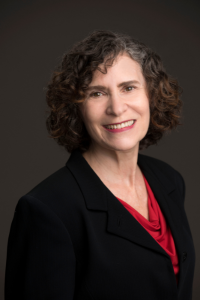
Cynthia Zwick runs the Residential Utility Consumer Office, a state agency that represents utility customers in rate cases at the Arizona Corporation Commission. She sat down with the Arizona Capitol Times to discuss her passion for consumer advocacy and her agency’s mission.
Can you tell me about how you started in your career and how you ended up at RUCO?
I moved to Arizona in 1980, which I think makes me a native now, and I began working for a company for a couple of years, and then started working at the State Bar of Arizona. I started there as a secretary in the continuing legal education department and then left as executive director. But when I left there, I was looking for a new challenge, a new opportunity, and ended up going over to the Arizona Community Action Association, which has now become Wildfire, to work on policy to end poverty in Arizona. Through that process, I started getting involved in energy issues, because we would intervene in the major rate cases on behalf of low income customers. So that’s where I really got to understand the impact of utility companies. I had a lot of great relationships with utility company staff and developed a number of programs for low income customers. When I started, there was one bill assistance program, one utility funded weatherization program. And when I left, pretty much all of the companies had programs in place, as well as discount programs for their customers. So, I was really intrigued by how the process works and with working collaboratively. When Governor Hobbs was elected, I heard that she was looking for someone to lead RUCO, and I thought, I might as well put my hat in and see what happens. I see this as a continuation of the work that I was doing at Wildfire, though on a much broader scale.
After spending so much time in the nonprofit advocacy space, what made you decide to move into government?
It was a new challenge and a new opportunity to learn more deeply about how rates are created, what the components of a rate case are, and really, better understand how we can be influential on behalf of a larger group of customers. Nobody likes to see their bills go up, so we want to make sure that the outcomes are fair and that they’re in the best interest of residential customers throughout the state. So that really just continues to be a driver. There’s a great team here, there are people that have worked here for many, many years. They’re experts at what they do, and so we’re really trying to capitalize on their expertise and then pay attention as well to this changing environment where there’s so much growth in the state. There’s all of these data centers and big manufacturing companies coming in. So how is that going to change the dynamic?
How did your background prepare you for this role and what couldn’t it have prepared you for?
Well, I think just being part of rate cases for so many years really prepared me for this role. I’ve learned a lot more since I’ve been here and taken on some different responsibilities as a result. There can be political components to the position that I don’t think I was prepared for. That’s probably naïve of me, but I’m not sure I was fully prepared for that. And at times, the rate cases can become more adversarial than they need to be, and I hadn’t been part of that because I was usually working in partnership with the utilities on proposals. And here it’s a little bit more adversarial because we don’t always walk in with an aligned position, so I’m not sure I was fully prepared for that difference. I knew we weren’t going to all be singing the same tune every single time, but I guess I was a little surprised by how often it can become more adversarial than I was expecting.
What does your role and the work of the office look like on a daily basis?
Utility companies are filing rate cases on a fairly regular basis. There are nine that we’re reviewing, and they’re thousands of pages. Our team literally reads all of that. Then, through either the team we have here or consultants that we bring in, we do a full analysis. It’s essentially a financial audit of the company. Our analysts go through all of the data and come up with a recommendation about whether (utilities) should recover what they’re asking for, and whether there are some adjustments that need to take place. So literally, every day, we’re reading rate cases, we’re evaluating the data that’s presented to us, and we’re making recommendations and creating testimony that gets filed in the docket, and then preparing for oral testimony when we go into a hearing. There is an interest among the commissioners to settle as many cases as possible, so we will participate in settlement discussions when it’s time to do that. The one other thing that we’re trying to do that’s a little bit different, perhaps, than some of my predecessors, is we’re really trying to better understand what the community is thinking about. So we’re reaching out to a lot of other nonprofits in the state to understand better what the issues are that their customers are facing, their clients are facing, their members are facing throughout the state and throughout the demographics of the population.
What do you wish the average utility customer knew about RUCO?
We’re fighting to keep rates affordable for them. Every day we’re fighting for the customers to keep rates affordable. That’s all we’re here for.
On the other hand, what would you like the commission or utility companies to know about RUCO?
We want reasonable outcomes that are in the best interest of customers, but also create a balance where we still can maintain healthy utilities. I do think there’s real value in being able to flip the switch in my house every day and the lights come on. There’s value in healthy utilities, but there has to be a balance between what the utilities are asking for and what’s fair to customers. We always want to work to achieve that balance, whatever that looks like. But our focus will always be on the residential customers in that equation.
What do you wish lawmakers knew about RUCO?
I wish they knew more just about the agency and the role that we play — the capacity that we have and the capacity that we need. When we’re fully staffed, we’re nine members. We’re up against utility companies that have pretty large budgets and large legal teams and a lot of analysts, and we have about a $1.5 million budget, so we don’t have very much redundancy, if any, in the office. And I wish they knew the return on investment for this organization is huge. But we need more capacity, and we need more staff with additional expertise. We don’t have an engineer in house to really evaluate some of the water company issues or pipeline issues. I don’t think people really understand the impact we have with the resources that are available to us. And at some point, with all of the cases that are coming through, we’re going to have to start deciding which ones we can get involved with and maybe limit our activity in some of them, because we just can’t keep up.
What would you recommend for someone who wants to understand the rate case process better?
I would recommend a couple of things. On our website, we have an explanation of how a rate case works, what the process is like. I would recommend sitting in on a couple of rate cases, at least portions of them. You can do it remotely. All of them are live streamed. Maybe read some of the testimony that’s actually being filed in the cases to better understand it. They can reach out to us. We’re happy to have a conversation with anybody who has an interest in this work, or what’s happening in a utility case. We’re happy to connect people with the utilities directly. The other thing I would really recommend is getting in touch with the commissioners directly. I’ve heard from several of them that they’re not hearing from the community at large, and I think it would be great if people have a question or a concern to raise it directly with the commissioner. Their doors are open; they’re willing to sit down and talk with members of the customer base, whoever they might be.
What is your outlook on the state of utility rates? Is it all doom and gloom, or are there positives to be found in these cases?
There are definitely some positives to be found. I think there’s some great programs that are being put forward that help customers pay their bills, whether they’re low income and they need access to some of the bill assistance or discount programs. There are energy efficiency programs in place which are great tools for people to manage their energy bills and energy consumption. Through some of these cases, we do impact them so that the rates aren’t going up quite as high as they might. So I think that’s a positive outcome. And I think, largely, the utility companies do care about their customers, and sometimes we lose sight of that. As I said, we don’t always agree on how these cases should fall out, but I do think there’s a genuine interest in providing safe, reliable service, and I think our utilities do that well, I really do. It’s not all doom and gloom. I do think we’re going to see prices continue to climb for a bit. And there’s a proposal out there shifting how rates are designed and implemented. We’re concerned about that because I do think that has the ability to see increases on a more regular basis. But we’re going to stay involved in those issues going forward, and hopefully, see some reasonable outcomes there as well.