Please ensure Javascript is enabled for purposes of website accessibility

Constitution Day and the power of states

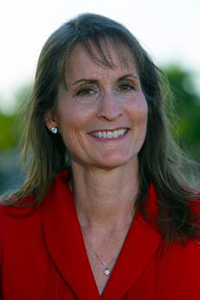
Lisa Fink

Every year on Sept. 17, we mark Constitution Day — an opportunity to reflect both on the genius of the document, but also on the system of government it established. All too often, our political attention is fixated solely on Washington — Congress, the president, the Supreme Court. However, the Framers never intended for all authority to flow from the nation’s capital. They not only instituted horizontal separation of powers (legislative, executive and judicial) but also vertical separation of powers (national, state and local,). This structure provided the states with the authority to be a barrier or check against federal overreach.

The Constitution created a national government with limited and enumerated powers. The Tenth Amendment is very clear, “The powers not delegated to the United States by the Constitution… are reserved to the States respectively, or to the people. As James Madison explained in Federalist 45: “The powers delegated by the proposed Constitution to the federal government are few and defined. Those which are to remain in the state governments are numerous and indefinite.”

The Framers’ design was deliberate because they understood that concentrated power often leads to abuse. Madison proclaimed that “State Legislatures (are) to be (the) sure guardians of the people’s liberty.” The states were to guard against federal encroachment, keeping decisions about schools, public safety and infrastructure close to the people most affected by them.

However, in recent decades, power has steadily drifted toward Washington D.C. Congress has passed sweeping mandates that reach deep into state affairs. Federal agencies have imposed regulations with little regard for local realities. And even the courts, intended to be neutral arbiters, have sometimes expanded federal reach rather than restraining it. The result is an erosion of the balance the Constitution sought to protect.

Restoring that balance is a passion of mine and will require that states reclaim their rightful role. Governors, legislatures, and local officials have both the constitutional authority and the civic duty to stand firm when federal laws and policies stray beyond their proper bounds. We’re not rejecting collaboration with Washington, but when we experience this overreach, we’re obliged to push back and return those decisions that belong closer to home.

It also means strengthening local sovereignty. When local leaders are empowered to govern effectively, they provide a powerful counterweight to centralized power.

There is, however, one challenge the Framers could not have anticipated: the flood of money into state politics from out-of-state and even international sources. Such spending distorts representation and weakens accountability. In the true spirit of the Constitution and federalism, if we are serious about re-centering power in the states, we must also ensure that state policy reflects the will of those who live there — not the priorities of distant donors.

Constitution Day is a reminder that America’s strength lies not in power concentrated in Washington, but in power shared among fifty states, thousands of communities and her citizens. Preserving that design is how we safeguard liberty for all— and how we keep faith with the Constitution.

Lisa Fink is a Republican Arizona representative for Legislative District 27.

ASU school with conservative backing touts broad civic education goals

When former Gov. Doug Ducey and the state Legislature directed Arizona State University to set up an academic department devoted to civic education almost a decade ago, Paul Carrese viewed the move as an unprecedented step toward expanding academic perspectives on campus.

Carrese was a professor at the U.S. Air Force Academy when ASU officials recruited him to become the founding director of the department, which became the School of Civic and Economic Thought and Leadership (SCETL).

Although the program still faces criticism for its alleged conservative bias, prompted by its inception by GOP legislation and initial funding from the Charles G. Koch Foundation of two centers at ASU that merged to form SCETL, Carrese and other faculty and students have credited the school with filling a gap in civic education at the university level while helping to spawn a larger movement of programs teaching similar principles.

“There were centers … at other state universities, private universities, (and) public universities, but there was no separate academic department mandated and funded in this way,” said Carrese, who stepped down as director in 2023 but remains a professor at the school. “So they did an unprecedented thing, and I think the record shows they were right.”

Launched in 2017, the school merged ASU’s Center for the Study of Economic Liberty and its Center for Political Thought and Leadership, with courses emphasizing the country’s political and constitutional history, political philosophies, economic thought, capitalism and free markets.

Class discussions follow the socratic method of teaching where professors ask probing questions to facilitate conversations and challenge ideas. The school also launched its “Civil Discourse” project, a speaker series featuring guests from different sides of the intellectual and political spectrum to discuss a variety of topics ranging from ideological conformity on campus to race, justice and leadership in America.

“We don’t bring in just conservative, intellectually conservative, constitutionalist speakers,” Carrese said. “We bring in a range of speakers, left and right and center. I do think people who would be seen as conservative … have come to campus because we’re around. So that’s bringing some intellectual diversity to campus.”

Some have questioned whether the school has actually promoted intellectual diversity or if it’s only pushing a singular viewpoint.

In 2018, former ASU faculty member Matthew Garcia, who served as director of the university’s School of Historical, Philosophical and Religious Studies, wrote an op-ed published in The Washington Post that criticized the process that led to the creation of the school and developing a program that would serve as an “alternative” to similar departments while maintaining a conservative bias.

Carrese acknowledged that the criticism still exists, although it’s not as intense as it was when the school opened.

“I think there might be some residual presence of the view back from 2016, 2017 that … SCETL is not legitimate. It’s a political project. It’s only for conservative thinking, it’s not for healthy intellectual discourse,” he said.

Carrese pointed to increased bipartisan support from lawmakers throughout the years, crediting Gov. Katie Hobbs, a Democrat, with continuing funding for the school when she took office. The school has also continued to add degree programs and one of its courses, American Institutions, meets ASU’s general studies requirement.

In addition, several universities across the country have launched similar schools in recent years, including the University of Texas at Austin School of Civic Leadership and the University of Florida Hamilton Center for Classical and Civic Education.

“I think that it really addresses one of the greatest needs in our society today,” said SCETL student Hannah Falvey.

Falvey is set to graduate in May with a bachelor’s degree of Civic and Economic Thought and Leadership, and received a certificate in philosophy, politics and economics. She credited SCETL with teaching her to respectfully debate and challenge ideas, which she says is a lost skill in society.

“I think if we don’t learn how to have these conversations again, what’s going to happen is … these questions won’t be asked and the conversations won’t be had,” she said.

Investment in civics education builds strong communities

Last month’s elections were full of good news. And that good news was the turnout. More Americans and more Arizonans voted than ever before. In our state, nearly 80% of...

Get 24/7 political news coverage and access to events honoring top political professionals

You don't have credit card details available. You will be redirected to update payment method page. Click OK to continue.