Please ensure Javascript is enabled for purposes of website accessibility

Federal probe examines debunked 2020 Arizona election audit

Key Points:
  • Federal grand jury subpoenas records from 2020 Arizona election audit
  • Senate President Warren Petersen complies with federal subpoena for audit records
  • Attorney General Kris Mayes calls the grand jury inquiry “weaponization”

A federal grand jury apparently is looking at the results of a long-ago-debunked “audit” of the 2020 Arizona election.

Senate President Warren Petersen said in a social media post on Monday that he “received and complied with” a federal grand jury subpoena for records related to the Senate audit of Maricopa County results following the 2020 election. That is a race where Joe Biden outpolled Donald Trump.

“The FBI has the records,” Petersen said.

He declined to comment further.

This comes just weeks after the FBI raided Fulton County, Ga. — another state where Trump lost in 2020 — seizing their election records from that year.

Both events come amid ongoing claims by Trump, who lost the 2020 election, that there was extensive fraud. And he has publicly urged his Department of Justice to investigate.

“Great!!!” the president posted on social media in response to the reports of the subpoena in Arizona.

There was no immediate response from the FBI.

But what Trump — or his agency — hopes to get out of it remains unclear.

In fact, Attorney General Mark Brnovich, a Republican, who reviewed what he got in 2022 from then-Senate President Karen Fann, found the report prepared by Cyber Ninjas as deeply flawed.

Brnovich for example, noted that the report claimed that 282 people who had allegedly died in early October 2020 cast ballots in the November general election.

“Our agents investigated all individuals that Cyber Ninjas reported as dead,” he said. “Many were very surprised to learn they were allegedly deceased.”

In fact, the attorney general said, only one of 282 listed voters on that report actually was deceased. The others were not only quite alive but also current voters.

But it wasn’t just what Cyber Ninjas had provided that Brnovich concluded was largely unfounded.

He said his agency’s Election Integrity Unit looked at the names of another 409 allegedly dead voters that came from other sources. And then investigators went through yet another report of 5,943 names, which made no distinction between dead voters and dead registrants.

“Once again, these claims were thoroughly investigated and resulted in only a handful of potential cases,” Brnovich told Fann.

“Some were so absurd the names and birth dates didn’t even match the deceased,” he reported. “And others included dates of death after the election.”

And Brnovich said while his agency has previously prosecuted other instances of dead people voting, even those cases “were ultimately determined to be isolated incidents.”

Of note is that the audit also included a hand count of the 2.1 million Maricopa County ballots. And it found that Biden actually outpolled Trump by an even larger margin than the official tally.

Responding to the reports of a grand jury subpoena, Kris Mayes, the current attorney general, cited the Brnovich investigation into the Cyber Ninjas report. And she said that complaints and allegations submitted to the AG’s office “were also unsupported by factual evidence.”

“Warren Petersen knows all this,” she said. “He has known it for years.”

Mayes also said that Petersen, who is running to be the GOP nominee for attorney general to take her on in November, has been “an unrepentant election denier.” She pointed to a rally he had after the election in 2020 claiming “we certified the vote prematurely.”

Petersen then co-chaired the oversight of the Cyber Ninjas inquiry with Fann.

Mayes also took a shot at the president, saying that what his administration appears to be pursuing is not a legitimate law enforcement inquiry.

“It is the weaponization of federal law enforcement in service of crackpots and lies,” she said.

The 2022 report by Brnovich was only one of several that concluded that Cyber Ninjas’ findings, which had never conducted an election audit before being hired by Fann, were misleading or outright wrong.

Other claims had since been debunked, including people voting duplicate ballots, machine-filled-in ballots, missing signatures on absentee ballots, and tallying machines linked to the internet.

For example, Doug Logan, CEO of Cyber Ninjas, claimed that the county logged 74,232 more early ballots than the number of requests sent out.

County spokesman Fields Moseley, whose staff worked with the county recorder to research the claims, said in response at the time, there were two problems with that.

First, he said the records show there were 2,364,426 requests for early ballots, with 1,918,024 returned.

“So the claim is not just wrong but completely wrong,” he said.

Aside from that, Moseley pointed out that there are two ways to vote early: with a mail-in ballot or going directly to one of the early voting locations. And in the latter case, people are handed ballots that are prepared there but lumped into the early ballot category.

“So it’s not unusual that we would have more early votes than mail-in ballots sent,” Moseley said.

There even was a lawsuit over a related issue of whether the tabulation machines were properly recording votes when ballots, which had been damaged or had extra marks, had to be redone by hand so they could be fed through counting machines.

In that case, Supreme Court Chief Justice Robert Brutinel said that a random check of 1,626 of these ballots, ordered by a trial court, found an error rate of as low as 0.37% or as high as 0.55%.

But the justice said that extrapolating that out to the 27,869 ballots that had to be duplicated to be able to be counted would have gained Donald Trump just 103 votes or, at best, 153 votes, “neither of which is sufficient to call the election results into question.”
The way out of our hyperbolic election cycle

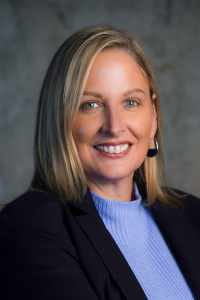
Since Donald Trump’s first election, American politics have shifted swiftly and disorientingly, amplifying divides and intensifying reactions to outcomes that, not so long ago, would have been met with acceptance and a resolve to do better next time. As someone who didn’t support Trump in either of his campaigns, I was devastated when he won in 2016. By 2024, however, I was less surprised. Pollsters had been predicting a razor-thin race, so I was braced for anything. My real dismay came as I witnessed the post-election reactions of young people in my life. Their messages reflected a profound sense of loss. They felt the stakes were existential – that democracy itself was at risk.

Kellie Walenciak

My response was to assure them it would be OK – and I believe it will be. But I also had to ask myself how we reached this point. How did elections come to feel like make-or-break moments for our democracy? Certainly, elections have always mattered, but with the rise of social media and 24/7 news, the stakes now seem to carry the weight of our collective future, leaving little room for resilience. Every victory or loss feels like an irreversible step toward progress or destruction.

Reflecting on this, I’ve had to confront my own role in creating a hyperbolic, binary view of politics – a mindset where one side supposedly holds all the answers, while the other will inevitably lead America to ruin. I bought into the idea that each election’s stakes were apocalyptic, and in doing so, I became part of the echo chamber fueling this divisive rhetoric. I was wrong. Real progress doesn’t come from seeing the world in black and white; it thrives in spaces where nuance and diverse perspectives are valued.

We’ve seen this in action with legislation like Trump’s First Step Act and Biden’s Infrastructure Deal – policies that brought together leaders across the political spectrum to achieve meaningful change. These examples remind us that the best ideas emerge not from one side but from collaborative and open dialogue across ideologies.

The amplification of every political event, real or rumored, keeps people in a perpetual state of political anxiety, unable to find stability or hope between election cycles. This mounting tension reached a breaking point on January 6, 2021, in a violent insurrection at the U.S. Capitol, fueled by misinformation and denial of the 2020 election results. Yet, as each new election approaches, I worry we haven’t learned our lesson – that we’re still trapped in this cycle, vulnerable to the same divisive forces.

Observing young people navigate this politically charged landscape, I empathize with their burden. They’ve come of age in an era where every vote and outcome feels like it could signal the beginning or end of something monumental. This anxiety is almost unavoidable in the digital age, where the two-party system thrives on division and campaigns heighten existential threats to mobilize support. Coupled with the relentless news cycle, these strategies intensify pressure on voters, making it increasingly difficult to maintain hope and resilience between elections.

When we approach each election as a last chance or a final hope, we strip away the possibility of resilience, recovery, and growth from within. Our democracy was built to withstand losses and victories, and it is on all of us – left, right, and center – to ensure we pass on that belief to future generations. The best way to move forward is to restore hope that each election is not a fatal blow or an irrevocable triumph but a part of our ongoing, resilient, democratic story.

Breaking this cycle won’t be easy. It calls for introspection and meaningful action. But if we’re willing, real change is possible. First, we must rethink how we see the “other side.” These aren’t just faceless opponents in a political game – they’re friends, family, colleagues – people we care about and respect in ways beyond politics. Whether we agree with them or not, their voices and values matter as much as ours.

Second, real engagement begins when we move past the empty noise of social media and choose action over argument. Voting is essential – especially in local elections, where the most immediate decisions about our lives are made, yet turnout is alarmingly low. Beyond that, we can support causes that align with our values by donating, volunteering, or joining advocacy efforts that create lasting change. Because when we invest in what matters, we find a purpose that brings perspective, reminds us of our impact, and restores the hope we need to build a stronger, more resilient democracy.

Kellie Walenciak is the head of Global Marketing at Televerde, a revenue creation partner supporting B2B businesses worldwide. Learn more at https://televerde.com/

Biden’s $15 wage mandate for federal contractors struck down by court

President Joe Biden exceeded his authority when he set a $15 minimum wage for employees of federal contractors, a federal appeals court ruled Tuesday.

In a divided decision, the 9th Circuit Court of Appeals sided with former state Attorney General Mark Brnovich who filed suit two years ago challenging the order, citing what he said would be the effects on the state, including universities that have federal contracts.

Appellate Judge Ryan Nelson, writing for the majority in the 2-1 ruling, rejected arguments by the U.S. Department of Justice that Congress, in approving the Procurement Act, gave the president “broad powers” to decide the policies for providing goods and services to the federal government. More to the point, the court said to the extent the president does have such powers, they do not include the terms in which it will do business, including how much those contractors must pay their workers.

Nelson acknowledged that similar rules were enacted by both the Obama and Trump administrations. But he noted that neither of these – which had wages below the $15 in the Biden order – ever were challenged.

Federal law going back to 1949 allows the president to establish policies for the executive branch he considers necessary to foster and “economical and efficient system” to obtain goods and services. Biden cited that in issuing his executive order requiring federal agencies to put a requirement in all contracts that workers are paid at least $15 an hour.

To justify that, the order said that raising the minimum wage “enhances worker productivity and generates higher-quality work by boosting workers’ health, morale and effort; reducing absenteeism and turnover; and lowering supervisory and training costs.”

“In short, the rule is aimed directly at improving economy and efficiency in government contracting by improving the efficiency of contractors’ employees and thus of the federal government’s contracting operations,” argued Justin Sandberg, an assistant U.S. attorney. And he said there’s evidence to back that up.

Sandberg cited a 2003 student which found that increased wages paid to workers at San Francisco International Airport “increased productivity and shortened airport lines.” And a 2011 study of both full- and limited-service restaurants found “productivity increased due to improved worker morale after a wage increase.”

U.S. District Court Judge Joseph Tuchi sided with the Biden administration and against Brnovich. But in the new ruling, Nelson said all of those arguments are irrelevant.

He said the president lacks the authority to do any of that. And even if he did, Nelson said there is not evidence that it actually will save money for the federal government in the long run – and, in fact, the reverse appears to be true.

What gave Brnovich the standing to sue in the first place was his argument that that states are financially affected.

For example, in seeking to get the order overturned at trial court, he said all three state universities have federal contracts, with federal revenues in the 2021 fiscal year topping $1.2 billion. Having to comply with Biden’s order, Brnovich said, will affect those schools who he said have some workers who earn less than the $15 figure, forcing them to either raise those wages or forego the federal contracts.

He also said there are many private employers who have federal contracts.

Aside from interfering with what Brnovich said is the sovereign power of states, he argued that affected companies will face higher labor costs.

“Those businesses in turn will have lower taxable income, and hence pay less in taxes to the state treasure,” he said. And if companies are forced to lay off workers to keep labor costs down, that will result in more people applying for jobless benefits.

He was joined in the challenge by fellow Republican attorneys general from Nebraska, Idaho, Indiana and South Carolina.

But after Tuchi ruled against Brnovich, his successor, Democrat Kris Mayes declined to participate in the appeal. That left the burden to the other states who, with Tuesday’s ruling, got that trial court decision overturned.

In the new ruling, Nelson agreed that Biden’s powers are not as broad as the administration has claimed.

He said such an interpretation would give the president the authority to implement any procurement policy “so long as it has some relation to the economy and efficiency.” But that, Nelson said, is far too broad.

“It would allow the president to require that all federal contractors certify that their employees take daily vitamins, live in smoke-free homes, exercise three times a week, or even, at the extremity, take birth control in order to reduce absenteeism related to childbirth and care,” he wrote.

And even if the courts were to accept such a broad interpretation, Nelson said it just doesn’t pencil out.

“Any increases in productivity and reductions in turnover are only expected to help offset the costs of the rule – not to outweigh the costs,” he wrote.

If the theory really worked, Nelson said, then the actual costs to the federal government would fall.

“But the (federal) Department of Labor confesses that expenditures will likely rise,” he said. That cost on federal contractors, Nelson said is pegged at $1.7 billion.

“And that cost will likely be passed onto the government,” he said.

Nelson also said what Biden sought to do by fiat stands in conflict with various federal laws which requirement payment of the local “prevailing” wage rather than some fixed nationwide figure.

“When Congress unambiguously commanded that the minimum wages paid to federal contractors be at the local prevailing wage, it recognized that wage rates drastically vary across the state,” Nelson said.

“It does not make sense to require federal contractors in Pocatello, Idaho to pay the same minimum wage as federal contractors in San Francisco,” he continued. “The wage mandate effectively nullifies the statutes that consider local market realities because the nationwide floor exceeds the minimum wage in every appellate state.”

That includes Arizona where the current minimum is $14.35 an hour and will go up to $14.70 in January.

In a dissent, appellate Judge Gabriel Sanchez said he would side with Biden, saying this is little different than other actions taken under the Procurement Act.

“For example, presidents have used the Procurement Act to require federal contractors to commit to affirmative action programs when racial discrimination threatened contractors’ efficiency; to adhere to wage and price guidelines to combat inflation in the economy; to ensure compliance with immigration and labor laws; and to attain sick leave parity with non-contracting employers,” he wrote.

Prosecutor challenges Mark Meadows’s bid to move Arizona’s fake elector case to federal court

PHOENIX (AP) — A prosecutor urged a judge on Thursday to reject former Donald Trump presidential chief of staff Mark Meadows’ bid to move his charges in Arizona’s fake elector case to federal court, saying his actions in trying to overturn the 2020 election results weren’t part of his job at the White House.

Meadows has asked a federal judge to move the case to U.S. District Court, arguing his actions were taken when he was a federal official working as Trump’s chief of staff and that he has immunity under the supremacy clause of the U.S. Constitution, which says federal law trumps state law.

The former chief of staff, who faces charges in Arizona and Georgia in what state authorities alleged was an illegal scheme to overturn the 2020 election results in Trump’s favor, had unsuccessfully tried to move state charges to federal court last year in an election subversion case in Georgia.

Prosecutor Krista Wood said Meadows’ electioneering efforts weren’t part of his official duties at the White House. “He is not authorized to meddle in the state’s administration of elections,” Wood said.

The prosecutor pointed to messages received and sent by Meadows in the weeks after the 2020 election, including a text Meadows sent to then-Republican Gov. Doug Ducey two weeks after Election Day saying former New York City Mayor Rudy Giuliani was trying to reach the governor to talk about the election results.

Meadows attorney George Terwilliger maintained his client’s messages and actions were part of his official duties and suggested important context about the messages was missing. “I don’t think the court can rely on those text messages,” Terwilliger said.

While not a fake elector in Arizona, prosecutors said Meadows worked with other Trump campaign members to submit names of fake electors from Arizona and other states to Congress in a bid to keep Trump in office despite his November 2020 defeat.

In 2020, President Joe Biden won Arizona by 10,457 votes.

While Democratic Attorney General Kris Mayes’ office had said Meadows missed the deadline for asking a court to move the charges to federal court, Meadows’ attorneys say another federal law allows for cases to be moved to federal court at a later time for good cause.

Terwilliger said he waited to try to move Meadows’ Arizona charges to federal court until after the U.S. Supreme Court issued a July ruling that gave former presidents broad immunity from prosecution. U.S. District Judge John Tuchi, who was nominated to the federal bench by then-President Barack Obama, didn’t say when he would issue his ruling on Meadows’ request.

Last year, Meadows tried to get his Georgia charges moved to federal court, but his request was rejected by a judge, whose ruling was later affirmed by an appeals court. The former chief of staff has since asked the U.S. Supreme Court to review the ruling.

The Arizona indictment also says Meadows confided to a White House staff member in early November 2020 that Trump had lost the election. Prosecutors say Meadows also had arranged meetings and calls with state officials to discuss the fake elector conspiracy.

Meadows and other defendants are seeking a dismissal of the Arizona case.

Meadows’ attorneys said nothing their client is alleged to have done in Arizona was criminal. They said the indictment consists of allegations that he received messages from people trying to get ideas in front of Trump — or “seeking to inform Mr. Meadows about the strategy and status of various legal efforts by the president’s campaign.”

In all, 18 Republicans were charged in late April in Arizona’s fake electors case. The defendants include 11 Republicans who had submitted a document falsely claiming Trump had won Arizona, another Trump aide and five lawyers connected to the former president.

In early August, Trump’s campaign attorney Jenna Ellis, who worked closely with Giuliani, signed a cooperation agreement with prosecutors that led to the dismissal of her charges. Republican activist Loraine Pellegrino also became the first person to be convicted in the Arizona case when she pleaded guilty to a misdemeanor charge and was sentenced to probation.

Meadows and the other remaining defendants have pleaded not guilty to the forgery, fraud and conspiracy charges in Arizona.

Trump wasn’t charged in Arizona, but the indictment refers to him as an unindicted coconspirator.

Eleven people who had been nominated to be Arizona’s Republican electors had met in Phoenix on Dec. 14, 2020, to sign a certificate saying they were “duly elected and qualified” electors and claimed Trump had carried the state in the 2020 election.

one-minute video of the signing ceremony was posted on social media by the Arizona Republican Party at the time. The document was later sent to Congress and the National Archives, where it was ignored.

Prosecutors in MichiganNevadaGeorgia and Wisconsin have also filed criminal charges related to the fake electors scheme.

Kennedy condemns the removal of Confederate monuments

PHOENIX (AP) — Independent presidential candidate Robert F. Kennedy Jr. has condemned the removal of Confederate statues, saying he had a “visceral reaction against” the destruction of monuments honoring southern...

Get 24/7 political news coverage and access to events honoring top political professionals

You don't have credit card details available. You will be redirected to update payment method page. Click OK to continue.