

Please ensure Javascript is enabled for purposes of website accessibility

Prefiled GOP bills look familiar – Hobbs vetoed them

Republicans introduced bills that Gov. Katie Hobbs vetoed in previous years as the period for prefiling got underway Monday. 

Sen. John Kavanagh, R-Fountain Hills, reintroduced two bills Democrats heavily opposed last year about transgender rights at public schools. He told the Arizona Capitol Times on Dec. 3 he had run compromise versions of the bills last year in an attempt to get Hobbs on board with them, but the recent election showed him that voters are rejecting “woke” ideology. 

“I’m hoping that the governor and some of the Democrats have now learned their lesson from this election where, amongst other things, their uber wokeness was rebutted,” Kavanagh said.

One measure, SB1002, would prohibit school employees from calling a student by a pronoun that differs from the student’s birth sex or by a name that isn’t listed on their official school record unless a parent provides written permission to do so. 

Employees could refer to a student by a nickname that is commonly associated with their name. 

Last year’s version of the bill required schools to notify a student’s parents if an employee called a student by a preferred pronoun or name and didn’t require employees to use a student’s preferred pronoun if it was contrary to an employee’s “religious or moral convictions.”

The new legislation would ban the practice of using preferred pronouns and names that differ from a student’s sex without parental permission, and employees could still refuse even with parental permission on the grounds of religious or moral reasons. 

Another measure, SB1003, would require schools to provide a reasonable accommodation to any person who is unwilling or unable to use a restroom, changing facility or sleeping quarters that is designated for their sex.

Kavanagh said last year’s version of the bill was softer since it was limited to just shower rooms. He pointed to Hobbs’ willingness to work with President-elect Donald Trump on immigration issues as a reason why he hoped for Democrats to be swayed this year with his bills.

A spokesman for Hobbs said Dec. 3 that her stance since she vetoed prior versions of Kavanagh’s bills hasn’t changed, and the measures will likely again be met with a veto stamp if they get to her desk. 

“As I have said time and time again, I will not sign legislation that attacks Arizonans,” Hobbs wrote in her veto letter of Kavanagh’s shower bill from the 2024 legislative session, SB1182.

Republicans are also pushing a once-vetoed election measure from 2023 that they say would increase the speed of reporting election night results. 

The measure was the first prefiled Senate bill, SB 1001. It would require people who turn in mailed ballots after the Friday before Election Day to present identification when dropping off their ballots. 

The bill sponsor Sen. J.D. Mesnard, R-Chandler, says this would eliminate the lengthy process of validating hundreds of thousands of signatures for mailed ballots that are delivered days before or on Election Day.

Hobbs vetoed Mesnard’s legislation in 2023, and he called on Hobbs to sign the bill in 2025 in a Nov. 8 news release. 

“Ignoring this problem is a complete disservice to our voters who are taking their precious time to exercise their civic duty. It also continually puts us in the national spotlight, and not in a good way,” Mesnard said in the news release. 

Senate President Warren Petersen, R-Gilbert, has spoken highly of the measure and said Republicans are trying to replicate election result reporting from Florida. Petersen wrote in a post on X that he met with Florida’s Secretary of State Cord Byrd to discuss ways to get election results out faster, which include establishing a cutoff for dropping off early ballots at polling places. 

Democrats are opposed to the election measure and argue it would make voting more difficult since people wouldn’t be able to drop off ballots of people in their household. 

Hobbs vetoed the 2023 version of the bill, SB1597, and wrote in her veto letter that it would present logistical and cost challenges for election administrators. 

As of Dec. 3, the only prefiled bill that wasn’t vetoed in an earlier version was HB2001, a measure from Rep. Matt Gress, R-Phoenix, that would require the State Board of Behavioral Health Examiners to issue a temporary license to a college graduate in the process of applying for an associate level license if they’ve completed a course of study in behavioral therapy fields.

Gress’ bill is an attempt to get college graduates practicing more quickly in the behavioral health field.

That measure never made it to Hobb’s desk in 2024, but it was widely opposed by most Democrats and some Republicans. It failed in the Senate in a 14-16 vote as HB2509.
 

Students picking up more of the state university funding

A bid by the Board of Regents for another $732 million to finance state universities is rekindling a decades old fight about the financial responsibility of state taxpayers versus how much of the cost should be borne by students.

In their new request, the board says the money is necessary to maintain programs in the face of prior funding cuts

More to the point, they want all of that to come from taxpayers versus students. And that is a 75% increase from current state funding.

The chairman of the Senate Appropriations Committee said that’s not going to happen. Sen. John Kavanagh said the estimates of tax collections for the coming fiscal year suggests that no one – including the universities – are going to be able to get additional funding.

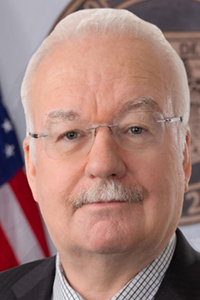
John Kavanagh
Sen. John Kavanagh

But regardless of the state’s overall financial situation, the Fountain Hills Republican who has been in the Legislature since 2007, said he thinks the university system is getting what it needs from state taxpayers. And he said that for a large share of Arizonans, higher education remains quite affordable and free for many.

That affordability, however, is not due to state aid, which has been decreasing for decades.

Instead, universities, facing years of cuts in public dollars, are making up the difference by recruiting more out-of-state students who pay three times as much as Arizona residents. And they now make up 51% of those enrolled, double what it was two decades ago.

Regent Fred DuVal said that a $732 million increase is necessary because of cuts that universities already have had to make in critical programs like the Arizona Teachers Academy. That covers tuition and mandatory fees for each year that a student commits to teaching in an Arizona school.

Also cut this year, DuVal said, was funding for the Arizona Promise Program, a guaranteed scholarship program for eligible Arizona residents to ensure all tuition and fees are covered at the state’s public universities.

Some of that can be attributed to the fact that pretty much all state agencies had to take a 3.5% year-over-year funding cut to balance the state budget.

But for universities, the actual dollar cut was bigger: State funds went from $1.1 billion two years ago to a bit more than $1 billion last school year, to the current $970 million figure.

Arizona State University President Michael Crow, who says his school lost $24 million this fiscal year as what he called a direct result of “recent budget cuts passed by the state Legislature and signed by the governor,” is not mincing words.

Last week he said the cuts are leading to new spending reductions and even a $350 surcharge this spring for on-campus students. And ASU will close its Lake Havasu Center next summer.

“These necessary actions reflect the continuing lack of public investment from state government for higher education in Arizona,” Crow said in a written statement. “ASU simply cannot be asked to fund the expansion of higher education across the state without state investment as a part of the financial structure to do so.”

Gov. Katie Hobbs, who signed the budget, does not dispute the numbers.

“Facing a $1.8 billion deficit that was largely inherited, I brought together a bipartisan coalition to pass a balanced budget, protect Arizonans from egregious cuts, and still make some new investments,” she told Capitol Media Services. But that also meant using the funds she had for her other priorities like money for housing and helping the homeless.

All that, however, relates directly to how much of the financial burden of running a state university system should be borne by students versus taxpayers.

Consider the trend.

This year the general fund put in $970 million against $3.4 billion paid by students in tuition and fees.

Put another way, in that 2007-2008 school year, the general fund paid for 33% of the operating budgets of the state universities. That includes not just tuition and general funds but other federal grants and dollars.

This year that’s down to 12%.

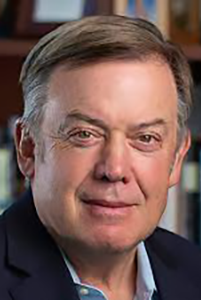
Fred DuVal

On the other side of the equation, tuition and fees made up 23% of university operating budgets in 207-2008. Now that’s up to 43%.

The balance comes from federal dollars, much of it in dedicated research grants, that currently make up more than 40% of total funding.

There’s another way of looking at it.

According to the regents, state aid on a per-student basis during the 2007-2008 school year was $9,439. For the current year that figure in actual dollars is estimated to be at $4,174. And that’s not taking into account how inflation has affected the value of those dollars.

But the trend and, in particular, the shift in the burden from taxpayers to students raises the question of at what point, with students absorbing more and more of the costs, why have a state university system.

“That’s part of why I’m working to build governing majorities in the Legislature, governing majorities that support higher education,” Hobbs said. And the governor has made no secret that she is raising money now in a year when she is not up for reelection to help gain seats for fellow Democrats and end the control of Republicans.

But Hobbs balked at whether that definitely means more higher education funding if Democrats take over.

“I cannot guarantee that,” she said. “I can guarantee that we will work to fund them equitably.”

As to relief for students, their only hope is that the Legislature and the governor step in.

Kavanagh acknowledged that tuition for Arizona students has increased.

In the 2010-2011 school year, for example, tuition and mandatory fees at the University of Arizona were $8,237. The current figure is $13,900.

But that, said Kavanagh, is misleading.

“Look at the walk-out-the-door price,” he said, saying the figures he has seen over the years in his role of having purview over university budgets show that close to half of all in-state students pay nothing in tuition after various scholarships and grants are factored in.

The actual figures across the university system according to the Board of Regents is 42.8% for first-time, full-time students and 37.8% for all full-time undergraduates. But the point remains.

“The next one third might have paid 25% of the tuition,” Kavanagh continued. “The only people who are paying full freight are people from wealthy families. And they can afford it.”

DuVal does not dispute that most in-state students aren’t paying the sticker price. But he said that can happen in an age of decreasing state support only because the universities are making up the difference by actively recruiting students from other states and countries.

That also makes up for the reduced state funding. But he’s not sure that’s been a good move.

“Decades ago, we capped those (out-of-state) students at 30%,” DuVal said. It’s now about half.

“Conversely, Arizona degree attainment is flat.” he said. “But educating Arizona students is our principal assignment.”

And those students from other states or other countries, said DuVal, return home after graduation.

“Arizona employers are saying their Number One issue is workforce,” he said. “And they see the universities as essential to fulfilling that need.”

But Kavanagh said he sees the number of students from elsewhere as a good thing. And he said it hasn’t come at the expense of quality.

Consider Arizona State University.

“When I came here in 1993, the reputation was a party school,” he said.

“The reputation now is top-tier, four-year public research institution” said Kavanagh. “I applaud the universities, especially (Michael) Crow, for creating a good brand that out-of-state people are willing to pay a premium price for,” Kavanagh said.

Nor does he see out-of-state students pushing out Arizona residents.

ASU, for example, saw its undergraduate headcount go from 58,404 in 2012 to 112,171 in 2023. 

The growth at U of A was not as remarkable, going from 30,665 to 38,751 during the same period.


Kavanagh wants Surprise probed over alleged free speech violation

Sen. John Kavanagh, R-Fountain Hills, is asking Attorney General Kris Mayes to launch a probe of the City of Suprise’s public comment policy after a woman was arrested while speaking at a city council meeting on Aug. 20. 

Rebekah Massie attended the Surprise City Council meeting with her 10-year-old daughter to speak in opposition of a proposal to increase the city attorney’s salary. 

Near the second hour of the meeting, Massie was speaking before being cut off by Surprise Mayor Skip Hall, who said she had violated the rules for public comment. 

“Do you want to be escorted out of here?” Hall asked Massie.“Oral communications during the city council meeting may not be used to lodge charges or complaints against any employee of the city or members of the body.”  

“That’s a violation of my First Amendment rights,” Massie replied. 

John Kavanagh
Sen. John Kavanagh

Hall asked Massie if she wanted to be escorted out of the building while she repeated that he had violated her rights and acted in an unconstitutional manner. 

Massie was arrested and subsequently charged with criminal trespass in the third degree for knowingly remaining unlawfully on property after being asked to leave, according to case records. 

On Tuesday, Kavanagh sent a letter to Mayes’s office to formally request that she investigate the city’s public speaking policy. 

Kavanagh said he was following media coverage of the dispute and had waited to file the complaint “to give the Mayor and Council or manager an opportunity to correct the situation.” 

“Arizona’s open meetings law specifically states that – if you have a call to the public – the individual can comment on any issue within the jurisdiction of the public body, and clearly, the salary of the town attorney and the performance of the town attorney… fall within the jurisdiction of the council,” Kavanagh said. “So, she should have been allowed to make those comments.” 

Kavanagh said “if there are any questions as to whether those comments are allowed,” the state’s open meeting law states that “any discrepancies or questions about it should be resolved in favor of free speech.” 

He said open meeting law allows members of the public body torespond to criticism made by those who have addressed the public body, so “if council members can respond to criticism, it obviously allows criticism.” 

The passage of SB1487 in 2016 permitted Arizona lawmakers to ask the Attorney General to investigate whether an official action taken by the governing body of a city or town violates state law or the constitution. 

Kavanagh submitted the complaint to Mayes to ask that she investigate whether the council’s rule is illegal. Alongside his letter, Kavanagh said he submitted a two-page legal analysis from the Senate Rules attorney which outlines potential violations of the law. 

If the Attorney General’s office finds the public comment regulation to stray from state law, Kavanagh said that Surprise city officials must scrap the rule or forfeit its state-shared revenues. 

A spokesperson for the AG’s office confirmed that they received Kavanagh’s letter and will “fulfill its statutory duties under the law and evaluate the Senator’s request for a 1487 investigation.” 

The AG’s office declined to comment on further details of the investigation as it is pending. 

The probe falls parallel to Massie’s own lawsuit against the city and what she calls an “unconstitutional decorum rule.” 

Massie is a regular attendee of city council meetings, the complaint said, and so is Quintus Schulzke, the second plaintiff in the suit. 

The complaint alleged that the city’s criticism policy violates the U.S. Constitution’s First Amendment by allowing the removal of speakers not only for actual disturbances but also “simply for speech that officials dislike.” The complaint also alleged that the council’s actions violated the Fourth and 14th Amendments.

“I fear that I will be ejected or detained if I make a negative comment about a city official if I were to speak at City Council meetings,” Schulzke said in a declaration submitted to the court in support of a preliminary injunction. 

Massie’s arraignment is scheduled for Sept. 25 in the Hassayampa Justice Court.

“Protecting freedom of speech, especially in public government settings, is incredibly important to our democracy,” Kavanagh said. “Regardless of where they stand, members of the public deserve the opportunity to voice their opinions and concerns to city leaders.”


Comprehensive election legislation gets initial approval

A Senate elections panel advanced a GOP ballot referral package Thursday on party lines that foes say would impose restrictions on early voting. The proposed measure, HCR2056, is heavily opposed...

Get 24/7 political news coverage and access to events honoring top political professionals

Lawmakers set to vote on border legislation

State lawmakers have set the stage for final approval of legislation billed as providing increased border security. On Thursday, the Senate gave preliminary approval to HCR 2030, a multi-pronged proposal...

Get 24/7 political news coverage and access to events honoring top political professionals

Hobbs vetoes 10 more Republican bills

Gov. Katie Hobbs has quashed legislation that could have barred students from other states attending college in Arizona from voting in elections here. Her action on HB2581 is just one...

Get 24/7 political news coverage and access to events honoring top political professionals

Expanded ‘defense of premises’ won’t become law

Gov. Katie Hobbs vetoed a controversial measure Monday that would have expanded the scope of the state’s “defense of premises” law. “The legislation as written values property over human life...

Get 24/7 political news coverage and access to events honoring top political professionals

Budget negotiations heat up as Legislature slows down

Three months into the Arizona Legislature’s annual session, lawmakers are ready to take some time off and go to a work schedule many would love to have — just one...

Get 24/7 political news coverage and access to events honoring top political professionals

Lawmakers consider break to negotiate budget

Lawmakers could take a break in the legislative session due to budget holdouts, according to Sen. John Kavanagh, R-Fountain Hills, chairman of the Senate Appropriations Committee. Republicans from both chambers...

Get 24/7 political news coverage and access to events honoring top political professionals

Debate fiery over expansion of self-defense law

A Senate committee approved an expansion of Arizona’s “castle doctrine” self-defense law to make it apply not just in someone’s home and yard but on any property they own or...

Get 24/7 political news coverage and access to events honoring top political professionals

Legislature ignores short-term rental bills

Efforts to regulate Arizona’s short-term rental marketplace appear to have failed this year with no Republican or Democratic bills on the issue getting a hearing in legislative committees.   The...

Get 24/7 political news coverage and access to events honoring top political professionals

You don't have credit card details available. You will be redirected to update payment method page. Click OK to continue.



