Arizona is considering a radical shift in how it licenses criminal law practitioners. A proposal advanced by the Arizona Supreme Court’s administrative office would allow graduates of a one-year Master’s of Legal Studies (MLS) program to practice criminal law, including serving as prosecutors, after just nine months of supervised work. While the stated goal is to address attorney shortages in rural areas, the consequences of this proposal would be felt statewide, and they are deeply troubling.
Under the plan, Arizona would become the only state in the nation where someone could represent a defendant in a criminal case, from traffic violations to serious felonies, after completing only two semesters of legal education. These MLS graduates would be permitted to practice independently after a brief supervised period, handling all criminal matters short of capital cases. This is not a minor adjustment to legal education — it is a fundamental redefinition of what it means to be a lawyer in the criminal justice system.
The proposal’s supporters argue that Arizona is a “legal desert,” with one of the lowest ratios of lawyers per capita in the country. But the solution to that shortage should not be to lower the standards for those entrusted with safeguarding liberty and enforcing the law. Prosecutors wield enormous power. They decide whether to file charges, what charges to bring, and whether to offer plea deals — decisions that can permanently alter lives. Entrusting such authority to individuals without a full Juris Doctor (JD) is not only unprecedented but dangerous.
Critics from both sides of the courtroom agree. Dean Brault, director of Public Defense Services for Pima County, called the proposal “absurd,” noting that it reduces the bar for entry into criminal law at the very moment when a person’s liberty is at stake. “Creating a system where any criminal practitioner, be it a prosecutor or public defender, can graduate from undergrad and be practicing in two semesters is reducing that bar,” Brault said. Pima County Attorney Laura Conover echoed this concern, warning that the plan risks turning criminal law into “some kind of lesser cousin to the rest of the law.”
The proposal also raises serious constitutional and ethical concerns. The Sixth Amendment guarantees the right to effective assistance of counsel. Licensing attorneys with abbreviated training to handle criminal cases invites constitutional challenges and undermines the ethical foundation of the legal profession. It also risks creating a two-tiered justice system — one for those who can afford full representation, and another for those who cannot.
Perhaps most troubling is the contradiction at the heart of the proposal: under Arizona’s current system, a full JD is required to represent someone in a civil case where only money is at stake. Yet under this new plan, someone with far less training could prosecute or defend a person facing incarceration. This inversion of risk and qualification is indefensible. It sends the message that liberty is worth less than liability, and that criminal defendants — often the most vulnerable in our society — deserve less protection than litigants in financial disputes.
Rather than lowering the bar, Arizona should pursue sustainable solutions that expand access to justice while preserving professional standards. These include:
Automatic bar admission for graduates of accredited Arizona law schools, subject to character and fitness review.
Loan forgiveness and financial incentives for JD graduates who commit to serving in underserved areas.
Rural fellowships that place recent law graduates under the supervision of experienced attorneys.
Investment in remote representation infrastructure to connect qualified attorneys with rural clients.
Expansion of supervised apprenticeship programs that maintain JD-level standards.
Law school partnerships that create rural externships and legal clinics under faculty supervision.
Arizona’s legal system should not be restructured at the expense of its most vulnerable residents. The proposed licensing shortcut would not solve the problem of legal deserts — it would create new problems of unequal justice, prosecutorial overreach, and constitutional vulnerability. The state must invest in high-quality, long-term solutions that expand access to justice without compromising the rights of its citizens.
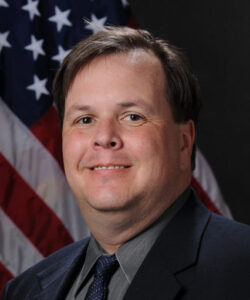
Luis Santaella is the interim city attorney of Scottsdale, Arizona.
Clarification: This story has been updated with information from the court on the ethics opinion distribution process and additional comment from a court spokesperson.
An opinion finding justices were wrong to wear robes to a religious event was withdrawn bythe Arizona Supreme Court after recently changing how it oversees an ethics committee.
The Judicial Ethics Advisory Committee received a request to weigh in on the ethical implications of judges wearing official robes at the Red Mass, an annual Roman Catholic gathering aimed at attorneys, lawmakers and judges to invoke divine guidance in the coming year.
The committee returned a formal opinion against donning a robe at the Red Mass, or any religious service, given a potential appearance of undue influence, and reaffirmed the same upon a request for reconsideration from the state high court. Then, a majority of the justices voted to withdraw the opinion – effectively shielding it from public view and preventing it from manifesting in the state’s ethics canon.
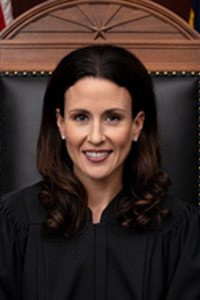
Arizona Supreme Court Justice Kathryn King
The Supreme Court’s explicit ability to withdraw an opinion is new. In August, the court adopted an emergency rule allowing it to review a formal advisory opinion from the Judicial Ethics Advisory Committee before it becomes final.
April Elliot, staff director of the Judicial Ethics Advisory Committee, said, “It certainly expands the court’s options. They can give it a thumbs up, they can give it a thumbs down, they can modify it themselves, or they can kick it back with very specific guidance. Some of that was probably available now under the inherent authority of the court umbrella, but this at least spells it out.”
The Judicial Ethics Advisory Committee is a committee of the Supreme Court convened to issue advisory opinions based on the Code of Judicial Conduct and the Code of Conduct for Judicial Employees. The committee is separate and apart from the Commission on Judicial Conduct, which acts and investigates complaints against judicial officers.
Per the rule establishing the committee, a judge, candidate for judicial office, a judicial employee, a member of the advisory committee, a court or an agency charged with judicial administration can request an opinion, though requests “must relate to the inquirer’s own prospective conduct.”
On Jan. 23, Justices William Montgomery and Kathryn King, and Court of Appeals judges Daniel Kiley and Randall Howe, attended the Red Mass in Phoenix.
Photos posted by the Arizona Catholic Sun and the St. Thomas More Society shows King and Montgomery at the lectern in their robes. Per the St. Thomas More Society, King gave the first reading, and Montgomery led attorneys in renewing their oath of admission to the State Bar of Arizona..
On Jan. 24, the ethics committee received a request to look at the ethical constructions of wearing an official judicial robe to a religious service and fulfilling “a special role at the Red Mass, such as giving a reading of scripture or asking for prayer intentions, while wearing their robes.”
Any request to the committee is made confidential per court rules. According to documents obtained by the Arizona Capitol Times, the ultimately unpublished opinion followed “multiple inquiries” from judicial officers.
After receiving a request, committee members decide whether to resolve it formally, with a written published opinion, or informally by a letter or other communication. A majority of the committee must vote to go forward with a formal opinion, and the question must then be circulated for comment.
The Judicial Ethics Advisory Committee posed the question for comment in February and returned a formal opinion in June.
“No,” the opinion read. “A judge is free to attend a religious service and fulfill a special role at that service in his or her personal capacity. But because the robe is a symbol of the exercise of the duties of judicial office, the robe should not be worn during religious services.”
The committee clarified that the opinion did not restrict a judge’s ability to attend and fully participate in Red Mass, or any religious service or ceremony, but did delineate a judge’s attendance or participation would be in a personal capacity, not a professional one.
The committee cemented the conclusion in three rules. The first speaks to promoting confidence in the judiciary, holding “a judge shall act at all times in a manner that promotes public confidence in the independence, integrity, and impartiality of the judiciary, and shall avoid impropriety and the appearance of impropriety.”
Another rule bars any indication or impression that any person or organization is in a position to influence a judge. A third cited rule notes a judge may engage in extrajudicial activities, but when doing so, a judge shall not “participate in activities that would appear to a reasonable person to undermine the judge’s independence, integrity, or impartiality or demean the judicial office.”
The opinion further referenced a “hardline rule,” promulgated in an earlier ethics opinion, which barred judges from adorning their robes with a rainbow pin or other symbol and held the judicial robe “powerfully and unmistakably invokes the prestige of judicial office.”
They noted, too, judges do not typically wear a robe while engaging in extrajudicial activities, like grocery shopping or attending weekly religious services.
In turning back to the Red Mass, the committee noted, though the service does pertain to the law and legal system, “at its core, it is a religious service where participants seek Providential guidance for the year ahead.”
“While judges have a constitutional right to express their religious or other beliefs, the robe is the uniform of judicial office, and there is a need for the judiciary to ensure that it remains independent and impartial from any religious, political, or other external influences and to be perceived as being independent and impartial from any external influences,” the committee found.
“A judge’s robe is emblematic of the office they hold, and when worn, the public perceives judges as engaged in their official duties. Thus, a judge may not wear a judicial robe to engage in a personal religious activity because such conduct can undermine the appearance of independence, integrity, and impartiality of the judiciary, and suggest a person or organization is in a position to influence the judge.”
The Ethics Committee returned their formal opinion on June 3 and distributed it to the unnamed requestor, the justices, clerk and chief staff attorney of the supreme court, the chief judges of the court of appeals, the presiding judges of the superior court, the director of the Administrative Office of the Courts and the chief bar counsel to the Arizona State Bar, per court rules.
The opinion was briefly posted on the court’s website on June 5 but was removed over the course of reconsideration and its eventual withdrawal.
On June 18, a majority of justices, with the exception of King and Montgomery, ordered a reconsideration. The Ethics Committee reaffirmed its decision on July 19.
Justices took up the 2024 Rules Agenda on August 20 and adopted the proposed rule change providing the Supreme Court with final review on any ethics opinion.
On August 28, the same justices voted to withdraw the opinion entirely.
In alerting the Ethics Advisory Committee of the court’s decision, Justice Clint Bolick wrote to Elliot in an email, “If you get a chance to chat with JEAC members, please let them know that this was not a decision on the merits … We were hoping the Committee would provide a more fulsome analysis and were disappointed that it did not. Hence, if the issue arises further, it will probably be in the context of a judicial ethics complaint.”
Elliot said prior to the rule change, the court withdrawing an opinion was an “anomaly,” but did not see it to be outside the powers of the state high court.
She noted when the Commission on Judicial Conduct finds a judge engaged in more severe misconduct, the commission must recommend sanctions to the state Supreme Court for the final say.
“The Supreme Court, under the judicial regulation scheme, they are the ultimate arbiter of the judicial regulation,” Elliot said. “As the highest court in the state, certainly, I’m not bothered by the fact that they have the ability to review an ethics opinion and have the authority to technically withdraw it. I can’t comment on what their motivations would be, but overall, I’m not really bothered by the fact that they have the authority to do it.”
In terms of the Red Mass opinion in particular, Elliot said “I suppose there can always be the impression that the Supreme Court may be attempting to dictate what a particular holding should read, but I didn’t get that impression.”
The justices are set to meet again in December to decide whether to adopt the new rule on a permanent basis.
As for opinions on the Red Mass, Elliot said she suspected the committee could see another round of inquiries come January, which could prompt the committee to contemplate the issue again.
“They could choose to issue another opinion, although I think it would be on the committee’s mind that they clearly couldn’t issue the same opinion,” Elliot said. “Because they know that would be shot down.”
Alberto Rodriguez, spokesman for the court, said the justices followed standard procedure and noted the issue could be up for reconsideration in a judicial ethics complaint.
“In this case, a majority of the Court either disagreed with the result or reasoning in the opinion and chose to withdraw it,” Rodriguez said. “It’s likely the Court would defer this issue until it came as a case matter where both sides could brief it.”
Lawyers for the state are denying that lawmakers did anything wrong by allocating $15.3 million for the Prescott Rodeo. In a new court filing, Assistant Attorney General Hayleigh Crawford acknowledges...
Get 24/7 political news coverage and access to events honoring top political professionals
Trials are very costly — both in terms of expense and the emotional exhaustion that comes from the weeks of preparation and the long days spent in the courthouse. Although most clients...
Get 24/7 political news coverage and access to events honoring top political professionals
Khalil Rushdan speaks in Phoenix on April 11, 2023 about his wrongful conviction. He has become an advocate for criminal justice reform and serves as social...
Get 24/7 political news coverage and access to events honoring top political professionals
Kari Lake, Arizona Republican candidate for governor, waves to her supporters at the Republican watch party in Scottsdale on Nov. 8. Lawyers for Maricopa County said...
Get 24/7 political news coverage and access to events honoring top political professionals
Four Arizona state representatives swept up in a sexual harassment investigation at the Capitol may hire attorneys paid for with public monies to represent them in the inquiry. [caption id="attachment_109071"...
Get 24/7 political news coverage and access to events honoring top political professionals
The media usually seeks out the analysis and opinions of Arizona State University law professor Paul Bender when there’s a news story involving questions of Arizona law or the U.S....
Get 24/7 political news coverage and access to events honoring top political professionals
The Arizona Supreme Court won’t repeal rules that threaten lawyers with disbarment if they help clients get, sell or use marijuana legally under a 2010 voter-approved law. Without comment, the...
Get 24/7 political news coverage and access to events honoring top political professionals
Just 11 lawyers have applied to be one of the two new justices that Gov. Doug Ducey will select for the Arizona Supreme Court. The list includes five judges now...
Get 24/7 political news coverage and access to events honoring top political professionals
The House put in extra time and debate on a couple of seemingly inconspicuous bills aimed at weakening the State Bar of Arizona. The first of the bills, HB2219, failed...
Get 24/7 political news coverage and access to events honoring top political professionals

 Sign In
 Free Newsletter