Sign In
 Free Newsletter


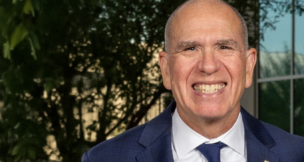
“I took the test to be a restaurant inspector, and that was my first public health job. So that's what got me started in public health, a guest lecture on a random day.” (Photo by Reagan Priest/Arizona Capitol Times)
Will Humble: Agency head turned policy wonk
Reagan Priest Arizona Capitol Times//January 24, 2025//


Will Humble spent decades at the Department of Health Services, including six years as director, before transitioning to advocacy. A self-described policy wonk, Humble reflected on his career in an interview with Arizona Capitol Times and said he isn’t done just yet.
What originally drew you to public health?
I was kind of a lost soul in my early 20s. I didn’t know what I wanted to do for a living. I got a bachelor’s degree at NAU in business. I worked at a hardware store … and I hated it. It wasn’t something I cared about and I need something to care about if I’m gonna work, or at least I want to care about it … So I went back to ASU and got another bachelor’s degree in microbiology. One of the guest lecturers was a guy from the Maricopa County Environmental Services Department – guy’s name was Mike Sparks. He was giving a guest lecture in an epidemiology class. A light bulb went on, because he started talking about public health and vector control and mosquito abatement and food safety … I left class that day like, “This actually sounds interesting.” So, I took the test to be a restaurant inspector, and that was my first public health job. So that’s what got me started in public health, a guest lecture on a random day.
What got you into the policy side of public health?
After my 10,000th inspection, I went back and got a master’s in public health at Berkeley, and then I came back, and that’s when I got my job at the state health department, just as a regular worker doing risk assessments for Superfund sites in Arizona. It wasn’t really until I was about 40, in about the year 2000 when I started getting into the kind of jobs where you actually make policy decisions. So my first bureau chief job was all the infectious disease programs. Policy became part of my job, because I got to start making decisions. That’s when I started following legislation. I think I can remember one of the first bills that I really paid a lot of attention to was a bill that passed through this House and Senate that would have said, “You can’t let people ride in the back of pickup trucks.” It passed, but Governor [Jane)]Hull vetoed it, and I remember thinking, “Why?” Her veto signing statement said, “It’s too hard on Navajo, Hopi people who buy their truck for their family.” I put myself in the shoes of a governor. Here’s this obviously a good bill because everyone needs to wear a seat belt … and yet, she vetoed it. But then I thought about, well, OK, people are making huge investment decisions on the family scale, and this would make it a lot harder. That’s the first bill I remember taking a real interest in.
You were at DHS for decades. What made you stick around for so long and what ultimately made you leave?
I’ve always liked my work. When I was a restaurant inspector, it became a point pretty early on, that I’m making a living at this, but I’m not really learning anything … But that never happened at [DHS]. In some ways, I got lucky, because after about three years, the next position would tend to open up. So I had a really nice career pace, where first I had three direct reports, and then I had 10, and then I had an office where I had 30, and then I had 150 as a bureau chief … accepting more and more responsibility, but at a pace that was manageable … And then-Governor [Janet] Napolitano suddenly quit to become Homeland Security secretary … So there was a guy who was going to become [Gov. Jan] Brewer’s deputy chief of staff, Brian McNeil. Brian’s like, “meet me in this parking lot at 8:30 in the morning,” … So we three deputies met, and [McNeil] said, “We need a director for this agency, call me at 8:30 tomorrow morning and tell me which one of you three is willing to do it, but realize that this gig is probably for 30 to 90 days, and then we expect to have somebody different in the job after that.” No sooner did he drive away, then [they] looked at me, and they’re like, “It has to be you.” … It was really hard at the beginning, but it wasn’t operationally hard because I knew the place inside and out. I have to say, I’ve thanked her for this many times, Susan Gerard left a really good team in place, and it makes such a huge difference in an agency that size to have talented people around you. Often many of them were good at things that I’m not that good at, and I’m good at things that they’re not good at. We had a diversity of personality and interests and that is partly what made the job so fun, is that I had people I could rely on that I already knew … It was a great run, and I loved working for Brewer and we still stay in touch. What I appreciated the most is that … there wasn’t a whole lot of micromanagement that was going on. Then [Gov. Doug] Ducey came in and they asked me to stay and I said yes. But it wasn’t very long before I realized this was going to be very different. Not ideologically, because they’re both pretty conservative, but the expectations about how you can make decisions … was gonna be completely different. And I’m like, it’s been a great six-year run, but the next six aren’t gonna be the same.
Why did you decide to stick around at the Capitol in an advocacy role?
Partly it’s just fun, like policy is my hobby. I know that’s a weird, wonky thing to say, but it is. Not just Arizona public policy … I like to read about things that are happening around the world, and not just public health policy, but just policy in general. Because I was in the executive branch for so long, I think I add a sort of street cred-perspective on policy matters, and combine that with the fact that I don’t have any clients. I mean, I’m a registered lobbyist, but only as the representative for the Public Health Association. So my only client is good policy. I don’t want to retire, I don’t know what would happen, it kind of freaks me out to even think about. I feel like I’m providing some value added. Some people listen to me and some people, whatever I say they do the opposite. Although I have to say there’s a big difference between running a state agency and being in my position. Honestly, it’s more fun to make decisions than it is to try to influence decisions. Although I’m not complaining. There’s a lot of freedom that comes with this job too.
What do you wish people — lawmakers or the public — knew about state agencies and their role in government?
At least during my tenure, we really did try to stay within the guardrails of our statutory authority. I think there’s some people down here skeptical that agencies are run amok and expanding their authority beyond what it should be expanded to. That, in my experience, was never the case. I will say that when we did administrative rulemakings, I did try to use all the authority I had, all the way up to the edge. If you give me the authority and you give me a governor that lets me make the policy decisions, then I’m going to write my regulations in a way that uses that full breadth of authority. And by and large, state employees want to do the right thing. There’s not much activism, honestly. They might have personal feelings about how they’re going to vote on this person and that person, but … they’re people just doing their jobs. Another thing is, I think many state employees would like to have more ability to meet with lawmakers on their own, but through all of the different governors that I worked under, who was allowed to go talk to legislators was usually pretty limited. I made it a point to bring people in, both to add color to the conversation, but also for professional development. So I wish lawmakers knew that there are state employees below the director level that would be interested in talking to them, but they’re often not given that opportunity.
What legacy do you hope you leave on the state of Arizona?
In those six years I was the director of DHS, I think we did a lot of really good things, probably the two biggest were the two things that were least noticed. One was the Arnold v. Sarn lawsuit. We worked through with the plaintiffs and did a settlement agreement on the Arnold suit, and committed to a lot of things … We wanted to hold future administrations accountable for the things that we agreed to in the settlement agreement on behavioral health, mental health. I think we were an important part of improving the system for people with a serious mental illness and other kinds of psychiatric disorders during that period. The other thing I think we left that’s also long lasting is back in 2013 we rewrote all of the regulations for assisted living, skilled nursing, adult therapeutic foster homes, childcare facilities, behavioral health group homes, all the licensed category of health care. Prior to our changes in the regulations, the regulations were very one dimensional. It was a checklist, and we rewrote the regs so that they were three dimensional. What we wrote in 2013 is still there. They haven’t done anything with the rules. So here we are, more than 10 years later, and that overhaul of all those regulations, I think, put us in a much better position now.