Sign In
 Free Newsletter

HOV lane access for electric vehicles ends soon
Howard Fischer, Capitol Media Services//September 25, 2025//
HOV lane access for electric vehicles ends soon
Howard Fischer, Capitol Media Services//September 25, 2025//


Key Points:
-
Law allowing electric vehicles to use HOV lanes will end Sept. 30
-
Law could be renewed by Congress
-
Electric vehicle buyers may also lose $7,500 federal tax credit on Oct. 1
Anyone who bought an alternative-fuel vehicle to ease their daily commute is going to find that the free ride is coming to an end.
The Arizona Department of Transportation says that a 2005 federal law allowing drivers of electric vehicles to use lanes otherwise reserved for “high occupancy vehicles,” regardless of the number of occupants, is ending. And unless Congress acts by the end of the month, the statute will self-destruct.
That’s not an issue in rural areas. Nor is it in Pima County where the freeways have no HOV lanes.
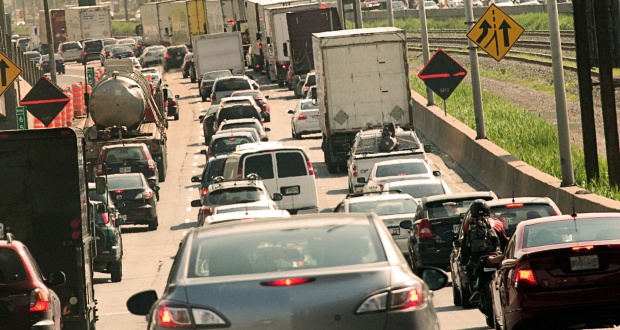
However, those living in and around Phoenix or Pinal and Yavapai counties can expect a return to gridlock freeway traffic every morning if there is no renewal of the law.
If the law lapses, it would mean that solo occupants of electric vehicles who are found in the HOV lanes would be subject to fines of at least $400, not including a list of possible surcharges.
ADOT doesn’t yet have county-by-county breakdowns for how many drivers may be impacted, but the agency has reported that nearly 160,000 vehicles in the state have those special blue and white plates that designate them as using alternate fuel. And a spokesman said that, given the privileges that have existed until now, he assumes the vast majority of those cars and trucks are in the Phoenix metro area.
The reason the federal law matters is that federal dollars have been used to build these extra lanes.
Originally authorized in the 1970s, they were designed to increase interest in ridesharing, a trend that accelerated during the Arab oil embargo. And that meant at least two people in a vehicle during certain hours — in Arizona being between 6 a.m. and 9 a.m. and 3 p.m. to 7 p.m.
It took until 2005 for Congress to extend that to alternative fuel vehicles with only the driver onboard. That list now includes cars and trucks operated on everything from alcohol, natural gas, propane, hydrogen and fuels derived from biological materials.
Also qualifying are electric vehicles that have a certain battery capacity.
HOV access for those single-occupancy vehicles was only supposed to be only temporary, but Congress has since extended it.
The only thing is, that last extension expires at the end of the month. And absent some last-minute action, the exemption will disappear on Oct. 1.
That leaves motorcycles, public transit buses, emergency vehicles used by first responders and tow trucks performing their duties with guaranteed legal access to HOV lanes during Arizona’s rush hour.
So how quickly will offenders get ticketed?
A spokesman for the Department of Public Safety, whose officers patrol all of the roads with HOV lanes in Arizona, declined to say whether there will be a grace period. Instead, Bart Graves said troopers always have discretion and “will weigh severity, safety and context.”
The timing of all this could not be worse for electric vehicle dealers.
Sept. 30 is the last day for buyers of these cars and trucks to qualify for a $7,500 federal tax credit. Also gone will be the $4,000 credit for used vehicles sold by dealers for $25,000 or less.
So the added loss of the ability to bypass all that rush-hour traffic becomes just one less reason to buy one.