Sign In
 Free Newsletter

Data centers, renewables and reliability are energy hot topics at the Legislature
Reagan Priest Arizona Capitol Times//January 23, 2026//
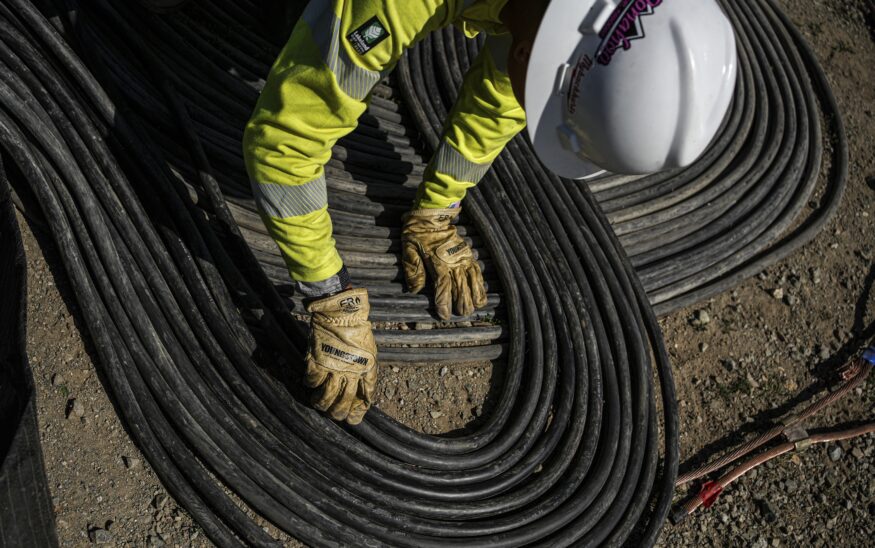
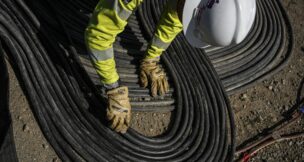
A worker lays cables at Energy Vault, a company that is creating an emergency power system that relies on hydrogen and battery storage, on Tuesday, May 27, 2025, in Calistoga, Calif. (AP Photo/Annika Hammerschlag)
Data centers, renewables and reliability are energy hot topics at the Legislature
Reagan Priest Arizona Capitol Times//January 23, 2026//


Key Points:
-
Lawmakers on both sides of the aisle are taking an interest in energy policy
-
Nearly 40 bills related to data centers, renewables and energy reliability have been introduced
-
Two lawmakers hoping to win seats on the Arizona Corporation Commission have introduced several bills
Data centers, high utility bills and energy reliability have been hot topics in Arizona in recent months, and state lawmakers are starting to notice.
As of this week, lawmakers introduced 38 bills related to energy, utility companies, data centers and the Arizona Corporation Commission, the regulatory body charged with overseeing public utility companies. Lawmakers on both sides of the aisle expressed interest in utility issues this session, but they have different ideas for how to address them.
At least eight bills are focused on data centers, while others prioritize increasing nuclear energy generation, adding restrictions on solar and wind farms, and making it easier to expand existing power plants. Many of the bills come from Republican Reps. David Marshall and Ralph Heap who are hoping to defeat incumbent Republican commissioners Kevin Thompson and Nick Myers in the August primary election.
The commission has not taken a formal position on any of the introduced bills, but does expect to be involved in the legislative process this session. Ryan DeMenna, the commission’s contracted lobbyist, confirmed the commission’s willingness to work with legislators during a Jan. 21 meeting on energy legislation.
“The commission made it a point to share with lawmakers that we want to serve as a resource, that when it comes to energy policy and the policymaking that occurs down at 1700 West Washington, we want that to be a cooperative working relationship,” DeMenna said. “That continues to be a message that we share and I think we are seeing that start to materialize.”
Data centers
Several lawmakers — and Gov. Katie Hobbs — want to end the state’s tax incentives for data center projects after backlash against new developments in 2025. But no one agrees exactly how or when to end the incentives.
Rep. Neal Carter, R-San Tan Valley, introduced a bill that would end the data center tax incentives this year. Several Democrats have also introduced bills to eliminate the incentives, but with even tighter restrictions on the industry’s use of water-intensive cooling systems and renewable energy.
Democrats also proposed a partial tax relief package to incentivize data centers to pay for the new utility infrastructure upgrades necessary to operate the facilities throughout the state.
Rep. Gail Griffin, R-Hereford, introduced a bill that would direct the commission to develop rules governing contracts, billing, and the review of high load factor utility customers such as data centers. Her bill would also direct public utility companies to file reports on high load factor customers with governing bodies like the commission.
Similarly, Rep. Justin Wilmeth, R-Phoenix, introduced legislation directing county boards of supervisors to update their comprehensive plans with proposals for future data center development.
Renewable energy resources
Republican lawmakers have introduced several bills imposing more requirements for solar and wind farm developments — or outright prohibition.
Marshall and Heap’s House Bill 2267 would designate all new, utility-scale solar and wind developments as public nuisances, requiring the attorney general to prevent their construction. In a statement, the two lawmakers said the bill is a response to Attorney General Kris Mayes’ inaction on local opposition to solar and wind projects.
“Arizonans don’t want large-scale renewable energy projects in their backyards,” the lawmakers stated in a release. “It’s time the attorney general treats large-scale wind and solar farms like the public nuisance they are and takes immediate action to abate and enjoin them.”
Thompson, who has not historically been a champion of solar or wind developments during his time on the commission, criticized HB2267 in posts on X and criticized Marshall and Heap for introducing it.
“For those that aren’t familiar with the ACC, in our capacity as Commissioners, we fill a quasi judicial role. Pre-judging anything in advance of a hearing would force you to recuse yourself from any item you have pre-judged; good, bad and indifferent,” Thompson wrote. “Unfortunately, candidates seeking a seat on the Commission have effectively taken themselves out of the conversation because they have pre-judged renewables as ‘a nuisance.’”
Marshall and Heap have also introduced other bills making it more difficult for boards of supervisors to zone land parcels for solar and wind projects and add additional requirements for approving renewable projects. The two also introduced bills eliminating property tax subsidies for renewable projects.
Energy reliability and development
Lawmakers are also concerned with the increased demand on Arizona’s energy grid and the development of new energy sources. Several proposals would make it easier for utility companies to expand existing power plants or transition those plants to new forms of generation, like nuclear energy.
Rep. Justin Olson, R-Mesa, is reviving a vetoed bill from the 2025 session that would update requirements for the integrated resource plans utility companies develop and submit to the commission to demonstrate the generation resources needed to serve their customers. Olson’s bill would specifically direct utility companies to develop integrated resource plans without considering carbon emission reduction goals.
Marshall introduced a bill requiring utility companies to use domestic fuel sources and “minimize reliance on foreign nations for critical materials or manufacturing.” The bill would require governing bodies like the commission to ensure integrated resource plans consider whether energy resources are affordable, reliable and clean.
His bill includes nuclear reactors and natural gas generation as “clean energy” sources, despite arguments from environmental groups that neither is as clean as solar or wind.
It is unclear how many energy and utility bills will make it through the Legislature, but those targeting renewable energy resources are likely to be met with the governor’s veto stamp.