Sign In
 Free Newsletter

Kevin McCarthy: An oracle of Arizona’s tax code
Jakob Thorington Arizona Capitol Times//January 23, 2026//

Kevin McCarthy (Jakob Thorington / Arizona Capitol Times)
Kevin McCarthy: An oracle of Arizona’s tax code
Jakob Thorington Arizona Capitol Times//January 23, 2026//


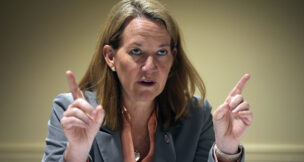
As lawmakers at the state Capitol grapple with conforming to new federal tax code, Arizona Tax Research Association President Kevin McCarthy sat down with the Arizona Capitol Times to discuss the issue and the potential pathways toward a solution. McCarthy, who has served with the organization since 1986, is among the top tax policy experts at the Capitol. He discusses the last tax conformity conflict the Legislature faced during Republican Gov. Doug Ducey’s administration and other issues ATRA is looking at this session.
The questions and answers have been lightly edited for style and clarity.
Tax conformity is the hot issue right now at the Legislature. Could you walk me through what that is?
Well, this is a mess, right? Most states that tax income use the federal tax code to benchmark off of and to tether themselves to so they don’t have to create that tax base they’re going to use to tax income. That’s a good idea. That makes it simpler for taxpayers to comply if they don’t have a completely different tax code at the state level than they have at the federal level. One of our top criteria for good tax policy is simplicity. So, we’re big believers in conformity and trying to keep things to have as little deviation between the state code and the federal code. Arizona is what’s called a static conformity state. We don’t just reflexively conform completely every year. The Legislature has to act to pass a bill. We wouldn’t advocate for static conformity because the state has to be in a position to protect its interests, whether it’s the taxpayers’ interest, or it’s the state general fund’s interests, if the feds significantly change the tax system. Most of the time, 90% of the time, the conformity bill is a non-event when it’s passed and ATRA and the certified public accountants are really the only ones paying attention.
Can you tell me when conformity was an issue in the past?
The Tax Cut and Jobs Act, when it passed in 2017, was probably the most profound change in my career that I can remember where the Legislature and governor needed to respond to federal changes. What’s happened there is almost the mirror image of what’s happening now. The changes they made increased federally the adjusted gross income — our starting point for conformity. They did that because they got rid of all sorts of deductions. The state and local deduction was dramatically limited and all sorts of deductions were eliminated in an effort to simplify the federal code and bring down rates. It was, in my opinion, one of the best pieces of legislation that Congress had ever passed in terms of making the federal tax code simpler, but the implications of that at the state level were significant because they significantly adjusted gross income. We weighed in immediately in 2018 with the Legislature and the governor. We had time to react to that and figure out how we were going to offset what was going to be a big tax increase on Arizona taxpayers, which the Department of Revenue was stabbing at about $300 million. Well, the Legislature and governor do nothing. We struggled with Gov. Doug Ducey and his staff to get them to react to it. So we roll around into the 2019 session and alarm bells are going off because people are recognizing we’ve got a big problem here. We’ve got a big tax increase that your department now has assumed and is in the forms that have gone out on the street.
What’s the Department of Revenue supposed to do when the Legislature and governor do not give it guidance?
They just assume conformity, although not totally. They assume conformity on the “above the line” stuff, which is everything before you get to federally adjusted gross income. They did that in the Tax Cut and Jobs Act, and now, they’re doing it here where we have the reverse in this case. Now we’re going to have reductions in revenue and reductions in taxes. It’s the complete opposite of what happened in 2019. We’re not critical of that. The department has to get forms out in December to all of the Turbo Taxes of the world. That’s the desirable approach, but we probably should have been in a special session in the fall and had this figured out so the state could give the department complete guidance. We didn’t do that. Now the clock ticks and taxpayers are reacting as we speak.
So from your understanding, what did the department do differently this year?
The department went beyond normal conformity for the above the line stuff. They took the guidance from Governor Hobbs to add the below the line things that she found attractive like no tax on tips or overtime, auto loans and the senior deduction. If you get on the department’s website, those below the line items are in a separate form. I wonder how many taxpayers are actually going to find that. Back in November, the governor issued an executive order saying she wants to eliminate from Arizona income tax some of the same things that were part of the Big Beautiful Bill. I was surprised, but more important than the surprise is what exactly did she mean by that? What did she tell the Department of Revenue to do? Because she can’t tell the department to do that. She needs the Legislature to pass that bill. Moreover, she was openly critical of the above the line stuff that the department would have in the forms when they sent them out. So for the rest of December, everybody waited with bated breath to see what the department was going to do. I fully expected the department to come out with forms that did this, but also denied all of that above the line stuff. If you read the bills the governor vetoed, you’ll see they actually had to go back and add back in the state and local tax deduction and put it back at $10,000, and not the $40,000 that’s in the federal bill. If none of this ever passes, you’re going to have people taking these deductions in the below the line items and there’s not going to be a law in place to facilitate that. Who knows how that’s going to work out?
What course of action should the Legislature take?
What policymakers ought to be most concerned about at this point is avoiding a situation where people have to file amended returns, but we’re headed in that direction. What the governor vetoed — that wasn’t a clean conformity bill either. They didn’t pass a bill that conformed to the forms that went out, which would have been the above the line stuff. So even if she signed it, it would mean that we’ve got to get correct, new forms. The below the line items — that’s all new tax policy. That’s all new law, and they have every right to do that, but it’s not necessarily clean conformity. So you have one side that’s creating complications with no law to back this up and then you have the Legislature passing something that also isn’t going to be consistent with what the forms are. In 2019, there was a bill to tax remote sales, the Wayfare legislation. They ended up passing a bill to smooth out all the rough edges and return monies to taxpayers through a prospective change in the code, so the tax increase went into effect. Everybody paid it, and then they passed a remote seller law that brought in a bunch of money. I don’t see that dynamic coming together here.
Now, we’ve got new revenue numbers that have come in. Things are looking better for the state budget than we thought a month ago. Maybe there’s some flexibility there for the Legislature and the governor to react quickly to do this, but the politics of the two sides don’t lend themselves to that. She’s highly critical of the above the line stuff that’s really important to Republicans. Not that the tips and wages aren’t, but I don’t see a lot of room for quick compromise to that. That’s kind of regrettable, so I’m telling everybody that I know not to file your Arizona return until you have to because, we could be at this for a while.
What’s another issue ATRA is looking at this session?
We’ve got a lot of chaos in the sales tax system and we will be pursuing a bill that we had last year that didn’t make it to the governor’s desk to try to create some certainty on sales tax sourcing right now. There is a disagreement between the Department of Revenue and Arizona cities that, regrettably, are able to administer their own sales tax codes and audits regarding how to source an in-state sale. If you’re an Arizona business and you’re having sales within the state of Arizona, the way the law reads, you’re able to source all your sales tax transactions to the city you’re located in. Well, the cities don’t buy that. Cities are arguing now that for sales that are sent to another city, you’ve got to pay that other city. We’ve got a bill to clear that up. The other significant one is a bill to change the Government Property Lease Excise Tax.