Sign In
 Free Newsletter

Arizona law aims to make it illegal to reject cash for small purchases
Howard Fischer, Capitol Media Services//January 28, 2026//
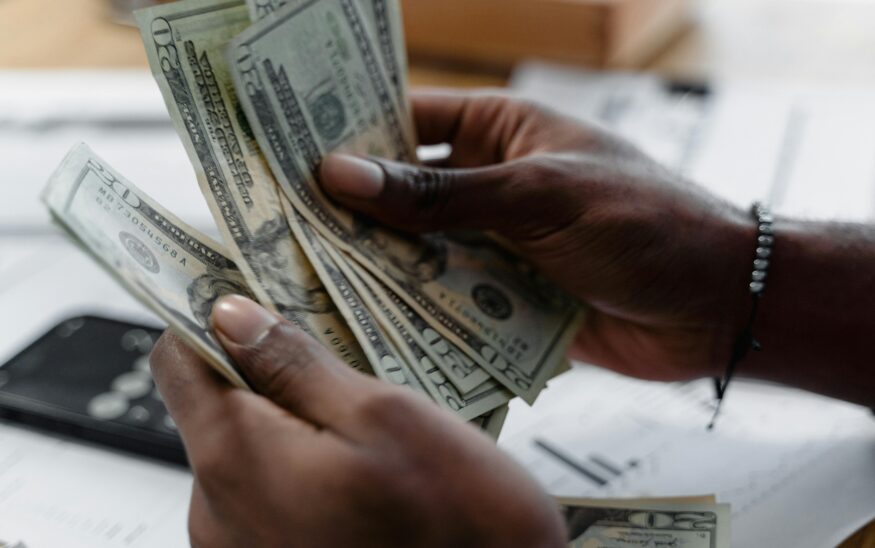
(Tima Miroshnichenko / Pexels)
Arizona law aims to make it illegal to reject cash for small purchases
Howard Fischer, Capitol Media Services//January 28, 2026//


Key Points:
- State lawmakers aim to make it illegal for retailers to refuse cash for purchases of $100 or less
- Legislation approved by House Commerce Committee would bar fee or penalty for using cash
- Business groups and associations strongly oppose the legislation, citing potential issues
They say that cash is king, and now state lawmakers are moving to ensure that merchants can’t turn it down.
Legislation approved by the House Commerce Committee on Jan. 28 on a 9-1 vote would make it illegal for retailers to refuse to accept cash for goods or services if the entire bill is $100 or less. HB2555 also would bar the imposition of any fee or penalty for using cash.
And the measure has teeth: Affected customers could go to court and get a penalty of $1,000 for each day there is a violation. And they also would get their legal fees paid.
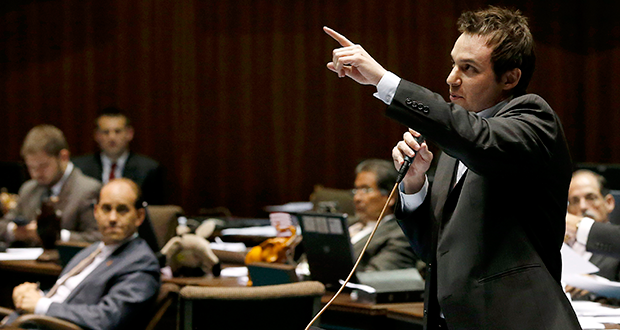
Rep. Joseph Chaplik said there’s no reason that businesses should be allowed to turn down cash. After all, said the Scottsdale Republican, all bills have the words “This note is legal tender for all debts, public and private.”
“This is our currency in the United States,” he told colleagues.
Chaplik said his legislation also is reasonable, applying only to purchases of $100 or less.
“We’re not going into a car dealership with a suitcase of cash,” he said.
There are exceptions.
One is that parties to a written contract can specify what payment is acceptable. And the requirement could not be applied to online sales of goods or services, rentals of goods or services, food trucks and delivery services.
Chaplik said there’s nothing unusual about his proposal, saying it or variants have been adopted in multiple cities and states. And he said it can be particularly important for those who are “unbanked” and don’t have access to credit and debit cards, a figure he put at 11.3% nationally.
Even if they do have access, Chaplik said, cash may be a better alternative for some.
“A lot of people don’t want to use credit cards for everything because they get into credit card debt,” he said.
The proposal drew across-the-board opposition from business groups, ranging from the Arizona Chamber of Commerce and Industry and the Arizona Retailers Association to the National Federation of Independent Business.
Also lined up in opposition is the Arizona Small Business Association, headed by Steve Kaiser, a former state senator. He questioned why lawmakers would want to interfere with the decisions that owners make about how to run their companies.
“Cash and checks offer all kinds of issues with accepting that,” said Kaiser. “Sometimes checks bounce, sometimes cash gets stolen.”
But ultimately, he said, it comes down to state lawmakers dictating operating rules for companies.
Consider, Kaiser said, if lawmakers were to require merchants to accept Bitcoin in payment.
“People would lose their minds,” he said.
Ditto, said Kaiser, if the situation were reversed and all merchants were forced to accept credit and debit cards whether they want to or not.
“It’s totally inappropriate and it’s gross overreach,” he said.
As to Chaplik’s citing the language on the bills stating they are acceptable for all public and private debts, Kaiser pointed out that, despite that verbiage, there is no federal law telling anyone — including merchants — that they cannot refuse to accept them.
But only one member of the committee voted against the plan.
“I think this is government overstepping,” said Rep. Janeen Connolly, D-Tempe. Other Democrats, however, disagreed. Betty Villegas said she sympathizes with the problem of residents lacking access to credit cards, saying there are few banks in the area of Tucson she represents.
As it turns out, Kaiser may be off-base, at least with his colleagues, when he said that lawmakers would never legislate on the acceptability of Bitcoin and other cryptocurrencies.
Last week, the Senate Finance Committee approved a measure allowing state agencies to enter into agreements with a service provider to accept cryptocurrency as payment for “fines, civil penalties, or other penalties, rent, rates, taxes, fees, charges, revenue, financial obligations and special assessments.” The proposal by Sen. Wendy Rogers, R-Flagstaff, cleared the Republican-controlled panel on a 4-3 party-line vote.
And Rogers got a similar 4-3 vote on another bill to allow the state treasurer and state retirement systems to invest up to 10% of public monies under their control in “virtual currency holdings.”