Sign In
Upcoming Event
 Free Newsletter

Political violence top of mind for Legislature this session
Reagan Priest, Arizona Capitol Times//January 31, 2026//
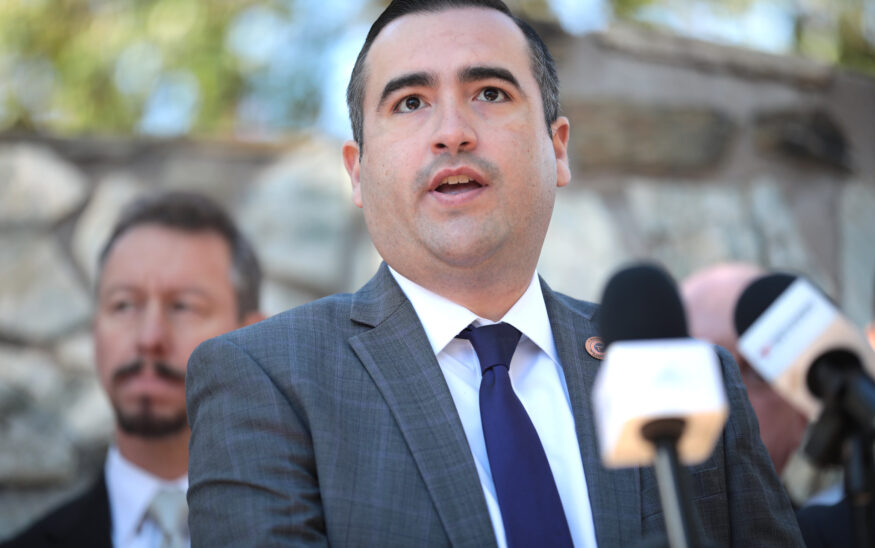
State Sen. T. J. Shope, R-Coolidge, speaking with the media at a January 2023 press conference at the Arizona State Capitol building in Phoenix. (Gage Skidmore / Flickr)
Political violence top of mind for Legislature this session
Reagan Priest, Arizona Capitol Times//January 31, 2026//


Key Points:
-
Lawmakers are introducing bills to offer more protections against political violence
-
One bill would allow candidates to spend campaign cash on security expenses
-
Other bills would increase penalties for harassing candidates and protect addresses
Arizona lawmakers are hoping to offer more protections for political candidates and election workers after 2025 saw several high-profile incidents of political violence.
Lawmakers on both sides of the aisle introduced three bills focused on threats to candidates and election workers that were directly inspired by the shooting deaths of former Minnesota House Speaker Melissa Hortman and Turning Point USA co-founder Charlie Kirk. It has been top of mind for officials across all areas of Arizona’s government over the past year.
“Unfortunately, personal security has become a necessary part of running for and holding elected office,” Secretary of State Adrian Fontes wrote in a memo following the incidents.
In that memo, Fontes also advised candidates that he would not bring enforcement action against anyone using campaign funds for security services even though those expenses aren’t explicitly allowed under state law. Sen. T.J. Shope, R-Coolidge, is hoping to change that with Senate Bill 1189.
Shope’s bill would allow campaign committees to lawfully spend campaign donations on personal security for the candidate or the candidate’s family and requires those expenses to be documented on campaign finance reports. Shope told the Senate Judiciary and Elections Committee on Jan. 21 that his bill will codify Fontes’ guidance to ensure candidates aren’t punished for following it.
“I belong to the board of directors for at least three of our legislative national organizations, and this is a topic that has come up in all of those,” Shope told the committee.
Since Fontes issued the guidance, several candidates have taken him up, including Shope’s colleague Sen. Shawnna Bolick, R-Phoenix. She has been candid about the threats her family has faced, given that she and her husband, Arizona Supreme Court Justice Clint Bolick, are public figures.
“I would advise any other elected official out there that this applies to actually utilize these dollars to protect your family, because you never know,” Bolick told the committee on Jan. 21. “In my opinion, it’s good to have video footage in the event you have to actually prosecute someone.”
Additionally, Gov. Katie Hobbs, who is running for reelection, and one of her potential gubernatorial challengers, Republican Karrin Taylor Robson, have both utilized their campaign dollars for security in recent months. Hobbs’ campaign paid $720 to a security consulting firm in November, while Taylor Robson’s campaign paid $3,800 to two separate security firms in July and October.
Shope’s bill passed out of committee unanimously. In a similar vein, Senate Majority Leader John Kavanagh, R-Fountain Hills, introduced a bill that would allow candidates whose home addresses have been sealed via a court order to provide alternate addresses on forms used to prove residency in an electoral district.
Megan Kintner, the legislative director for the Arizona Association of Counties, said during a committee hearing on the bill that it will help ensure addresses that are otherwise protected aren’t inadvertently publicized.
“Like a judge, or if you were maybe a law enforcement official and you had your address protected because you were dealing with some harassment or some stalking, we wouldn’t want you to decide later that you wanted to continue your public service in another format and then realize ‘now my address is going to be exposed again,’” Kintner told lawmakers.
Rep. Lorena Austin, D-Mesa, is proposing extending similar protections to election officers whose addresses are protected by court order. Her bill would also criminalize posting personal information about election officials online when that information poses a safety threat.
Another bill from Rep. Quang Nguyen, R-Prescott Valley, would increase punishments for threatening, intimidating or harassing public officials, employees or their family members. Threatening or intimidating public figures or their family members would be a class 3 felony with a minimum sentence of two years in prison, while harassing them would be a class 6 felony with a maximum sentence of two years in prison.
Shope and Kavanagh’s bills are currently on the move in the Senate, but Austin and Nguyen’s bills are currently awaiting committee hearings. It is unclear if any of the bills will receive a signature from Hobbs.