Sign In
 Free Newsletter

Jennifer Loredo: Leading on policy in the Governor’s Office
Reagan Priest Arizona Capitol Times//February 1, 2026//
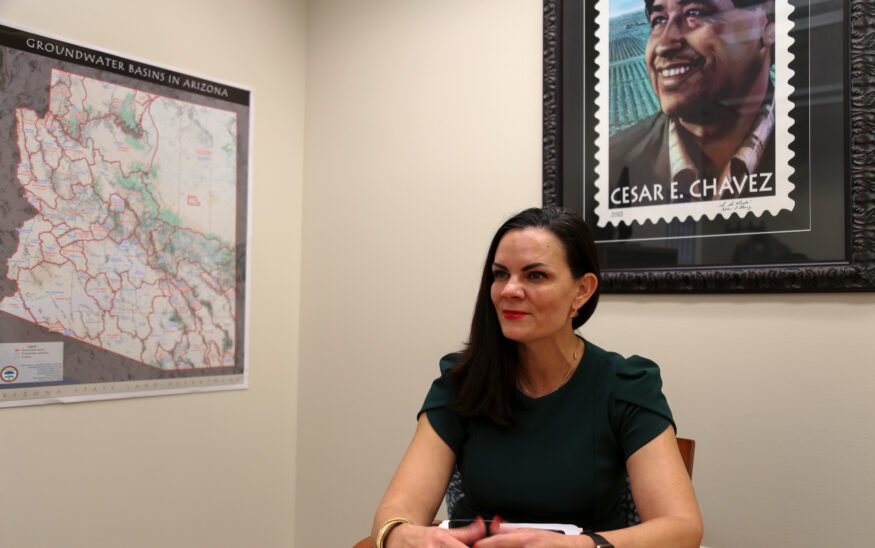
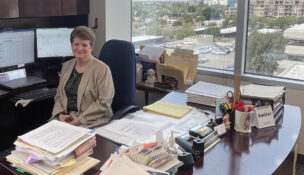
Jennifer Loredo sits for a portrait in the Executive Tower of the Arizona State Capitol. (Reagan Priest / Arizona Capitol Times)
Jennifer Loredo: Leading on policy in the Governor’s Office
Reagan Priest Arizona Capitol Times//February 1, 2026//


After starting out as a legislative intern in 2000, Jennifer Loredo worked her way up to leading policy work in Gov. Katie Hobbs’ administration. Now, as deputy chief of staff for legislative, policy and governmental affairs, Loredo is relying on her rural Arizona roots and decades of state government experience to advance the governor’s legislative agenda.
Questions and answers have been lightly edited for clarity.
Can you tell me a little bit about your career trajectory?
I actually started as a legislative intern. I’m like the old soul here, because my first legislative session was 2000, so it’s been quite a number of years of legislative sessions. I got hired on to staff in the House, and I did four more sessions doing education policy, counties and municipalities, and then a committee that was called Government Reform, and another one was called Federal Mandates and States Rights. From there, I joined the Arizona Education Association, the union that represents school employees. I lobbied for the AEA from 2005 through 2015. After the (2015) legislative session, I was moved into a management position where I was overseeing all the field staff. I was the field manager during the statewide walkout in 2018. Fast forward to Governor Hobbs getting elected. I did not have it on my radar, I did not put it into work here. I was loving what I was doing, and I got a call from her chief of staff, asking if I would want to come in and join the senior staff team. When I first got here, I started in a constituent engagement role. (Then) there was a call made by the chief of staff that we needed to redirect a little bit on the policy and legislative side. So today, I’m the deputy chief of staff for legislative and policy. I have a counterpart and we basically split the policy team. I have anything dealing with commerce and economic development, finance and revenue, water, transportation, energy, land. It’s been a rollercoaster, but it’s been a joy.
For those who don’t know, what does the day-to-day look like in your role?
I wish someone could just follow me around on my shoulder and see how much stuff pops up and what comes to the Governor’s Office. It’s always those big decision points that maybe no one ever really sees because they just continue to move forward. I don’t feel like any day has ever been the same here. Regularly, there are committees that I will try to watch during the legislative session, and there’s a ton of meetings with stakeholders as they’re wanting to engage on bills or maybe it’s like the city of Prescott’s day at the Capitol. There are meetings with our agencies, there’s meetings with our legislative liaisons, and then there’s meetings with legislators themselves, and then with the policy advisers. So it always looks different. I am never bored. I never have a free moment. But it’s fascinating, and I step back and I pinch myself and feel so blessed to be able to be in this position and to be able to serve under a governor who has so much trust and faith in her staff doing the right thing and helping make the right calls with her for the state of Arizona.
What do you wish the average Arizonan knew about Arizona’s state government or its governor?
I wish the average person knew, especially at the agency level, that people who come to work for the state do so very much from a place of public service. For our agencies and our staff it is,
“How do we try to make things better for people’s lives?” I wish people knew a little more about how caring our directors are, especially those selected to run our agencies. They really are experts in their field, and they are managing huge agencies with multiple hundreds of people, and knowing that they’re showing up every day and giving it their best. And things may not always go perfectly, but everyone’s always trying. As it relates to the governor, the one thing I would just really want people to know, she is a social worker at heart. She is kind to her staff, even when we’ve messed up, it’s never been like, “How the heck did you let this out?” It’s like, what did we learn? What can we do? How do we do better? And that is the stuff I wish people could see, her genuineness.
What do you enjoy most about your role?
My favorite thing in this role is the people I get to work with, from the governor to the chief of staff to our comms team to our policy team. I don’t know that I will ever be in another work situation where I have people who are as kind and dedicated as they are, but also super type-A hard workers. And especially in the role that I’m in, there’s a lot of trust that I’ve got to give to the policy advisers. And I’m blown away. These policy advisers we have are these young professionals, and the amount of depth of knowledge and sophistication they have on these issues, I always say, “You are the expert.” It really feels like a team. And I’m not trying to be glib, it’s a very unique and special situation with as high pressure as this is, where people are genuinely coming with a positive attitude and genuinely trying to help one another.
What has been your biggest challenge in this role so far?
I often have Republican legislators who will say, “We know this is a bad bill, the governor’s just going to veto it, why alienate myself within the caucus and kill the bill working with the Democrats?” And it’s frustrating from a policy perspective, because you know that they know it’s not good policy, but it’s partisan that way. How do we have people say what they mean and mean what they say? And be able to have those earnest conversations, even with their colleagues at the Legislature, to say, I don’t support this idea. That’s what’s changed from when I first started working in 2000. There was ferocious debate. There was no limiting someone to two minutes, or telling people when they come in and testify, they get a limited amount of time. Like my intern year in 2000, there were times when we’d stay and debate and COW until 3:30 in the morning, and then we’d be back here at 8:30 in the morning for committee hearings. And the legislators, as ferociously as they would debate, they would then go down the way and have a beer, and they’d work out an amendment. That part that is genuinely missing right now, the ability to reach across the aisle and have those conversations and work things out.
What has kept you in state government work for so long?
It is fascinating work. It is a unique period of time. The work that we’re doing, and some of the achievements we’ve had, if we weren’t here, would that have happened? That’s what keeps me engaged, to say, we are doing things or we’re at the very least stopping bad things from happening. (Hobbs) being just a rational person has kept Arizona on a good path in the last three years and moving into the fourth year of her first term.