Sign In
Upcoming Event
 Free Newsletter

Trump admin. sues Ariz., Con.., Ill. over prediction markets
Emma Kinery, State Affairs//April 6, 2026//
Credit: S. Greg Panosian
Trump admin. sues Ariz., Con.., Ill. over prediction markets
Emma Kinery, State Affairs//April 6, 2026//


Key Points:
-
All three states have taken action against Kalshi or Polymarket
-
Prediction market operators say they should be regulated by the CFTC
-
There are at least 30 lawsuits between state regulators and industry operators
The Trump Administration is suing three states in an attempt to push back on a wave of lawsuits from state gaming regulators who say prediction market platforms Kalshi and Polymarket are violating their state gambling laws.
Kalshi and Polymarket, which are both based in New York, say they should be regulated by the Commodity Futures Trading Commission since they are registered with the agency as contract markets where users can buy contracts on the outcomes of games.
The operators maintain they are not gambling sites and users are not betting on the outcome of sports games, but rather operate more like derivatives markets, which are overseen by the CFTC.State regulators disagree, saying the companies should be beholden to the same state gaming laws as any other betting company.
The Trump Administration on Thursday filed lawsuits against Arizona, Connecticut and Illinois seeking to override the state statutes.
The majority of state lawsuits have involved Kalshi, which has been sued by state gaming regulators and attorneys general. Kalshi is facing lawsuits from eight states and two tribal governments: Arizona, California, Connecticut, Illinois, Massachusetts, Michigan, Nevada, Washington, and the Ho-Chunk Nation in Wisconsin and three tribes in California.
The company has sued 10 state regulators: Arizona, Connecticut, Iowa, Maryland, Nevada, New Jersey, New York, Ohio, Tennessee and Utah. The total number of cases is at least 30, not including class action lawsuits.
Polymarket, by contrast, currently only faces lawsuits against gaming regulators in Nevada and Massachusetts but also faces several class action suits in states including California and New York, as well as scrutiny from federal lawmakers over questions of insider trading.
Courts have been split in the legal fight between state regulators and prediction market operators, but states have mostly had the advantage to date. Judges for the most part have sided with state regulators and have refused Kalshi’s attempts to have the cases moved to federal court, ruling that the issue pertained to state law.
The Trump administration in recent weeks has grown more aggressively vocal in backing the nascent industry.
Historically, the CFTC has been reluctant to approve markets that resemble sports betting or gambling. That posture remained true at the beginning of the second Trump administration as well, though the president’s son, Donald Trump Jr., has long been a proponent of the industry and serves as an adviser to both Kalshi and Polymarket.
In his confirmation hearing, CFTC Chair Mike Selig said he believed it best to leave the issues to the courts but has since changed his tune. Last month in a video, Selig announced the CFTC would be filing a friend-of-the-court brief “to defend its exclusive jurisdiction over these derivative markets.” He followed it with an opinion piece published by The Wall Street Journal.
In a statement Thursday announcing the lawsuit, Selig said his agency would continue to “safeguard its exclusive regulatory authority over these markets and defend market participants against overzealous state regulators.”
“This is not the first time states have tried to impose inconsistent and contrary obligations on market participants, but Congress specifically rejected such a fragmented patchwork of state regulations because it resulted in poorer consumer protection and increased risk of fraud and manipulation,” Selig said.
A spokesperson for Kalshi declined to comment on the lawsuit to State Affairs.
A spokesperson for Polymarket told State Affairs in a statement: “Prediction markets are federally regulated financial instruments, and we applaud the CFTC for taking action to defend these important markets.”
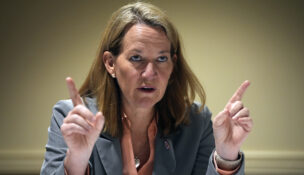
A spokesperson for the Arizona Department of Gaming said the agency is aware of the lawsuits filed by the CFTC but could not provide any additional information beyond that. A spokesperson for Arizona Attorney General Kris Mayes also declined to comment.
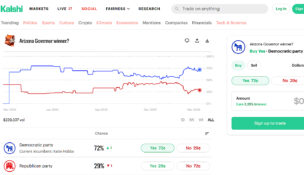
Arizona took the unprecedented step last month of filing criminal charges against any prediction market platform when it charged Kalshi. Mayes filed 20 counts against the company, with four related to election wagering. Kalshi previously said in a statement to State Affairs the charges were founded on “paper thin arguments.”
The Illinois Gaming Board referred comments to the governor’s office. A spokesperson for Illinois Gov. JB Pritzker told State Affairs the Trump Administration is “carrying water for companies driving well-documented and lucrative insider trading schemes.”
“These firms are making record profits while exposing Illinoisans to gaming products with no basic consumer protections or oversight,” the spokesman said. “This is a blatant attempt to sidestep the State’s jurisdiction and put profits ahead of consumers. Illinois isn’t backing down — we will continue to fight to protect Illinois consumers.”
The Connecticut Department of Consumer Protection, which oversees gaming in the state, declined to comment on pending litigation. Connecticut Attorney General William Tong in a statement to State Affairs said the Trump Administration was “recycling industry arguments that have been rejected in district courts across the country.”
“These contracts are plainly unlicensed illegal gambling under time-worn state law, and we will aggressively defend Connecticut’s commonsense consumer protection laws,” he said.
Update: This article has been updated to include a statement from the Connecticut Attorney General.
Emma Kinery is a State Affairs national reporter covering state politics and policy out of our Washington, D.C. office. Contact Emma Kinery at ekinery@stateaffairs.com or on X @EmmaKinery.
RELATED