Sign In


 Free Newsletter

Trump goes on offense as prediction market lawsuits multiply
Emma Kinery, State Affairs//May 29, 2026//
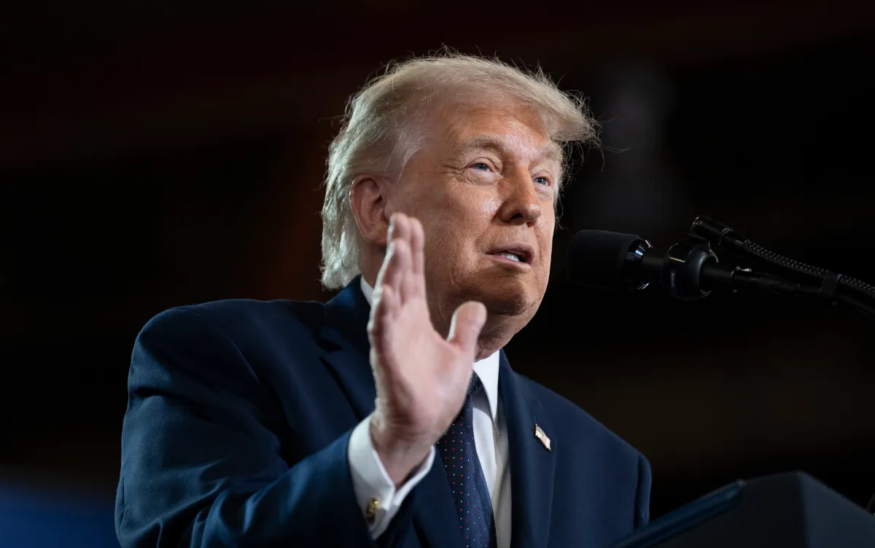
President Trump Delivers Remarks in New York, May 22nd, 2026. (Courtesy of whitehouse.gov)
Trump goes on offense as prediction market lawsuits multiply
Emma Kinery, State Affairs//May 29, 2026//


Key Points
-
States are defending their jurisdiction over prediction markets in court
-
The CFTC has historically avoided regulating sports betting, gambling
-
The agency was greatly impacted by the Trump admin. government downsizing
The federal government has grown increasingly combative in recent weeks defending what it purports to be its “exclusive jurisdiction” over prediction markets.
The Commodity Futures Trading Commission, which once shied away from the industry, has sued five states since April in an effort to block enforcement of their gambling statutes. And President Donald Trump this week took his most overt stance to defend prediction markets in a lengthy social media post.
Federalism has been on full display in the fight over who controls prediction markets, as the federal government spars with states for regulatory oversight.
State regulators say the sites — which let users bet billions of dollars a week on the outcome of practically anything, from the NBA Finals to elections — are no different than any other gambling website and should be beholden to the same laws and taxed the same way. States are estimated to have missed out on more than $1 billion in taxes since prediction markets began offering sports events contracts, according to a running tally by the American Gaming Association.
The industry says the regulation task belongs to the federal government and that the sites are derivatives and futures contracts, which fall under the Commodity Exchange Act. Nearly all platforms are registered as such with the CFTC.
Because of this, platforms like Kalshi boast that they operate in all 50 states, even those where gambling and sports betting is illegal. That may soon become more difficult to claim: Minnesota last week enacted a law to ban all prediction markets from operating or advertising in the state.
In a post on his social media platform Truth Social, the president called it “critically important that the CFTC’s exclusive authority over prediction markets is maintained so “that they will thrive.”
“Under my leadership, we are setting the ‘rules of the road’ that are the gold standard for the states,” Trump wrote, before listing several politicians he said were “scum” currently “setting the rules.”
“It is a major industry, and we must protect it,” Trump said.
The post was the strongest language from the president who, while he has expressed ardent support for CFTC Chairman Mike Selig, has until recently been more tepid on prediction markets. Trump told reporters in the Oval Office last month that he “was never much in favor of [the industry],” adding: “I don’t like it conceptually. It is what it is. I’m not happy with any of that stuff.”
The administration at the beginning of April sued Arizona, Connecticut and Illinois seeking to block enforcement of state gaming statutes against Kalshi and Polymarket. It subsequently filed suits against New York, Wisconsin and Minnesota, and has submitted several amicus briefs in cases involving other states.
This more active approach is a departure from the agency’s historical stance on regulating prediction markets. Prior to the second Trump administration, the agency had been reluctant to approve markets that resemble sports betting or gambling.
Kalshi did not promote itself as a place to bet on sports outcomes until January 2025. Polymarket also did not begin to heavily market itself for sports until around that time. Now, sports account for 90% of Kalshi trades and around two-thirds of those on Polymarket.
Selig said in his Senate confirmation hearing that he believed it best to leave the issues to the courts, but he has since changed his tune. Selig announced in March that the CFTC would be filing a friend-of-the-court brief “to defend its exclusive jurisdiction over these derivative markets,” then penned an opinion piece published in the Wall Street Journal.
Trump’s son, Donald Trump Jr., serves as an adviser to both Kalshi and Polymarket. His venture capital firm 1789 Capital is a considerable investor in Polymarket.
The likelihood of the Supreme Court ultimately settling the question over who has the final authority to regulate the sector grew last week when a federal appeals court on the West Coast sided with the states — contradicting an earlier ruling by an East Coast federal appeals court.
The 9th Circuit denied stays for Kalshi and Polymarket in a trio of rulings, siding with regulators in Nevada and Washington state. The three-judge panel found that neither company successfully argued that the cases should be bumped to the federal level.
In April, the 3rd Circuit became the first appeals court to rule on the issue. The judges sided with Kalshi and against New Jersey gaming regulators in a 2-1 split decision, upholding a preliminary injunction.
Several other cases are currently being heard by federal appeals courts. Others are playing out on the state level. The total number of cases is around 30, not including class action suits.
Kalshi in particular has preemptively sued and countersued a dozen states: Arizona, Connecticut, Iowa, Maryland, Montana, Nevada, New Jersey, New York, Ohio, Tennessee, Utah and Washington.
The company is also facing lawsuits from seven states and several tribal governments: Arizona, Massachusetts, Michigan, Nevada, Rhode Island, Washington and Wisconsin; and the Ho-Chunk Nation in Wisconsin, three tribes in California and four tribes in New Mexico.
Thirty-eight state attorneys general — including several not involved in litigation — filed an amicus brief last month in support of Massachusetts’s lawsuit against Kalshi. They wrote in the brief that the states have “traditionally regulated gambling, including sports betting,” and “are interested in this case because Kalshi’s aggressive theory of preemption threatens the States’ longstanding ability to protect their citizens in this area.”
Massachusetts in September 2025 became the first state to sue a prediction market, when Attorney General Andrea Campbell filed a lawsuit against Kalshi in Suffolk County Superior Court. The case is ongoing and was heard earlier this month.
Trump in his Truth Social post May 26 didn’t mention Campbell but named several other politicians who have been involved in the space.
The president derided former New Jersey Gov. Chris Christie, who now serves as an adviser to the American Gaming Association and is a critic of the industry; New York Attorney General Letitia James, who has taken action against prediction market operators and whom the CFTC has sued; Minnesota Gov. Tim Walz, who signed legislation banning the products from operating in the state; and Illinois Gov. JB Pritzker, whose state has also been sued by the administration.
Emma Kinery is a State Affairs national reporter covering state politics and policy out of our Washington, D.C. office. Contact Emma Kinery at ekinery@stateaffairs.com or on X @EmmaKinery.
RELATED
Tennessee seeks to reverse block on sports wagering law enforcement
Federal appeals court sides with Nev., Wash. over Kalshi, Polymarket
Minnesota enacts first-in-the-nation prediction market ban
Swaps or bets? High court digs into sports prediction market case
38 state AGs sign amicus brief supporting Mass. in Kalshi lawsuit
CFTC sues New York to prevent prediction market enforcement
New York AG sues Coinbase, Gemini for prediction market offerings
Federal appeals court sides with Kalshi, allows sports contracts in N.J.
Robinhood sues Washington state following AG’s Kalshi suit
Washington joins states suing Kalshi over gambling claims
Trump admin. sues Ariz., Conn., Ill. over prediction markets
Court grants Nevada two-week restraining order against Kalshi
Kalshi vs. state regulators: State of play
Prediction markets face legal challenges as Super Bowl bets surge
Prediction markets form coalition amid scrutiny from state regulators
State AGs call on DOJ to crack down on illegal gambling websites