Sign In


 Free Newsletter

Attorney General Mayes oversees execution of LeRoy McGill
Kiera Riley, Arizona Capitol Times//May 20, 2026//
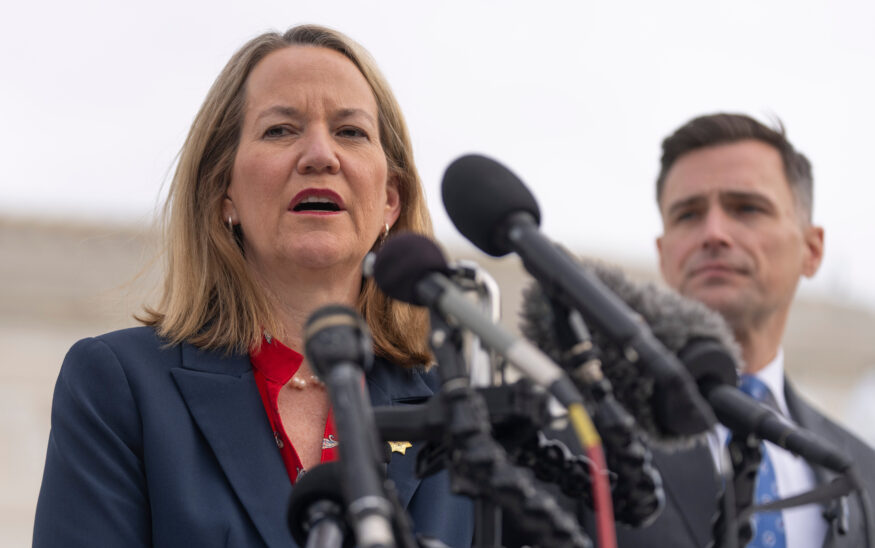
Arizona Attorney General Kris Mayes speaks to reporters outside the U.S. Supreme Court on Nov. 5, 2025, in Washington. (AP Photo / Mark Schiefelbein)
Attorney General Mayes oversees execution of LeRoy McGill
Kiera Riley, Arizona Capitol Times//May 20, 2026//


Key Points:
-
LeRoy McGill executed by the state for 2002 murder of Charles Perez
-
Friend of McGill detailed his childhood, priest prayed over execution
-
Attorney general stands behind death penalty, citing cruel murder
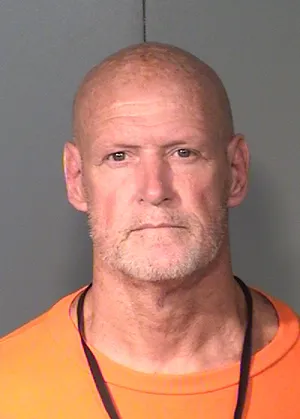
When the curtains parted, LeRoy McGill craned his head to the side.
He smiled at the cadre of law enforcement officers and officials flanking the right side of the room, nodded and said hello. His eyes wandered across the stands, tracing over the two media witnesses cradling legal pads and his two defense attorneys sharing a box of tissues.
His gaze then landed on a man named Bubba. He nodded and Bubba raised his fist.
He kept it still in the air as the white-gloved medical team felt for veins, tied blue rubber tourniquets, pierced needles and taped each down. The IV tubes crossed the tattooed celtic knots intersecting McGill’s wrists and the crook of his arm.
In his last words, McGill thanked everyone for being “accommodating and nice.” He said, “I’m going home.”
A priest entered, donning a white robe with embroidered silver crosses and a purple stole. He read McGill’s last rites, placing his hand on his head.
Bubba still had his fist up as a blue gloved hand, shown only on a television screen, plunged saline, and then pentobarbital. McGill closed his eyes and let out a few snores.
The priest continued to pray, tempering his voice to a whisper imperceptible by the loudspeaker.
When McGill went still and silent, the priest stopped speaking. Bubba put his arm down. A medical staff member took his pulse, and at 10:26 a.m., the deputy director of the Department of Corrections announced he was dead.
Grover “Bubba” Ridgeway and McGill saw each other in person for the first time in the execution chamber. Bubba raised his fist to let McGill know his family was thinking of him.
The two had connected over the phone sometime after their worst days were behind them, tied together by time spent at Boysville, a children’s shelter in San Antonio.
According to Bubba, physical and sexual abuse was rampant. And according to the court record, McGill did not make it out unscathed.
By the time McGill set two people on fire in 2002, leaving one dead and another severely burned over three quarters of her body, substance abuse had been a fact of life, tracing back to his time at Boysville.
Ten years later, addiction’s orbit would lead to his first arrest and probation for the illegal use of a credit card. The next year he robbed two fast food restaurants, pled guilty to two counts of armed robbery and was sentenced to 10 years and six months in state prison.
He got out three years early and was paroled in 1993. He worked at a company making PVC pipe. He lived with his mother. He attended court-mandated treatment programs.
In 1995, he moved out of his mother’s house and into an apartment neighboring his brother, Kean, and his girlfriend Angela. Angela’s brother Robert moved in with McGill for a time and put him in touch with his girlfriend’s cellmate, Jonna “Angel” Hardesty.
Hardesty and McGill corresponded in writing over the course of her incarceration and met in person only after her release. She moved in with McGill in January 1996.
The two started regularly using methamphetamine.
Then, over the course of a few weeks in April 2002, McGill lost his job, and then his apartment, leaving himself and Hardesty homeless. The two lived out of a car and drifted into a one bedroom apartment rented by Jack Yates.
Yates allowed McGill and Hardesty into the fold. The two joined Charles Perez, Nova Banta, Edwin and Kimberly Keith, their two young daughters, and occasionally, Hardesty’s brother Jeffrey Uhl, crashing alongside them in the living room.
The apartment was “busy,” and methamphetamine and marijuana use was standard.
Weeks into McGill and Hardesty’s stay, Yates’ shotgun went missing.
Banta and Perez pointed to Hardesty and McGill, and Yates kicked the two out of the apartment. McGill and Hardesty then went to stay with a friend who lived a short walk away.
On the night of July 12, McGill was high. And at around 3:30 a.m., he set off for Yates’ apartment. He met Uhl and Keith outside. He told Keith to get his wife and kids out of the apartment, leaving Yates, Perez and Banta inside.
Uhl let McGill in. Perez and Banta sat next to each other on a couch.
According to Banta, McGill walked in, said they should not talk behind people’s backs, doused the two in gasoline, and lit and threw a match, engulfing her and Perez in flames.
The two ran out of the apartment in a rush of flames as the fire spread, eventually engulfing the complex.
Yates, Uhl and a neighbor in an adjoining unit got out alive. Banta survived with third-degree burns to three quarters of her body. Perez died at the hospital, with 80% of his body burned.
McGill was indicted on March 11, 2003, for first degree murder. And shortly after, the state sent notice that it planned to seek the death penalty, finding McGill had a previous conviction, that his presence created a grave risk of death to others and that he had committed the murder in an especially heinous, cruel or depraved manner.
Banta told police at the hospital that it was McGill who had set her on fire, and she later identified McGill in court as a witness for the prosecution.
In November 2004, a jury returned a death sentence.
McGill sought appeals in state and federal court, lodging one last attempt at life in prison after the Arizona Supreme Court issued a warrant for his execution, claiming deficiencies in his trial attorney, false statements to the jury on his eligibility for parole and incorrect or tainted testimony from witnesses.
A judge found all of McGill’s claims were “untimely, precluded, or both.”
He declined to appeal. His execution date stayed static, and, on May 20, the state carried out his death sentence by lethal injection.
In a press conference, Mayes acknowledged her statutory role as the individual responsible for selecting which inmates are subject to the death penalty and said her office had developed a “thoughtful and well reasoned methodology” in making the decisions.
“We look at factors like cruelty. We look at factors like whether children were murdered. We look at factors like whether police officers were murdered in the line of duty by these individuals, we look at the heinousness of the crime,” Mayes said.
The first execution under Mayes came about after death row inmate Aaron Gunches moved for his own death. Her office then chose Richard Djerf, a man convicted of the murder of four members of the Luna family, Albert, 47, Patricia, 42, Rochelle, 18, and Damien, 5.
As for McGill, Mayes pointed to the details of the murder.
“Look, this particular individual killed a person using Styrofoam and gasoline,” Mayes said. “And that’s obviously extremely heinous, so that’s why I made this selection.”
The styrofoam allegation has been repeated in briefings throughout the legal process as an aggravating factor, with McGill making the first mention in an interview with a detective after his arrest.
He claimed someone else had combined styrofoam and gasoline, which turned into a gel and made the fire “harder to put out.”
The detail was disputed throughout McGill’s post-conviction relief proceedings as he claimed his trial attorney failed to call an arson witness or cross examine the state’s experts.
One of the state’s witnesses at the trial found no indication of styrofoam in the tests he ran but noted he did not specifically test the composition of the victims’ clothing. The 9th Circuit Court of Appeals found the state’s presentation of evidence on the issue “inconsistent at best.”
But in any case, the state maintains that setting two people on fire met the cruel, depraved and heinous standard of a death sentence. In the aftermath of the third execution, Mayes continued a familiar refrain to abide by the state’s death penalty statute.
“As Arizona voters have affirmed and Arizona courts have reinforced, the death penalty is the law of the land in Arizona,” Mayes said. “As Arizona’s top law enforcement official it is my duty to enforce the law of our state. Today that duty has been carried out.”
Banta, family and friends of Perez, and any other involved victims stayed out of legal proceedings and the execution.
“My thoughts today are with the family and the loved ones of Charles Perez as well as with Nova Banta,” Mayes said.