Sign In




 Free Newsletter
APS rate case kicks off with hours of protest over 14% rate increase
Reagan Priest, Arizona Capitol Times//May 19, 2026//

Sandy Bahr speaks outside the Arizona Corporation Commission on May 18 alongside advocates protesting Arizona Public Service's rate increase request. (Reagan Priest / Arizona Capitol Times)
APS rate case kicks off with hours of protest over 14% rate increase
Reagan Priest, Arizona Capitol Times//May 19, 2026//


Key Points:
-
Arizona Public Service is requesting a 14% rate increase, potentially costing customers $240 more per year
-
Ratepayers voiced extreme opposition to the rate increase during four hours of testimony on May 18
-
The Arizona Corporation Commission will likely vote on the rate increase in December
“No rate hikes! No rate hikes! No rate hikes!”
Before packing two Arizona Corporation Commission hearing rooms for nearly four hours of public testimony, local advocacy groups and utility ratepayers gathered outside of the commission’s downtown Phoenix building on May 18 to protest Arizona Public Service’s proposed 14% rate increase.
APS is the state’s largest electricity provider, serving 1.5 million residential and commercial customers. It is currently in the process of asking the commission, the state’s utility regulatory body, for its third rate increase in four years.
May 18 marked the beginning of hearings in the company’s rate case, a quasi-judicial process requiring the participation of regulated monopoly utilities that want to adjust the rates they charge customers. At the end of the lengthy process, the five-member, all-Republican commission will ultimately decide what rate increase APS will receive.
The rate increase request comes amid a nationwide cost of living crisis, record-breaking high temperatures, and a midterm election year in which two commissioners, Nick Myers and Kevin Thompson, are seeking reelection. Those facts were not lost on ratepayers who testified at the opening day of hearings.
“A ‘yes’ vote for this 14% rate hike is a death sentence to many of our most vulnerable citizens,” said Kori McClemens, a local activist, during public comment. “Their blood will be on your hands, and we will remember who you are at the ballot box.”
Testifiers were especially concerned about data center costs, multimillion dollar salaries for APS executives and potential annual rate increases with APS’ proposed formula rate structure. One audience member heckled APS CEO Ted Geisler during the hearing and as he left for the commission’s lunch break, calling out his $3.7 million dollar salary.
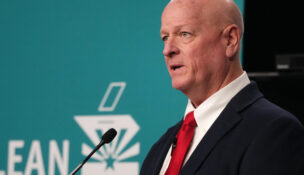
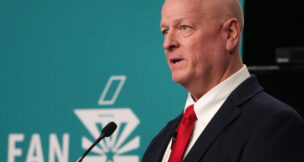
Myers, the commission’s current chair, defended himself and his fellow commissioners at the end of the lengthy public comment period.
“The utilities can come in and ask for whatever kind of rate increase they want, that does not mean that they’re going to get everything they ask for,” Myers said. “As a matter of fact, I’ve never actually seen that happen.”
What is in the APS rate application?
In June 2025, APS filed an application to the commission requesting a 14% rate increase. If approved, the average household could see around $240 more in utility costs per year.
The company says the request is driven by inflation, increasing costs for utility equipment and the exploding demand for electricity in APS’ service territory as temperatures soar and data center developers set their sights on the desert.
APS is also requesting a 45% rate increase for large load customers like data centers and manufacturing facilities. The company is looking to update how it allocates costs to serve large load customers, ensuring that any new power plants or transmission lines needed to serve those customers are paid for by the developers or end-users.
Some ratepayers with rooftop solar panels will also see an increase under APS’ proposal, as the company seeks to increase its already-controversial grid access charge. The charge amounts to a small monthly fee that APS has argued is necessary because solar customers do not fully pay the costs the company incurs to serve them.
The company is also seeking its first formula rate structure, a new ratemaking mechanism approved by the commission in 2024.
Typically, utility companies in Arizona set their rates based on the actual costs incurred to serve customers in a historic 12-month period. APS’ application relies on a test year including costs from 2024, and the rates customers are currently paying rely on data from the 2022 test year.
Under a formula rate structure, APS would be allowed to adjust rates annually based on projected future costs and without going through the typical rate case process. The company says this will prevent large rate increase requests every few years by reducing the regulatory lag that comes with the nearly two-year long rate case process.
APS is also requesting a 10.7% return on equity, otherwise known as the rate of return the company’s shareholders will receive on their investment, which APS uses to fund infrastructure developments and other customer costs.
What do opponents say?
The Residential Utility Consumer Office, the state agency tasked with representing ratepayers at the commission is opposing the company’s formula rate proposal and its return on equity request. RUCO Director Cynthia Zwick told the Arizona Capitol Times that her office is not convinced that formula rates will reduce costs for customers since nearly every utility company is looking to implement them.
“Depending on where you live, not only will you see an increase in your electric bill, you will likely also see one in your gas bill and you will likely see one in your water and your wastewater bill,” Zwick said. “So you could see one, two, three or four increases on an annual basis and we just simply think that doesn’t make sense.”
Attorney General Kris Mayes, herself a former commissioner, argues APS’ rate increase could be slashed to 3% by reducing the return on equity request, which her office says amounts to a $524 million “wealth transfer” from ratepayers to shareholders.
Mayes filed expert testimony suggesting the return on equity should be reduced to 6%. RUCO and commission staff recommended an ROE closer to 9%.
Zwick said RUCO is also advocating for creating a completely separate customer class for data centers and other large load customers, in addition to raising their rates. Additionally, Zwick said the commission should be wary of data center proposals with broad non-disclosure agreements that reduce transparency.
What happens next?
The May 18 hearing kicked off what is likely to be a six-week long hearing process where attorneys will present evidence and make their case to an administrative law judge about whether the rate increase should be approved as is or adjusted. The judge is expected to issue a recommended order on the rate application in November.
The commission will discuss, amend and vote on the recommended order in an open meeting likely to be held sometime in December. Any rate increase approved by the commission will likely go into effect in early 2027.
It is unlikely that the commission will approve the exact rate increase APS is asking for. However, commissioners have repeatedly said that they cannot outright prohibit a rate increase, due to both legal constraints and financial considerations.
“Contrary to popular belief, we as commissioners do not have the option of simply saying ‘no’ to a rate case, as much as we want to,” Myers said. “We just don’t have that option. We are required to set just and reasonable rates, which is a balance between the utility’s viability and keeping the rates as low as possible.”