Sign In
Upcoming Event
 Free Newsletter

$2M arts appropriation pales to $15B potential state profit, expert says
Jordan Gerard, Arizona Capitol Times//May 17, 2026//
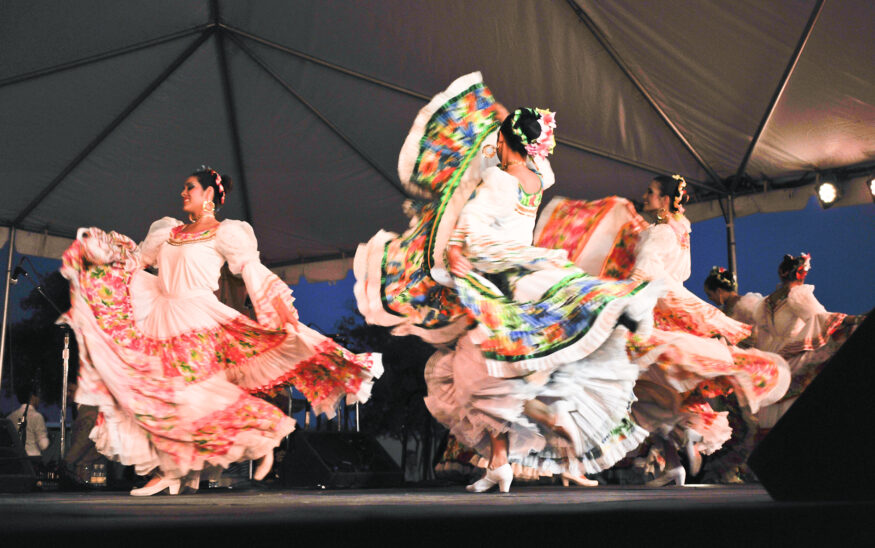
Arizona Arts Commission grantee Baile Folklorico dance group performs at the Fiesta de Garibaldi during the 2024 Tucson International Mariachi Conference. (Angy Shearer / La Frontera)
$2M arts appropriation pales to $15B potential state profit, expert says
Jordan Gerard, Arizona Capitol Times//May 17, 2026//


Key Points:
-
State appropriations to its art commission fuel $15.8 billion in economic value
-
The Arizona Commission on the Arts relies on one-time legislative appropriations, leaving the level of funding uncertain year to year
-
$2 million state appropriation accounts for about 44% of the commission’s budget
In the grand illustration of Arizona’s budget, $2 million seems like a small detail. Except when the return on investment comes back as $15.8 billion in value to the economy.
Before Republicans’ latest budget proposal met Gov. Katie Hobbs’ veto pen, senators discussed its pros and cons in a Senate floor session on May 4. During that session, Sen. Kiana Sears, D-Mesa, brought up the importance of supporting the arts and the pending appropriation to the Arizona Commission on the Arts.
“It’s essential to a culture,” she told the Arizona Capitol Times. “The support and the return on investment is incredible because it’s weaving into the fibers of every city, every town.”
If the state chooses not to fund the arts, it hurts the economy, Sears said. Programs in her district, like the Mesa Arts Center and many others, bring art shows, live music, theatre and classes to community members.
Republicans didn’t include any appropriation for the commission in their most recent budget proposal. And Senate Majority Leader John Kavanagh, R-Fountain Hills, described the tension as a “need to have” versus “nice to have” problem.
Steve Wilcox, director of communications for the Arizona Commission on the Arts, said last year’s one-time legislative appropriation of $2 million accounted for about 44% of the commission’s budget. More significantly, 58% of the commission’s budget was then distributed through 589 grants across the state, totaling $2.82 million in arts funding across 67 cities or towns in 14 different counties.
Not only do those grants financially support commercial, nonprofit and individual programs dedicated to beautifying the state, experts also argue they add about $15.8 billion in value to the state’s economy and employ over 95,000 people. Arizona’s arts and culture sector contributes more to the gross state product than mining and forestry, coming in behind construction and transportation, according to a 2023 U.S. Bureau of Economy Analysis report.
Wilcox said it’s not just Maricopa and Pima counties that benefit, but it’s the whole state.
“It is rural arts festivals that are bringing people in from out of town and out of state. We’ve got an incredible bluegrass festival every year in Payson. We’ve got some great music festivals around Flagstaff, Prescott,” he said. “These are major events bringing people into those communities and those have a huge impact.”
Once upon a time, the commission received a general fund appropriation that provided appropriate funding for its operations, he said. There was also the Arizona ArtShare Private/Public Endowment established in the 1990s and reached a corpus of about $20 million and delivered about $1 million to the arts sector each year, Wilcox added.
The commission also received benefits from the Arts Trust Fund, established in 1989 by Gov. Rose Mofford. Under that fund, businesses pay a $45 filing fee to the Arizona Corporation Commission and $15 of that goes to the Arts Trust Fund and, in turn, the art commission. This fund still accounts for about 27% of their budget.
Then the Great Recession hit and the state stopped the general fund appropriations to the commission — sweeping the endowment and halting those funding streams, Wilcox said. Wilcox added that decision started a period of intermittent support for Arizona’s arts, with the commission receiving some funding from the Legislature certain years and barely any at all the next. For example, in 2011, they received $72,600.
Recently, legislative appropriations have improved. The commission received $5 million in fiscal years 2023 and 2024, which accounted for 66% of their budget at that time. In the last two fiscal years, the commission received $2 million each year, Wilcox said.
This year, Hobbs’ budget proposal included depositing $2 million into the Arts Trust Fund, but due to ongoing budget negotiations, she did not comment on the ongoing status of the next appropriation.
“Obviously the budget scenario for the state is pretty rough, and we certainly respect that $2 million. It’s a very modest investment for an industry that has a significant impact,” Wilcox said.
About 24% of the art commission’s budget comes from the National Endowment for the Arts and 5% comes from other sources. Beyond the 58% that is distributed through grants to arts programs big and small, metro and rural, 21% is spent on programs and services and another 21% supports administration and operations, according to data from the commission.
The upcoming fiscal year presents a question mark for how much money they’ll have to work with, Wilcox said, and by extension, organizations that rely on the commissions’ grants to bolster their activities won’t know how much they’ll get either.
“Unfortunately, we’re kind of used to it at this point,” he said. “When it’s not there, it’s a significant loss to us.”
Due to that uncertainty, the commission has developed strategies to ensure their programs and services are not so reliant on that one-time funding, Wilcox said. Eventually, they’d like to see the general fund appropriation return.
“I think the general fund appropriation is maybe the loudest statement that could be made that this state is committed to supporting its arts and culture sector,” he added. The one-time appropriations are meaningful, but it needs to be more strategic instead of “maybe we will, maybe we won’t,” he said.
The $15.8 billion value in economic impact comes from both nonprofit and commercial operations, Wilcox said. Contributing to that value are the people who buy tickets to attend a show, make family arrangements such as a babysitter, drive or use public transportation or rideshare to get to the show, go out for dinner beforehand and maybe go out for cocktails afterwards, he added. Some might come in from out of town and book accommodations for the night.
“All of that builds out. This has a larger economic impact,” he said. Even the nonprofit arts and culture sector fuels $1.1 billion in economic activity, or the equivalent of a Superbowl every year, Wilcox said.
Per capita investment in the arts through legislative appropriations shows Arizona is ranked 47th in the nation, with 26 cents per person. In comparison, Texas invests 58 cents per person and Utah invests $2.55 per person.
The Arizona Legislature would need to make a $20 million appropriation to match Utah’s per capita investment, according to the commission’s research.