Sign In
Upcoming Event
 Free Newsletter

Contentious GOP primary reveals Republicans’ latest party lines
Kiera Riley & Reagan Priest, Arizona Capitol Times//May 15, 2026//
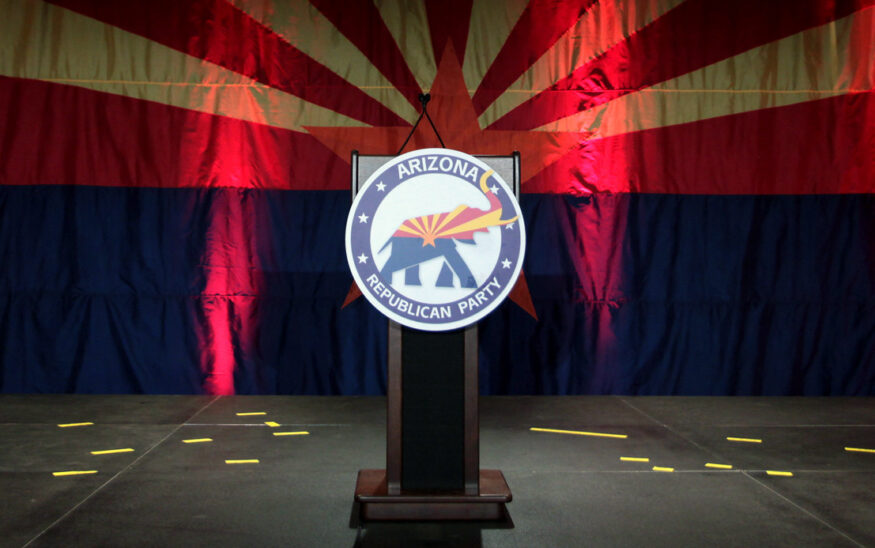
The stage of the 2014 Arizona Republican Party victory party at the Hyatt Regency in Phoenix. (Gage Skidmore / Flickr)
Contentious GOP primary reveals Republicans’ latest party lines
Kiera Riley & Reagan Priest, Arizona Capitol Times//May 15, 2026//


Key Points:
-
Republicans face divisive primaries amid shifting political dynamics, voter makeup
-
Turning Point influence tested against independent voters’ growing electoral hold
-
Conservative incumbents battle fellow Republicans across multiple statewide races
Thirteen Republicans are vying for statewide office this year, but before they can take on their Democratic opponents, they’ll have to navigate increasingly contentious and fragmented primary challenges.
There isn’t a single Republican running unopposed in a statewide primary this year, while most of the Democrats hoping to keep or flip those same seats will not face any meaningful competition within their own party. Even Republican incumbents have not been spared; three officeholders with proven conservative chops are facing challenges from the right.
“That’s a Turning Point thing,” said Chuck Coughlin, a Republican-turned-independent consultant. “Are they going to be able to marshal Republican voters in opposition to fairly conservative candidates?”
Hanging over it all is diminished public support for President Donald Trump, his policies and the Republican Party as a whole. Each candidate is walking a delicate tight rope between supporting the president enough to win over an engaged GOP primary voter and keeping enough distance so as to not alienate Arizona’s growing bloc of independent voters.
Some Republicans argue even Turning Point, the conservative youth organization founded in Arizona, might be losing its influence in the state after less than resounding results for TP-backed candidates in April’s Salt River Project Board elections.
“Turning Point puts their money behind people, and that machine rolls, but it turns off the independent voters,” said Lisa Everett, the former chair of Legislative District 29 Republicans. “Since they are the ones that decide the elections in Arizona, we need to figure out how to court them.”
With the exception of the Republican primary for governor, GOP voters seem largely undecided about primary candidates in down-ballot statewide contests. Polling suggests that some of those candidates are unknown to the Republican electorate, even though most have held some form of elected office in Arizona.
Governor
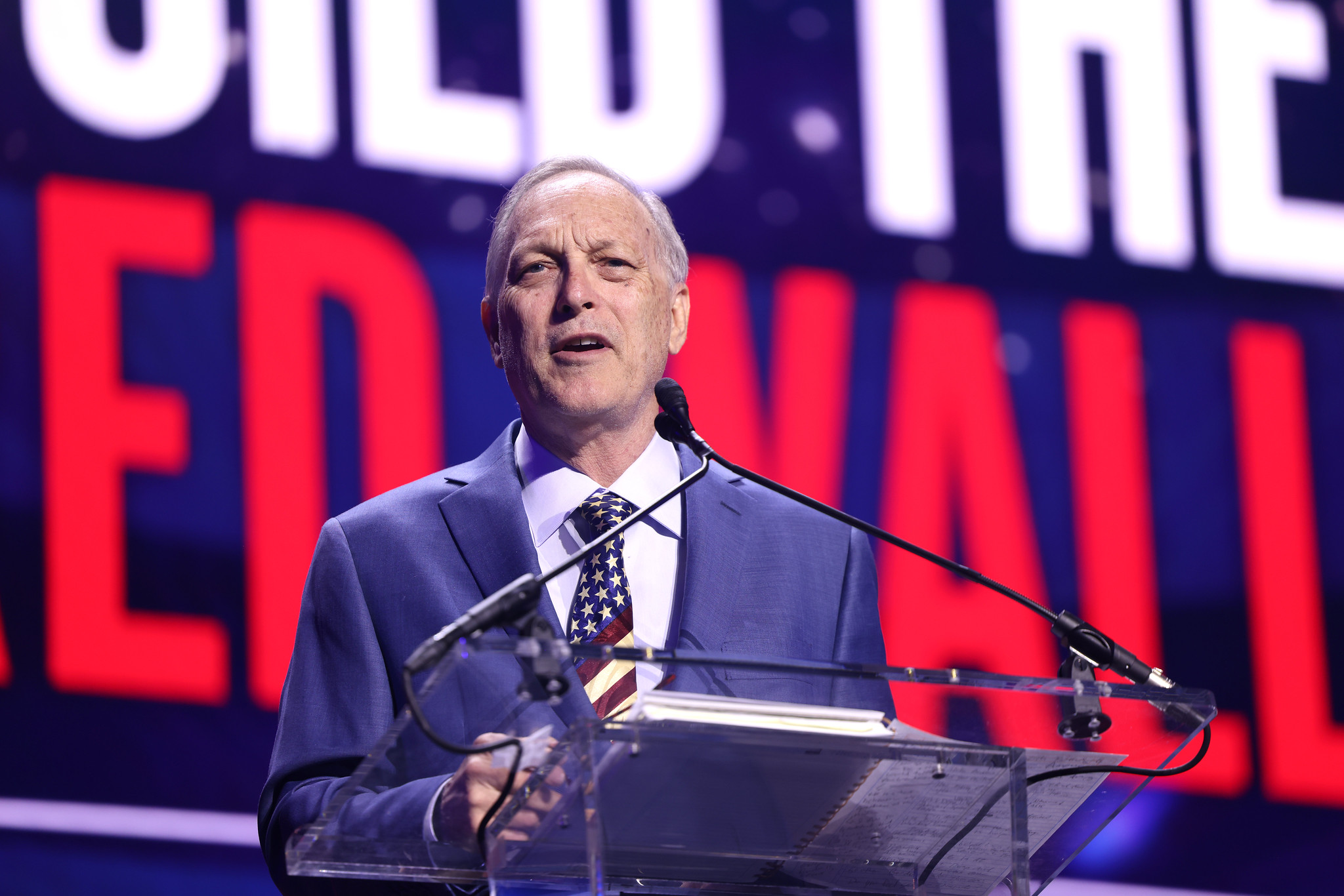
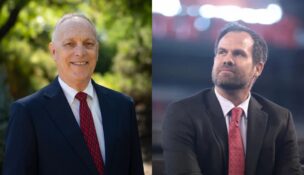
Congressman Andy Biggs is widely viewed as the frontrunner in the GOP gubernatorial primary. His closest rival — fellow Congressman David Schweikert — is still behind by double-digits according to most polls and by several hundreds of thousands of dollars in fundraising.
“I’m trying to unify the Republican Party right now to win this governor’s race,” Biggs told reporters when asked about Schweikert on May 5. “I don’t talk about my primary opponent, because the reality is, I’m staying focused on Governor (Katie) Hobbs, what she’s not doing and what she is doing, and I’m trying to bring that message out.”
Schweikert has maintained since he entered the race in October 2025 that Biggs cannot defeat Hobbs in the general election.

“The left is so giddy (and) wanting him to be the nominee because you see the polling, he can’t come within 10, 11 points of Katie Hobbs,” Schweikert told KTAR on May 7.
Everett endorsed Schweikert on social media for precisely that reason, though she knows her opinion is not widely shared among the conservative grassroots.
“I attend lots of meetings, LD meetings, club meetings, council board meetings, etc. and what I am seeing is Republicans are coming up to me, and they’re whispering, ‘I’m supporting David Schweikert,’” Everett said. “They’re afraid to say it out loud, because the other candidates that are supported by these larger organizations are taking up all the oxygen in the room.”
One slight wrinkle in Schweikert’s election theory is that polling numbers actually show he’s doing worse than Biggs in the matchup against Hobbs. According to a February survey from local pollster Noble Predictive Insights, Biggs trailed Hobbs by five points among registered voters, while Schweikert trailed the governor by nine points.
Biggs, the only candidate in the race with a Trump endorsement after Karrin Taylor Robson dropped out in February, doesn’t see the president’s support as a deterrent for voters.
“If I had an issue, I would just call (Trump) up and say, ‘Hey, what’s going on here?,’” Biggs told reporters on May 5. “… I think you need to have somebody in office as the governor here who can actually call up the president … I think those relationships are important, and I think they benefit the state.”
Secretary of State

Rep. Alex Kolodin, a state lawmaker and election attorney, was the first candidate to cut into the secretary of state’s race. But, he did so as rumors of a run by Gina Swoboda, chair of the Republican Party of Arizona and the Legislature’s election policy lead, started to swirl around the political sphere.
Swoboda initially launched a campaign for the 1st Congressional District, but, in early February, she filed her statement of interest for the Secretary of State’s Office and pivoted her run.
“I love the office so much, and I love the people in it, and I love the work,” Swoboda said. “And I’m sad by how politicized it’s become, and I’m sad at where I think it will go if this continues for another four years.”
Kolodin, with the endorsement of Turning Point Action, is angling his campaign at some election nerves frayed among his base. Along the campaign trail, Kolodin has focused on alleged noncitizen voting, championed the SAVE Act and pledged to cooperate with the federal government in granting access to state voter rolls.
“When I’m elected the very first thing that we need to do is partner up with our friends in the federal government who have graciously offered to allow us to use their SAVE Act database to ensure that we don’t have noncitizens on our voter rolls,” Kolodin said in an interview with former U.S. Congressman Matt Gaetz.
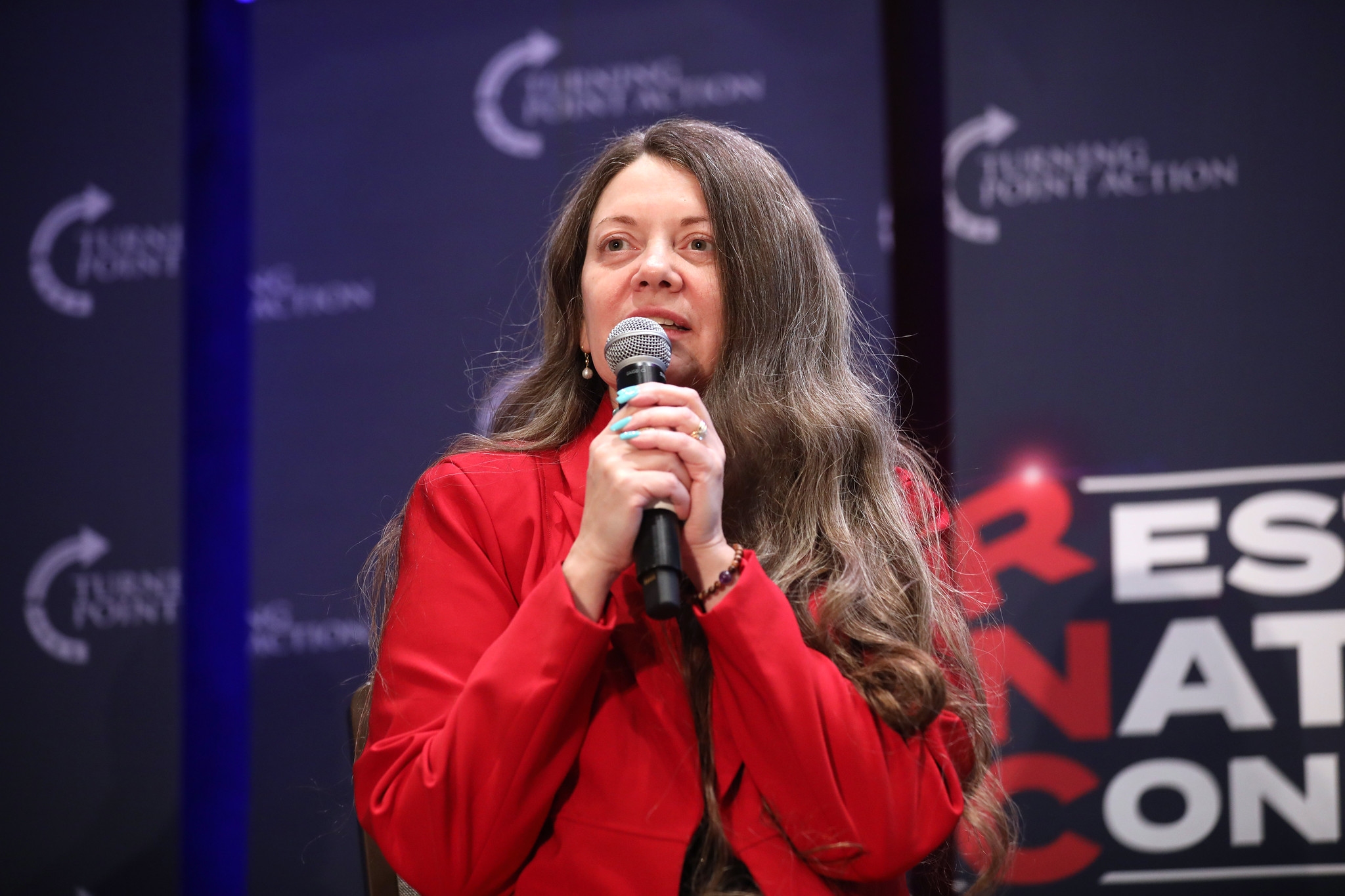
Swoboda, meanwhile, aims to capture the growing sect of Arizona’s independent voters through a focus on policy and operations.
“What I want to run on is transparency, accountability and competence. That’s all I want. And that’s what I think the voters want. I think that they are exhausted,” Swoboda said. “The last thing (people) need to worry about is what did the secretary of state do today? Why do people have to think about that?”
She expressed some doubt that Kolodin could win over the third of the state’s voters who have no declared party affiliation. And Swoboda stressed the need to work well across the state with officials in every corner on election administration, a skill she claimed her opponent lacked.
Swoboda referenced the ongoing legal dispute between the Maricopa County Recorder and the Board of Supervisors as one example.
“It’s a disaster. I got into the race because I don’t want that to happen on a statewide level,” Swoboda said. “It will dissolve into dysfunction and infighting, and the voters will not have confidence in the process. Nobody needs that.”
Attorney General
Senate President Warren Petersen and Rodney Glassman framed campaigns for the Attorney General’s Office as a matter of legal experience.

Glassman, a lieutenant colonel in the U.S. JAG Corps Reserve, former Tucson City Councilmember and longtime candidate for office — with past runs for the Arizona Corporation Commission, Maricopa County assessor and the U.S. Senate, as a Democrat — claims he is the only candidate who has ever practiced law, taken on a client or prosecuted someone in court.
“My primary opponent is a termed-out career politician, a part time Realtor, and received his law license less than 28 months ago,” Glassman said. “He’s never had a client. He’s never prosecuted a criminal, and he doesn’t even carry professional liability insurance, aka, he doesn’t practice law. He’s never practiced law.”
Petersen was licensed to practice law in 2023, though he passed the bar in 2020. And he corrected Glassman, noting he is not yet termed out from the Senate.

Petersen claimed he is the most experienced person in the race, pointing to his part in a swell of litigation from the Legislature to defend public laws Attorney General Kris Mayes left by the wayside.
“We basically set up a mini Solicitor General’s Office here at the Senate,” Petersen said.
More significantly, Petersen pointed to Glassman’s past history of switching parties and continuing to pursue election as a downside.
“The people, they’re tired of him running for office. If you run twice and lose twice, normal people quit,” Petersen said. “If you run more than twice and you keep running, I think you’re achieving sociopath level.”
Support and endorsement is currently split among both candidates.
Glassman has courted support from Congressman Paul Gosar, Superintendent of Public Instruction Tom Horne, Maricopa County Sheriff Jerry Sheridan, and former Senate President Karen Fann.
Petersen meanwhile has shored up support withCongressman Biggs, a slate of Republican state lawmakers and Idaho and West Virginia’s attorneys general.
During Trump’s recent visit to the state, he declined to dole out any formal endorsement, but he did give Petersen a shoutout from the stage. And when Gosar voiced his support for Glassman, it drew a mixed reaction from the crowd.
Superintendent of Public Instruction
The Arizona Freedom Caucus and Turning Point Action placed veteran incumbent Superintendent of Public Instruction Tom Horne in its crosshairs early on, recruiting outgoing Treasurer Kimberly Yee to oust him from office.
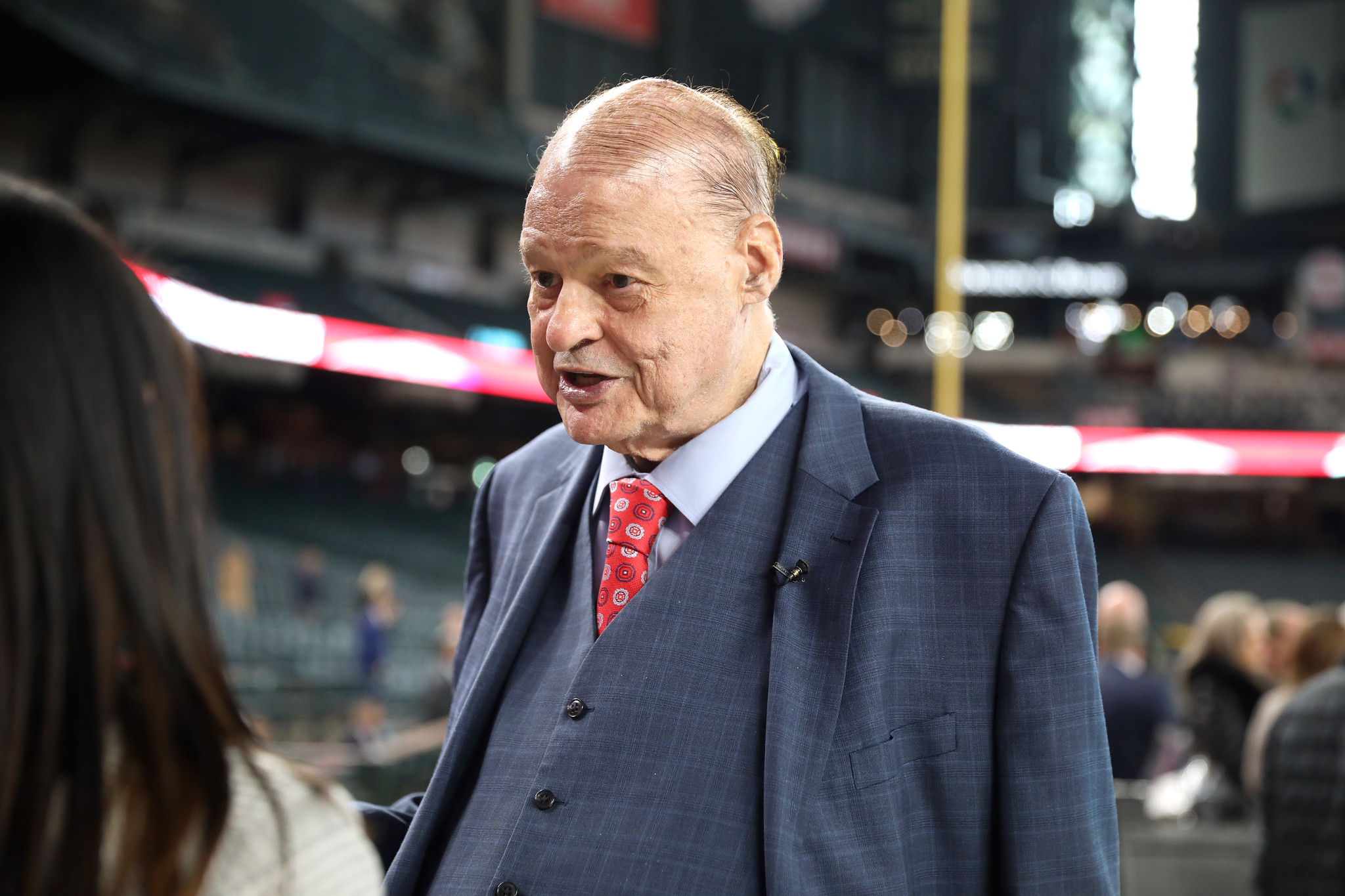
Horne is keeping his messaging on improving academics across education and is hoping voters will keep him around for another four years to finish what he set out to do at the start of his term.
He pointed to the department’s Project Momentum, which lifted 80% of schools in the bottom 5% for academic performance to a higher bar.
“That’s an eight-year job, not a four-year job,” Horne said. “I want to finish the job. If the voters were to switch horses after four years, somebody else would start all over again and it would never get done.”
Horne is continuing his crusade against critical race theory, diversity, equity and inclusion and “woke ideology” as well. And in that vein, he did not have much to say about his opponent, other than claiming she had served on a Diversity, Equity and Inclusion Committee for the National Association of State Treasurers.
Yee denies serving on any DEI committee and went so far as to send a cease and desist letter.
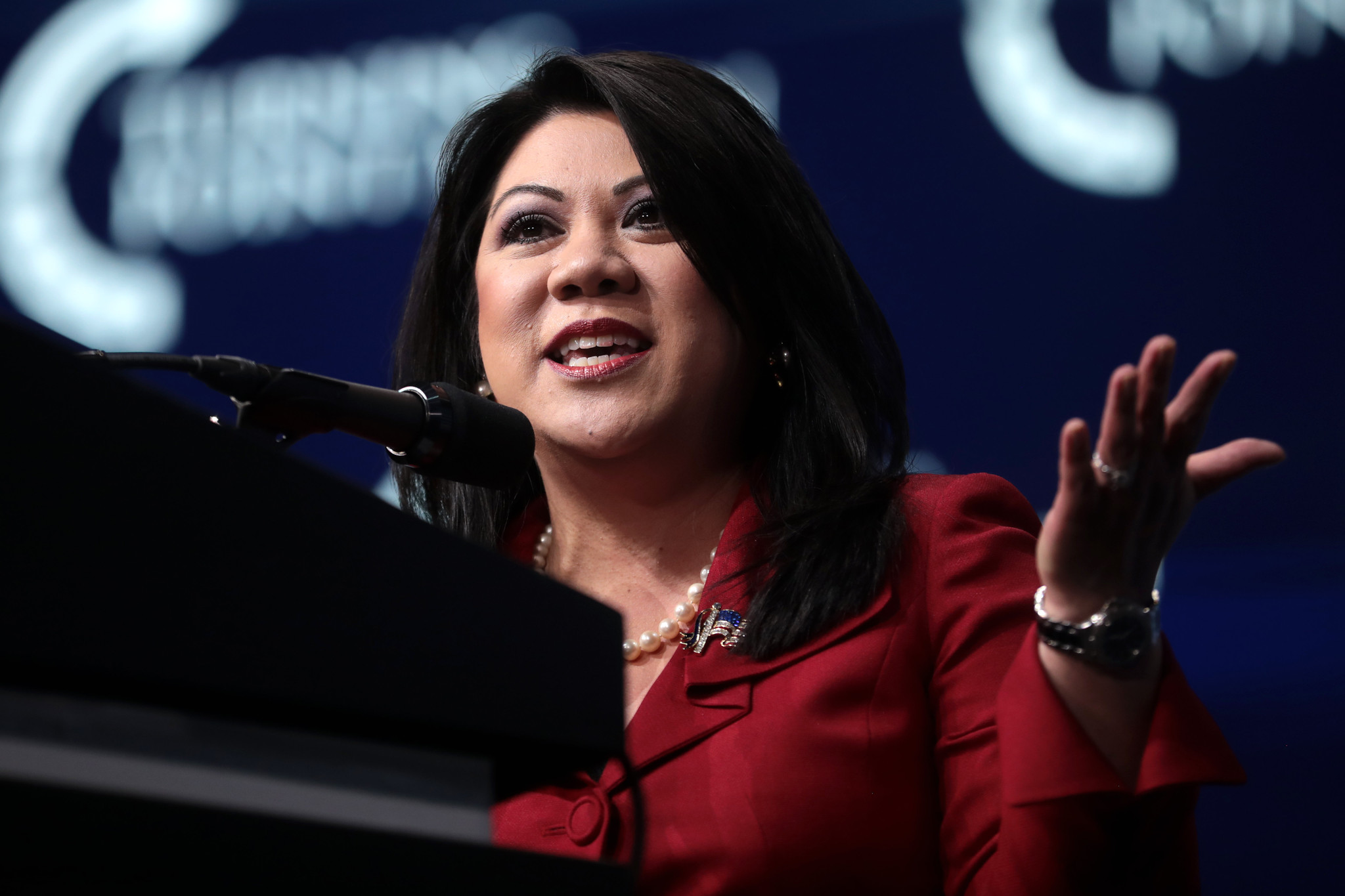
In her own campaign, Yee claims academic performance has not improved significantly under Horne.
“He’s had four years, and those numbers have not changed,” Yee said. “I see complete chaos in the Department of Education when it comes to management. I also see a real non-presence of this current superintendent with respect to his role as a statewide official.”
The two must also contend with the Empowerment Scholarship Account program, a live wire for Republicans staunch on supporting school choice, which has formed significant party lines surrounding the issue of ensuring there’s no misspending, fraud or abuse in the program.
Horne maintains the department is continuing to finetune its oversight of the program.
Meanwhile, Yee, in her role as state treasurer, recently put out a request for information to assess the field of financial vendors. She stopped short of wading into any policy questions for the program, though, claiming the specifics are better left to the Legislature.
“We have a superintendent of public instruction who has exceeded that authority and has gone beyond what an administrator is required to do by the law,” Yee said. “And if there ever is a question of administration or properties of educational definitions, those really need to be brought back to the Legislature.”
Corporation Commission
Corporation Commissioners Nick Myers and Kevin Thompson are not exactly known as moderate Republicans. But that did not stop the Arizona Free Enterprise Club and the state’s Freedom Caucus from recruiting two state lawmakers to run against them in the Republican primary.
That challenge lost a bit of steam recently, with former Rep. David Marshall ending his bid for the commission to accept a new role as Navajo County recorder. Marshall’s exit leaves Rep. Ralph Heap, R-Mesa, to fend for himself against the two incumbents.
“If you have two people on the commission that have similar ideas in terms of how to produce energy and what we need to do, that’s a stronger position,” Heap said. “So that does weaken the message I have and that’s frustrating.”
Heap’s main message is that Myers and Thompson have not done enough to end “Green New Deal” policies at the state’s utility companies, nor have they done enough to support Trump’s coal-centric energy priorities.
“We need to immediately adopt the principles that are in the Trump energy agenda, which are continuing with reliable, affordable fossil fuels, and then move towards nuclear energy as fast as we possibly can.” Heap said.

Myers and Thompson say they have done exactly what they set out to do, pointing to their votes to repeal the energy efficiency and renewable energy requirements past commissions imposed on utilities.
“We’ve delivered the promises that we campaigned on the first time, which was to eliminate the Green New Deal, eliminate mandates and subsidies,” Thompson said.
Myers noted that the pair is in favor of an “all of the above” approach to energy generation, though they believe natural gas is far more affordable and reliable than solar or wind. The two also said they have done everything in their power to cut the fat out of utility budgets in rate cases, though they know customers are still struggling with high bills.
“We’ve been saving as much money as we possibly can and trying to keep those rate increases as low as we can, but we’re fighting an uphill battle when it comes to the weather and the things that we don’t have control over,” Myers said.
The duo said they are more focused on the general election than defeating Heap in the primary.
“We’re just going to continue focusing on things that got us here, and talk about the great things the commission has done over the last three years and hope that the people of Arizona see that and decide they want to keep us in place,” Thompson said.
Treasurer
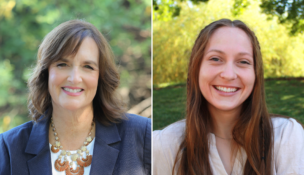
Katherine Haley, president of the State Board of Education, lodged her challenge against Elijah Norton, former treasurer for the AZGOP, late in the game, with an endorsement from sitting Treasurer Kimberly Yee in tow.
Norton has painted himself as the candidate with the most relevant experience. Besides guarding the AZGOP coffers, he founded and currently serves as president of Veritas Global Protection Services, an international vehicle insurance company.
“I don’t just have business experience. I also have experience investing money,” Norton said. “And that’s literally the treasurer’s job, the chief Banking and Investment Officer of Arizona.”
He said Haley was a “nice person” but doubted her ability to manage the state’s $32 billion in assets.
“I always use the example of the Treasurer’s Office being like an airplane. Do you want someone flying a $32 billion airplane from Phoenix to Australia who’s never set foot in a cockpit before?” Norton said. “Or do you want a veteran person that has proven experience piloting that flight?”
Haley is leaning on her background in public service to make her case to voters and pointed to her experience on the State Board of Education overseeing district budgets and the Empowerment Scholarship Account program.
“It’s about the mentality of service. It’s focused on Arizona taxpayers and what they need, rather than personal interest,” Haley said. “My opponent has a life career in sales, and I think that is just a different skillset than one that is focused on Arizona taxpayers.”
Norton noted, though, as the two have convened at legislative district meetings that straw polls have swung in his favor.
At the Legislative District 27 meeting on May 12, Norton said a straw poll yielded 68 votes for him and four votes for Haley.
“When people actually get into the weeds, and they listen to us talk about policy. There’s an obvious dichotomy, that she does not have the experience,” Norton said.