Sign In


Upcoming Event
 Free Newsletter

Rebecca Gau: Taking the right next step for Arizona’s children
Jakob Thorington, Arizona Capitol Times//May 15, 2026//
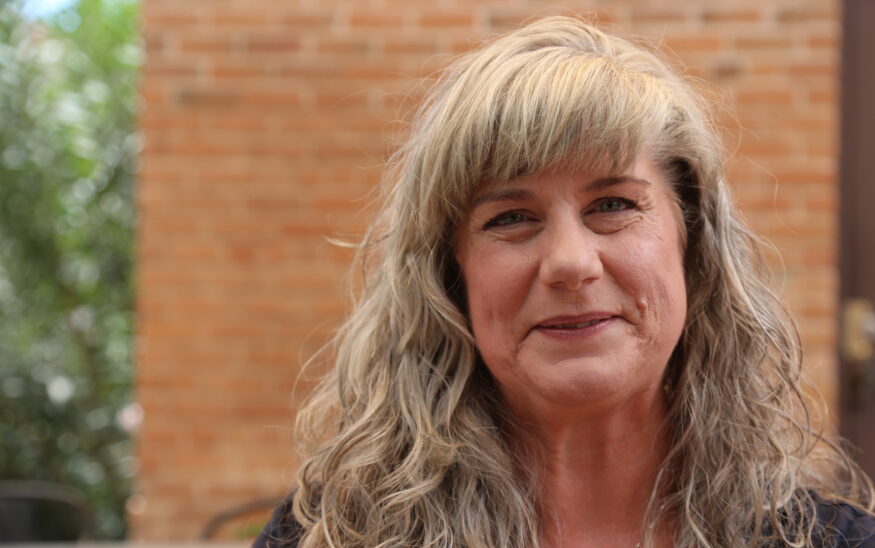
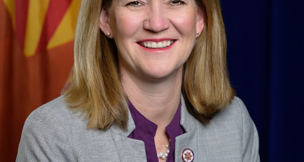
Rebecca Gau, the executive director of Stand for Children’s Arizona branch. (Jakob Thorington / Arizona Capitol Times)
Rebecca Gau: Taking the right next step for Arizona’s children
Jakob Thorington, Arizona Capitol Times//May 15, 2026//


Since 1993, Rebecca Gau has worked in education policy and has advocated for continuous improvement in education performance. From working in Washington D.C. as an intern to former Arizona Governor Jan Brewer’s office and now the executive director of Stand For Children, Gau has spent more than three decades working to bridge public policy, education and child development. In a recent interview with the Arizona Capitol Times, Gau discussed her work with Stand for Children and some of the organization’s policy goals for this legislative session.
The questions and answers have been lightly edited for style and clarity:
Can you tell me a little about your professional background and the work you did prior to this position?
I launched my career in education policy through an internship on Capitol Hill in 1993, and part of that internship was to study charter schools because we were reauthorizing the federal Elementary and Secondary Education Act. I was advising Congress members on whether or not they should vote for it, so I got to know a lot about charter schools and got to know a lot about Arizona. I moved here to be an education policy analyst at the Morrison Institute at Arizona State University. That led to me working at the Charter Schools Association as their vice president and that introduced me to Gov. Jan Brewer’s office. I was offered the position to lead Brewer’s education reform plan and, in doing that, my career had really been focused on the policy and data side of education.
Tell me about Stand for Children. How would you describe the organization?
We’re a unique catalyst for supporting a strong education system and supporting kids and families with whatever it takes, whether it’s local parent engagement, working with local school districts, or lobbying at the Capitol. Sometimes, we do get involved in political campaigns and we’re unique with that flexibility. We have a 501(c)(3), which is called Stand for Children Leadership Center, and then we have a 501(c)(4), which is called Stand for Children Incorporated. Then we have the Stand for Children Arizona Independent Expenditure Committee, so essentially, I run three different organizations out of the Stand for Children Arizona umbrella.
What was it like working in Brewer’s office?
Working for Governor Brewer was an absolute honor and privilege. The team we had up there was phenomenal, and she was committed to doing the right thing in the education space. Senate Bill 1070 happened right before I started working there, and I didn’t have anything to do with that, but Brewer’s commitment was to all Arizona students and that controversy didn’t impact her desire to do the right thing for all of Arizona’s children, regardless of ethnicity or background. They should be well educated — and I really respected that.
Last I checked, the waitlist for childcare subsidies is now at more than 12,000 kids. What kind of impact does that have on Arizona families?
It’s a crisis. I know people throw that word around all the time, but I don’t. I’m a data worker. But when you look at the impact on families, particularly in this economy, it’s pretty daunting. Cost of childcare, regardless of whether it’s quality childcare or not, the cost of childcare is often the same as your mortgage payment. It can be the same as college tuition. Almost 20% of family budgets are going to childcare right now. That’s a lot and that impacts the economy when you have families that choose not to have a parent working because they can’t afford the childcare. It’s about a $5 billion hit to our economy. The Center for the Future of Arizona has a data point that if we were to invest properly in support of childcare, it would inject $12 billion into our economy. Arizona employers are seeing issues in not being able to hire enough people because they have to stay at home with their kids. There’s a huge problem there. So whether you’re looking from a family point of view or a state point of view, there is clearly an opportunity for economic growth and support. We have a lot of tax breaks for corporations and businesses in Arizona that are meant to spur the economy. The theory is if we’re not taxing them, they can invest that in employees and infrastructure and they can grow their businesses. If we’re willing to invest billions and billions of dollars on spurring economic development by giving tax breaks to corporations, why wouldn’t we spend $160 million for working families to create a $12 billion economic benefit that eliminates the childcare subsidy waitlist?
Spending $160 million might be a difficult ask with this year’s budget. Is there a realistic number you’ve identified that could be spent?
I think $45 million is realistic. Last year got $45 million one-time, so I think that’s what would likely happen again this year. Every year, we’re going to have to fight for at least the $45 million until hopefully we’re in a position that we can advocate for the full amount. Something is better than nothing.
Arizona’s voter-created state agency First Things First helps fund early childhood education, but its revenue has decreased by more than $60 million since the program was created. Can you talk to me about what’s happening here?
First Things First is fascinating, and a lot of my early childhood advocacy colleagues are jealous of us for having this. They’re very envious of voters who clearly supported kids not starting from behind. If you are a policymaker who is interested in the actual long-term health of our state, you have to look at the younger generations and what kind of pipeline we’re building for a strong workforce and a strong economy. What really disgusts me is when people try to tie the immigration issue into early childhood funding because, as I see it, a kid is a kid. Most young children entering the K-12 space are here legally. The hiccup is that the way that initiative for First Things First was worded included tobacco products sales that went into early childhood education. Technology has changed and we have vaping products that aren’t necessarily using tobacco in the nicotine delivery system. They use the vape product now and with the legalization of marijuana, there’s a whole other product that people are substituting, so we have very much supported the vape tax bill.
What are some other issues you’ve been looking at this session?
We supported the child tax credit bills, and we were very invested in the high school state level grant program that’s at risk of being cut this year. It’s called the Ninth Grade on Track grant and it’s been funded for the last three years by the Arizona Department of Education that grants high schools up to $150 per ninth grader. It invests in research-based methods of ensuring they finish their first year of high school with a quarter of their credit requirements complete while also failing no more than one course. It’s hard for students to transition from rather small environments of a middle school to larger environments in a high school and we lose a lot of ninth graders in that process. Finishing a quarter of their credits in their ninth grade year is the highest predictor of whether or not a student will graduate on time. It’s stronger than socioeconomic status, income level and other factors we typically associate with academic success.
What are the biggest challenges to Arizona’s education system?
Funding, either due to low enrollment or some people have concerns about the dip in the birth rate. Young people just aren’t starting families or growing their family in a way they had intended. When you have cuts to student enrollment, that’s not losing enough kids to not have a teacher. It’s losing the kids that pay for that teacher’s salary, so it creates a structural imbalance in schools. The politics of Empowerment Scholarship Accounts has created a bigger problem, which is unfortunate because even ESA advocates nationally don’t like the way Arizona did it. They don’t use us as a model because there’s no accountability in that system. Covid did a number on a lot of kids, but a lot of things related to that were already in play before. People blame Covid for kids being babysat by technology because of online schooling that made their attention span crappy, but the research shows that the beginning of the mental health crisis with teens started in the early 2010s.The rise of young people owning cell phones and the increase in social media use is so clearly correlated to increases in self-harm and a lack of self worth among youth and teens. That’s become a top priority for us in figuring out how to address that, whether it’s through state policy or local efforts and programming to get a shared definition of age-appropriate technology use so no one entity is the bad guy.
Anything else?
I just hope we can get back to a place where we don’t have to agree 100% on everything, but we can at least work together on doing the right thing. That’s what I would like to see at the Capitol.