Sign In
Upcoming Event
 Free Newsletter

David Clouse: Law enforcement is a family tradition
Jakob Thorington, Arizona Capitol Times//March 22, 2026//
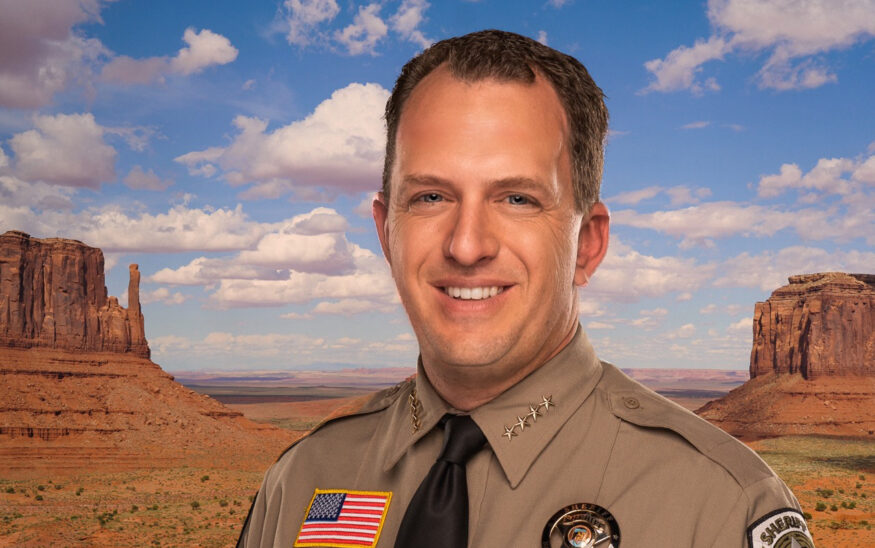
(Courtesy of David Clouse)
David Clouse: Law enforcement is a family tradition
Jakob Thorington, Arizona Capitol Times//March 22, 2026//


Public safety has been a lifelong mission for Navajo County Sheriff David Clouse, whose family has a history of serving in the county’s Sheriff’s Office. Clouse became president of the Arizona Sheriffs’ Association in 2024 and he recently spoke to the Arizona Capitol Times about the role and what sheriffs are asking for from lawmakers this year.
The questions and answers have been edited lightly for style and clarity.
What drew you into law enforcement?
I’m a native Arizonan and on my mother’s side, my grandfather was in law enforcement, specifically in Navajo County and his father was also with the Navajo County Sheriff’s Office. I was always drawn to that and public safety as kind of a part of our lives. I’ve always wanted to get into law enforcement since I was a little kid. I dipped my toes in and applied to several places, but Navajo County was one of the first to call me back. I gave it a shot and I’ve been there for 17 years and I’ve been sheriff for the last seven.
What does being sheriff mean to you?
It’s a lot more unique and different than a chief of police. You’re the conduit or the representative to hold the office that administers public safety so you’re very responsive to what the people want and what the people need. To steal the Abraham Lincoln quote, “by the people, for the people,” that kind of statement by the president always resonates with me when I think of carrying out and enforcing the laws. It’s a calling, and you’ve got to do it right.
How do you balance the law enforcement duties of the office with the more political and lobbying side of it — especially now as president of the association?
That’s a bad question to ask me this week because I’m asking myself how and why. But honestly, you have to say: Number One, is this worth it? And two, is it necessary or needed? It’s only possible if you put forth hard work and effort, but most importantly, it is the agency that you’ve assembled back home. I’ve got a great team, starting with the chief deputy and all the deputy chiefs, the administrative staff and the volunteer coordinators. Everybody is kind of lifting a grand piano. If one person tries to lift, you can’t move it. If everybody lifts at the same time, you can carry it and walk it out. In our case at a Sheriff’s Office, we have to surround ourselves with a lot of good people because the job involves so many different aspects. It sure makes it easier and possible to take care of things at home and take care of political fronts.
What’s something odd or interesting you’ve observed with this job that you don’t think people realize?
I would say our engagement in working at the Legislature. It’s not something that I campaign for or tell people, hey elect me and I’ll be the best advocate at the Legislature and I’ll be the best lobbyist. You come up at the street level, working in the jail and doing all these types of operational things. Well, there are policy decisions that lawmakers make on the other end and they want to hear from us. Sometimes they listen; sometimes they don’t. I think Arizona gets better laws or better outcomes when stakeholders are considered. I never put that together with the job initially and it’s become a big part of the job.
How has the session gone so far?
One of the bills we’ve been watching closely is the license plate reader bill, Senate Bill 1111. There are some groups I think are spreading misinformation or bad information about the use of license plate readers. Every car is equipped with a license plate and readers are a tool within law enforcement. The license plate is used to identify registered vehicles. We ask the public all the time if they have a license plate to help lead law enforcement to suspects. It’s a tool we’ve had for Amber alerts and Silver alerts. It’s the world that we’ve come to with everything being digitized and captured with surveillance on private/public right-of-ways. Law enforcement just has been working with lawmakers to say what’s appropriate and what needs search warrants and I think we’ve come to a good agreement as to how to handle sensitive information. In other types of investigations, we need a reason. We have to put in an officer’s name. We have to put in the case number, and we have to put in the reason for the search. I think that’s no different from what we’re dealing with here.
What’s the situation been like at the southern border recently?
There’s been a huge difference in what we’re seeing at the southern border. The Trump administration has been pointing out that there have been zero releases into the interior of the country. The catch and release that was so critical of the Biden administration has pretty much gone away, which has been very helpful on a lot of government resources as far as dealing with gotaways, which are the people that don’t want to be detected. There’s still the operations where people want to be covert. They’re smuggling people who want to be smuggled in or maybe those who don’t want to be smuggled in. We’ve seen a decrease. There’s obviously a lot of pressure at the border. You’re seeing less interdiction but the demand unfortunately has not gone away. The means and the opportunities are harder to get into the country, which is a good thing. That’s where the border sheriffs and the Arizona Sheriff’s Association have been trying to partner with not only the Legislature and the governor, but with our federal agencies. You see us in the interior counties with our local border support fund. That’s an initiative the sheriffs have been pushing for the last four years. We asked for about $20 million this year. We were appropriated about $17 million last year. It’s improving, but we’re now fighting these covert and underground operations which are a little more sophisticated in working through local businesses for their operations and money laundering.
What else are the sheriffs asking for in the upcoming budget?
We have our re-entry bill, Senate Bill 1317, which is our coordinated re-entry bill. That funds the re-entry programs out of the county jail systems and that’s been widely successful, which originated in Yavapai County. It’s now being offered in five counties with two more coming on board and a third county looking into it as well. We’ve had some conversations last year and this year on what we call a retention and recruitment tool, which is restoring some of the benefits for our employees on the Corrections Officers Retirement Plan.
Tell me more about the correction’s retirement plan benefits.
The plan is for your Department of Corrections employees and your county detention officer employees. I think it was 2018 when there was a big restructuring of that. They created a new tier, but when they did, it pushed down the employer contribution, so sheriffs have been saying this has been one of the hardest programs within our offices to hire for. It’s not a pension plan. It’s more of a 401(k) and the contributions are kind of low. We’ve obviously got some opposition from county supervisors because of the cost and the balancing of budgets, but we’re trying to put the message out there that these are mandatory programs or running a county jail is not an option. We have to run these and we need the best and brightest.