Sign In




 Free Newsletter
Judge denies Tohono O’odham request to halt border wall construction
Howard Fischer, Capitol Media Services//August 16, 2026//
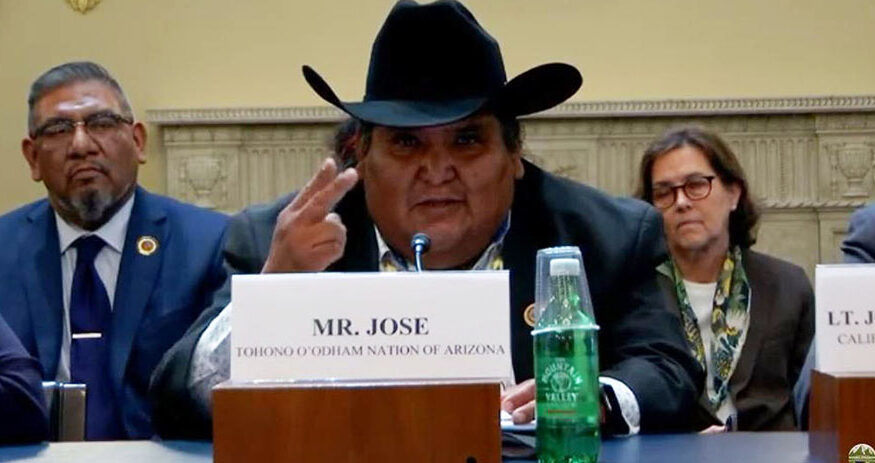
Tohono O'odham Chairman Verlon Jose on Oct. 18, 2023, told a U.S. House panel that migrants crossing his tribe's reservation may cause problems, but that the construction and presence of the border wall has caused bigger problems. (Photo courtesy House Natural Resources Committee)
Judge denies Tohono O’odham request to halt border wall construction
Howard Fischer, Capitol Media Services//August 16, 2026//


A federal judge allowed the construction of 62 miles of new border wall to proceed along the Tohono O’odham Nation’s southern boundary with Mexico.
In a new ruling, Judge Richard Leon rejected several of the tribe’s arguments that:
- A new border wall and the construction around it would amount to illegal trespassing on tribal lands
- The move would effectively shrink the reservation without congressional approval
- All of the land right down to the border belongs to the tribe despite a 1907 proclamation that reserves the first 60 feet for federal use
Leon, in an 18-page opinion, said the United States’ need to secure the border trumps the tribe’s concerns.
“Given the national security and foreign policy considerations related to the border wall, deference to the government is warranted,” he said.
The ruling comes just weeks after the tribe erected “no trespassing” signs through much of the 2.8 million-acre reservation. But tribal Chairman Verlon Jose said that is not related to the contractors who are being sent to the reservation by the Department of Homeland Security to start scoping out the project.
“That has been in the works for some time,” he told Capitol Media Services.
“We have a lot of people who come on the nation who are technically trespassing, not only contractors,” Jose said. “We have a lot of people come on that do illegal hunting, that want to go driving all over the nation to areas that are not public spaces.”
He acknowledged, though, that there is a specific concern about contractors, not just for Homeland Security but also Border Patrol. But Jose said it’s because they “aren’t fully licensed, permitted, paid the necessary taxes,” not specifically because of the work they are doing related to the border wall.
Yet the tribe, in a Facebook post on Aug. 8, made it clear exactly who it is targeting.
“ANY construction-related activities to the illegal and destructive border wall be warned, informed of trespass and escorted off the Nation’s land by law enforcement,” it says.
But in the new ruling, Leon said that the tribe has no case to stop planning and construction activities because the fence isn’t going up on reservation land.
The key is a 1907 proclamation by President Theodore Roosevelt that declared all public lands within 60 feet of the international boundary to be under the exclusive control of the federal government. That was done, according to the proclamation, “as a protection against the smuggling of goods between the United States and the Republic [of Mexico].’’
Homeland Security officials say they intend to build the new double-layered 30-foot steel-and-concrete barrier within that strip.
Attorneys for the tribe argued that the proclamation does not include the land within the reservation.
Leon, however, said that claim holds no water: Congress did not actually establish a reservation for the tribe until 1917.
The tribe, in an alternate argument, argued it had “aboriginal title” to the land before the creation of the “Roosevelt Reservation.” Following that argument, the lawyers said the 60-foot strip was never “public lands,” and therefore the Roosevelt Reservation never existed on the reservation.
The judge acknowledged that what the tribe calls its “broader aboriginal territory” exists on both sides of the border.
“There are currently 17 O’odham communities with approximately 2,000 members in Mexico,” he wrote. “And members of the nation continue to cross the border for sacred pilgrimages and ceremonies and important religious and cultural sites.”
But the judge said that doesn’t mean the tribe has some title to that 60-foot buffer zone.
“Historical evidence casts doubt on plaintiff’s theory,” Leon responded.
He also suggested that the tribe has effectively conceded the federal government’s right to act within that 60-foot strip, noting that tribal officials in 2004 approved construction of a barrier in that zone, albeit one that stops vehicles but allows pedestrians to pass.
Jose said the tribe is prepared to fight the judge’s ruling.
“There are too many critical issues that were not adequately addressed,” the tribal chairman said.
“The judge’s opinion is the judge’s opinion,” he continued. “And I think, at the end of the day, the law will rule.”