Sign In


 Free Newsletter

Arizona avoids ‘draconian’ Colorado River cuts — for now
Reagan Priest, Arizona Capitol Times//August 21, 2026//
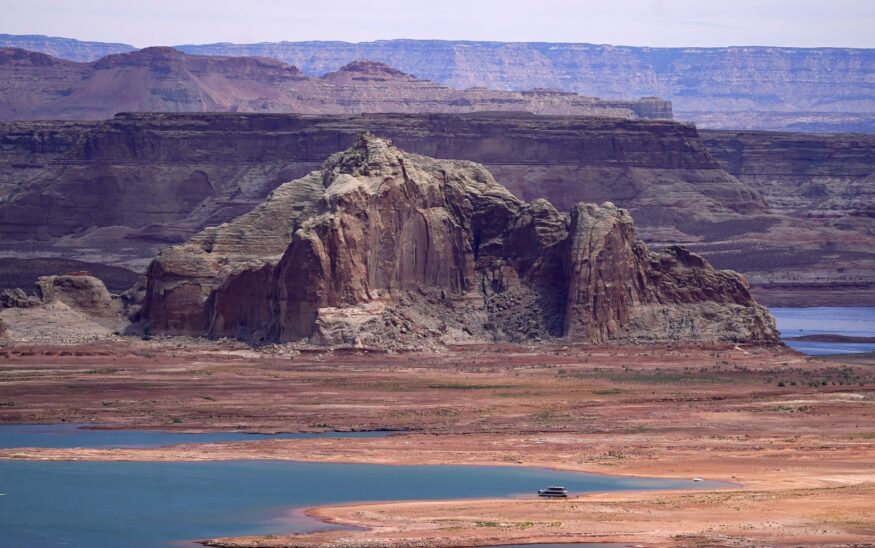
Low water levels at Wahweap Bay at Lake Powell along the Upper Colorado River Basin are pictured, June 9, 2021, at the Utah and Arizona border at Wahweap, Ariz. (AP Photo/Ross D. Franklin)
Arizona avoids ‘draconian’ Colorado River cuts — for now
Reagan Priest, Arizona Capitol Times//August 21, 2026//


Key Points:
-
The federal government adopted Arizona’s preferred operating guidelines
-
The state’s Colorado River allocation will be reduced by 31% over two years
-
Deeper cuts are still on the table without a negotiated seven-state agreement
The federal government will adopt Arizona’s preferred plan for Colorado River reductions over the next two years, but more drastic cuts could still be on the horizon.
The Bureau of Reclamation released its 2027-2028 Operating Guidelines and Record of Decision for post-2026 operations Friday, incorporating voluntary water usage reductions proposed by the Lower Basin States.
Under the plan, Arizona will reduce its water usage by 760,000 acre-feet over the next two years. That amounts to a 31% reduction in Arizona’s Colorado River allocation, which water stakeholders note is much more palatable than the federal government’s proposed 77% cut.
“With this plan, we saved Arizona from forced federal cuts that would have crippled our economy and America’s national security,” Gov. Katie Hobbs said in a statement. “The 77% cut to [the Central Arizona Project’s] water supply that the federal government considered in January would have been an unacceptable disaster.”
But Arizona isn’t out of the woods just yet. The Bureau of Reclamation’s final environmental impact statement on Colorado River operations suggests reevaluating guidelines every two years. That leaves a 77% cut on the table after 2028.
“The federal decision also protects Upper Basin reservoirs at the expense of Lake Mead and falls short of providing the water that the Lower Basin is entitled to, all while the threat of unilateral federal cutbacks in future years remains,” Hobbs continued.
Tom Buschatzke, the director of Arizona’s Department of Water Resources and the state’s chief Colorado River negotiator, echoed Hobbs’ sentiments in his own statement Friday.
“While the framework for years 3-10 continues to be of concern, we applaud the Department of the Interior for clarifying the decision-making process for operations beyond 2028,” Buschatzke said. “That outcome allows for continued negotiations for years 3-10 while preserving our ability to protect Arizona’s legal rights to Colorado River water.”
Arizona would avoid deeper cuts only if it and the six other Colorado River states could reach a negotiated agreement to divide the river’s flows. The Lower Basin states of Arizona, California and Nevada have long accused the Upper Basin states of Colorado, Utah, Wyoming and New Mexico of being unwilling to make meaningful cuts to their own water supplies.
Negotiations have been deadlocked for three years, so it’s unclear whether additional time for discussions will yield better results.
For now, though, it does appear that Arizona will avoid going to court over the Colorado River. Lawmakers set aside millions of dollars for potential litigation, while Gov. Katie Hobbs’ office retained a high-powered law firm to represent the state’s interests.
“I felt like litigation was more likely until this Lower Basin states agreement got proposed, and I feel like it’s cooled the temperature quite a bit on the litigation front,” said Riley Snow, the head of Rose Law Group’s water law department.
Hobbs hinted to reporters on Aug. 4 that she may need to call a special session of the Legislature so Arizona can ratify the Record of Decision, but her office did not immediately respond to requests for clarification on that point Friday.