Sign In




 Free Newsletter
Fontes wants Arizona voters prepared for election misinformation
Howard Fischer, Capitol Media Services//September 8, 2026//
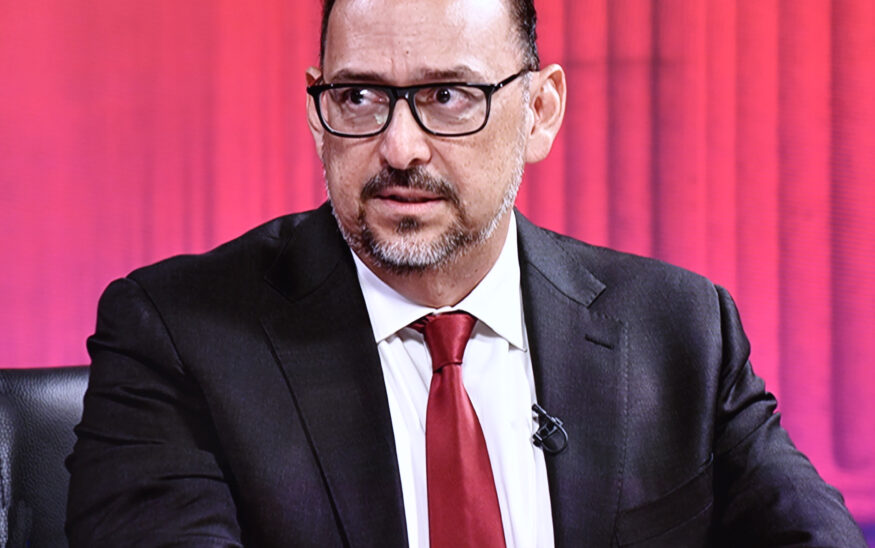
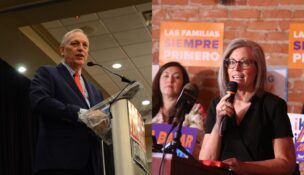
Secretary of State Adrian Fontes during a televised debate on Aug. 31, 2026 ahead of the November general election. (Howard Fischer/Capitol Media Services)
Fontes wants Arizona voters prepared for election misinformation
Howard Fischer, Capitol Media Services//September 8, 2026//


PHOENIX — Adrian Fontes wants to get as many Arizonans as he can inoculated.
But in this case, it isn’t against the latest virus. It’s against the misinformation that the Democratic secretary of state says spreads every time there’s an election.
Fontes has set up a website — “arizona.vote” — he hopes will counter that misinformation by giving voters reliable, easily accessible information about how Arizona’s elections work before the next controversy, rumor or false claim takes hold.
“You never know what’s the next little monster that’s going to rear its ugly head,” he said.
“But the reality is, the efforts we are engaged in now are confidence builders against the potential of those little monsters,” Fontes said. “And we prepare folks to understand how the systems work so that they, themselves, are better equipped to deal with the potential questions.”
That question of confidence is not just a local issue.
President Trump himself has repeatedly questioned the security of the election system, most recently with his ongoing efforts to say mail voting is inherently unreliable.
Some Arizonans still contend that Trump won the 2020 race despite the final official tally showing that Biden defeated him by 10,457 votes.
That election led Republican state senators to hire an organization known as Cyber Ninjas, a company with no significant election-auditing experience, to review all the ballots cast in Maricopa County in hopes of finding evidence that could overturn the result. That review did not change the election outcome.
In fact, the hand-count audits conducted as part of Arizona’s regular post-election procedures found no discrepancies in Maricopa County in the 2020 election. They concluded that Biden actually won by a larger margin than tabulators initially reported.
But “arizona.vote” isn’t aimed specifically at conspiracy theories.
The website provides basic information, like registration deadlines. This year, that is Oct. 5 for those who want to vote in the Nov. 3 general election. The site also includes instructions for getting an early ballot for those not on the Active Early Voting List and what identification is required for those casting ballots in person.
Voters can also track their ballots to confirm they were received and counted, according to the Secretary of State’s Office.
But Fontes said the website is also being designed to inoculate against situations “when some knucklehead gets out there and starts saying dumb crap about our elections.”
Debunking misinformation
Consider, he said, the demand for paper ballots.
“Well, in Arizona, all of our votes are cast on paper ballots,” Fontes said, with those ballots fed into tabulators that do the counting.
That still doesn’t satisfy some who insist that the totals are unreliable. But Fontes said that, rumors notwithstanding, the tabulators are not linked to the internet. They also undergo mandatory “logic and accuracy testing,” where a batch of sample ballots with known results is fed through tabulators to ensure they count accurately.
Arizona law already requires a random hand-count audit after every election, where a certain number of races from a certain number of precincts — all chosen by party officials — are tabulated by hand to see whether the totals match what the machines counted.
Still, that hasn’t always proven enough for everyone.
Two Cochise County supervisors, both Republicans, were indicted after the 2022 election for attempting to conduct a full hand count. Peggy Judd took a plea deal; charges against Tom Crosby are still pending.
Mohave County Supervisor Ron Gould, also a Republican, went to the Arizona Supreme Court in his unsuccessful bid to get immunity from possible prosecution by Democratic Attorney General Kris Mayes for his own efforts to demand a full hand count.
As recently as Sunday, Republican Abe Hamadeh still claimed he won the 2022 race for attorney general, despite the final tally showing Mayes beat him by 280 votes. He blamed Democrat Katie Hobbs, who at the time was the secretary of state.
Political implications of misinformation
Claims about election irregularities have political implications.
Stephen Richer, the incumbent Maricopa County recorder, was ousted in the Republican primary in 2024 by Justin Heap, who complained of “historically low voter confidence.” Heap went on to win the general election.
And just this past month, Republican state Rep. Alexander Kolodin, hoping to defeat Fontes in November, raised similar claims.
“There’s no doubt that confidence in our elections here in Arizona is at an all-time low,” he said during a televised debate. “And the responsibility of that sits squarely on the shoulders of Secretary Fontes.”
That assertion, however, may not be accurate.
In an opt-in online survey of 948 registered voters last year, weighted to reflect political and other demographics, pollster Mike Noble asked about their confidence in elections. He found 70% said they were “totally confident.”
That included 77% of Republicans and 75% of Democrats, while political independents — about a third of all registered voters — dragged down the average, with just 58% expressing confidence.
Noble said that differs sharply from when he conducted the same survey in 2021, at the height of the Cyber Ninjas audit, when confidence was just 58%. He also noted that it was a highly partisan response, with just 40% of Republicans expressing confidence versus 80% of Democrats.
“The bipartisan alignment suggests that successful election administration and the passage of time have helped heal some wounds from previous electoral controversies,” Noble said.
While Fontes is the state’s chief election official, county recorders and supervisors in each of the 15 counties run the elections, with a mix of Republicans and Democrats.
“The problem is there are people out there who are motivated to sow distrust even if the little issue that might pop up is minor and easily explained,” Fontes said. “Their goal is to capitalize on mistrust. And our goal is to make sure the public is inoculated against the potential mistrust.”