Sign In




 Free Newsletter
Padgaonkar: Billionaires behind Arizona’s data centers appreciate your support
By Abhay Padgaonkar, Guest Commentary//October 16, 2026//
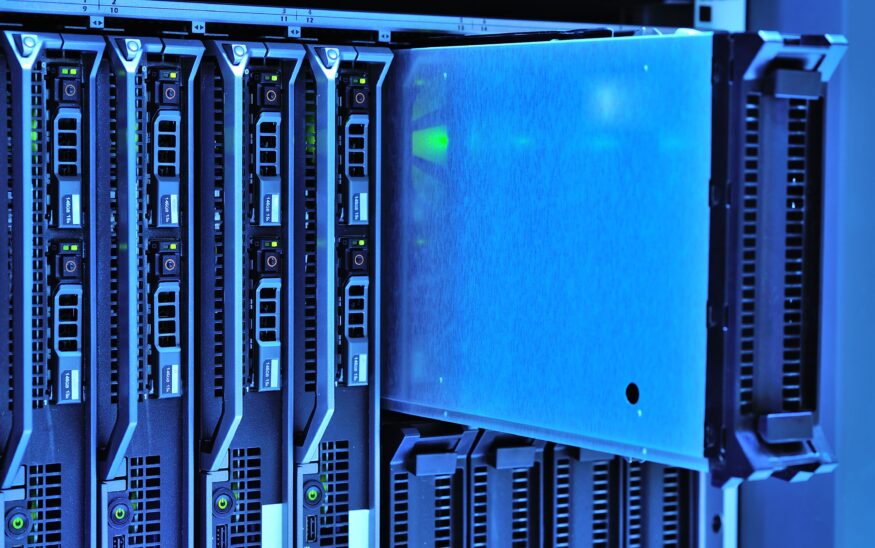
Server racks with glowing lights in a data center environment. (Pexels)
Padgaonkar: Billionaires behind Arizona’s data centers appreciate your support
By Abhay Padgaonkar, Guest Commentary//October 16, 2026//


The “growth pays for growth” operation was a great success — that is, if you believe Arizona Public Service and the Arizona Corporation Commission. There is just one problem: My research shows the patient is dead! To the tune of more than half a billion dollars.
An ultra-small group of about 117 extra-large customers, including data centers, accounted for nearly all of APS’ retail electricity sales growth from 2022 to 2025. Yet $587 million in purchased-power costs were shifted away from this tiny group, lowering the boom on more than 1.4 million other customers like you and me.
So, from the billionaires behind Arizona’s data center boom: “Thank you!”
APS talking out of both sides of its mouth
In August, APS claimed “the record shows that” it had avoided cost shifts to residential and smaller business customers “up to this point.” Of course, APS didn’t mention that the Power Supply Adjustor (PSA) rate on your bills, which recovers power costs, is 1,000% higher now than five years ago and the PSA balance reached nearly 1,000 times the projection.
The State of Arizona undercut APS’ “up to this point” claim, pointing to delayed large-load ramping that increased the PSA balance by a staggering $100 million. The shortfall was passed on to its entire customer base. Translation: You and I picked up the tab!
Now, APS has all but threatened the Commission that unless it approves its proposed fix soon, a sizable portion of purchased-power costs tied to large-customer growth in 2027 “would otherwise be socialized across all customer classes.” Translation: You and I will pick up the tab!
Five weeks earlier, APS said the new plan would first be used for 2028. If the old system avoided cost shifts, why is using it for another year a problem? And how can a future remedy go Back to the Future to erase earlier cost shifts?
The State has already called APS’s proposed remedies “either insufficient or fundamentally at odds” with growth paying for growth.
Victory lap before the race?
APS CEO Ted Geisler has repeatedly emphasized that “growth pays for growth.” He insisted that new infrastructure is “paid for entirely” by new customers and promised that residential and small business customers “will not see bills increase as a result.”
Umm. That broader “growth pays for growth” slogan was already contradicted by the State’s roughly $100 million real-world example.
My own research, now featured in 12News’s Unprecedented Charge investigation, found a $587 million purchased-power cost shift over 2023–2025. Attorney General Kris Mayes has now urged the Commission to “swiftly and publicly investigate” whether APS’s PSA facilitated that cost shift.
The $587 million finding has become a campaign issue for the Corporation Commission, dividing candidates over whether it should be independently investigated.
The Commission was quick to portray itself as being on top of things.
Chairman Nick Myers told Congress that Arizona’s guiding principle is that “growth needs to pay for itself.” He said infrastructure for large new loads must be funded by those loads “not partially, not over time in a way that shifts risk to other ratepayers, but fully.”
When then-Chair Kevin Thompson opened the Commission’s data center inquiry in April 2025, he simultaneously declared that “the data center industry is paying its fair share” of expanding power generation and infrastructure. Thompson has since acknowledged EdgeCore, the developer of Arizona’s largest operating data center, as a consulting client.
Ever heard of the NTSB opening an investigation into a plane crash and announcing the cause before examining the wreckage — or even finding the black box?
After the workshop, Myers proclaimed it had “confirmed” that Arizona’s policies already protect other ratepayers. Thompson piled on and called Arizona “a model in protecting ratepayers.”
A model? The workshop had no sworn testimony. No underlying workpapers. No cross-examination. No audit results. And if Arizona PIRG proposed ten additional ratepayer protections after the workshop, what exactly had been “confirmed”?
Now, 18 months after opening its data center inquiry, the Commission still has no proof that growth has actually paid for growth. And there is still no comprehensive framework to prevent cost shifts.
Stop talking and regulate
The Commission must immediately protect ratepayers from further cost shifts in the pending APS rate case. That means adopting the State’s recommendations to isolate large-load fuel and purchased-power costs, directly assign incremental costs, and pause new large-load contracts until minimum protections are in place.
It must also order an independent APS cost-causation audit to determine who caused large-load costs, including purchased power and transmission, and who actually paid them.
The Commission can unfurl the Mission Accomplished banner only after putting the “Growth Pays for Growth” claim under oath.
Abhay Padgaonkar is a management consultant and longtime consumer advocate who served as an expert witness on behalf of utility ratepayers in 2018.