Sign In



 Free Newsletter


Photo enforcement ban leads early on the ballot
Jakob Thorington, Arizona Capitol Times//November 3, 2026//
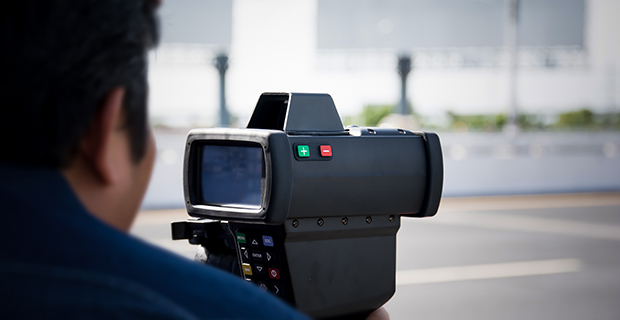
Proposition 319, a ballot referral which would prohibit cities from implementing photo enforcement for traffic citations, has early support from voters on election day (Deposit Photos).
Photo enforcement ban leads early on the ballot
Jakob Thorington, Arizona Capitol Times//November 3, 2026//


A ballot measure that would prohibit local governments from establishing photo traffic enforcement systems was headed to passage Tuesday night.
As of 10:30 p.m. on Election Day, Proposition 319, the “Prohibit New Photo Traffic Enforcement Systems Measure,” had 58.12% of the vote.
The measure would prohibit local governments from using photo enforcement systems like red light cameras or speed cameras to identify traffic violations starting in 2027.
Cities like Paradise Valley and Tempe that already have photo enforcement systems in place could continue using them, but would have to ask local voters whether to continue in the November 2027 election. If voters approve continuing to use a photo enforcement system, a city would be required to ask voters every 10 years whether they want to continue using it.
According to the city of Paradise Valley, its police department was the first agency in the U.S. to use photo enforcement in 1987, which immediately resulted in a 42% decrease in traffic collisions.
Prop. 319 does not include automated license plate readers, including Flock cameras. It only applies to traffic safety tools. The measure defines a photo enforcement system as a device linked to a camera that can record digital evidence of a vehicle’s license plate to issue traffic citations. Automated license plate readers are used for purposes beyond traffic citations, including criminal investigations.
The Arizona Public Health Association has opposed the measure, saying its inclusion of red-light cameras goes too far.
Yes on Prop. 319, the organization supporting the measure, argues photo enforcement is a regressive system that allows cities and towns to generate revenue at the expense of working Arizonans, since drivers can face a $250 ticket for a first-time, low-level offense.