Sign In



 Free Newsletter


Will Arizona’s nuclear ambitions survive the Capitol’s power shift?
Reagan Priest, Arizona Capitol Times//November 20, 2026//
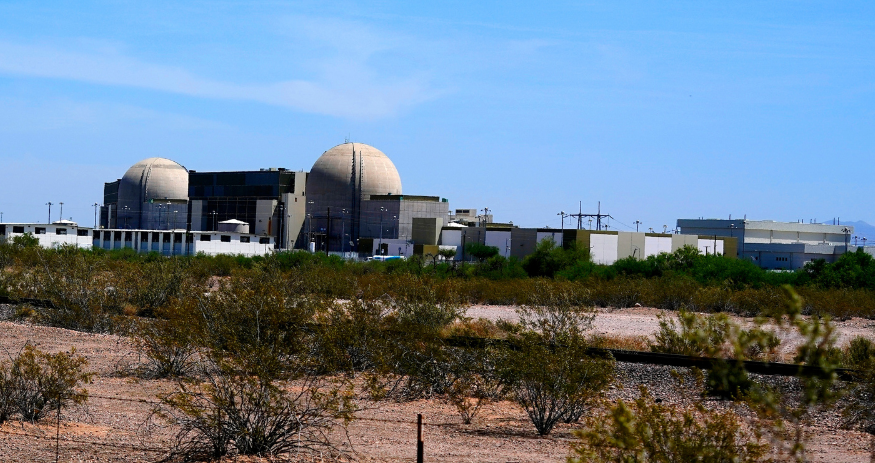
The Palo Verde Generating Station shown Friday, May 6, 2022, in Tonopah, Ariz. The power plant is the only nuclear plant in the world not adjacent to a large body of water to cool the plant, but instead, it uses reclaimed water piped more than 35 miles across the desert. (AP Photo/Ross D. Franklin)
Will Arizona’s nuclear ambitions survive the Capitol’s power shift?
Reagan Priest, Arizona Capitol Times//November 20, 2026//


Key Points
-
Democrats’ newfound control of the Legislature creates uncertainty for nuclear energy
-
Utility companies, with the backing of the Corporation Commission, are exploring new nuclear projects
-
One Democratic leader says there may be a split among the caucus on the environmental impacts of nuclear
As Arizona’s three largest electric utilities plan for new nuclear generation, Republican Corporation Commissioners hope the incoming Democratic Legislature will provide political support for the energy source.
The Republican-controlled Legislature was a strong partner for the all-Republican commission in its quest to spur development of new nuclear energy projects, with lawmakers introducing six bills related to small modular nuclear reactors (SMRs) in 2026 alone. While Democrats like Gov. Katie Hobbs and members of Arizona’s congressional delegation shared that position, it’s unclear if the new Democratic majorities in the House and Senate will do the same.
Additionally, two Democrats will join the Arizona Corporation Commission in January. Clara Pratte and Jonathon Hill spoke favorably about nuclear energy on the campaign trail, but are expected to have more questions about the technology and its environmental impacts than their Republican colleagues.
At the commission’s third nuclear generation workshop on Nov. 19, Commissioner René Lopez expressed concern that Arizona could miss out on developing new nuclear technologies—and a large baseload energy source to meet growing demand—if the new Legislature isn’t on board.
“This opportunity, personally, I just hope we don’t lose it,” Lopez told his fellow commissioners. “And I think if we let our foot off the pedal, it kind of gets stagnant. It could wind up being a lost opportunity in the future.”
Arizona is currently home to Palo Verde Nuclear Generating Station, which powers more than 4 million homes and businesses in the state, according to Arizona Public Service. Now, APS, Tucson Electric Power and the Salt River Project are teaming up to explore the possibility of more nuclear generation as data centers, population growth and hot summers drive skyrocketing demand for electricity.
Where would nuclear generation go?
The utilities told commissioners on Nov. 19 that they are still evaluating 29 potential sites, including Palo Verde, for a new nuclear project. They hope to file an early site permit application to the U.S. Nuclear Regulatory Commission in the first half of 2027.
However, APS, TEP and SRP have not identified whether they will pursue advanced nuclear technologies, like SMRs, or build a second traditional nuclear power plant. Additionally, representatives for the three utilities emphasized that new nuclear power is not a foregone conclusion, and the final decision will depend on a range of factors.
One of those factors is support from lawmakers and their communities, according to Steve Sims, TEP’s director of project and contractor management.
“If there isn’t support across the board, we don’t want to spend that money [on nuclear],” Sims told commissioners. “We don’t want to spend our customers’ money that way.”
Rep. Chris Mathis, D-Tucson, will lead the new House Committee on Water, Environment and Energy, while Sen. Lauren Kuby, D-Tempe, will lead the new Senate Committee on Climate, Energy and Natural Resources. Mathis told the Arizona Capitol Times that he and Kuby are still ironing out their caucuses’ energy goals.
“There has been kind of a split in the environmental community on nuclear,” Mathis said. “I would guess, as we have discussions within our caucus, that those discussions might reflect some of that split and diversity of views.”
Mathis served on the House Natural Resources, Energy and Water Committee for five years under a Republican-controlled Legislature. He said he wasn’t exactly impressed by the GOP-backed SMR bills the committee heard this year, including one Hobbs ultimately vetoed.
Those bills focused on eliminating zoning or environmental permitting hurdles that SMR technologies might face from local communities or the commission itself. However, the United States does not currently have any commercial SMRs, and most under construction are outside the country.
“The predicate of that [legislation] was, since it’s small nuclear, we don’t really need to worry about the negative impacts to the extent that we would with large nuclear,” Mathis said. “And that always seemed to me to be a curious approach because it seems that you have essentially the same set of concerns whether you have a traditional-sized nuclear reactor or a smaller one.”
Those concerns typically revolve around the water required to cool nuclear reactors, the disposal of nuclear waste, the impact on the surrounding environment and communities, and the cost of building a new plant. But Mathis said he is open to having those conversations with commissioners and utilities.
“I just think we need to have a full and realistic discussion about benefits and risks, and that’s not just true of nuclear,” Mathis said. ”That’s true across the energy spectrum.”
Lopez, who spearheaded the commission’s pursuit of new nuclear generation, hopes to see such a project come online by 2035. But he also told his fellow commissioners that he will be happy as long as conversations with the Legislature continue.
“[We’re] maybe not singing from the same song, but we’re all humming along to the same beat,” Lopez said.