Sign In
Upcoming Event
 Free Newsletter

Republicans look to speed up small modular nuclear reactor construction in Arizona
Reagan Priest, Arizona Capitol Times//February 19, 2026//
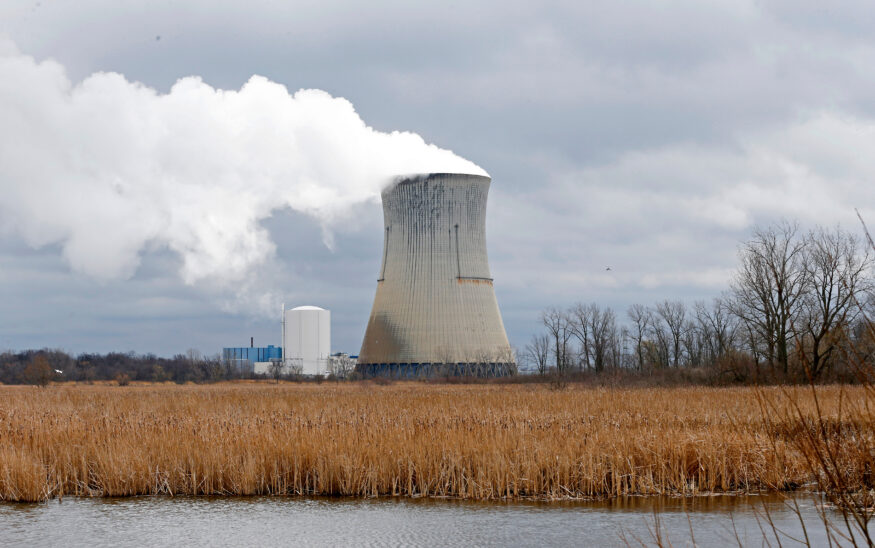
FILE – Plumes of steam drift from the cooling tower of FirstEnergy Corp.'s Davis-Besse Nuclear Power Station in Oak Harbor, Ohio, April 4, 2017. (AP Photo/Ron Schwane, File)
Republicans look to speed up small modular nuclear reactor construction in Arizona
Reagan Priest, Arizona Capitol Times//February 19, 2026//


Key Points:
-
GOP lawmakers introduce six bills to accelerate small modular nuclear reactor development
-
The bills preempt county governments from prohibiting SMR construction
-
Opponents argue SMRs will not be ready for deployment in Arizona anytime soon
Republican lawmakers hope to clear the path for new nuclear energy technology in Arizona, while opponents argue it is too soon to expect that technology to come online.
Six bills aimed at making it easier to construct small modular nuclear reactors, known as SMRs, have been introduced this session as buzz around the alternative to large nuclear plants grows. The bills focus on prohibiting counties from banning the construction or operation of SMRs and making it easier for data centers to build SMRs to power their operations.
“The future is here, A.I. is here, data centers are here,” said Rep. Justin Wilmeth during a Feb. 12 committee hearing. “We need more energy, and I think (SMRs are) a great approach to be more flexible and create more energy options in the future.”
SMRs are about one-third the size of traditional nuclear reactors and can produce 50 to 300 megawatts of power. According to Stanford University’s Precourt Institute for Energy, 300 megawatts can power around 300,000 homes.
Only two SMRs are operational currently, one in Russia and one in China. However, 74 SMR projects are currently under development worldwide, according to Stanford.
Wilmeth, a Republican from Phoenix, introduced two bills aimed at accelerating SMR construction. One requires counties to allow data centers and other large industrial energy users to co-locate with SMRs and another requires counties to include land use planning for SMRs in their comprehensive plans.
Rep. Michael Carbone, R-Buckeye, and Sen. Frank Carroll, R-Sun City West, introduced their own bills with similar provisions to Wilmeth’s proposals. Carroll’s proposal would also allow electric utility companies to replace coal or natural gas generating units with SMRs or to co-locate an SMR with a data center without additional environmental review.
Another bill from Rep. James Taylor, R-Litchfield Park, would require counties to approve the construction and operation of any facility manufacturing SMRs or the supplies needed to construct an SMR. Meanwhile, Rep. Teresa Martinez, R-Casa Grande, is sponsoring a bill that would direct the Arizona Commerce Authority to conduct a study on the economic benefits of SMRs and data centers in the state.
Arizona Corporation Commission Chairman Nick Myers opened a nuclear energy docket at the commission last year to generate conversations about SMR deployment in the state. He said he supports the Legislature’s efforts to tackle regulations that could slow deployment, but is cautious about utility-built SMRs.
“Arizona really doesn’t want to be on the cutting edge of nuclear, because then all of the (research and development) costs tend to get put back on to the ratepayers of the utilities, and we don’t want that,” Myers said. “So being fourth, fifth, sixth in line is really where we’re aiming for from a utility standpoint.”
Myers said he is supportive of allowing data center operators to construct their own SMRs because the operators would front all of those research, development and construction costs.
Arizona’s utility companies are interested in building SMRs as demand on the state’s energy grid continues to increase, but actual deployment of those projects is likely far off. According to a letter filed with the Arizona Corporation Commission in December, Arizona’s three major electric utilities — Arizona Public Service, Salt River Project and Tucson Electric Power — are in the very early stages of exploring SMR construction.
The three utilities have submitted a grant application to the U.S. Department of Energy to finance the pursuit of an early site permit from the U.S. Nuclear Regulatory Commission. The companies have not yet identified any specific sites or any specific SMR manufacturers to facilitate a potential project.
However, opponents of nuclear energy argue SMRs are expensive, experimental and hazardous to the environment. Additionally, the County Supervisors Association opposes many of the SMR bills because they impose restrictions on county governments.
Sandy Bahr, director of the Sierra Club’s Grand Canyon chapter, said lawmakers should focus on removing regulatory barriers from solar and wind before paving the way for SMRs because those energy sources are currently deployable.
“They’re spending all this time on legislation on something that is not ready for prime time,” Bahr said.
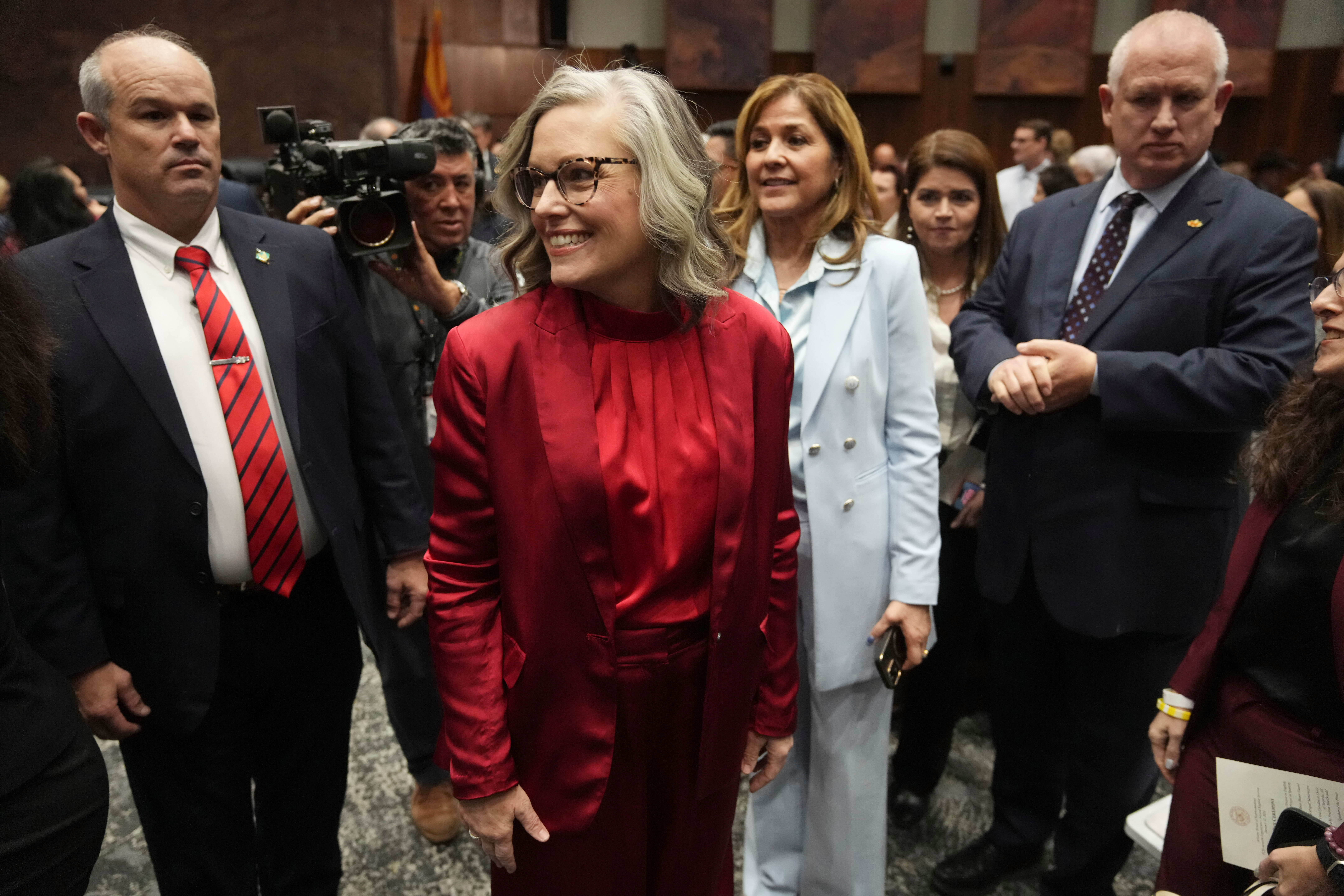
Gov. Katie Hobbs echoed that sentiment in a veto letter for a 2025 bill from Carbone that mirrors the bill he introduced this session.
“Unfortunately, this bill puts the cart before the horse by providing broad exemptions for a technology that has yet to be commercially operationalized anywhere in the nation,” Hobbs wrote on April 18, 2025.
Nearly all of this session’s SMR bills have passed out of committee, and those preempting county authority are likely to face the governor’s veto pen. But vetoes will not stop SMRs from being deployed in Arizona, which some advocates say could happen in the next three to eight years.