Sign In




 Free Newsletter
Arizona still pursuing nuclear energy despite hurdles
Reagan Priest, Arizona Capitol Times//July 1, 2026//
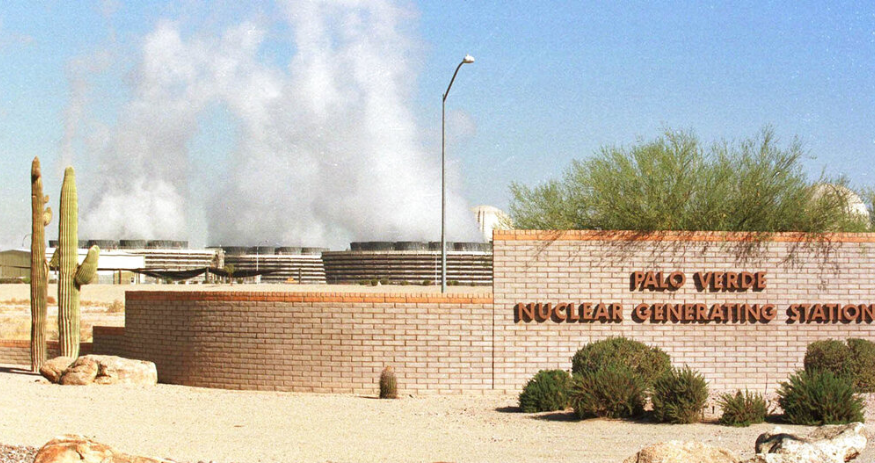
Water vapors rise from cooling towers at Palo Verde Nuclear Generating Station, the nation's largest nuclear plant near Wintersburg, Ariz. (AP Photo/Jason Wise, File)
Arizona still pursuing nuclear energy despite hurdles
Reagan Priest, Arizona Capitol Times//July 1, 2026//


Key Points:
-
Arizona utilities have begun a siting study to explore building a nuclear facility
-
The project hit a setback when the utilities were denied a Department of Energy grant
-
Dwindling Colorado River water supplies could also challenge new nuclear growth
Arizona leaders are forging ahead with plans for new nuclear energy generation despite ongoing funding woes and water hurdles.
At a June 25 Arizona Corporation Commission workshop, utility companies, universities, local governments and private industry stakeholders demonstrated their preparedness and commitment to turning the state’s dreams for a new nuclear power plant into reality. Arizona’s three largest electric utilities announced ahead of the workshop that they have commenced a siting study to find a potential location for the project.
Arizona Public Service, Salt River Project and Tucson Electric Power are surveying a range of potential sites for a new nuclear plant, including decommissioned coal-fired plants. Commissioners celebrated that announcement at the workshop.
“With the recent announcement that APS, SRP, and TEP have launched a preliminary siting study for potential new nuclear generation in Arizona, we’re seeing real momentum translate into meaningful action,” Commission Chair Nick Myers said in a statement. “The expertise and collaboration shared throughout this workshop will help ensure we’re prepared to seize the opportunities ahead and build a strong foundation for Arizona’s energy future.”
If all goes according to plan, the companies expect to hold community stakeholder meetings later this year near the potential nuclear sites. The companies will then “evaluate technical, financial and other factors” to determine whether to submit an early site permit application to the federal government.
However, the utility companies did hit a snag in their process. They did not receive a U.S. Department of Energy grant they applied for in order to help finance that early site permit application, which would need to be submitted to the U.S. Nuclear Regulatory Commission.
The utilities “will continue to work together to explore future funding opportunities to help mitigate the costs of evaluating potential new nuclear generation,” according to a joint statement. The companies stressed that a new nuclear plant is not a foregone conclusion, and they have not decided whether the potential project would use small modular reactors or large reactors like those at Arizona’s Palo Verde Nuclear Generating Station west of Phoenix.
The June 25 workshop also identified a few other potential obstacles that could slow Arizona’s nuclear energy progress, like supply chain constraints, community backlash and dwindling Colorado River water supplies.
Cuts to Arizona’s Colorado River water allocation could be the most difficult obstacle for the state to overcome in order to pursue a new nuclear plant. Representatives from the Arizona Department of Water Resources and the Arizona Municipal Water Users Association told commissioners that the Colorado River is no longer a reliable water supply and alternatives will likely require significant investments.
Palo Verde uses recycled wastewater to cool its three nuclear reactors and APS has explored using low-quality groundwater for cooling at the plant. But with water likely to become more scarce and more expensive in Arizona, a cooling source for any new nuclear plant could be a significant hurdle.
Proposals attempting to clear the way for new nuclear technologies, like small modular reactors, also did not fare well during this year’s legislative session. Lawmakers introduced six bills that would have preempted local authority or streamlined environmental review processes for small modular reactors, but only one made it to Gov. Katie Hobbs’ desk.
Senate Bill 1418 from Sen. Frank Carroll, R-Sun City West, would have allowed utility companies to bypass the commission’s traditional environmental review process for project siting if the company planned to replace a coal generation unit with a small modular reactor. That bill could have benefited the joint project from APS, SRP and TEP if the companies eventually select small modular reactor technology for the new plant.
However, Hobbs vetoed the bill, arguing it was not in line with the state’s goal to “responsibly reduce barriers to deploying new energy projects quickly.”
“We are not in the business of picking winners and losers in the energy landscape, and while advancements in small modular reactor technologies are promising, they are still emerging,” Hobbs wrote in a veto letter. “Deploying such a catch-all approach for an emerging technology, as laid out in this bill, is irresponsible.”
Nevertheless, a potential new nuclear power plant has broad, bipartisan support in Arizona. And some communities are chomping at the bit to bring the technology to their areas, as Navajo County Supervisor Jason Whiting told commissioners on June 25.
“Northeastern Arizona’s energy communities… want to be part of it,” Whiting said. “They want to be involved with it. They will embrace this discussion and decision with open arms.”