Sign In


Upcoming Event
 Free Newsletter

Athena Salman: Defending abortion rights after Proposition 139
Reagan Priest, Arizona Capitol Times//August 11, 2026//
Athena Salman: Defending abortion rights after Proposition 139
Reagan Priest, Arizona Capitol Times//August 11, 2026//


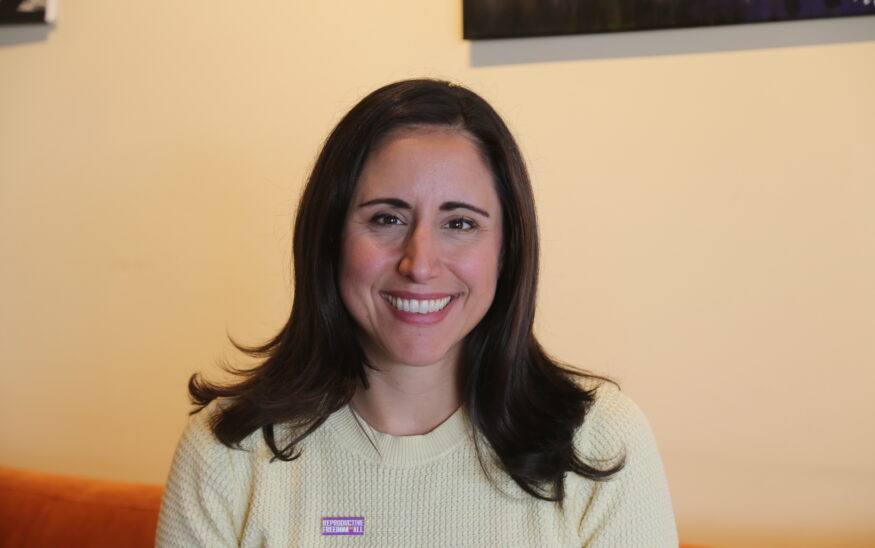
Athena Salman left the Arizona Legislature in 2024 to pursue an ambitious goal: enshrining a right to abortion into the state’s Constitution.
Two years after her exit and the passage of Proposition 139, guaranteeing access to abortion until fetal viability, Salman says her work is far from over. Salman, the director of state campaigns for Reproductive Freedom for All, still argues that abortion rights are under attack.
With the Republican-controlled Legislature determined to chip around the edges of Prop. 139, anti-abortion groups gauging interest in a potential repeal measure and the Trump administration signaling increasing interest in a national abortion ban, Salman hasn’t had much time to rest on her laurels.
She spoke with the Arizona Capitol Times about her work and the two daughters she says motivate her to pursue her cause.
The questions and answers have been edited lightly for style and clarity.
Tell me about your career trajectory.
I was born and raised in Arizona. I come from a really diverse family. My mom’s the daughter of immigrants, and then my dad’s Palestinian. So I really love this state, and I really committed my life here.
I was the first in my family to graduate from college, and while I was in college, what really got me interested in state politics [was] when [former Gov. Janet] Napolitano left, and we ended up with a conservative trifecta. Policies that I disagreed with started becoming law, and cuts that I don’t think were reflective of Arizona priorities started getting enacted.
Before I ran for the Legislature, I was working for First Things First, supporting early childhood development. In my 20s, a seat opened up in the House, and it wasn’t my plan to run for office, but people kept asking me to do it. At first I said no, and eventually I was just like, “Oh, OK.”
When I was at the Legislature, I really championed issues with the lens of protecting the rights and well-being of women and girls. One of the first bills I introduced was about feminine hygiene products in prison, making sure that women had access to those products. I was really proud that it eventually became law.
Talk about your decision to leave the Legislature.
It was a really challenging decision. During my time in office, I had two children, and the legislative pay hadn’t increased since 1998, so it was locked at a good, old-fashioned $24,000 a year. It was a decision where, long-term, I could not afford to stay.
And I don’t shy away from that being part of my reality because I think that continues to be a challenge in getting long-term, sustainable, diverse representation in [the Legislature]. So at the time [that] was really weighing heavily on my mind. And then, I was so excited [about this position].
Reproductive Freedom for All had already established and maintained a presence in Arizona, and I had worked really well with the previous person in a version of this role and was really impressed by the impact that she had made working with lawmakers and helping elect the statewides.
I also just saw an opportunity to continue to deepen the impact and narrow my focus on reproductive freedom. It felt like the right decision given that my identity had changed from Athena, warrior of the people, to Athena, mother of two young girls who, at least for the foreseeable future, will live in Arizona. And I want them to have more opportunities and a better future. Part of protecting their future here in our state is ensuring that they’ll have access to reproductive freedom.
How has becoming a mother of two girls impacted how you view your work?
I keep visualizing a future where they’re young adults, and they’re like, “Whoa, mom, that was a wild time. Thanks for doing what you did to make sure we didn’t have to go through that.” That’s the goal.
I was always passionate about reproductive freedom. It’s always been a key issue for me. But now, a huge part of my motivation is their future and their lives and well-being. And so my hope is that they see that and they think, “Oh, that was so cool that my mom not only was this awesome mother to me, but she made it her full-time job to fight for my rights and my future.”
What was the transition from the Legislature to this role like?
I was a leading lawmaker on reproductive rights, so that’s always been a part of my north star. But it wasn’t the only issue that I focused on. I was also the lead Democrat in the House working on democracy protection and voting rights. I was the ranking member on appropriations, digging into the financial situation that the state is in. So I think one of the transition pieces was really becoming more narrow in scope. For me, it’s also provided more clarity that this is the lane that I’m good at, that I occupy.
What do you consider to be your biggest accomplishment?
I would say two accomplishments, and one started when I was in the state Legislature: repealing the 1864 [abortion] ban. When I resigned from the Legislature, I passed that bill on to Representative [Stephanie] Stahl Hamilton because I knew that if the moment presented itself, she would be able to get it over the finish line, which she did amazingly and brilliantly.
It meant a lot to me to be able to get that law off the books before it could take effect again. Then to follow that up with enshrining the constitutional amendment in the same year, it was a one-two punch.
What has been your biggest challenge?
[Prop. 139] won every single legislative district. We got more votes than many of the legislators, both Republican and Democrat, and so it was just really challenging to see Republicans double down and introduce some of the most extreme abortion bans and restrictions [in 2025].
The other thing that’s really challenging about this moment for my job is the fact that we have a federal government that is continuing to attack access to reproductive health care. In spite of what the states want, in spite of what the people want, [the Trump administration] wants to put us under a nationwide abortion ban. [It]wouldn’t necessarily be like starting from scratch because we do have Prop. 139, but it would be a huge setback for the people of Arizona who literally just crawled our way out of these bans and restrictions. That is one of the top obstacles in the short term, because the threat is so imminent.