Sign In




 Free Newsletter
As voter anxiety over AI grows, candidates stake out positions
Austin Jenkins, Pluribus News/State Affairs//August 11, 2026//

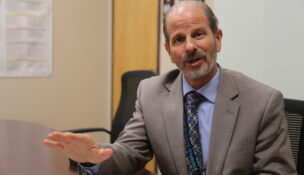
Screenshot of a video of Utah Rep. Doug Fiefia (R). (Courtesy of Fiefia state Senate campaign)
As voter anxiety over AI grows, candidates stake out positions
Austin Jenkins, Pluribus News/State Affairs//August 11, 2026//


Artificial intelligence regulation has emerged as a campaign issue in statehouse and gubernatorial races, as candidates seize on a topic increasingly viewed as a source of voter anxiety.
The bipartisan issue is showing up in campaigns from Florida to Washington and Arizona to Vermont.
For the past three years, state legislators from both parties have led the push to establish guardrails for AI. The current shift from wonky debates under capitol domes to populist stump speech material signals AI’s grip on the public consciousness.
“AI has quickly gone from a niche technology issue to a kitchen table issue,” Utah Rep. Doug Fiefia, a Republican running for state Senate, told Pluribus News.
Fiefia, a former Google employee, sought this year to pass regulations on large frontier AI models and chatbots. The effort failed after the Trump administration made its opposition known.
Read more: AI legislation falters as White House applies pressure
Fiefia has made “Pro Human AI and Technology” a top issue in his Senate campaign, alongside more traditional topics like housing affordability and parental rights. His platform calls for “responsible AI development that protects privacy, rewards hard work, and creates opportunity rather than displacement.”
“As AI becomes part of everyday life, it’s only natural that voters expect candidates to have thoughtful policies that both encourage innovation and protect the public,” Fiefia said.
Even as Americans rapidly adopt AI tools, they are experiencing a range of emotions about the technology. AI is the source of existential angst, concerns about job losses, alarm over youth safety, and distress over deepfakes.
An NBC poll in March found that 57% of voters said AI carries more risks than benefits. Younger voters and women are the most pessimistic about AI.
Pew Research Center reports that roughly half of U.S. adults use chatbots, including nearly a quarter who use them daily. But 40% say AI will have a more negative than positive impact on society.
“With the growing visibility around AI models and their potential dangers, it’s not surprising that legislators and candidates are raising concerns,” said Alex Alben, Washington state’s former chief privacy officer who now directs The AI Forum independent think tank and teaches at UCLA School of Law.
In Seattle, attorney Will Dreher has made AI the top issue in his Democratic campaign for state representative. Dreher is poised to advance to the general election after coming in second in early returns in this week’s top-two primary. He would face longtime Democratic Rep. Gerry Pollet in November.
“AI governance is rapidly becoming, and will eventually be remembered as, the defining issue of our time,” Dreher’s campaign platform says. “We need elected leaders who are unafraid of industry and willing to step into the breach and pass forward-thinking legislation to address AI’s disruption.”
Among Dreher’s campaign proposals is to ban AI from replacing teachers or other essential workers, tax AI services and products, and regulate large frontier AI models.
Eric Neyman, a researcher at the Alignment Research Center in Berkeley, has labeled Dreher the “first serious candidate for elected office to put AI as the top issue on his platform.”
Dreher’s primary opponents also made AI a campaign issue, but he says that was only after he “forced the issue.”
Pollet highlights his work opposing tax breaks for data centers and protecting citizens from deepfakes, as well as supporting journalists whose work has been used to train AI models without compensation.
Two other Washington state legislative candidates, Democrats Chandler Torbett and Danica Noble, included AI regulation in their campaign platforms for their respective races. Torbett was in third place in the primary after initial ballot counts, while Noble had the second slot in her race.
Other candidates running on AI as an issue this year include Joseph Hoolihan, an unaffiliated Florida House candidate. His campaign platform lists “Artificial Intelligence for Good” as his No. 1 issue.
Massachusetts Rep. Erika Uyterhoeven, a Democrat running for Senate, made “Safe and Ethical AI for the Future” her third platform issue. She is critical of how the state has procured AI products and is calling for community AI councils to guide how the technology is deployed.
Vermont Rep. Monique Priestley, also a Democrat running for Senate, highlights her work on AI regulation in a section of her platform titled, “Our Digital Lives.”
“Innovation should create opportunity, not extract value from people without consent or accountability,” Priestley writes.
AI policy is also showing up in a handful of governor races, including in California, home to nearly two-thirds of the world’s top AI companies and has led the nation on AI regulation.
Billionaire Tom Steyer ran an unsuccessful campaign for California governor this year on a platform that called for AI “safeguards” and a proposed “token tax” on use of AI by corporations to fund a sovereign wealth fund.
California Attorney General Xavier Becerra, the Democrat who advanced to the general election, has his own 11-point AI agenda. It includes calls to unleash AI to tackle difficult issues such as housing affordability while also strengthening protections.
By contrast Becerra’s Republican opponent, former Fox News host Steve Hilton, criticizes what he calls “excessive caution rather than confidence.” Hilton also says California “should enforce basic accountability — but avoid sweeping, preemptive regulation on evolving technologies.”
Wisconsin Rep. Francesca Hong, a democratic socialist running for governor, has a lengthy section on her website titled: “Protecting Your Rights In An AI World.” It includes calls to end personalized pricing, ban insurance companies from using AI to decide claims and regulation of AI chatbots.
“My administration would draw a clear distinction between AI as a tool and the AI industry as a political and economic force,” Hong told the Milwaukee Journal Sentinel last month.
Other gubernatorial candidates calling for AI regulations include former Alaska Rep. Jonathan Kreiss-Tomkins, a Democrat, and U.S. Rep. Byron Donalds, a Florida Republican who recently expressed support for Gov. Ron DeSantis’s AI Bill of Rights, which failed in the Legislature this year.
Alben with The AI Forum, whose mission is to “promote thoughtful discussion of the legal and societal challenges posed by AI technology,” urged policy makers to proceed cautiously on policy if they are elected.
“Past experience with regulating new technology suggests that it’s better to identify specific harms, than to generally ban or mandate excessive government regulation,” Alben said. “Industry needs to do its part to agree to safety measures and sensible requirements, such as much more transparency.”