Sign In
Upcoming Event
 Free Newsletter

Arizona faces potential $208M penalty over food stamp errors
Howard Fischer, Capitol Media Services//June 25, 2026//
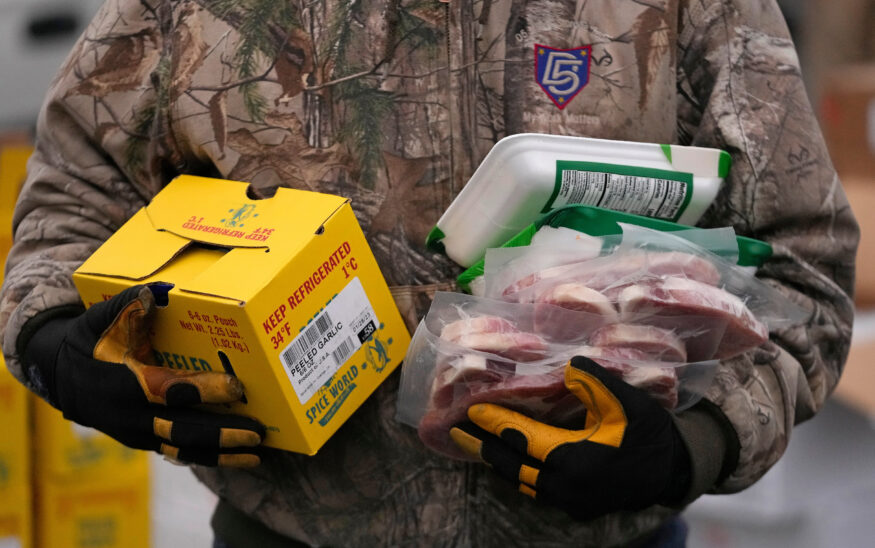
FILE - A Utah Food Bank volunteer carries groceries at a mobile food pantry distribution site Dec. 21, 2022, in Salt Lake City. (AP Photo/Rick Bowmer, File)
Arizona faces potential $208M penalty over food stamp errors
Howard Fischer, Capitol Media Services//June 25, 2026//


Key Points:
-
State blames some errors on having fewer employees checking applicants
-
Some errors actually involve under-payments
-
Hobbs office says it is dealing with the issue
It’s official, Arizona’s food stamp application error rate for the last budget year was higher than the national average, a fact that could cost the state $208 million in federal penalties.
New figures from the U.S. Department of Agriculture put the total error rate for the state at 10.8%. That includes more than 8.6% in overpayments and almost 2.2% where recipients got less than the amount to which they were entitled.
That compares with the national rate of 10.6%.
That is significant because a provision in HR 1, the budget bill approved last year by Congress, says that states with error rates at 6% or more must start paying part of the costs associated with administering the state’s Supplemental Nutrition Insurance Program. Normally, all benefits are paid for by the federal government.
That penalty hits 5% of program costs for error rates up to 8%, 10% of costs when the error rate goes up to 10% — and 15% for rates higher than that. That’s where the estimate of a $208 million penalty comes in beginning in the 2027-2028 budget year.
The news about the error rate comes more than two months after it was revealed that a higher percentage of Arizonans have been knocked off of food stamps after Congress approved HR 1 than any other state in the nation.
Figures from the state Department of Economic Security showed that the number of recipients was cut by half, with more than 450,000 losing benefits in the past year, including close to 200,000 children.
In February 2025, close to 920,000 Arizonans were getting food stamps.
DES Director Michael Wisehart told Capitol Media Services last month that some of that is related to HR 1 – specifically the mandate to reduce the error rate. That, in turn, has put more pressure on eligibility workers to do more to screen applicants and make sure they have all the necessary documentation.
And there’s something else.
“Arizona invests less money than other states in terms of eligibility determination than other states do,” Wisehart said.
Gubernatorial press aide Christian Slater said his boss has moved to deal with that part of the problem. He said the governor allocated $6.4 million in leftover Covid relief funds to hire more eligibility staff. And Slater said the new state budget that kicks in July 1 has another $10.8 million, though that is one-time funding for 146 positions within DES.
But he said all of that came too late to affect the newly released 10.8% error rate, calculated for the period from Oct. 1, 2024, through Sept. 30, 2025.
Still, there is a chance that Arizona could reduce — and possibly even eliminate — that $208 million penalty.
HR 1 is structured so that the final decision on how much Arizona will have to pay out of its own treasury for food stamp benefits in 2028 fiscal year can be reduced. That’s because it will be computed based on the lower of the error rates for the 2025 fiscal year — the one with the 10.8% figure — or the one the state manages to attain for the 12 months ending this coming Sept. 30.
A spokesman for DES did not provide any estimates on June 24 for the state’s anticipated future error rate, or even what the error rate is now. And the official figure from the USDA will not be released until June 2027.
But the state has shown it can do better: The food stamp error rate for the 2024 fiscal year was 8.84%
The Arizona Center for Economic Progress, which lobbies to put more dollars into public programs, says that the error rate is not necessarily related to fraud or cheating.
“These errors can include cases in which an eligible family received slightly too much or too little assistance because of a processing delay, a mistake by an eligibility worker, incomplete information, or problems with a computer system,” the organization said in a press release June 24.
It also warns that even if Arizona does escape federal penalties, what’s in HR 1 will still result in higher costs for the state. That’s because federal law also shifts more of the responsibility of administering the food stamp program to states, regardless of the error rates.
A preliminary analysis says that this federal decision should add about $33 million in costs to Arizona’s 2026-2027 budget year, rising to about $44 million annually after that.
There’s a separate question beyond the error rate but one closely tied in: How many Arizonans actually are eligible for the food stamp benefits — the maximum ranges from $298 a month for a single individual to $994 for a family of court — but aren’t getting them.
Wisehart said that even before Congress enacted HR 1, DES was hobbled by layoffs, a move the state blamed on other cuts in federal funding.
That came at the expense of eligibility workers. The agency said the number of employees who reviewed food stamp eligibility dropped from 1,370 in July 2024 to 880 last July.
Those Covid funds were designed to address the delays in processing not just food stamp applications but also to deal with those seeking unemployment benefits, another program within DES. But those dollars were temporary.
Wisehart said that efforts by the state to reduce its error rate means continued changes in how DES screens its applicants. That shift has included policies like reducing the ability of the people to self-attest to income.
That amounts to more applications being denied, driving down the number of Arizonans collecting benefits.
That drop in food stamp recipients has, in turn, increased demand on food banks. The Arizona Food Bank Network reported in January that about 720,000 people are visiting food banks each month.