Sign In


 Free Newsletter

Nguyen vows to protect Arizona confessional confidentiality
Howard Fischer, Capitol Media Services//August 3, 2026//

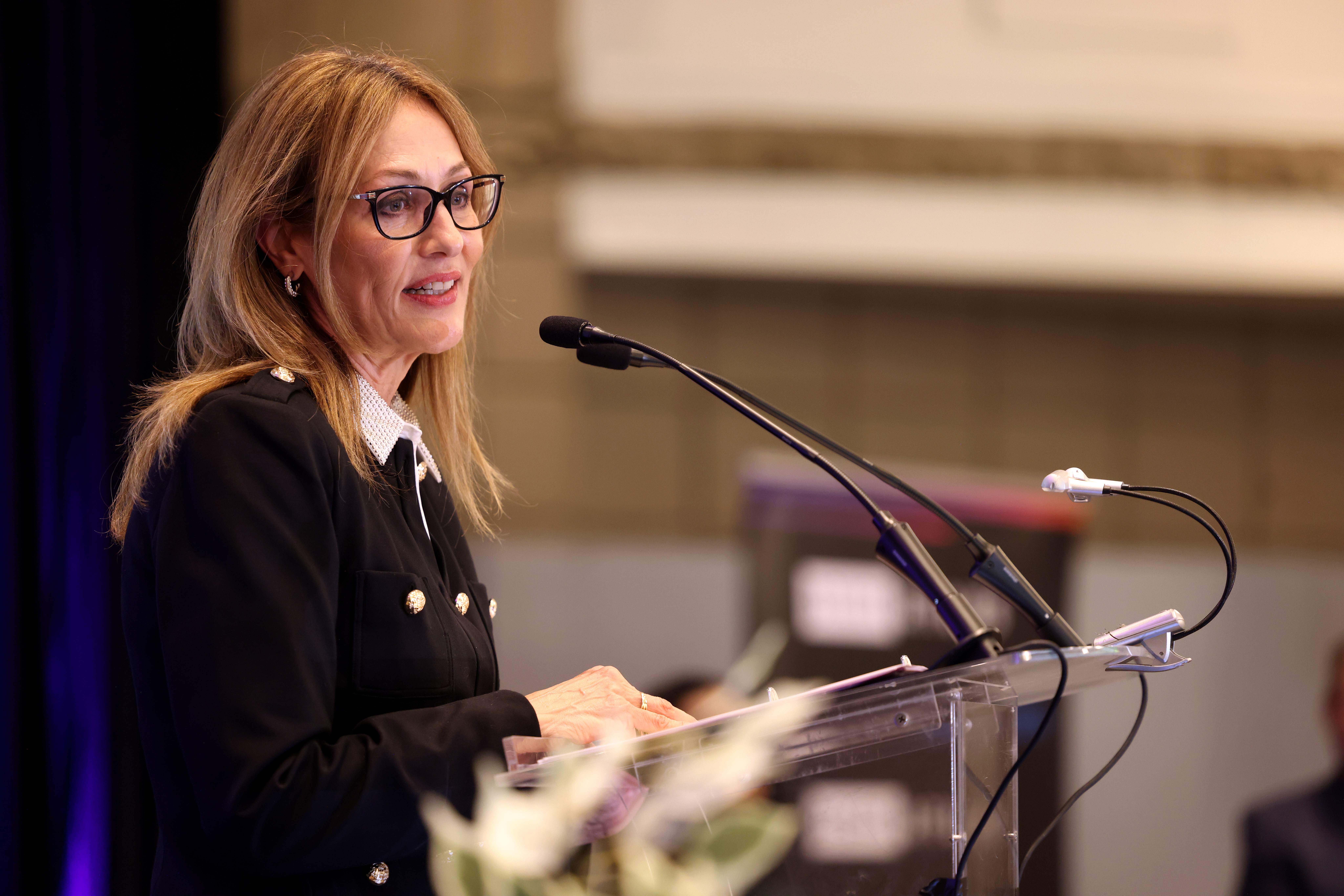
State Rep. Quang Nguyen speaking on the floor of the Arizona House of Representatives at the Arizona State Capitol building in Phoenix, Arizona. (Gage Skidmore / Flickr)
Nguyen vows to protect Arizona confessional confidentiality
Howard Fischer, Capitol Media Services//August 3, 2026//


Key Points:
-
The Arizona Supreme Court has confirmed that information from church confessionals is protected from mandatory reporting laws
-
State lawmakers have made numerous attempts to remove those protections
-
The chair of the House Judiciary Committee says he will block any attempts to remove confessional confidentiality
PHOENIX — A key legislator says a recent Arizona Supreme Court ruling shielding priests and other clergy from having to report confessions of crimes — even of ongoing child abuse — hasn’t convinced him to stop blocking legislation to change the law.
Rep. Quang Nguyen, R-Prescott Valley, said Arizona law already requires clergy to report ongoing abuse or other crimes they learn about outside the confessional. But he said he will not support legislation requiring disclosure of information obtained through confession, regardless of what is revealed.
“As a Catholic, confession is one of the very important sacraments of the church,” Nguyen said. “I will not break that sacrament. I will not be the guy to do that.”
Nguyen, who chairs the House Judiciary Committee, has repeatedly blocked legislation sponsored by Rep. Stacey Travers, D-Phoenix, to narrow Arizona’s clergy-penitent privilege. His committee has never even granted a hearing to her proposal, which has been introduced in various forms since 2023.
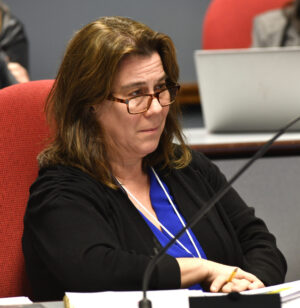
Travers wants to preserve clergy confidentiality in most circumstances. At the same time, she wants to create an exception when someone confesses to ongoing child abuse or abuse that is likely to continue. She said she will renew the effort when lawmakers return in January.
The Arizona Supreme Court ruled last week that religious organizations may determine what constitutes a confession or other protected confidential communication. The unanimous ruling sided with The Church of Jesus Christ of Latter-day Saints in a lawsuit stemming from the case of Bisbee resident Paul Adams.
Church bishops learned in 2011 that Adams was sexually abusing his 7-year-old daughter. The court ruled those communications fell within the church’s confidential religious process and were therefore protected under Arizona’s clergy privilege.
As a result, Adams continued abusing his daughter for another seven years. During that time, authorities say he also began sexually abusing her infant sister and posted videos of the abuse online.
Adams was arrested in 2017 after Interpol tipped off the Department of Homeland Security that New Zealand police had found the videos. He later died by suicide in prison while awaiting trial.
Changes to the law repeatedly blocked
Travers isn’t the only lawmaker who has tried to get the law changed.
Former state Sen. Victoria Steele introduced legislation three times — in 2021, 2022 and 2023 — to make the same changes. The Tucson Democrat, now a justice of the peace, also failed to get her plan advanced to the full Senate.
Steele has noted that Adams not only confessed to his bishops but that his wife, Leizza, also knew about the ongoing abuse. She was later sentenced to 2 ½ years in prison. Leizza was released in 2020.
“As somebody who experienced extreme abuse as a child, that doesn’t go away,” Steele said.
“You can’t undo that. No amount of counseling is ever going to fix that or make it go away.”
Steele’s legislation was blocked by Eddie Farnsworth, then a state senator from Gilbert, who headed the Senate Judiciary Committee at the time.
“We have all kinds of mandatory reporters,” he said, noting the examples of teachers and coaches. They have no right to refuse to come forward when they learn about the abuse of children, regardless of the source.
But Farnsworth said the kind of changes sought then by Steele — and now Travers — are a bad idea.
“The issue of privilege is something that I think has been sacrosanct for a very long time, recognizing that the privilege is something that is necessary for people to engage in their religious beliefs,” he said. “If you believe the bishop is obligated to go to the police, would they come in and confess? Probably not.”
Travers said she isn’t buying that argument.
“There is a special case when you’re confessing to somebody in your religious organization, and there is a search for absolution and contrition,” she said. “And somebody should be afforded that.”
But she said her legislation addresses situations in which a congregant comes in, confesses to ongoing child abuse — and does so with the assurance that no one will file a report. That, she said, is a “conditional” confession.
“I’m going to tell you that I’m going to keep doing this to absolve myself so that I can go to heaven,” Travers said. “But if I’m doing any jail time? No, buddy, I’m not doing that.”
Will voters ultimately decide?
Nguyen said if Travers finds the issue so important, she will have to wait until 2029 — when he is no longer a legislator — for any chance of a hearing.
Travers, for her part, envisions a different scenario.
“How fun would it be if we took the majority this year?” she said, noting that flipping the chamber to Democratic control would mean a new Judiciary Committee chair.
Though even then, there may be additional legal challenges.
In reaching its decision last week, the justices cited not just the confession privilege in state law but also the First Amendment of the U.S. Constitution, which they said provides religious organizations “an independence from secular control or manipulation.”
“Put simply, the Religion Clauses give religious institutions the power to decide for themselves, free from state interference, matters of church government as well as those of faith and doctrine,” Justice John Lopez wrote for the unanimous court.
That could lead churches to still argue that their own requirements of secrecy prevail over any new legislation.
Travers, however, said such deference by the court would be inappropriate given that the idea of secret confession didn’t exist in the Catholic Church until the 12th century.
“This isn’t Divine Law,’” she said. “This didn’t come down on a tablet from a mountain.”