Sign In


 Free Newsletter

Arizona’s push to lower SNAP errors reaches people’s daily lives
Jordan Gerard, Arizona Capitol Times//July 30, 2026//
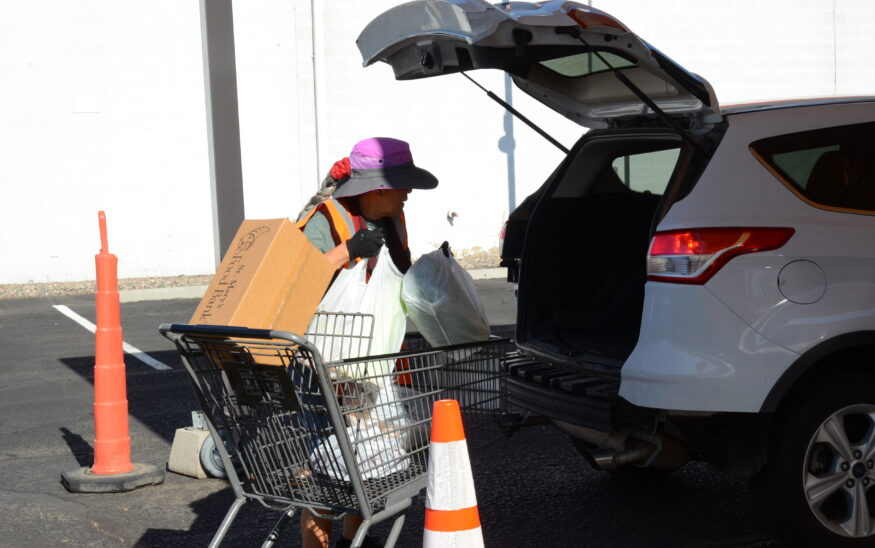
Volunteer Angie Velasquez loads bags of groceries into a family’s vehicle on July 29 at St. Mary’s Food Bank in Phoenix. (Jordan Gerard / Arizona Capitol Times)
Arizona’s push to lower SNAP errors reaches people’s daily lives
Jordan Gerard, Arizona Capitol Times//July 30, 2026//


Key point
-
Arizona is under pressure to get its SNAP payment error rate down. The people who rely on SNAP say they’re feeling that pressure, too
-
The Department of Economic Security said its numbers are stabilizing and more people are starting to receive assistance
-
Democratic lawmakers worry about lives impacted, but Republican lawmakers don’t want to foot the potential $208 million bill
Arizona resident Eileen Halladay said she didn’t expect navigating inflation would become a full-time job. But after she lost her SNAP benefits in November, she jokes that she’s now become a “professional grocery store mathematician.”
Halladay shared her story at an event earlier this month in Phoenix hosted by Opportunity Arizona and the national initiative “Families Over Billionaires.” She and five others recounted delays in receiving benefits, repeated paperwork requests and longer waits for assistance.
“Before I lost my SNAP benefits in November, I was already making every dollar count. SNAP wasn’t paying for luxury; it was helping me buy the basics and keep food on the table,” Halladay said. “I’ve become a regular at my local food bank.”
More than 475,000 Arizonans have lost their Supplemental Nutrition Assistance Program benefits as a result of federal budget cuts last year, according to a recent report by the Center on Budget and Policy Priorities. Arizona’s SNAP participation rate has dropped by nearly 55% over the past year, as of April — the sharpest decline in the country, the report shows.
H.R. 1, also known as the “One Big Beautiful Bill Act” of 2025, is expected to cut nearly $200 billion from the SNAP program over the next decade.
The financial squeeze could even get tighter for the Grand Canyon State.
Arizona faces a potential $208 million penalty because of its payment error rate, which the U.S. Department of Agriculture calculated at 10.8%. A provision in H.R. 1 requires states with error rates higher than 6% to start sharing in SNAP costs beginning in 2028. The federal government otherwise covers the cost of all benefits for states in compliance.
State officials blame much of the problem on new federal regulations.
Arizona’s Department of Economic Security Director, Michael Wisehart, wrote in a June blog post that the law has “disrupted the Supplemental Nutrition Assistance Program (SNAP) with the most sweeping structural changes and strict administrative penalties seen in a generation.”
“H.R. 1 altered SNAP eligibility and administration, adding new documentation and verification requirements onto an already complex system,” he said in a statement to the Arizona Capitol Times. “DES moved quickly to implement these federal requirements, not to restrict access, but to protect it, preserving food assistance for as many Arizona families as possible over the long term.”
He also characterized payment error rates as a simple indicator of under- and over-payments based on eligibility determinations, not an indicator of fraud.
In a statement earlier this year, the Trump administration characterized the law as a necessary step in controlling federal spending.
“President Trump is strengthening SNAP for the Americans who need it by ensuring these programs are sustainable for future generations,” White House spokeswoman Anna Kelly said. “The Working Families Tax Cuts restores basic work requirements, prioritizes American citizens, and implements reasonable cost-sharing measures with states to crack down on waste, fraud and abuse.”
About 472,000 Arizonans received SNAP assistance in June, an increase of 20,000 since May and 36,500 since April.
Arizonan Erika Ovalle, who took a moment during her story to wipe tears from her eyes during that July 15 event, said her funds have been cut from $400 a month to $100 a month. She also lives in affordable housing.
“It’s like people have this misconception that the people on SNAP are lazy and not working,” she said. “I struggle to put food on the table, and I’m fighting for my community to have more resources.”

A safety net
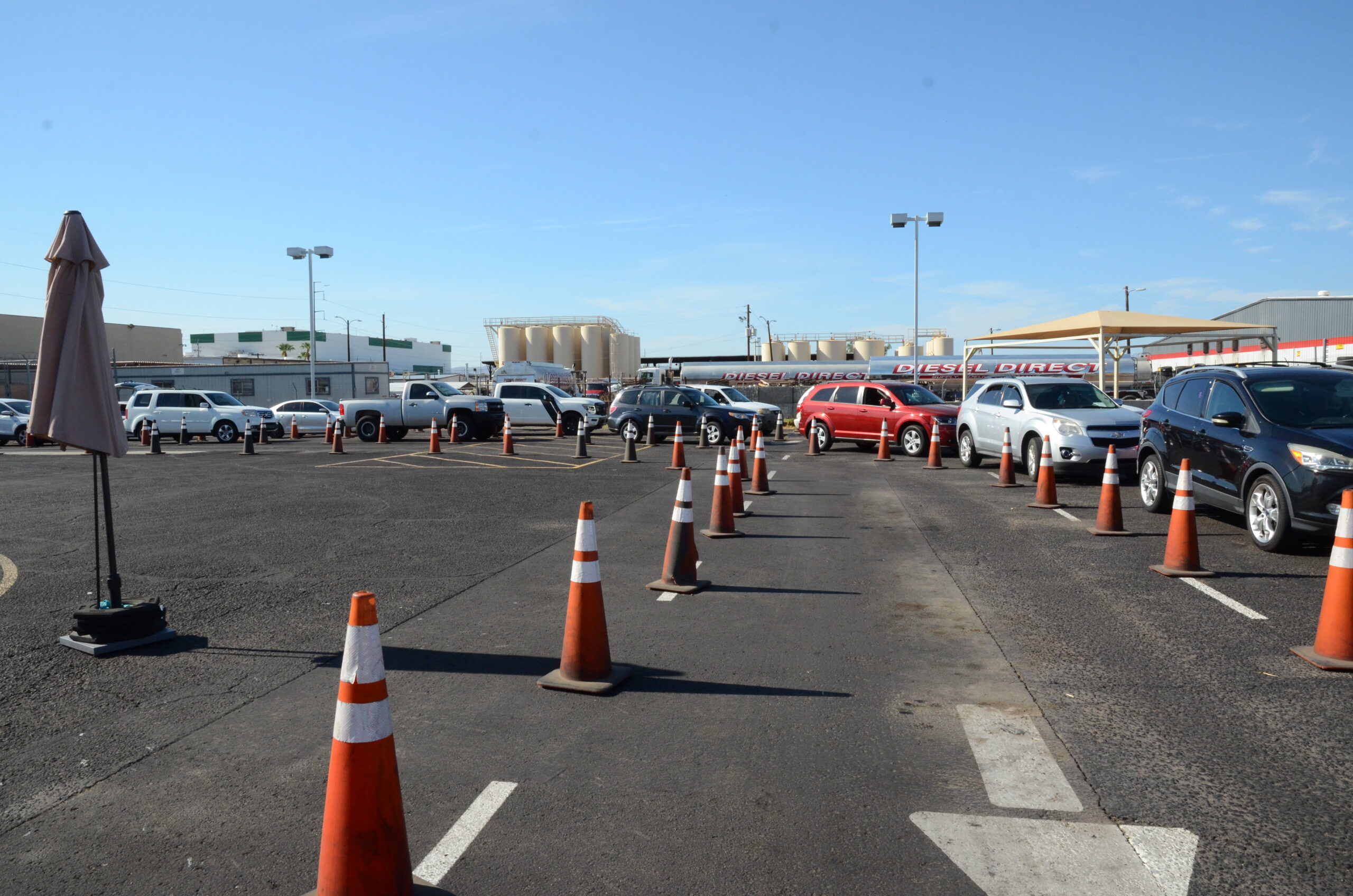
On Wednesday morning on Thomas Road just off Interstate 17, two lines of vehicles wrapped around St. Mary’s Food Bank.
Volunteers rolled out carts loaded with vegetables, bread, meat and other food items to waiting people who entered the loading area eight at a time. The distribution moved with the efficiency of a NASCAR pit stop and takes only minutes to complete.
This happens an average of 1,100 times a day.
St. Mary’s Food Bank, a nonprofit organization serving about two-thirds of Arizona, has seen a 15% increase in visits over the last year, coinciding with the federal cuts to the SNAP program, said President and CEO Milt Liu. That translates into about an additional 300,000 Arizonans, he said.
Most of the food is donated, Liu said. About 15% comes from the federal government. St. Mary’s buys another 15%, but that has increased in the last two years as a result of food inflation and rising fuel costs.
“We’re buying more food than ever before,” Liu said.
Liu said he has heard some people say nonprofits can cover the gap, but “the math doesn’t math.” SNAP is supposed to be the primary nutritional safety net, and the four food banks and other organizations are another safety net.
But there’s no way they can fully meet the state’s needs, he said.
“The reality is that there’s many folks who are coming to us who are not on SNAP, and they are the ones also having difficulty making it to the end of the month,” he said. “On the one hand, our demand is increasing, and on the other hand, our ability to buy food is being hit because of inflation and because there have been some reductions in USDA food.”
Republicans say reform is needed
Republican Congressman Andy Biggs, the GOP nominee for governor this year, voted for the SNAP cuts.
His office did not immediately return a request for comment Thursday. But Drew Sexton, a spokesman for the campaign, told Capitol Media Services in April that Biggs supported rooting out waste in government spending. Sexton said Biggs supported a state economy in which “every Arizona family can become self-sufficient while Katie Hobbs wants more people dependent on state government.”
Senate Majority Leader John Kavanagh introduced three bills this year to address the state’s error rate and reform Arizona’s SNAP program. Gov. Katie Hobbs vetoed all of them.
He said it’s not unreasonable for the federal government to expect beneficiaries to be working, seeking work or going to school — assuming they don’t have young children to care for. It’s about priorities, he said.
“Apparently, there is enough money that we can spend to root out misspending in the ESA voucher program, but when it comes to SNAP, we’re not that anxious to find people who are cheating,” Kavanagh said. “Since the same new restrictions were placed on every state, any states that had more than average losses probably had more than average ineligible people on the rolls.”
This article was updated to correct the percentage of food St. Mary’s Food Banks purchases from local grocery stores.