Sign In


 Free Newsletter

Arizona childcare assistance waitlist jumps to 13,500
Jakob Thorington, Arizona Capitol Times//July 29, 2026//

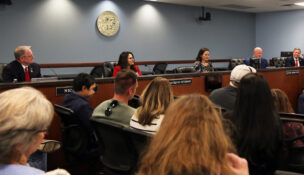
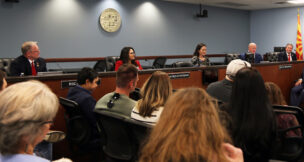
U.S. Rep. Greg Stanton, D-Ariz, and Arizona Rep. Lorena Mesa, speak at a Stand for Children listening event with parents and community members at the Mesa Public Library on July 24. (Jakob Thorington / Arizona Capitol Times.
Arizona childcare assistance waitlist jumps to 13,500
Jakob Thorington, Arizona Capitol Times//July 29, 2026//


Key points:
-
Arizona’s childcare assistance waitlist has grown more than 575% since it was reinstated in 2024.
-
The Legislature has funded $90 million toward childcare assistance in the last two years, but advocates of eliminating the waitlist say more is needed.
-
The average annual cost for childcare in Arizona sits over $16,000.
Arizona’s childcare assistance waitlist has swelled to more than 13,500 children, highlighting a growing affordability challenge that advocates say is forcing many parents out of the workforce.
The waitlist for subsidies through the Arizona Department of Economic Security grew by more than 10,000 children since the state reinstated it in August 2024, when federal COVID-19 childcare relief funding expired.
About 2,000 children were initially on the list when it reopened.
The growing demand comes as voters increasingly identify childcare costs as a serious problem.
In a recent poll of 1,000 likely U.S. voters conducted for the First Five Years Fund, a nonpartisan organization that advocates for early childcare assistance policies, more than 80% of respondents said childcare is part of an affordability crisis.
“When we as a state have decided that’s not where we’re going to concentrate our investments, then we’ve already told families and children that they don’t matter,” said Melisha Alhambra, a single mother whose children have been on a waitlist for six months.
The average annual cost for childcare in Arizona is more than $16,000, according to the First Five Years Fund.
Georgina Monsalvo, Stand For Children Arizona’s campaigns and government affairs director, said the state is experiencing a childcare “crisis” that is affecting its overall economic impact.
“When Arizona families can’t find and afford quality childcare, parents are forced to make difficult decisions about work,” Monsalvo said.
Alhambra is one of those parents. She told the Arizona Capitol Times she’s had to stop working during the summers because her children don’t have anyone to supervise them when they’re not attending school.
“That has put a strain on paying bills,” Alhambra said. “If I can’t find care, then I have to care for them, and then I can’t work.”
An October 2025 report from the Center for the Future of Arizona estimated that the state could see more than $12 billion in economic output if childcare were fully funded, resulting in an additional 115,000 jobs, $465 million in state and local tax revenue, and an additional $9,300 saved per household annually.
The state Legislature has partially funded childcare in the last couple of legislative sessions. Lawmakers appropriated $45 million in 2025 and 2026 to address the issue, but policymakers and advocates estimate it’ll take more than $160 million to eliminate the waitlist.
Rep. Sarah Liguori, D-Phoenix, sponsored House Bill 2648 to fund childcare assistance at $160 million during the recently concluded session, but the bill was not considered in any legislative committee.
Rep. Lorena Austin, D-Mesa, who sits on the House Appropriations Committee, was critical of the GOP-majority Legislature’s lack of childcare funding.
“What I’ve seen in my four years (there) does astound me,” Austin said. “We are not putting your taxpayer dollars into what I feel are the most important needs for the people of Arizona.”
Stanton also lamented the loss of the COVID-19 era child tax credit, which the U.S. Census Bureau estimated after its implementation reduced U.S. child poverty by nearly 50%. The tax credit expired in December 2021.
Stand for Children Arizona recently graded most Republicans with B-letter grades on their support for early childhood spending after the 2026 legislative session.
“If you look at the type of legislation that Democrats introduced, it was taking more money from Arizona to try to put together programs that they said would help Arizona,” said House Speaker Steve Montenegro, R-Goodyear. “Their vision is to have the government be the referee of how affordability works. Republicans said no. We want to cut government spending, reduce the tax burden on Arizonans and deliver more money back to their pockets.”
More than 60% of voters in First Five Years Fund’s recent poll said they supported the bipartisan “Child Care Modernization Act” filed last year in Congress that would increase funding for childcare.
Alhambra and several other parents said other issues impacting their ability to find childcare involve finding a provider who fits their schedule and finding providers with staff they trust with their children.
“We have to be innovative,” Alhambra said. “If we value Arizona and if we love our state and the people of our state, then we’ve got to start with the children, and we have to start with families.”