Sign In


 Free Newsletter

Arizona facing deep Colorado River cuts under ‘unacceptable’ federal plan
Reagan Priest, Arizona Capitol Times//July 31, 2026//
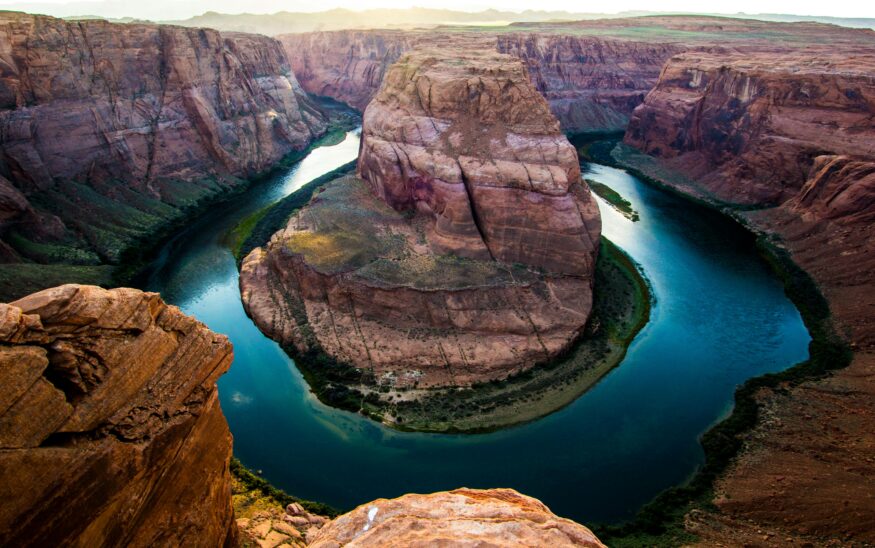
Arizona could face drastic cuts to its Colorado River allocation under newly announced federal plan. (Sarah Howell/Pexels)
Arizona facing deep Colorado River cuts under ‘unacceptable’ federal plan
Reagan Priest, Arizona Capitol Times//July 31, 2026//


Key Points
-
The U.S. Bureau of Reclamation released its long-awaited Colorado River operating guidelines
-
Arizona could see a 77% reduction in its Colorado River supply, rather than the 31% it proposed
-
Gov. Katie Hobbs and water leaders say the announcement is a framework, not a final decision
The federal government announced Friday that it will move forward with plans to drastically reduce Colorado River allocations to Lower Basin states, including Arizona, leaving Upper Basin states relatively unscathed.
The Bureau of Reclamation released its long-awaited final environmental impact statement on post-2026 Colorado River operating guidelines. The proposal calls for adjusting river operations every two years unless the seven states that share the river reach a long-term agreement.
In May, Arizona, California and Nevada outlined a Lower Basin proposal that would have reduced the states’ water usage by 1.25 million acre-feet per year, cutting Arizona’s supply by 31%.
Instead, the federal government is proposing a Lower Basin reduction of 3 million acre-feet per year, potentially eliminating 77% of Arizona’s allocation. The state is legally entitled to a 2.8 million acre-feet yearly allocation from the river, but is currently reducing its usage by over 500,000 acre-feet.
“Such reductions would devastate Arizona’s water users and its economy,” the Department of Water Resources said in a statement.
In a statement, Gov. Katie Hobbs said there is still an opportunity for the federal government to adopt the Lower Basin proposal to prevent “draconian” cuts to Arizona’s water supply.
“Today, the federal government released a broad range of alternatives for how the Colorado River will be managed over the next ten years,” Hobbs said. “Within that range is the opportunity for the federal government to adopt the commonsense, compromise proposal put forward by Lower Basin States for 2027 and 2028.”
Republican leaders expressed frustration with the federal government in statements released Friday. House Speaker Steve Montenegro urged Arizona leaders to remain united in the state’s position, while Rep. Teresa Martinez, R-Casa Grande, lambasted the Bureau of Reclamation.
“Pinal County farmers already lost their Colorado River water. That happened years ago. They took the hit without a bailout, without fanfare, and without much sympathy from anybody,” Martinez said in a statement. “So when Washington tells Arizona to cut more, I want straight answers. Who is being asked to cut?”
ADWR emphasized that the guidelines are not yet final and won’t be until the Bureau of Reclamation issues a Record of Decision following an expedited public comment period.
“We will continue to work with the federal government as well as with our tribal, agricultural and municipal partners in Arizona, and the other Colorado River Basin states, to make river operations work for the betterment of all,” ADWR said in its statement.
According to ADWR, 36% of Arizona’s water supply comes from its Colorado River allocation. The rest comes from groundwater, in-state rivers and reclaimed water.
Over 70% of the state’s water supply goes to agricultural users, with the remaining 28% shared by municipal and industrial users, according to the department.
Friday’s announcement wasn’t exactly unexpected. The Bureau of Reclamation’s February draft environmental impact statement proposed cutting Arizona’s Colorado River allocation by 77%.
That suggestion sparked immediate and intense backlash from Arizona’s elected officials, water experts, business leaders and tribal nations.
Hobbs’ office even hired a high-powered law firm to prepare for potential litigation in the case the Bureau attempted to enact that proposal. The Legislature also set aside millions of dollars in the last two state budgets to fund any legal action needed to protect Arizona’s share of the river.
With Friday’s announcement, litigation remains an option for Arizona to defend its water rights. The concept of a negotiated sharing agreement between the seven Colorado River states remains far-fetched.
The states remain at a negotiating standstill over how to share the river in the coming decades. Its dwindling flows can no longer support the allocations outlined in the current sharing agreement, which is set to expire this year.
Arizona and its Lower Basin neighbors have already made significant cuts to their Colorado River usage in recent years, and those negotiators argue the Upper Basin states are not willing to bear meaningful cuts to their allocations.
Negotiators from Colorado, Utah, Wyoming and New Mexico argue that the Lower Basin states should bear the brunt of any cuts because the Upper Basin states have historically received less than their full share of the river’s flows.
“For many months it has been clear that the direction of Colorado River negotiations has been an exercise in lowering expectations, particularly for a long-term, seven-state agreement on operating this vital river system,” ADWR said in a statement.
The Colorado River situation could also have implications for Arizona’s governor’s race. Hobbs and her Republican challenger, Congressman Andy Biggs, have traded barbs over who is better poised to advocate for the state’s best interests in negotiations with the Upper Basin and talks with the federal government.
Additionally, polling suggests that 92% of Arizonans believe state officials should prioritize the state’s water security.
Water experts are careful to warn that Arizona is not running out of water. But the cost for water services could increase when cuts go into effect, and there is less of it to go around.