Sign In
Upcoming Event
 Free Newsletter

Fletcher McCusker: Surviving Arizona’s budget process
Jakob Thorington, Arizona Capitol Times//August 3, 2026//
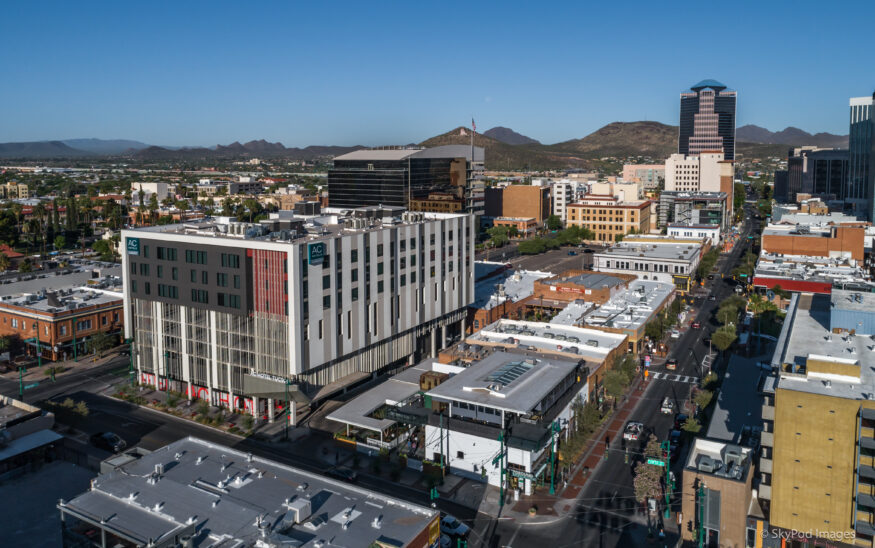
The Rio Nuevo district in Tucson has helped develop downtown Tucson as the only tax increment finance district in Arizona.
Fletcher McCusker: Surviving Arizona’s budget process
Jakob Thorington, Arizona Capitol Times//August 3, 2026//


After the latest round of political scrutiny threatened to derail its mission, the leader of an important and unique part of Tucson’s economic development wants not just to keep the momentum going, but to expand its scope.
Many people have credited Rio Nuevo as a contributor to revitalizing Tucson’s downtown area in the 21st century by using state dollars and private funds to aid new businesses in the region.
The district, created with voter approval in 1999 as Arizona’s only tax increment financing district, will sunset in 2035. The Arizona Auditor General’s Office recently determined every dollar Rio Nuevo has received has yielded $10 in funding from the private sector.
In a recent Q&A with the Arizona Capitol Times, Rio Nuevo’s Chairman Fletcher McCusker spoke of Rio Nuevo’s importance to Tucson and how the district managed to avoid seeing its funding cut in the recently enacted state budget.
The questions and answers have been edited lightly for style and clarity.
What is your connection to Tucson?
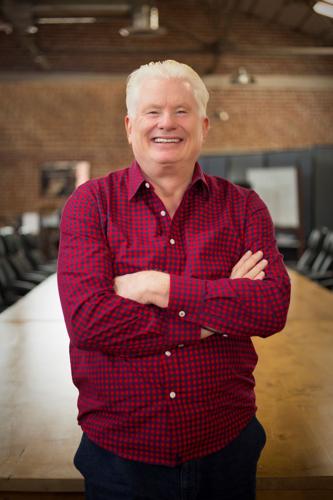
I’m a native Tucsonan so that’s a rarity. My grandfather moved to Tucson in 1929. He was assigned here by the Works Progress Administration. They lost everything in the bank crisis of the Great Depression. I grew up here. When I went to the University of Arizona in 1967, Tucson was a town of 200,000 people. When I got out of college, I could not wait to leave.
When you grow up here, everything else looks better. I got my degree in healthcare management. I got a job right away out of school and eventually started a company called Providence, which was the first home healthcare company in the U.S.
My wife and I lived in Houston at the time, and I asked her where she wanted to live while we were trying to start a new company. She put her finger on the map, and it was right on top of Tucson. She said, “It’s time for you to go home.” That was in 1996. We packed up and moved to Tucson, and it exploded. I got to live the American Dream.
How did you get involved with Rio Nuevo?
In 2010, Providence was quite successful. We were located in multiple cities and [had] about 350 staff in our corporate office in Tucson. They suggested we move downtown. At the time, downtown was boarded up. It was blighted. Rio Nuevo had failed, and downtown was a ghost town full of homeless people and peddlers. The only reason you went downtown was for jury duty.
We bought a whole block and renovated it to become the headquarters for Providence. Shortly after that, Tucson Electric Power moved right next door to us. In 2012, I got a call from Senate President Steve Pierce, and he told me that he just appointed me to the Rio Nuevo board. It had been a disaster before then. The state seized it from the city. Rio Nuevo spent $235 million and had nothing to show for it, but some Tucson legislators thought there was some value in replacing the board. So I said, “Well, this doesn’t sound voluntary,” and he goes, “It’s not.”
So what changed after you got involved?
I brought San Diego’s model to Rio Nuevo of relying more on private developers instead of using 100% state dollars. I believed we could create up to 10 times the amount of money that we have by using the money to see private development. Fourteen years later, we’ve invested about $200 million, and the private sector has invested over a billion dollars to create some 80 new restaurants, a dozen hotels and revitalized our community center.
The first budget we got from Republicans this year was vetoed, and it would have cut state funding for Rio Nuevo. How did you react when you saw that proposal?
We thought the Legislature was thrilled with us before that. We’re audited by the auditor general, and we report to the Joint Committee on Capital Review. They celebrated our success. Then, one Sunday morning, I picked up the paper to see that the Republican majority wanted to repeal the tax. There’s a group of people who resent the idea of using tax dollars for private purposes.
The lesson I learned in this repeal is they don’t read the reports. They don’t see the audits that keep me out of trouble, but there’s no real perspective of how valuable Tucson has become for this entire state.
How did you convince them to back off?
Our success is ultimately why we survived. We arranged for the speaker to come down and we arranged for the president to come down. We won them over, and the repeal was set aside. That was one of the points we made — to let us finish our work. They’ve now given us the opportunity to do that. This wouldn’t have happened without Gov. Katie Hobbs. She immediately came out in support of us and said Rio Nuevo is not even on the table.
They did end up getting language in the budget that requires 80% of the district’s spending to be toward sales-tax generating projects. Do you believe that’s going to change anything for Rio Nuevo going forward?
I think the conversation there was what happens if something happens to me. We believe our mandate is to create taxpaying endeavors, but there are a lot of people who suggest that we should be more socioeconomic and invest in affordable housing and other community programs.
There was some concern that Democrats would put activists on our board, but we’ve had really good appointees who see the importance of retail development. We do important things culturally too. We’ve invested in a skate park and affordable housing, but it is not our mainstay. So what the Legislature did was put guardrails around Rio Nuevo for the remaining nine years we have, but we already exceed their requirement.
Do you have a project that’s a personal favorite?
The relocation of Caterpillar’s mining group to Tucson was an extraordinary achievement. We competed with Denver. We competed with Dallas. Tucson is not known for winning these kinds of relocations, but Caterpillar was thrilled about being part of this downtown community.
We donated land to them. We built their building, and they announced to the world that they were bringing a thousand employees to Tucson, which has created an investment with other mining companies that have relocated downtown.
The Tucson Community Center also used to be obsolete, but we’ve spent $100 million on it. When we got involved, the attendance was about 200,000 annually. Today, it’s 1.2 million.
Rio Nuevo describes you as downtown Tucson’s greatest fan. What does that mean to you?
It makes me want to see this through. I’m 77. I’ve thought about turning this over to someone else, but the controversy has motivated me to see it through. The disconnect between the [members of the] Republican Party, [many of whom] I would consider to be friends, and the Democratic Party, [which] I now work for, is important for me to resolve.
What are your hopes for Rio Nuevo’s future?
I hope the Legislature extends the tax. I believe there are opportunities to extend our time and extend our boundaries. This is a very confined geography. It’s four miles, and there are seriously blighted areas south, north and west of us that could benefit from state funding assistance.
We have also agreed to recruit a CEO to bring in someone younger. We’ve never had a CEO, and that recruitment is going to be our project for the next couple of years.