Sign In
Upcoming Event
 Free Newsletter

Agreement aims to reduce Salt River horse herd to 120 in 5 years
Jordan Gerard, Arizona Capitol Times//April 11, 2026//

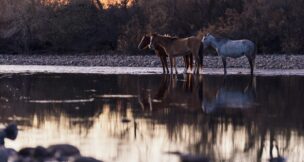
(Erik Johnson / Pexels)
Agreement aims to reduce Salt River horse herd to 120 in 5 years
Jordan Gerard, Arizona Capitol Times//April 11, 2026//


Key Points:
-
A crowd rallied at the Arizona Capitol in support of the Salt River horses
-
Research says wild horses both benefit and harm the desert and riparian ecosystems
-
One legislator wants to give the horses further protection before they can be removed
Not far from the Phoenix metro area, horses graze along the riparian areas of the Salt River, peaceful and unaware of the ongoing fight about their herd at the Capitol.
An estimated 274 horses make up the Salt River herd, but that number will be reduced to 120 horses after five years, according to a recent agreement by the Arizona Arizona Department of Agriculture and the Salt River Wild Horse Management Group.
In a news release, the Agriculture Department said the gradual reduction balances the limited range resources available while maintaining the genetic integrity of the herd. The plan also provides new safeguards to protect the horses that leave the management area and only be relocated to sanctuaries approved by the department.
On April 7, more than 50 people rallied at the Arizona Capitol in support of the horses. Supporters say it’s a fight they’ve been embroiled in for the last 10 years — one that has received renewed attention due to a new controversial management agreement and a potential legislation that would offer more protection for the herd.
Susie Bell, an advocate who is a member of the Friends of the Salt River Wild Horses group, was among the crowd of those who came in support of the wild horses — a significant cultural and ecological attraction for those visiting the Salt River.
“We want the governor to stand up and protect the Salt River horses like Governor (Doug) Ducey did when we fought for them ten years ago. She hasn’t done anything yet as far as standing up to protect them,” Bell said. “We’re calling on her to do that as part of the effort in trying to stop the removals of over half of the Salt River wild horses with no justifiable imperative to do so at this time.”
A spokesperson for the Governor’s Office saud: “The Arizona Department of Agriculture recently conducted a thorough procurement process to select a partner that will help manage the horses. In collaboration with the selected contractor, the state is committed to sustainably managing the herd to protect the long-term health of the horses and their habitat.”
The group was awarded the contract again in February and has seen previous success at managing the size of the herd. They rely on natural attrition and a birth control method delivered via dart. The herd size has been decreased from 450 over the past several years for the sake of preserving ecological stability in the areas surrounding the river.
Currently, the horses live on about 19,000 acres around the Salt River, but advocates said there are no peer-reviewed scientific studies to determine how many horses can be supported on that amount of land.
The department said in an email they have never mandated a herd reduction target and have not specified or required a herd target of 120 horses. They said the contractor, the Salt River Wild Horse Management Group, proposed reducing the herd to 120 over the term of the five year contract. The group did not respond to a request for comment.
“AZDA is committed to preserving the health, safety, and integrity of the Salt River Horse Herd and is statutorily mandated to humanely manage the herd,” the department wrote. “Humanely and sustainably managing the herd requires balancing what the ecosystem can sustain as well as the size and diversity of the herd.”
The department said it considered a variety of proposals to reduce the size of the herd, including the continuation of fertility control and the gradual, humane relocation of horses.
The department said it does not have authority over wild horses or burros managed on the Bureau of Land Management lands and are not coordinating with BLM on the removal of horses in Arizona.
A spokesperson for BLM Arizona said they are removing some burros from Lake Pleasant and Black Mountain Herd Management Areas, but not removing horses from the herd management areas near Kingman or Yuma.
The state department said their management of the Salt River Horse Herd is vital to preventing federal management of the herd.
“AZDA’s role in managing the Salt River Horse Herd came after a federal plan to remove large amounts of horses from the Tonto National Forest,” the department wrote, referencing the fight to keep the horses before the 2016 law was passed. “AZDA’s current approach to sustainably and cooperatively manage the Salt River Horse Herd serves to prevent future federal efforts that could result in significant removal of horses from the Tonto National Forest.”
Hobbs is not the only elected official advocates are counting on for support. Newly appointed Republican Rep. Cody Reim is introducing a striker amendment to provide clarity and definitions in the existing law, known as the Salt River Wild Horse Act, passed in 2016. The Maricopa County Board of Supervisors appointed Reim to fill former Rep. Joseph Chaplik’s seat after he resigned to run for Congress.
Bell said his appointment was a wonderful surprise because they needed a hero.
The draft is still in progress and Reim said he plans to introduce it as a floor amendment. The proposal would also provide protection for a certain amount of time while genetic diversity studies can take place, but he’s still working through the stakeholder process, he added. He said he has gotten mostly bipartisan support in the House and the Senate.
“As a constituent, it’s an issue that I followed over 10 years ago,” Reim said. “Apparently the interpretation of the current law that we’re under now is being interpreted to favor removals, which was never the intent of the legislation.”
A mix of research exists in support and opposition to wild horses in general. Advocates say more peer reviewed research is needed to show that wild horses can benefit ecosystems. While studies continue, the horses tend to attract a lot of visitors from around the country and the world.
Ecotourism has become a booming business in wilderness areas even more than hunting and other traditional activities, Bell said. She usually visits the sandy riverside area three times a week, unless she’s at the Capital fighting for the horses.
“We have countless people that I meet at the river. The top 10 things that they want to see and do while they’re here is see the Salt River horses,” she said. “They ask if they can tag along with me, so they’re coming for like a week at a time. Hotel, food, rental car, everything is going into our economy because of those horses.”
The Salties, as they’re affectionately known, have also caught the attention of Arizona’s federal lawmakers. Rep. David Schweikert and Rep. Juan Ciscomani, both Republicans, co-chair the Wild Horse Caucus, which was established in Congress last year. The caucus will focus on solutions such as fertility control and habitat preservation as sustainable alternatives to roundups and removals, according to a news release last year.
“Wild horses and burros embody the spirit and heritage of the West and deserve to be protected and treated humanely,” Ciscomani said in the news release. “For too long, these animals have been subject to cruel and costly roundups that, at best, remove them from their natural habitat to be housed in warehouses, and at worst, result in the death of the animal.”
“Growing up, I had the blessing of spending much time on several ranches and farms in Arizona,” Schweikert said in the same release. “These experiences have led me to serve as an advocate for humane treatment and protection of these majestic species. I’m looking forward to the conservation initiatives that will come out of the formation of this caucus.”
Neither Schweikert nor Ciscomani responded to a request for comment on if they’re exploring any new protections for wild horses.