Sign In
Upcoming Event
 Free Newsletter

Arizona business and political leaders need to work together on Colorado River messaging, advocates say
Reagan Priest Arizona Capitol Times//April 7, 2026//
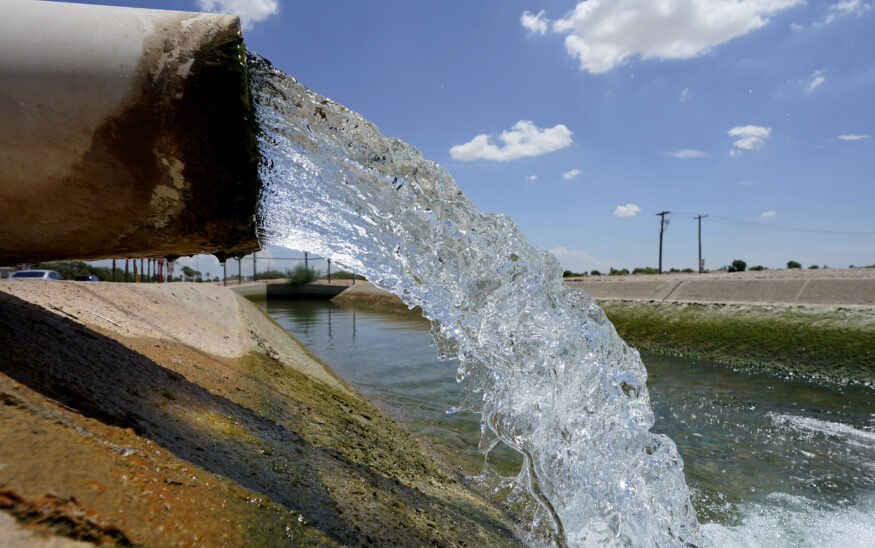
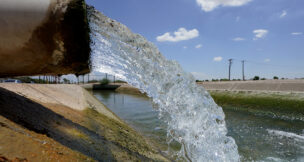
FILE - Water from the Colorado River diverted through the Central Arizona Project fills an irrigation canal on Aug. 18, 2022, in Maricopa, Ariz. Living with less water in the U.S. Southwest is the focus for a conference starting Wednesday, Dec. 14, 2022, in Las Vegas about the drought-stricken and overpromised Colorado River. (AP Photo/Matt York, File)
Arizona business and political leaders need to work together on Colorado River messaging, advocates say
Reagan Priest Arizona Capitol Times//April 7, 2026//


Key Points:
-
Colorado River negotiations remain deadlocked
-
Business leaders are working with city officials to explore water solutions
-
Leaders are trying to strike a balance between pragmatism and urgency
Arizona’s business community and local leaders are attempting to balance pragmatic water solutions with urgent messaging to the public and the federal government as the state’s Colorado River position remains precarious.
In a conversation for the Arizona Capitol Times’ Morning Scoop, Greater Phoenix Leadership President Neil Giuliano, Intel Senior Technologist Kelly Osborne and Central Arizona Project Board President Terry Goddard discussed the state’s “critical” water situation and the role corporations and cities can play in advocating for a stable water future.
Negotiations between the seven Colorado River states over a renewed sharing agreement are deadlocked, while the U.S. Department of the Interior considers alternatives that Arizona’s negotiators say are unworkable. The state has retained the high-powered law firm Sullivan & Cromwell to represent its position in a potential court battle, but more needs to be done at the local and business levels to conserve water, find alternative supplies and communicate Arizona’s position.
Giuliano and Osborne highlighted the commitment Arizona’s business community has already made to water conservation efforts as the federal government considers reducing the state’s allocation of Colorado River water to 15% of the CAP’s current capacity, or about 232,000 acre feet. Giuliano said the state’s business leaders are no strangers to the need to conserve water and create innovative solutions to do so.
“We’re desert dwellers,” Giuliano said. “We have been used to this for a very long time, and I think that’s why we’re very good at it, because we have to be.”
That’s why GPL joined the Coalition for Protecting Arizona’s Lifeline, an advocacy project originally formed by a bipartisan group of mayors in the fall of 2025. The coalition has now expanded to include business organizations, local water companies and tribal nations.
Many of the state’s biggest industries rely on Colorado River water, which is why Gov. Katie Hobbs has urged federal leaders to consider the national security and economic risks of reducing the state’s allocation. Semiconductor manufacturers like Intel need water to maintain a competitive edge over other states and other nations, but Osborne said the company is also doing what it can to conserve amid water shortages.
She said the company has decreased its freshwater withdrawal by 30% since 2020 while bringing two new semiconductor factories online by investing in water treatment and reclamation facilities.
“Not only do we reduce and reuse water, but we also restore (more) water than we consume,” Osborne said. “Intel has a net positive goal for water, so water that we actually lose to evaporation, we work with nonprofits within our watersheds to go then restore water to the river.”
Goddard noted that partnerships between public and private entities are crucial for both conserving water and advocating for Arizona’s Colorado River allocation. But he said the state’s leaders need to do more to educate the business community and the public at large about the situation, highlighting a recent conversation he had with a business leader.
“He said, ‘Well, when does it become critical? When does this issue on the Colorado River become critical?’ And I wanted to say, well, about five years ago …” Goddard said. “I said, ‘Well, clearly today it is critical …’ if it was ever critical, it’s critical right now.”
Leaders like Giuliano hope to help the state’s elected officials spread that message by providing data and information they can use to make the case for Arizona’s water.
“If the business community can help our elected officials ignore the political noise and just work on your long-term obligation, I think we’d be helping if we can do that,” Giuliano said.
He also said the private sector needs to help government officials spread the word about potential Colorado River cutbacks without spooking investors or average citizens. Osborne said Intel has focused on working alongside city leaders in Chandler to do just that as the company’s footprint in the East Valley grows.
In the meantime, Goddard emphasized the importance of striking a balance between awareness and fearmongering.
“I feel like I’m Paul Revere, not Chicken Little,” Goddard said. “The sky is not falling, but we need to make an accommodation for a different kind of more water-short future. We can do it and our cities are pioneers.”