When you stepped into office, many of us felt renewed optimism. We knew you opposed the death penalty. We heard that you supported life sentences without parole instead of capital punishment. For many, this felt like a hopeful sign that we might see a shift away from retribution and toward a more compassionate approach to justice.
This fall, I started an internship with a nonprofit organization that advocates for changes to our criminal justice system. It’s opened my eyes to just how deeply inequities run within the system, where justice isn’t equal, and the consequences are often devastating. I’ve learned about wrongful conviction cases— about the 200 people exonerated at the state level since the 1970s. Many of them were sentenced to death for crimes they did not commit. Stories like these show just how real and terrifying the risks are when we choose the ultimate punishment.
Sienna Walenciak
Today, 40 people remain on federal death row. Before the Trump administration, federal executions were rare, only three had been carried out since the U.S. Supreme Court reinstated the federal death penalty in 1988. But in the final days of President Trump’s term, this changed drastically, as 13 inmates were executed—even as Covid spread through our prisons. Among them was Brandon Bernard, who was only 18 when he committed his crime. The pause on federal executions, which had lasted over 15 years, was broken, signaling what felt like a step back for our nation—choosing vengeance over mercy and punishment over healing.
As a young person watching the results of the recent presidential election unfold, I’m concerned we’re entering a phase where we’re moving toward leading with an iron fist. What we need from you now, more than ever, is compassionate leadership. Give us examples that remind us that justice can coexist with mercy. My generation needs to see this within our leaders if we are to grow up believing in the ideals of fairness, empathy, and justice for all.
You have the power to set a legacy that embodies those ideals. Commuting the sentences of those on federal death row would send a powerful message: that even in challenging times, America chooses healing over retribution. It would be a legacy of compassion, one that shows us a way forward rooted in mercy, not fear.
We need that kind of leadership heading into these next four years. We need that kind of hope.
Sienna Walenciak is a college student and a volunteer with the Televerde Foundation, an Arizona-based organization dedicated to second chances for justice-involved women. She is also a fall intern with the Responsible Business Initiative for Justice, a nonprofit organization dedicated to mobilizing the business community to advance fair and effective justice policies.
Gov. Katie Hobbs said Monday there’s a good reason she is ignoring the recommendation of her hand-picked expert who said it’s impossible to humanely kill inmates by lethal injection: She says he was not “up to the task.”
But the governor also won’t say whether she personally believes that it’s possible to humanely conduct an execution.
“I’m not going to get into that,” Hobbs said.
All this comes as Hobbs dismissed retired federal magistrate David Duncan Nov. 26, whom she hired last year after she said there had been a series of “botched executions” in Arizona, all conducted using lethal injection.
“I’m grateful for the work he did,” she said. “But we decided to go in a different direction.”
That “different direction” is to resume putting prisoners convicted of capital crimes to death by lethal injection, which is the only method currently authorized under the Arizona Constitution. Hobbs sought the study and got fellow Democrat, Attorney General Kris Mayes, to pause seeking execution warrants while Duncan was conducting it.
Hobbs made it clear Monday she believes that Duncan was getting into issues she believes went beyond her order to study the process.
“Just one example of that was he started saying that we should execute people by firing squad,” the governor said. “And that is clearly unconstitutional, not the job he was hired to do.”
Duncan, however, told Capitol Media Services he was hired to find out what went wrong with previous executions that resulted in perceptions that had been “botched.” In fact, Hobbs herself used that word last year in announcing the study.
More to the point, Duncan said that required him to determine whether the procedure is humane. And he said the comments about using a firing squad were designed to say that if the state is going to have a death penalty, a decision that wasn’t his to make, that process is more humane, shorter, and results in less pain.
Hobbs said Monday that her decision to fire Duncan and give her blessing to resuming executions followed a review of the process by the state Department of Corrections, Rehabilitation and Reentry conducted under Ryan Thornell whom she hand picked after taking office to run the agency.
Thornell came to Arizona from the Department of Corrections in Maine, which has no death penalty.
“I am very confident in their review,” the governor said.
“They have thoroughly gone through every procedure and process and updated them,” she said. “And I’m confident in the process.”
More to the point, the governor said that the death penalty, and lethal injection, are the law in Arizona.
“And we’re going to follow the law,” she said.
Hobbs said, though, she will not follow the lead of Mayes, who told Capitol Media Services, she intends to be a witness at the next execution.
“She believes that given her role in requesting the warrant it is her obligation to attend,” said Richie Taylor, Mayes’ press aide.
Hobbs, however, pointed out that her decision to stay away is no different than any of her gubernatorial predecessors.
“And I’m confident in the team that’s in place and the processes that will be in place,” she said.
Nor does she expect a repeat of prior problems, saying there is a new team in place, not the one “where we had botched executions.”
“The whole point of doing a thorough review is to avoid that,” Hobbs said.
“Everyone understands the scrutiny that is in place and they want to avoid that as well in making sure that we’re carrying out this ultimate punishment according to the law and ensuring that the botched situation isn’t going to happen.”
And, method of execution aside, what does the governor believe about capital punishment?
“I’m not going to talk about that,” Hobbs responded.
Strictly speaking, the governor plays no role in executions.
It is solely up to the attorney general to ask the Arizona Supreme Court for the necessary warrant to execute someone once all appeals have been exhausted. And unlike some states, the governor here cannot unilaterally pardon someone or commute a sentence without first getting a recommendation to do so from the Arizona Board of Executive Clemency.
But it was Hobbs’ decision to seek a study that led Mayes to refuse, at least until now, to seek such warrants.
Mayes last week filed paperwork asking the Supreme Court to set a schedule to hear arguments about whether to issue a warrant to execute Aaron Gunches. He pleaded guilty to the 2002 kidnapping and murder of Ted Price, his girlfriend’s ex-husband.
Hobbs said Monday that case is one reason she and Mayes want to resume executions.
“This is something that the victim’s family has been waiting for for a long time,” the governor said.
“And this is the law of the state of Arizona,” Hobbs said. “And both of us have been elected to uphold that law.”
Attorney General Kris Mayes took the first steps Friday to finally putting convicted murderer Aaron Gunches to death.
Mayes asked the Arizona Supreme Court to set a “firm briefing schedule” to deal with the legal issues required before an inmate can be executed.
Strictly speaking, she has not yet asked for the necessary warrant of execution. That, Mayes said, will not come until after any legal arguments have been heard.
Aaron Gunches
The reason for that is that an execution has to occur exactly 35 days after a warrant is issued. More to the point, if there are still pending legal issues, the warrant expires.
That’s exactly what happened last year.
Gunches was convicted and sentenced to death for the 2002 murder of Ted Price, his girlfriend’s ex husband. He had been set to be put to death on April 6, 2023.
That never occurred after Gov. Katie Hobbs said in January 2023 she did not want any executions to be carried out while she had a special commissioner study the process in the wake of several “botched” executions. Mayes concurred and the warrant expired.
The governor last month agreed to restart the process after she dismissed retired federal Magistrate David Duncan, whom she had hired to do the study. Hobbs said that she had lost confidence in him, saying a draft report he prepared showed he had gone far afield of what she said was a limited request that he review the protocols and procedures used to put inmates to death.
But there also is another reason Mayes is not yet asking the court to sign the death warrant.
In her new court filings, she pointed out that the pentobarbital the state plans to use to execute Gunches has to be compounded. More to the point, it must be used within 90 days of that occurring.
Mayes said she is now ready to restart the execution process.
“This is not a decision that I have made lightly,” she said in a prepared statement.
“But the death penalty is the law in our state and it is my job to uphold it,” Mayes continued. “The family of Ted Price has waited for over 22 years for justice in this case, and I am committed to ensuring that justice is served.”
How quickly an execution could occur remains unclear.
Mayes told the justices that Gunches, who has been representing himself, has 10 days to respond to the request for a warrant of execution, with the state having five days to respond.
On paper, the court then could immediately review the request and, if granted, set an execution date for 35 days later. The attorney general said, however, she doesn’t expect such quick action.
“When extended filing periods are requested, as frequently occurs in capital cases, the pre-warrant briefing process alone, not including the statutory 35-day waiting period on the execution warrant, can last for months,” Mayes told the court.
For example, she said, the pre-warrant litigation for Robert Jones in 2013 spanned approximately two months.
But she also noted that the execution date was set for beyond the 35-day period, likely because there was another pending execution. The result, she said, was nearly four months elapsing between the state’s request for the warrant and Jones’ execution.
Whether Gunches, who represents himself, will contest the warrant remains unclear.
Gunches never disputed the charges, pleading guilty to both the murder and kidnapping of Price.
He waived his right to post-conviction review and in November 2022 filed a motion on his own behalf seeking an execution warrant. But Gunches withdrew that request in January 2023 after Hobbs took office.
The Supreme Court refused at that time to reconsider. But with the decision to halt all executions during the Hobbs-ordered study, the warrant expired. And, until now, Mayes had refused to seek a new one.
If the execution goes forward, it would be the first in two years.
There are 111 inmates on death row, with 25 who, including Gunches, have exhausted their appeals.
Arizona, under Republican former Attorney General Mark Brnovich, resumed executions in 2022 after an eight-year pause following the botched procedure when Joseph Wood was given 15 doses of a two-drug cocktail over two hours. Two other inmates were put to death that year.
But Hobbs, in appointing Duncan shortly after she took office in 2023, said the process remained plagued by questions.
“Recent executions have been embroiled in controversy,” she said at the time. There were reports that prison employees repeatedly encountered problems in placing the intravenous line into the veins of the condemned men.
Still, halting executions actually was not the governor’s decision to make.
It is solely up to the attorney general to ask the Arizona Supreme Court for the necessary warrant to execute someone once all appeals are exhausted. And unlike in some states, the governor here cannot unilaterally pardon someone or commute a sentence without first getting a recommendation to do so from the Arizona Board of Executive Clemency.
But Mayes, in legal filings with the Supreme Court last year, agreed with Hobbs that the delay was justified, which is why she refused until now to seek any execution warrants.
“There is a heightened need to ensure any capital sentence is carried out constitutionally, legally, humanely, and with transparency,’’ she told the justices.
While Hobbs dismissed Duncan and he never issued a final report, Mayes said she was satisfied with a separate review of the execution process issued by Ryan Thornell, director of the Department of Corrections, Rehabilitation and Reentry.
Mayes’ legal filings come as the Supreme Court is weighing a parallel bid by Maricopa County Attorney Rachel Mitchell to get an order to put Gunches to death.
Mitchell disagreed with the decision by Hobbs and Mayes to delay all executions during the outside review, one that the governor has since abandoned. So she contends she has the same right as the attorney general to seek a death warrant.
The justices have not yet ruled on that argument.
A spokeswoman for Mitchell said Friday said it’s too soon to know if Mitchell will now drop her claim.
The former federal magistrate who Gov. Katie Hobbs hired to study the execution process said Wednesday he was dismissed because he was telling the governor something she didn’t want to hear: There is no humane way to kill someone with lethal injection.
“She asked me to find out what went wrong with the previous injections that resulted in perceptions, widely held, that they were botched,” said David Duncan. And he said that included whether lethal injections can be safely used “and make recommendations on that point.”
More specifically, the executive order issued by Hobbs shortly after she took office in January 2023 sought review of protocols for execution by injection, including inserting the lines to administer the drugs and transparency. It also sought information on training of staff and experience in carrying out executions.
What Duncan said he found in an outline that had been submitted is that the methods used to put inmates to death, being “humane” as was promoted when lethal injections were authorized by voters, are far from it. And what complicates all that, he said, is the state-sanctioned secrecy that surrounds all that.
“She asked me to increase transparency,” he told Capitol Media Services on Wednesday, the day after he got a call from the governor’s office saying his services were no longer needed.
“And I prepared a report that I thought would do that,” Duncan said. “And it’s ironic that a report that was designed to increase transparency was terminated on the eve of its disclosure.”
Hobbs, in her letter to Duncan on Tuesday, said he had gone far afield of her directive “to focus on procurement, protocols, and procedures related to carrying out an execution under existing law.” And Exhibit No. 1 from the governor was his suggestion that if Arizona wants to continue to put inmates to death, the most humane way would be a firing squad, something he said would avoid all the mistakes and problems that have led to multiple reports of inmates suffering as staffers had problems administering the fatal drugs.
But Duncan said that proposal fits squarely within the central question Hobbs presented to him: Review the death penalty procedures including the experience of the staff at the Department of Corrections, Rehabilitation and Reentry to conduct executions. In fact, that’s exactly what she said when announcing an independent review.
“Recent executions have been embroiled in controversy,” the governor said in January 2023. There were reports that prison employees had repeated problems in placing the intravenous line into the veins of the condemned men.
“The death penalty is a controversial issue to begin with,” Hobbs continued. “We just want to make sure the practices are sound and that we don’t end up with botched executions like we’ve seen recently.”
Duncan said that’s what he delivered.
“I don’t think they wanted to hear that,” he said.
“I think they wanted me to say everything was fine,” Duncan said. “And I could not say that.”
He said any discussion needs to start with the question of whether the procedure is humane.
Voters in 1992 approved lethal injection for execution.
Prior to that, the state-approved method was the gas chamber. But in its first use that year since 1976, it took 11 minutes for Donald Harding to die, prompting a call for an alternative.
In the ensuing years, the state had issues legally finding the proper drugs, including an ill-fated effort by the Department of Corrections in 2015 to buy 1,000 vials of sodium thiopental from a supplier in India, only to have them seized by Customs and Border Protection.
Arizona began executions again in 2022.
The process in the first, Duncan said, took about 40 minutes just to complete inserting the intravenous line. Ultimately the execution team had to cut into Clarence Dixon’s groin area, a process that one media observer said resulted in “a fair amount of blood.”
Two more executions were conducted in 2022, with reports in both cases of problems with the team getting in functioning IV lines.
It was against that backdrop that Hobbs made her January 2023 announcement appointing an independent reviewer – and fellow Democrat Attorney General Kris Mayes, also newly elected, agreeing not to seek any warrants of execution until that review was done.
Duncan said the idea of using lethal injections is seen by the public as no different than what happens when they have to put a beloved pet to sleep.
“It’s seamless and it’s perfect and it works every time,” he said. “And there was no reason for us as people 40 years ago, when this was adopted, to think it would not be a humane method that’s equivalent to what happens with our dogs.”
But that equivalency, he said, is false.
First, is that the companies that manufacture the drugs used by veterinarians won’t allow them to be sold to the state for executions. More problematic, he said, is who performs the procedures.
“The medical personnel who are best suited to do this are not allowed to be anywhere near it because the American Board of Anesthesiologists will withdraw the board certification for any anesthesiologist who participates in an execution,” he said. And the American Medical Association’s code of ethics says that, “as a member of a profession dedicated to preserving life when there is hope of doing so, a physician must not participate in a legally authorized execution.”
“So you’re very much restricted on finding the appropriate personnel to do it,” Duncan said. “And that has led, also, to the botches.”
There’s another flaw, he said.
“In the world of execution it is so secretive that no best practices ever emerge, no mistakes are shared, no lessons are ever learned or shared with other people,” he said.
“The hope that we have in our administrative state that when we turn over decisions to agencies, that they will get good at things, just does not happen because nobody ever studies it internally,” said Duncan. “And they don’t share whatever they learned, if they did.”
He called it a “siloed environment that breeds errors and flawed practices that hobble lethal injections.”
“Such secrecy in government is not desirable or normal,” said Duncan.
And his draft outline reported a related problem: the lack of oversight, mentioning “corrections officials seeking to learn on the eve of an execution what doses of lethal drugs to administer from Wikipedia.”
All that, he said, is what led to the suggestion that if the state is going to execute someone there are more humane ways to do it.
“We have a perfectly safe way of putting somebody in a chair and put a target adjusted a little bit to the left and then having six to 12 people shoot at it at the same time,” said Duncan.
“That person will be out of consciousness in under a second and dead, probably, in two,” he said, in comparison to the more lengthy and apparently painful procedures now used for lethal injections.
Hobbs, for her part, said on Tuesday that Duncan’s not-yet-completed report is no longer necessary.
She said Ryan Thornell, her choice as the head of the prison system, has now completed his own review of the execution process. That report lays out a series of changes from revised training requirements to extensive documentation of all aspects of the process.
“With these changes in place, ADCRR is prepared to conduct an execution that complies with the legal requirements if an execution warrant is issued,” the governor said.
Christian Slater, her press aide, echoed that when asked Wednesday about Duncan’s concerns.
“ADCRR has conducted a thorough review of policies and procedures and made critical improvements to help ensure executions carried out by the state meet legal and constitutional standings,” he said. And Slater said his boss “remains committed to upholding the law while ensuring justice is carried out in a way that’s transparent and humane.”
But Slater did not answer a question of whether the governor believes the way the state is now executing inmates fits her definition of what is humane.
Mayes, however, said she is satisfied with that review by Thornell and is now ready to start seeking warrants of execution on the 25 individuals on death row who have exhausted their appeals. And Richie Taylor, her press aide, said his boss believes executions using the current method “can be carried out humanely.”
There actually is another option.
The 1992 law authorizing lethal injection also left in place the ability of inmates who already had been sentenced to instead choose the gas chamber. The last inmate to choose that was Walter LaGrand in 1999.
Still, there are some that remain on death row who are eligible for that option. And the state did spend some money several years ago both refurbishing the gas chamber, like replacing seals on the chamber’s hatch door, and buying materials to make hydrogen cyanide gas.
Duncan said that has its own issues. And he said it hardly fits the definition of humane.
“Not only is it wrong as a way of killing somebody because it’s heinous,” he said.
“It’s what the Nazis did,” Duncan said. “I just don’t think we should be doing that and suffocating people in a painful death like that.”
Arizona is going to resume executions – perhaps as soon as early next year.
The decision from Attorney General Kris Mayes comes after Gov. Katie Hobbs on Nov. 26 dismissed the retired federal magistrate she had hired in her first days in office to review the process the state uses to put people to death. Mayes said she was waiting on that report before seeking any death warrants from the Arizona Supreme Court.
David Duncan has not finished his work for which he was authorized to charge $175 an hour, up to $100,000. But Hobbs, in a letter to him obtained by Capitol Media Services, told Duncan she no longer has confidence in him, saying his reports to her show he has gone far afield of her request to review the protocols and procedures used to put inmates to death that in the past have sometimes resulted in “botched” executions.
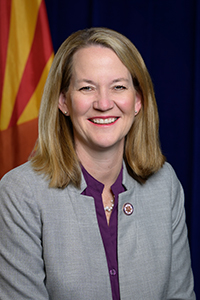
Gov. Katie Hobbs
In fact, the governor noted, Duncan at one point suggested the Department of Corrections, Rehabilitation and Reentry should consider using a firing squad, saying that it “does overcome the impediments to lethal injection from unavailability of material and skilled personnel.” That, however, is not even an option under Arizona law.
So Duncan will get just $36,000 for the work he has done.
But Hobbs said that Duncan’s failing to do what she asked is just part of the reason she has concluded the state is now ready to resume executions for the first time in two years.
She said Ryan Thornell, her choice as the agency’s director, has now completed his own review of the execution process. That report, obtained by Capitol Media Services, lays out a series of changes from revised training requirements to extensive documentation of all aspects of the process.
“With these changes in place, ADCRR is prepared to conduct an execution that complies with the legal requirements if an execution warrant is issued,” the governor said.
Mayes, for her part, said Nov. 26 she now will seek a warrant to execute Aaron Gunches within the next two weeks. He had been on schedule to be put to death last year when Hobbs asked for Duncan to study the issue; Mayes agreed to pause the process until that was complete.
Gunches had pleaded guilty
Aaron Gunches
to first degree murder and kidnapping in the 2002 death of Ted Price, his girlfriend’s ex-husband.
He waived his right to post-conviction review and in November 2022 filed a motion on his own behalf seeking an execution warrant. But Gunches withdrew that request in January 2023 after Hobbs took office.
The Supreme Court refused to reconsider.
But the warrant, which had a fixed time limit, expired before the execution was carried out. And until now Mayes has refused to seek a new one.
Gunches would be just the first: Mayes said of the 111 inmates on death row, 25 have exhausted their appeals.
Arizona resumed executions in 2022 under former Attorney General Mark Brnovich, a Republican, after an eight-year pause following the botched procedure when Joseph Wood was given 15 doses of a two-drug combination over two hours. Three inmates were put to death in 2022.
But Hobbs, in appointing Duncan shortly after she took office, said the process has remained plagued by questions.
“Recent executions have been embroiled in controversy,” she said at the time. There were reports that prison employees had repeated problems in placing the intravenous line into the veins of the condemned men.
“The death penalty is a controversial issue to begin with,” the governor continued. “We just want to make sure the practices are sound and that we don’t end up with botched executions like we’ve seen recently.”
Under Arizona law, however, the governor plays no role in executions.
It is solely up to the attorney general to ask the Arizona Supreme Court for the necessary warrant to execute someone once all appeals have been exhausted. And unlike some states, the governor here cannot unilaterally pardon someone or commute a sentence without first getting a recommendation to do so from the Arizona Board of Executive Clemency
Arizona Attorney General Kris Mayes (Photo by Jennifer Stewart)
But Mayes, in legal filings with the Supreme Court last year, agreed with the governor that the delay was justified.
“There is a heightened need to ensure any capital sentence is carried out constitutionally, legally, humanely, and with transparency,” she told the justices.
And now?
“Given the review that has now been completed by the Department of Corrections, I feel confident that the state is prepared to conduct an execution,” she told Capitol Media Services. “And so I will be issuing a request for an execution warrant to the Supreme Court in the next two weeks.”
Mayes said her office has been working with the agency on its review for more than six months. And she said there have been “several improvements” made.
One of the big issues has been the inability of agency staff to properly place the intravenous line into the inmate to administer the lethal chemicals, something that Thornell, the corrections director, said led to “executions lasting longer than expected.” He also said that some executions involved a procedure that was “extensive and intrusive.”
The director said a new medical team has been assembled, including a phlebotomist – a specialist who draws blood – “providing a level of expertise to the team related to IV placement procedures.” And Thornell said there has been “inconsistency” in the record about the decisions in executions made by prior agency directors and the communication with the medical team.
“I will not make decisions without the advice of the trained and qualified medical/IV team,” he said.
The report also says that there are procedures in place so that the lethal chemicals will not be “compounded” until a warrant is issued. That goes to the 90-day limit that the compounds remain viable.
And Thornell said the department will comply with federal regulations to acquire the pentobarbital necessary for executions.
That is not an academic question.
In 2015, Arizona ordered 1,000 vials of sodium thiopental, a muscle relaxant used in the execution process, from a supplier in India. That came after a domestic manufacturer refused to sell it for executions.
That decision came despite a warning from the federal Food and Drug Administration that buying the drugs from India-based Harris Pharma would be illegal. It ended up with Customs and Border Protection seizing the drugs at Sky Harbor International Airport.
Mayes said that the delay in awaiting the Duncan report – the one that now won’t happen – hasn’t been a waste. She said that, if nothing else, it gave Thornell time to complete his own review, including corrections officials visiting other states where executions have been ongoing, to see how they do it.
One other change Thornell is implementing is “more humane/therapeutic restrains”’ on the execution table, calling what had been used before “improper.”
Thornell’s report goes beyond the actual administration of the death sentence.
For example, the protocol was to place inmates on a 35-day “death watch,” moving them to an isolation cell.
“This period of time is unnecessarily long, isolating, and also unnecessarily staff intensive and burdensome,” he wrote, changing it to seven days.
“This allows the inmates to remain around other inmates and staff in the time leading up to an execution,” Thornell said.
And the agency also agreed to allow for an inmate’s last meal to be closer to the time of the actual execution and allow that person to continue to have certain personal items.
The decision by Mayes to restart the execution process likely short-circuits a case now before the Arizona Supreme Court about who has the right to seek a warrant to put an inmate to death.
When Mayes paused executions last year, Maricopa County Attorney Rachel Mitchell asked the justices to rule that she had as much authority as the attorney general to seek the necessary warrant.
She points to the Victims’ Bill of Rights, a set of statutory and constitutional provisions, including “a prompt and final conclusion of the case after the conviction and sentencing.”
Mitchell said the surviving victims in the Gunches case – Karen Price, who was Ted Price’s sister, and Brittney Kay, his daughter – have asserted their rights and have asked her to help enforce them, something state law legally requires her to do. That, Mitchell told the court, gives her “not only the authority but the duty to do so.”
Mayes does not dispute the authority of any county attorney to prosecute murder cases and seek the death penalty.
She contends, however, the Legislature designated the attorney general the “chief legal officer” of the state. And that, she said, includes the “sole responsibility to prosecute and defend in the Supreme Court all proceedings in which this state or an officer of the state is a party.”
None of this, including the study and the decision to restart executions, deals with a separate underlying question of whether the death penalty is fairly administered in Arizona.
Laura Conover
That issue was raised by Pima County Attorney Laura Conover when Hobbs first announced the study.
Conover, who said she will never seek the death penalty, said there is clear data that both race and class play “an absolutely unacceptable role” in how it’s been applied.”
Mayes said that’s a different question. And the attorney general said she has no problem in resuming executions for those now on death row who have exhausted their appeals.
“There are 25 families out there who have an expectation that the killer of their loved ones will be executed,” she said.
Still, she said, there is at least one question that needs to be answered going forward: whether the odds of facing a death penalty depend on where the crime was committed.
Statistics show about 60% of Arizonans live in Maricopa County, versus close to 73% of death row inmates sentenced from courts there. Mayes said the counties that have more resources for what can be an expensive procedure, both for prosecutors and often county-paid public defenders, are more likely to pursue the death penalty.
“And that’s something I think the Legislature needs to address,” she said.
Attorney General Kris Mayes has picked up some allies in her fight with Maricopa County Attorney Rachel Mitchell over who gets to seek to execute Aaron Gunches.
In a new legal filing, former Attorney General Terry Goddard joined with two former county attorneys, Republican Rick Romley of Maricopa County and Barbara LaWall of Pima County, to urge the Supreme Court to reject Mitchell’s bid to seek a warrant of execution. They said the history of the death penalty of the state and associated legislation makes clear why the Attorney General’s Office is in charge.
And attorney Andrew Stone, who filed the friend of the court brief, said his clients believe that Mitchell’s position is “bad public policy and unworkable.”
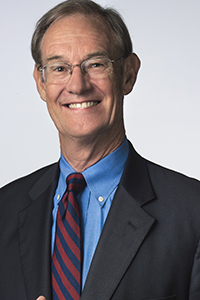
Terry Goddard
Hanging in the balance is the life of Aaron Gunches who pleaded guilty to first-degree murder and kidnapping in the 2002 death of Ted Price, his girlfriend’s ex husband.
A warrant for execution had been issued in 2022 at the request of then-Attorney General Mark Brnovich. But that warrant, which had a fixed time limit, expired before the execution was carried out.
Mayes, newly elected in 2023, declined for the moment to seek a new one.
The attorney general said she is waiting on a report by a special Death Penalty Commission named by Gov. Katie Hobbs, also newly elected. She said the process has remained plagued by questions.
“Recent executions have been embroiled in controversy,” the governor said. There were reports that prison employees had repeated problems in placing the intravenous line into the veins of the condemned men.
“The death penalty is a controversial issue to begin with,” Hobbs continued. “We just want to make sure the practices are sound and that we don’t end up with botched executions like we’ve seen recently.”
Barbara LaWall
That report is not expected to be ready before the end of the year.
But Mitchell insists that she has concurrent authority to ask the high court, in the name of “the state,” to set a date for Gunches’ execution, prompting the brief by Goddard, Romley and LaWall.
Setting such a precedent, the three former elected officials are telling the justices, is a bad idea.
“The Maricopa County Attorney believes that just because her office represents the state in some proceedings, it therefore has the authority to represent the state in any proceeding it chooses,” their legal brief argues.
It starts, they say, with state laws which spell out that the attorney general is the “chief legal officer” who shall “prosecute and defend in the supreme court all proceedings in which this state is a party.”
By contrast, they say, the state’s 15 county attorneys can represent the state and “conduct all prosecutions for public offenses, but only within their respective counties.” And the trio contend this has never been understood to extend to seeking execution warrants.
There’s a more practical issue.
Consider, they said, what would happen if any prosecutor argued he or she has the authority to speak for “the state” in any prosecution.
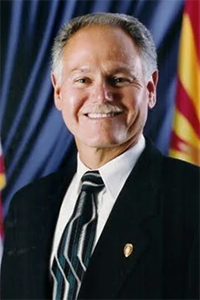
Rick Romley
“This would require courts to resolve internal disputes among the various prosecutors’ offices who claimed to be representing ‘the state’ before ever turning their attention to the actual issues of the state,” Stone wrote for the former prosecutors.
“Arizona courts are sufficiently busy without forcing judges to determine conflicting arguments from the same party,” the prosecutors argued. “The Maricopa County Attorney’s request would do little more than sow confusion among an otherwise well-understood and agreed-upon procedure.”
And there’s something else: Seeking a warrant of execution is more complex than simply filing a piece of paper with the Supreme Court.
“There are dozens of motions that are filed after this court grants the state’s request to set a briefing schedule for a warrant of execution,” they noted. And they pointed out that the Attorney General’s Office has been specially funded by the Legislature to handle post-conviction proceedings.
“To permit a prosecutor’s office to seek an execution warrant but not follow through with the ensuing litigation would be no different than allowing one prosecutor’s office to indict a dozen defendants in a complex fraud matter, but then force another office to handle all the subsequent work,” the brief states.
“The indictment, like a motion seeking an execution warrant is the easy part,” it continued. “Securing a conviction and navigating the attendant capital-case appellate issues are much more difficult.”
Mitchell declined to be interviewed on the filing. Instead, she filed her own legal brief saying all it does is repeat Mayes’ “unsupported and unsupportable legal conclusions” about her authority.
It starts with the stated reason for the delay: that “independent death penalty review.” Mitchell said that is irrelevant to the current case, saying there is no dispute that the legal requirements have been met to issue a warrant of execution, just as they were when Brnovich obtained the first warrant.
And Mitchell also says the bid to block her from proceeding ignores the constitutional and statutory rights of victims.
These include ensuring “a prompt and final conclusion of the case after the conviction and sentence.” And Mitchell has said that Karen Price, who was Ted’s sister and his daughter Brittney Kay, have asserted those rights and have asked for her help in enforcing them, something she said state law requires her to do.
Finally, Mitchell said while the attorney general may have some “supervisory authority” over county attorneys, that does not extend to her “legally supported attempt to exercise absolute control.”
The view that Mitchell is exceeding her authority extends to several current sitting county attorneys.
Coconino County Attorney William Ring said he’s not familiar with the process as his county hasn’t sought a death penalty in years. And the Democrat said he sees no need to pursue concurrent jurisdiction with the attorney general in initiating an execution warrant.
“Concurrent jurisdiction to seek an execution warrant only invites a race to the death chamber,” he said. “That would be confusing to the victim representatives and embarrassing to the state.”
Pima County Attorney Laura Conover, also a Democrat, has a more basic problem with the whole issue and the inconsistencies in Mitchell seeking to “speak for the state” on the issue, especially in contradiction with the attorney general.
“We have a Maricopa death penalty, not an Arizona death penalty, because the rest of the state can’t afford or won’t tolerate it,” she said. “The quickest and most efficient way to avoid the inconsistency is for Arizona to stop tinkering with the machinery of death, statewide.”
Several Republican county attorneys contacted by Capitol Media Services declined to comment on the issue of whether Mitchell has authority to seek a warrant of execution.
Mayes has never said she will refuse to ever seek execution warrants even after the report of the death penalty commissioner is released. But, like Conover, she has said there is an issue of whether where someone commits a crime affects a sentence.
“In particular, I’m interested in knowing whether there are disparities between counties in Arizona in terms of which receives the death penalty,” she said when the moratorium was first announced.
“It is beginning to look like the death penalty is only being sought in Maricopa County because Maricopa County can afford it,” the attorney general explained, what with the huge price tag on prosecutors and defense counsel devoting years, and sometimes decades, of their time to just a handful of cases. “We need to understand that better before we go forward.” The statistics show that about 60 percent of Arizonans live in the state’s largest county, versus close to 73 percent of death row inmates sentenced from courts there.
Attorney General Kris Mayes insists that she is “the state.” But Maricopa County Attorney Rachel Mitchell says she, too, can be “the state.” So, she said, is every other prosecuting...
Get 24/7 political news coverage and access to events honoring top political professionals
Maricopa County Attorney Rachel Mitchell announced Wednesday that her office filed a motion with the Arizona Supreme Court to seek an execution warrant for death row inmate Aaron Gunches, igniting...
Get 24/7 political news coverage and access to events honoring top political professionals
In a small hearing room in the State Courts Building, a few individuals in black shirts sat in the three rows of chairs in the back. For the six hearings...
Get 24/7 political news coverage and access to events honoring top political professionals
The Maricopa County Attorney’s Office agreed to dismiss the civil suit seeking to compel the state to be prepared to dole out the death penalty for Aaron Gunches after the...
Get 24/7 political news coverage and access to events honoring top political professionals
PHOENIX (AP) — A man convicted of sexually attacking and fatally stabbing two young Phoenix women in separate killings in the early 1990s was sentenced to death by a judge...
Get 24/7 political news coverage and access to events honoring top political professionals
PHOENIX (AP) — An ex-convict has been indicted on a first-degree murder charge in the death of a woman who was attacked from behind and stabbed 15 times while walking...
Get 24/7 political news coverage and access to events honoring top political professionals

 Sign In
 Free Newsletter