Please ensure Javascript is enabled for purposes of website accessibility

GOP lawmaker seems to agree with Dems about top billing on ballots

A Scottsdale Republican lawmaker has concluded that Democrats were right all along – it’s not fair to have ballot order determined by who won the last governor’s race.

But Rep. Alexander Kolodin said the fact that there’s now a Democrat in the top office – and that prior GOP advantage has disappeared – has at least something to do with his legislation to alter the system.

His HB2045 would require that the order of candidates for each race on the general election ballot be rotated among voting precincts in each county so that each party gets an equal chance of being in that first position.

The current system – the one based on who won the last governor’s race – meant that in the 2022 election Republicans were listed ahead of Democrats in all races in 11 of the state’s 15 counties where Doug Ducey outpolled Democrat David Garcia. That included Maricopa County, which has more voters than the other 14 counties combined.

The Democratic National Committee and its allies thought that system is so unfair that they filed suit in 2019 asking a federal judge to rule the system illegal.

To back their arguments, they cited research from a political science professor who estimated that first-listed candidates get an average advantage of 2.2 percentage points. And the margin, according to Jonathan Rodden, can reach 5.6 percentage points.

All that, argued attorney Sarah Gonski, explains why Arizona law requires rotation of names on primary election ballots. And she urged U.S. District Court Judge Diane Humetewa to extend that rotation to general elections.

The judge refused. And the Democrats had no better luck going all the way to the U.S. Supreme Court.

Now, however, Kolodin says they have a point.

“It provides a statistical advantage to the group of candidates listed first,” he said – exactly what the Democrats were arguing in court.

So what’s changed?

One thing is that Democrat Katie Hobbs beat Republican Kari Lake in the 2022 gubernatorial race. And that meant Democrats got top billing in the just-completed election in five counties, including Maricopa and Pima, where three out of every four registered voters reside.

That would be repealed if the Republican-controlled Legislature approves his plan and the governor signs it, replaced by the system of random rotation.

But Kolodin also conceded there is some politics behind his move to have the Legislature revamp the law versus having it decided by a federal judge.

“The Democrats were suing to try to change the law to suit their purposes,” he said. But Kolodin said Humetewa was right in concluding it was not the role of the courts to make such decisions.

Instead, he said, that’s the role of the Legislature which then – and now – has been controlled by Republicans.

“The Legislature saw fit to, fairly in my view, provide that advantage to the party that had won the Governor’s Office,” he said of the law in place when Ducey had won his races for governor.

Put another way, Kolodin said, Republican lawmakers had every right to set up a system that was designed to benefit their candidates.

“It’s not fair to take that advantage away from a political party in the middle of a gubernatorial term,” he said, saying the GOP, having won 11 counties in 2018, including Maricopa, was entitled to “get the prize” of first position in future elections.

“And you get to keep that prize for the four years,” Kolodin said.

Anyway, he said, it’s not like he’s trying to take away the current Democratic advantage – at least not right away.

“It doesn’t take effect until 2027,” Kolodin he said.

What that means, he said, is that even if his measure becomes law the Democratic candidates still will be listed first in the five affected counties for the upcoming election. That’s the one in which Hobbs herself will seek a new term.

But it will make irrelevant beyond that, at least for ballot order, whether she wins or loses.
 

Finchem to propose several changes to election laws

Mark Finchem has apparently given up on his perennial bid to require that all ballots be counted by hand.

The Republican senator, in an online letter to his new constituents in Prescott, conceded a majority of his colleagues aren’t buying his arguments that having election workers at every voting location hand counting the ballots is the only way to ensure accurate results.

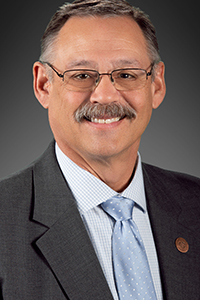
Mark Finchem

“While I prefer hand-counting paper ballots at the precinct level, not all my colleagues do,” he wrote.

But Finchem, a former representative from Oro Valley who moved to Prescott after losing his 2022 bid to become Secretary of State, has a fallback position. He wants a law that says if Arizona sticks with machine counting, which is the only method allowed by statute, the tabulators must “meet Department of Defense-level cybersecurity standards.”

It’s just one of a series of ideas to revamp the state’s election system being introduced by Finchem that he wants adopted when lawmakers return to the Capitol on Jan. 13. And the package even includes a fairly radical proposal to change the date of some elections.

The fight over machine tabulation is not new. There have been proposals for years from some Republicans who insist that the machines can be hacked and reprogrammed to give incorrect results. Those claims have been rebuffed by counties who say the machines are not connected to the internet.

And then there’s the fact that state law requires a random hand count of selected races from selected precincts. That would reveal any discrepancies between the votes cast and what the tabulators report.

Finchem and Kari Lake, both candidates for statewide office in the 2022 election, even tried to get a federal court to declare that voting machines are unreliable and should be banned. That was a direct outgrowth of claims by both that the 2020 election was stolen from President Trump, a position that, to this day, neither have disavowed.

U.S. District Court Judge John Tuchi tossed the lawsuit, saying that their claims were based on a lot of “what if” speculations. And even the U.S. Supreme Court refused to hear their case.

That leaves the tabulation machines in place and Finchem’s new proposal to require they meet certain cybersecurity standards.

“If the machines cannot guarantee stand-alone security, they will be prohibited from use in Arizona if the bill passes,” Finchem said in his letter to constituents.

Finchem, who declined to comment, also is pushing another measure that could provoke opposition: Moving some elections to odd-numbered years.

The problem, he wrote, is the sheer length of ballots: In some counties in the just-completed election, the races for federal, state and local offices, coupled with special district elections, bond questions, judicial retention and 13 ballot measures meant voters were faced with two double-sided pages to fill out.

That may be less of an issue for those who vote at home. But it presents potential problems for those who choose to fill out their ballots at local vote centers.

Finchem’s proposal would move all ballot measures to odd-numbered years. Also moved to that cycle would be the votes for judges.

“This will streamline the system and help to reduce the size of the even-year ballots,” he wrote.

But what Finchem is trying to do actually works against what Republican lawmakers have been adopting for nearly three decades.

More recently, lawmakers in 2012 declared that all elections must be conducted in even-numbered years and only on dates spelled out by the Legislature.

That was primarily aimed to force certain cities, including Tucson, to give up its own system of having elections in odd-numbered years.

City officials argued that a separate date ensures that local races and local ballot measures are not swept up and buried under debates about who should be president or governor, or about statewide ballot issues.

But Sen. J.D. Mesnard, R-Chandler, who has been the prime proponent of consolidated elections, said the flip side of that historically has been lower turnout.

Tucson has so far managed to maintain its off-year elections, with the courts ruling charter cities are entitled to make those decisions for themselves. Mesnard, however, said the principle of promoting maximum voter turnout remains, and lawmakers should not tinker with election dates as Finchem is proposing.

“I think there’s an expectation by voters that elections happen every two to four years, in November,” he told Capitol Media Services. “I still believe that.”

Mesnard said he recognizes what happened in November with the longer ballot.

“That’s unusual to have a second page,” he said. “I don’t know that we should revamp the system because of a relatively infrequent circumstance.”

Still, Mesnard said if this becomes “the new norm,” with repeat elections with multi-page ballots, he’s willing to discuss the issue.

Finchem has other ideas he wants lawmakers to consider this session.

One would require that ballots have “currency-grade watermarks,” with an “auditable supply chain” to ensure that only official ballots are being given to voters and counted.

Much of this concern traces its roots back to the 2000 presidential election where supporters of Donald Trump claimed that 40,000 fake ballots had been inserted into the system in Arizona to secure a victory for Joe Biden.

That resulted in a post-election “audit” of the presidential race ordered by then-Senate President Karen Fann, who contracted with Cyber Ninjas. They brought in an army of volunteers examining each ballot, looking for bamboo fibers based on arguments that the ballots had been flown in from Asia where bamboo is used in making paper.

None was ever found.

The idea of watermarks is not new, at least on a national level. California has regulations that require ballot papers to have a watermark. So do Tennessee and Georgia.

Other Finchem proposals include:

  • Making voter registration rolls a public record, allowing anyone to check out who is signed up to vote and, presumably, file reports with county officials of those who are not living there or otherwise not eligible to cast a ballot;
  •  Prohibiting the use of gift cards to fund political campaigns as they cannot be linked to a contributor, allowing violations of campaign finance laws;
  • Eliminating what Finchem said is a gap in campaign finance laws that bar donations by foreigners to candidates in Arizona elections but do not preclude them spending money for or against ballot measures.


Legal challenges to elections switched in 2024 from results to administration

A long year of election litigation challenged all but the results, standing in stark contrast to 2022 and illustrating a shift toward tooling with election administration as opposed to lawsuits brought in individual races. 

Many of the legal challenges filed in 2024 stand to bleed into the coming year, too, with potential appeals and a new Elections Procedures Manual in 2026 leaving more legal questions on the table for the next election cycle. 

“The litigation in the election space has been increasing, year after year after year. I don’t see that changing in 2025,” election attorney Andrew Gould said. “But what’s interesting is the litigation will take place in 2025. In other words, I don’t know if there’s a down cycle for this anymore.” 

Andrew Gould

The year started with legal challenges to the 2022 election still sustaining a pulse and promises of litigation against the 2023 Elections Procedure Manual impending and eventually materializing from the Legislature, the RNC and the Arizona Republican Party and the Arizona Free Enterprise Club. 

In the lead up to the election, low and high courts also fielded lawsuits challenging petitions, initiatives set to head to the ballot, summaries of the initiatives and management of voter registration databases. 

But absent from the post-election period was a swell of election litigation challenging results. 

“This year, the margins just weren’t close,” Gould said. “So the more we get into a mindset of, we want to win by more mandate, bigger margins, I think you’ll see election challenges fade away. But I think if we are in a mindset that all I need is 50 plus one, then we’re always going to have election challenges.” 

Gould said the cycle brought more lawsuits filed in advance of the election and “more and more litigation directed toward the structure of administration of elections versus individual candidates and challenges,” a trend he said he expected to continue into the next year. 

“Candidates and people that want to get an initiative on the ballot need to know what the rules of the game are efficiently in advance so they can participate in the Democratic process,” Gould said. 

Challenges to the Elections Procedure Manual are set to continue into the next calendar year as the  Secretary of State’s Office is tasked with drafting a new manual in 2025, with a draft due to Attorney General Kris Mayes and Gov. Katie Hobbs by Oct. 1. 

Most recently, a Superior Court judge ruled on the Legislature’s challenge to the procedures manual. The court voided provisions allowing for voters to be made inactive, as opposed to having their voter registration cancelled if they affirm they are a non-resident of their county in a juror questionnaire. The ruling also allows for leniency for errors in petition circulators registration and requiring counties to canvass the election or see their votes omitted from the statewide canvass. 

In September, both a federal judge and a Court of Appeals judge blocked provisions of the manual enumerating and expanding upon behaviors considered voter harassment and a provision allowing the Secretary of State to certify the statewide election without counties that failed to do so. 

Still pending are questions on recorders and the state’s responsibilities on managing and voiding ineligible voters from voter rolls. 

Gould predicted further challenges to election administration will come earlier and earlier, noting past dismissals of cases based on the Purcell doctrine – case law barring changes on the eve of an election, or laches – a doctrine requiring the dismissal of a case filed too late in the game. 

“People have seen that and thought, I want to avoid those issues and file earlier, so that those defenses aren’t raised and the point is well taken,” Gould said.

Why combat veterans are needed in the political process

This past Election Day, I stepped into a polling station — not just as a voter, but as a volunteer. After years of military service, it felt natural to channel my dedication to service into a new mission – helping ensure a smooth, accessible, and transparent voting process for everyone in my community.

My experience on Election Day was nothing short of inspiring. Voters of all backgrounds arrived with purpose, casting their ballots in a process that ran smoothly, efficiently, and with respect for every individual’s voice. It was a reminder of what makes our country strong — ordinary citizens coming

Matt Kenney

together to make their voices heard. It’s a right that has been protected and preserved through the sacrifice made by many service members. For me, Election Day was smooth, efficient, and dignified — everything we hope for in the election process. The experience underscored an important truth: the same principles I upheld in the military — integrity, service, and accountability — are the backbone of a healthy democratic process.

For veterans like me, service didn’t end when we hung up the uniform. Our training instills values like discipline, leadership, and a sense of responsibility to something greater than ourselves. These values are needed now more than ever—not just on Election Day, but in every corner of the American political landscape. These qualities are invaluable in a time when trust in our institutions often feels fractured.

Whether it’s volunteering at polling locations, joining local boards, becoming advocates, or  running for office — veterans are uniquely equipped to step up and contribute. The skills we’ve learned through our military experience — problem-solving, teamwork, and leading under pressure — are assets that can strengthen our communities. And they are assets that are largely missing in the current American political climate. Transitioning from combat duty to civic duty is not just a continuation of service, it’s an opportunity to lead at home in the same way we led in the service.

The impact of veterans’ civic leadership is evident in the renewed confidence Americans have in our elections. According to a recent Pew Research poll, the percentage of Republican voters who believe elections are well-run surged from just 21% in 2020 to an impressive 93% in 2024. This remarkable shift is no coincidence. It reflects the trust that comes when those who have already served their country step forward to ensure transparency, fairness, and integrity in our democratic process. By bringing the same values we upheld in the military to our local communities, we’re helping to bridge divides and restore faith in the very foundations of our democratic system.

The time is now for veterans to embrace this call to action. Volunteer for a cause that matters to you. Attend a town hall meeting. Get involved in local governance. The same commitment we showed in uniform can transform our neighborhoods, schools, and cities into stronger, more united communities. 

Volunteering on Election Day, I saw firsthand how vital community engagement and participation is in the democratic process we take for granted. It’s not just about voting, it’s about engaging and being proactive. It’s about creating a process everyone can trust. And veterans, with our shared commitment to service, are uniquely positioned to answer this call. 

America thrives when its citizens take ownership of its future. Veterans have already proven their dedication to this country, and our service doesn’t have to stop after combat or deployment. Together, let’s lead in this next chapter of service, one civic act at a time.

Matt Kenney is a founding partner of Echo Canyon Consulting and a U.S. Army combat veteran. 


Arizona Republicans want quicker election results like in Florida

Republicans in the state Legislature pre-filed an elections bill that aims to make Arizona’s election system more like Florida’s, but there’s no guarantee the measure will see Gov. Katie Hobbs’s signature.

Speeding up election night reporting is one of the top priorities for Republicans, many of whom have grown frustrated with how long the state has taken to count ballots. 

“Arizona is a laughingstock across the country for how long it’s taking our state to determine winners and losers in this election,” said Sen. J.D. Mesnard in a Nov. 8 news release days after the general election. 

ASU, Arizona State University, freedom of speech,
Sen. J.D. Mesnard, R-Chandler

Both Mesnard and Senate President Warren Petersen, R-Gilbert, have pre-filed bills intended to speed up election result reporting. 

Petersen’s bill will be the first bill heard in the Senate Judiciary and Elections Committee, chaired by Sen. Wendy Rogers, R-Flagstaff, according to a Dec. 12 post on X from Petersen. 

The Senate president’s measure, SB1011, would move the deadline to drop off an early ballot at a polling place to 7 p.m. the Friday before an Election Day instead of on Election Day. It would also expand early voting to include the Monday and weekend before an election, and repeal state law that instructs county supervisors to set up emergency voting centers, which requires voters to provide “unforeseen circumstances” that prevent them from voting at the polls. 

If the bill becomes law, anyone who drops off an early ballot in person after the new deadline could show identification and sign an affidavit, eliminating signature verification for their “late early” ballots, which election officials say is one of the leading causes of election reporting delays.

Many of the ideas in Petersen’s bill are also supported by Maricopa County Board of Supervisors Vice Chairman Thomas Galvin. 

“By moving up the cutoff date for early ballot drop offs, using government buildings to host polling sites, and eliminate emergency voting for the Saturday and Monday prior to the election while allowing folks to vote in person, we can significantly speed up the process and have nearly 95% of ballots tabulated by election night,” Galvin said in a Nov. 18 news release. 

Doug Cole, a political consultant at HighGround Public Affairs Consultants, said Galvin’s support of speeding up election results is significant, particularly since Maricopa County contains nearly two-thirds of the number of people who vote in Arizona. 

“There’s more momentum right now than there has been in years past,” Cole said. “Maybe there’s a deal to be made. When you’re dealing with a divided government, it’s all about making a deal.” Cole said

Incoming House Speaker Steve Montenegro, R-Goodyear, said the House is planning on running a mirror bill to Petersen’s. It will likely have no trouble passing the GOP-controlled House or Senate, but Democrats have publicly opposed the measure. 

“Faster election results should not come at the expense of voters’ rights,” Hobbs’s spokesman Christian Slater said in a written statement. “Governor Hobbs is open to proposals to speed up the counting process, but any solution must protect Arizonans’ freedom to make their voices heard at the ballot box. She remains committed to a voting process that maintains accessibility and integrity for all Arizona voters and guarantees safe, secure and fair elections.”

The Arizona Association of Counties has not stated a position on Petersen’s bill yet. Association Executive Director Jen Marson told the Arizona Capitol Times on Dec. 18 in an email that prefiled bills have gone out to county officials for feedback, but many newly elected individuals have not had their county emails activated yet with a chance to weigh in on legislation. 

The association was against a similar proposal from Mesnard two years ago that allowed early ballots to be submitted at polling places if voters showed identification at the polls to eliminate signature verification.

That measure was vetoed by Hobbs in 2023. The governor wrote in her veto letter that she believed the bill failed to meaningfully address real challenges facing Arizona voters. Mesnard has reintroduced his bill as SB1001 in the upcoming legislative session. 

Maricopa County Recorder Stephen Richer has also supported speeding up election results. Richer outlined several proposals to do so after the 2022 election and he said the “cleanest” solution is to eliminate late early ballots like Petersen has proposed.

“Some will say this reduces accessibility. And it does. And there will be some pains during the first election cycle,” Richer wrote in a Dec. 13 thread on X. “But it still allows for 27 days of early voting, 24 of which allow for the drop off of early mail ballots at ANY location. It allows you to return your ballot through USPS. It allows 27 days of in-person early voting. It allows in-person voting on Election Day.”

Richer will not be returning to office. Cole said Richer’s successor, Rep. Justin Heap, R-Mesa, a Freedom Caucus Republican, is likely to support Petersen’s proposal. 

Another prominent county recorder in the state has criticized the measure. Pima County Recorder Gabriella Cázares-Kelly pointed out in a similar thread on X to Richer’s that Arizona’s 15 counties are much larger than Florida’s 67 counties. 

“The problem the bill sponsors want to solve: reducing the time it takes to obtain election results, was largely impacted by political parties who discouraged voters from returning ballots by mail in 2020. In 2024 the parties supported Early Voting and that number was reduced,” Cázares-Kelly wrote.

While Democrats largely oppose Petersen’s measure, they have shown support for the goal of faster results. 

A recent poll from Noble Predictive Insights that surveyed nearly 1,000 voters found 52% of respondents expressed frustration with how long it takes the state to finalize election results, despite an increased confidence in the election process. 

“Arizona’s elections are secure and trusted, but we can always improve,” Noble said. “Expediting the ballot counting process should be a top priority. Voters deserve accuracy, but they also deserve timeliness.”


Are legislators to blame for long vote counts?

A few weeks back, Sen. President Warren Petersen, R-Gilbert, tweeted: “Just finished a great meeting with FL SOS… As expected a big difference is that we do not have a cutoff for early ballot dropoffs at polling like they do.” 

For those who do not know, Petersen was referencing the timeline for Arizona to count ballots. Like him, some elected leaders are fixated on the fact that Arizona doesn’t report election results on Election Day due to ballot dropoffs. They are even trying to use this conclusion to justify ending ballot dropoff by seeking to pass Senate Bill 1001, which could shorten the timeframe in which voters have to return early ballots, forcing more people to stand in line on Election Day. 

Alex Gulotta

This bill takes a path to the ballot box away from Arizona voters, in an attempt to make early voting less convenient and less accessible. Why? Because politics have shifted in Arizona. We now have highly competitive races and one party cannot simply force their pet policies on the people of Arizona without attempts such as these. 

Some legislators would have you believe that voters are responsible for delays and long lines. In reality, the single biggest factor for the delays in 2024 was the two-page ballot, caused by legislators who forced these bad policies on the ballot in an attempt to override Gov. Katie Hobbs’ veto pen. For the first time in nearly 20 years, the Arizona ballot expanded to two pages, front and back, in many counties because more than 20 legislative referrals were put forward throughout the year, 11 of which made it onto the ballot. These referrals were an attempt to circumvent Hobbs, who often uses her veto power to protect Arizonan’s rights and freedoms. 

Legislators, who caused the delay, now seek to blame voters and, despite playing the blame game, nine of 15 counties certified earlier this year than in the last three presidential election years despite the recount law change, which slows certification.

It is important to note that Arizona has never delivered election results on Election Day, in part because our procedures favor having every voice be heard over the unreasonable demands of candidates and politicians for immediate results in razor-close races. In close races, it always takes time to call the winner, in every state. And now, Arizona is a place where we have close races. Arizona voters deserve to have their voting rights protected and expanded, not reduced and eliminated because candidates demand instant answers and legislators seek to go around the governor. 

Further, the fact that our legislators are looking to Florida for model policies and procedures should be terrifying for Arizona voters. In Florida, they created an election police force that their governor used in a targeted campaign to intimidate women who signed a petition for reproductive rights. They also made it illegal for community groups to provide food or water to people waiting in line to vote. We could go on and on about the many harmful policies Florida’s Legislature and governor have enacted against Florida voters.

Florida should not be the blueprint for Arizona. We want local solutions for Arizona voters. We want our legislators to show restraint by not littering the ballot with every awful idea vetoed by the governor and be thoughtful and strategic when deciding election policy, not reactive and shortsighted. SB1001 doesn’t even come close to helping voters. 

Arizonans deserve leadership that strengthens our democracy, with bipartisan ideas that help more voters successfully cast their votes. Fortunately, there is a list of bipartisan proposals in a report of the Governor’s Bipartisan Elections Task Force issued at the end of last year. If legislative leaders are really inspired to make positive progress that could actually result in new, pro-voter policies that would be signed by the governor, it seems like that would be the right place to start the 2025 legislative session.

Alex Gulotta is State Director for All Voting is Local Action Arizona.

Jane Andersen: Standing up to protect democracy

After the rash of accusations of fraudulent elections in 2020 and 2022, Jane Andersen was appointed as the Arizona state director for Mormon Women for Ethical Government, a nonprofit founded by members of the Church of Jesus Christ of Latter-day Saints. They advocate for protecting democracy in government by using faithful, nonpartisan, peacemaking, and proactive methods. In a recent interview with the Arizona Capitol Times, Andersen discussed her role with the organization and its presence in Arizona.

The questions and answers have been edited lightly for style and clarity.

Tell me about your organization and your involvement?

There was a group of women who are members of the Church of Jesus Christ of Latter-day Saints who formed a Facebook group and basically decided “we don’t feel comfortable with this. This doesn’t land with our principles and values.” That Facebook group quickly grew into hundreds of women, and then thousands of women. MWEG has about 8,000 members across the United States, and Arizona – we’re just under about 300 but growing. I’ve been a part of it really since the beginning because that message resonated to me. That principle-based approach to politics and the vision is we’re women of faith trying to build a world that infuses a peaceful approach to politics and holding the government up to standards that are ethical. We’re training women to be civic actors. We’re nonpartisan. We have about 40% Republican, 34% Democrat and 26% independent. 

What are some of the things MWEG has done to accomplish its mission?

In terms of empowering women, the big thing is media literacy. They did a lot of campaigns about literacy and how we ingest communications that are coming our way. Also, doing a lot of campaigning to try to teach women to become principled voters. While we encourage women who are members of our organization to have a party affiliation, we definitely try to encourage people to put principle over a party affiliation. A lot of women sometimes are hesitant to use their voice so we have things like an op-ed lab that will help women craft and create communication that they can share. Over the summer, I think there was a lot of discouragement in the United States, so we did a campaign about how to bring hope into your spaces. A lot of our worries are swept up into national conversations, but the truth is that you can make a difference locally, no matter what’s happening nationally. 

Were you surprised with how President-elect Donald Trump did in the election?

I wasn’t super surprised. I thought money was really going to carry the day. Representing MWEG, I was a poll chaplain in south Phoenix on Election Day for seven hours. As I watched people’s reactions as they came to vote and who they were interacting with, it became pretty clear that that was the direction that it was going to go. I am surprised because the language and rhetoric he uses is difficult for me. For instance, having a child with special needs and past statements or ways that he’s described or interacted with people with disabilities is challenging to me. Our organization has big concerns about dehumanizing language just as it relates to immigrants and refugees, so I would think more people would have issues with that. One of our pillars that we focus on is protecting democracy, but that seems to have been too far in the past for the issue of January 6th to make a difference for some voters.

You’ve spoken before about how your faith has guided you politically. Can you elaborate?

Just to be clear, MWEG is in no way affiliated with the church and is a separate nonprofit, although we absolutely sustain the doctrines of the Church of Jesus Christ of Latter-day Saints and the leaders. My opinion is not the official representation of the organization because it’s nonpartisan. For me, having studied the science of politics and government, I have a lot of respect for the way that was set up. The process of politics should involve compromise and should involve reaching across the aisle and listening. That very much does not align with the way that I see Trump operating. How that relates to my religious views is I very much believe that the United States is an important beacon on the hill in terms of standing up for democratic norms and values. If we’re not living those principles, where else are they going to be offered in the world? I also highly listen with intent to my ecclesiastical leaders. When they discuss any advice about entering the political sphere, they specifically name three values that are really important and that is integrity, compassion and service to others. That’s not something I see as much with Trump. The focus of the organization is not anti Trump. We have this wide spectrum of people within the organization. The one thing we do agree on is the process of government and I think that’s where we really have some work to do in Arizona. One of our church leaders said we need contested issues to moderate and unify. I don’t know that moderating and unifying is something that we’re going to see in Arizona anytime soon.

What can someone in your role do about the increased divisiveness between folks politically?

I don’t know if you’re familiar with how our church operates in terms of its congregations, but you don’t get to choose what time you go to church. We’re tasked with working together with people that live around us whether or not we agree with them politically and that has some grumpies along with it. People viewed members of our faith as being one party politically or one point of view. There’s a lot more diversity to that. We attend church with people that don’t agree with us and we learn the skills of feeling across lines of difference. Our women are particularly adept at doing that. What we bring to the table in Arizona is the ability to really lean into peacemaking. Peacekeeping is, “We agree to disagree; we’re not going to talk about anything,” and that’s not going to move the needle. Peacemaking is entering hard spaces and having difficult conversations where you know there’s conflict. Conflict isn’t always bad. It just means there’s an opportunity to listen and to learn. The women of our faith are particularly poised to take a role in that. We’re passionate about our communities. We’re passionate about our families, and we’re not afraid to speak up and share our opinions.

How do you feel about the general attitude of the last election? The negativity toward our election systems seems to not be as high.

And that’s for one reason. Because a certain candidate won. Because Republicans won and Republicans fostered the conversation about election denialism, it suddenly went away. I’m a registered Republican. I’m conservative by nature, but I never bought into the election denialism. I’m a huge supporter of Stephen Richer. He’s a personal friend. Bill Gates, Clint Hickman, Rusty Bowers, these are all people who stood up and stood their ground in terms of living with integrity. I still think there’s an issue with protecting democracy. If we have one candidate that was willing to say that the election was stolen and it filters down to a mistrust and distrust in our institutions, that’s pretty dangerous. We have so much dis- and malinformation. We have foreign actors and local actors who try to use that to their benefit.

Former Gov Jan Brewer recently wrote an op-ed published by The Arizona Republic that you, among some others, played “a vital role in building confidence in our electoral process” and are an “unsung hero.” What does that kind of praise mean to you?

It’s not always easy to stand up. I am a conservative Republican and there’s people that disagree with me. Good friends, people in my community – but I think it’s important that when we feel like something isn’t correct and we feel like we have to abide by our principles, we just stand up and do it. There are a lot of people who chose not to speak out at the time for fear that it might affect their career or if they’re politicians, their electability. Protecting our democratic institutions can’t simply come from one side from the left or one side from the right. We have to have people working together who may not agree on anything else, but agree that we want our institution to be trusted. 

What kind of impact are you looking to make at the state level?

Having this new position as a state director in Arizona, we are definitely going to be looking at specific things happening in the state Legislature, which would be protecting democracy, immigration, rooting out racism – things related to children and families. There will be more of a lobbying presence from MWEG to show up in a measured way. I’d love to work with other organizations like the Arizona Democracy Resilience Network and other groups that really want this bipartisan approach to governing. If might is right, then we’re just going to seesaw with whoever’s in power. I’d love to have legislators stand up and represent civic virtues and respond to the needs of our citizens. We have some really good people serving the Legislature. I’d love to call on their better nature and have them lead out in a way that reaches to the exhausted majority in the middle because that’s where most people are. 


Arizona county recorders won’t have to check citizenship of federal-only voters, court rules

A federal judge has slapped down a bid by an Arizona group to force county recorders to immediately investigate whether more than 40,000 registered voters are citizens.

In a 22-page order, Judge Krissa Lanham, a 2024 nominee of President Joe Biden,  said Strong Communities Foundation of Arizona lacks standing to challenge what the group claims is the failure of county officials to run citizenship checks on those who have signed up to vote only in federal elections. The judge said the group has failed to show any harm that would occur if she did not issue such an order.

Judge Krissa Lanham

Lanham said the same is true for Yvonne Cahill, a Republican Party member, who also joined in the lawsuit. The judge rejected any claim that Cahill, a naturalized citizen, would have her vote diluted if it turns out any of these federal-only voters are not citizens.

But the judge said there’s an even bigger problem: timeliness.

She said that the lawsuit is based, at least in part, on what challengers contend is the refusal of all 15 county recorders to follow a 2022 state law requiring them to send inquiries to various federal agencies to check the citizenship status of those federal-only voters.

“Plaintiffs waited until shortly before the election to file this lawsuit despite allegedly suffering irreparable harm since Arizona’s 2022 voter list maintenance laws went into effect,” Lanham wrote. What’s worse, she ruled, is they are asking her to order counties to do this work in the middle of an already ongoing election: The claim was filed just 24 days before early voting began this past Wednesday. That, said the judge, is not acceptable.

Merissa Hamilton of Strong Communities said the group’s attorneys are evaluating the ruling.

At the heart of the lawsuit is Arizona’s two-tiered voter registration system.

Those who provide documented proof of citizenship, required under a 2004 voter-approved law, are entitled to vote in all elections.

But the National Voter Registration Act says individuals without such proof can sign up to vote in federal elections, president and members of Congress, simply by signing an avowal, under penalty of perjury, that they are citizens and otherwise qualified to cast a ballot. At last count there were about 42,000 on that list.

Still, the law does make it illegal for noncitizens to vote.

The lawsuit alleges that county recorders are obliged under both state and federal statutes to perform “list maintenance” on their voter rolls. More to the point, the challengers contend the recorders are not complying with that law.

So they sued to get an order for the recorders to make what they claim are mandatory checks. And they also want the recorders to turn over a list of all those who registered without providing proof of citizenship, which is legal, to Attorney General Kris Mayes.

In filing suit, the challengers provided nothing to suggest that people who are not citizens actually are signing up to vote in Arizona, much less they are casting ballots.

Instead, it cited information about efforts in other states where election officials said they had purged foreign voters from the rolls, including situations some actually had voted. And, based on that, the challengers argued that if the recorders checked with federal databases they would discover some of the registrants, particularly those who signed up in recent months, are ineligible to vote.

Lanham was unimpressed.

“Plaintiffs do not provide any plausible factual allegations supporting this belief,” she wrote. “Moreover, their claims about the likely results of the investigation rely on a public opinion poll.”

That refers to a survey conducted for America First Legal in Arizona and five other battleground states conducted by Rasmussen Reports, which claims that more than 1% of those who said they were likely voters actually admitted to not being citizens.

Aaron Thacker, press aide to Secretary of State Adrian Fontes, said there is little basis to believe that there are many people who have signed up to vote and signed a sworn statement under penalty of perjury who are not actually allowed to cast a ballot.

“The federal only ballots are made up of groups like Native Americans, college students and the elderly,” Thacker said, those who may not have easy access to the documents to prove citizenship.

Lanham said there’s another problem with the lawsuit.

That’s also the assessment of Pima County Recorder Gabriella Cazares-Kelly, who wrote to attorneys from  Strong Communities when they first threatened to sue her.

“Reality has proven that as a general rule, those who are not citizens do not register to vote.” Cazares-Kelly said. “In rare cases where someone who is not eligible actually attempts to register to vote, there are safeguards and laws to ensure that only eligible persons can vote.”

As originally filed, the challengers demanded that the recorders take immediate action to actually cancel the registrations of those whom they cannot get proof of citizenship from the registration rolls.

The only thing is, the judge noted, federal law pretty much precludes making such moves within 90 days of an election. So the lawsuit was altered to ask only that the counties send the citizenship inquiries to the federal agencies to start the investigation.

In doing that, however, Lanham said they undermined their claim that an immediate court order was needed to ensure that non-citizens did not dilute the votes of others: If the rolls can’t be altered now, the challengers can’t get the legal relief they seek.

But the judge said even a stripped-down approach requiring recorders to start making inquiries with federal databases of all these federal voters is legally problematic coming so close to an election.

She said that the same 90-day rule that precludes registration cancellation also is designed to prevent eleventh-hour administrative burdens for elected officials.

“Running statewide elections is extraordinarily complicated and difficult, poses significant logistical challenges, and requires enormous advance preparation by state and local officials,” Lanham wrote. And the judge said the challengers presented nothing of merit to show that those officials should be forced to divert resources earmarked to run an election to instead start inquiring to federal agencies about citizenship status.


Arizona Capitol Times 2024 General Election Guide

Vote 2024 with Citizens Clean Elections

Court keeps names of low-level election workers secret

Members of the public aren’t entitled to know the names of election workers who review the signatures on ballot envelopes, a judge ruled Thursday.

We The People, an organization that has aligned itself with Kari Lake, had sought the information from Maricopa County since January 2020. The group said it wanted to conduct further investigations given how quickly it said some signatures were verified.

In a five-page ruling, Maricopa County Superior Court Judge Scott Blaney, an appointee of former Gov. Doug Ducey, said that such information is generally considered a public record. But he said that presumption can be overridden if there is a legitimate public interest.

And in this case, he said, there was credible evidence of threats or harassment of workers. And that, said Blaney, trumps the public’s right to know.

Much of what is behind the request goes back to efforts by Lake to overturn her 2022 election loss in the governor’s race to Katie Hobbs.

One of her witnesses she called said about 274,000 signatures on early ballots were compared to samples in less than three seconds, with about 70,000 in two seconds or less. So far, though, courts have thrown out all of Lake’s challenges, even ruling the evidence of the time taken to be legally irrelevant.

Blaney said We The People, in its own action filed in April 2023, submitted evidence that some signature verifiers worked remotely from their homes during recent elections. And the group argued that the rapid pace, coupled with some confirming 100% of their signatures were valid, was highly improbable.

What getting their names would do, the group argued, would allow the workers to be interviewed about their training and procedures.

Maricopa County Recorder Stephen Richer agreed to provide the names of managers and those higher in the organization. But he refused to identify the lower-level employees, saying it could expose employees to harassment and threats.

“The public has a right to inspect public records,” Blaney wrote. He said anyone rejecting such a request has to demonstrate specifically how production would “violate rights of privacy or confidentiality or be detrimental to the bests interests of the state.”

That, said Blaney, is the case here, saying there was “credible, uncontested, sworn testimony” from two defense witnesses – Richer and Kristi Passarelli, former assistant director in the office – of “alarming threats that they personally received arising from their positions and activities in the Recorder’s Office.” And the judge noted that at the time of the hearing the U.S. Department of Justice had already charged three individuals for their threats to Richer and one had pleaded guilty.

Blaney said there was other evidence of security concerns, including a new black fence outside the facility, the addition of drones for surveillance, snipers on the roof, more security guards and the installation of bullet-proof glass.

“It is not reasonable to assume that the Recorder’s Office would take such extreme measures if the threats had not been as frequent, intense, and alarming as the defense alleged,” the judge wrote.

Then there was the concern that threats would have a chilling effect on Richer’s ability to recruit and retain employees.

“The Recorder’s Office could not accomplish its critical mission without sufficient temporary workers,” Blaney wrote. “These concerns outweigh the public’s right to know the identities of these lower level, non-managerial employees.”

He noted that Richer had offered to provide unique identification numbers for each of the workers. While that would not open them up to the interviews that We The People wanted, it would allow their data to be tracked.

A message to We The People was not immediately returned.

Richer lost his bid for reelection in the Republican primary to Rep. Justin Heap who now will face off in November against Democrat Tim Stringham.


Pima County sample ballot error weakens voter confidence

Pima County’s distribution of 135,541 sample ballots with an incorrect Election Day date could undermine voter confidence in elections, election law lawyers said.   Jen Wright, attorney for 2022 gubernatorial candidate...

Get 24/7 political news coverage and access to events honoring top political professionals

You don't have credit card details available. You will be redirected to update payment method page. Click OK to continue.