Please ensure Javascript is enabled for purposes of website accessibility

Cities can’t fix Arizona’s broken E-Bike laws alone

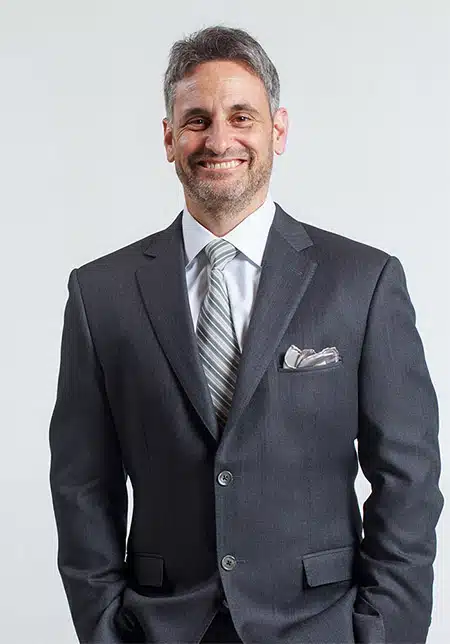
Marc Lamber

Electric bikes and scooters were once fringe transportation options. In Arizona’s urban cores, they are now everyday fixtures and increasingly a source of serious safety concern. Cities across Arizona are responding the only way they can, by writing their own rules. Tempe is the latest to do so. That should be the moment Arizona steps in.

The problem starts with state law.

According to Arizona Revised Statutes (A.R.S) § 28-819, electric bicycles and electric standup scooters are regulated together and treated largely like traditional bicycles. Riders need no license, registration or insurance. These devices may operate on streets and in bike lanes by default, and on bike paths unless a local authority restricts them. But the statute leaves nearly every meaningful safety decision, including age limits, helmet requirements, sidewalk rules, penalties, and enforcement, to cities. That structure may have worked when micromobility was rare. Today, it shifts responsibility to cities without giving them a common baseline, ensuring inconsistent rules, uneven enforcement and confusion for riders, parents and police.

Tempe illustrates the consequences of that gap. From 2021 through 2024, the city recorded 116 serious injury or fatal collisions involving pedestrians or bicycle units, including “micro mobility devices, according to AZFamily. In two-thirds of those cases, the rider was the primary cause of the accident. Fox 10 also reported more than 1,100 EMS responses tied to e-scooters over four years, including more than 300 injuries and numerous cases involving loss of consciousness. Faced with those numbers, and operating under a code that relies largely on general bicycle and traffic rules, Tempe has convened a City Council subcommittee to recommend age limits, speed restrictions, helmet requirements, and clearer enforcement. In effect, the city is rebuilding a safety framework that state law never required.

Tempe is not alone. Glendale recently adopted one of the state’s most comprehensive ordinances, with age thresholds by device type, helmet requirements for minors, mandatory lighting, and fines starting at $50 and escalating to $500 for repeat violations, enforced by city police. Scottsdale has banned riders under 16 from operating faster, Class 3 e-bikes on city property. Phoenix prohibits e-bike riding on sidewalks and enforces violations as civil traffic offenses.

Each city is responding rationally. The problem is that they are responding alone.

A teenager riding legally in Tempe may be cited with a violation minutes later in Scottsdale. Parents trying to set clear rules for their children and protect their family’s financial assets must currently decipher multiple municipal codes. Police officers are asked to enforce different standards depending on city boundaries. When safety rules change block by block, compliance drops, and enforcement becomes harder, not easier.

Lawmakers have acknowledged growing concern with the introduction of Senate Bill 1008 this session, which would impose speed limits on shared-use paths. But SB1008 is not a solution. It layers a narrow rule onto an outdated statute and leaves the underlying problem untouched.

SB1008 does not clarify where e-bikes and scooters should operate, who should be allowed to ride them, what safety equipment should be required, or how violations should be enforced statewide. It preserves the underlying outdated that has produced today’s regulatory patchwork.

Arizona does not need another patch. It needs to rewrite A.R.S. § 28-819. The statute should establish clear, statewide safety rules, including minimum age requirements by device class, helmet standards for minors, default rules for where e-bikes and scooters may operate, and consistent enforcement and penalties. Cities should retain the ability to go further, but public safety should not hinge on which side of a city limit someone is riding on.

Given how much these vehicles have permeated our culture and the risks they pose, Arizona should also consider requiring that Class 3 e-bikes, which can reach 28 mph, be classified as motor vehicles within A.R.S. § 28-819. If we are going to allow vehicles capable of nearly 30 mph to share lanes with cars, we must treat them with the seriousness they demand.

Reclassification would involve registration and licensing. Crucially, it would require riders to carry liability insurance, just like any other motorist on the road. When a high-speed collision happens, victims should not be left without recourse. It would ensure manufacturer compliance with federal and state safety standards.

E-bikes and scooters are here to stay. The injuries are already happening. Cities are acting because they feel they must. It’s time our state’s motor vehicle laws caught up with reality.

Marc Lamber is a Martindale-Hubbell AV Preeminent-rated trial attorney.

Glendale panhandling law faces free speech legal challenge

Key Points:
  • Glendale hit with federal lawsuit over panhandling, traffic ordinance
  • Civil rights and First Amendment groups allege free speech violations 
  • Plaintiffs claim enforcement, language of the law to be unconstitutional

Glendale’s panhandling ordinance, adopted ahead of the 2023 Super Bowl despite warnings of First Amendment falter, is finally facing legal challenge in federal court. 

A lawsuit filed by the First Amendment Clinic at Arizona State University’s Sandra Day O’Connor College of Law, Public Justice and the American Civil Liberties Foundation of Arizona seeks to strike down two city ordinances for alleged free speech violations.

“In Glendale, it is legal to carry a sign that says Jesus loves me, for example, but it is not legal to carry a sign that says Jesus wants you to give me a dollar,” Lauren Beall, attorney for the ACLU said. “If you have to look at what’s written on a sign to tell if it’s legal or not, that is the government violating your First Amendment right.” 

In late 2022, in anticipation of Super Bowl LVII in Glendale, the city council adopted two ordinances to curb panhandling. 

The first prohibited solicitation of money or any items of value on public transit, at public transit stations, within 50 feet of a bank, ATM, or check-cashing business, within 25 feet of any private property, and from drivers. It also prohibited “aggressive” panhandling on any public property. 

The second ordinance prohibited pedestrians from standing near roads, or on medians and traffic islands, except to wait to cross the street. 

Violating the pan-handling ordinance carries a civil violation. But a second offense within the following year of the first offense would be a misdemeanor, with a maximum fine of $2,500 and up to six months in jail. 

As for the street and median ordinance, the first offense starts with a warning, then a civil violation, and a second offense would again mean a misdemeanor. 

The American Civil Liberties Union and Public Justices wrote to the city two weeks ahead of the Super Bowl in 2023 to try to warn the city of the potential constitutional failings, warning similar ordinances have been struck down by courts in the past. 

The city did not respond but added additional definitions on “aggressive” and “solicit.” The ordinances have since remained in place. 

On July 30, the ACLU Foundation of Arizona, Public Justice and ASU’s First Amendment Clinic filed a lawsuit, representing three plaintiffs who have previously solicited or currently solicit. 

Two of the plaintiffs, Amy Hughes and Denise Carr, have been threatened with arrest for asking for donations. 

Attorneys for the plaintiffs argue the panhandling ordinance constitutes a content-based restriction, given that it singles out solicitation, and the median and street ordinance improperly imposes a burden on public forums. 

The complaint starts by listing past cases in which similar ordinances have been challenged in federal court and have either been struck down as unlawful or challenged on First Amendment grounds. 

Gregg Leslie, director of the ASU First Amendment Clinic, said the issue was a “fundamental restriction on speech.” 

Aaron Baumann, an attorney with ASU’s First Amendment clinic, argued in the complaint that even though ordinances technically apply to any person seeking charitable donations — from panhandlers, high school sports teams, Girl Scouts and the city’s fire department — the City Council kept panhandlers at the front of mind and Glendale Police Department has enforced the law with the same aim. 

“A firefighter in Glendale can sit outside of a business, a grocery store and ask for charitable donations for the fire department, which is solicitation, and in the ordinance, it’s specifically not allowed for you to do so in front of a business, and they’re not going to be cited or hassled or warned by the police,” Beall said. “But if a poor person stands on the street corner or in front of a grocery store asking for charitable donations, then they are going to be.” 

Beall said the legal team had gathered enforcement records from the city revealing such a pattern. 

As for the traffic median, attorneys argue there is no legitimate public reason to justify banning expressive pedestrian presence from traditional public forums. 

And, overall, they claim both ordinances reach too far.

“By regulating the solicitation of ‘items of value’ in various public places, prohibits such benign conduct as asking a friend for a cigarette outside a bar, asking a parent for bus fare at a bus stop, or collecting donations of food, money, or children’s toys for charity outside a grocery store,” Baumann wrote. 

He continued, “even on traffic islands where pedestrian presence could have no effect on traffic safety, members of the public cannot engage in core First Amendment activity like holding signs in protest or political advocacy. Pedestrians may not even stop on a median to have an extended conversation or debate political issues.”

The plaintiffs ask the court to declare the two ordinances unconstitutional and enjoin enforcement. 

The city of Glendale did not immediately respond to a request for comment. 

Lesko’s decision opens door for fresh faces in LD27

Correction: This article has been corrected to state U.S. Reps Andy Biggs and Paul Gosar had a complaint filed against them requesting an investigation of their involvement with the Jan. 6,...

Get 24/7 political news coverage and access to events honoring top political professionals

Arizona pauses home development in some parts of Phoenix area 

Arizona will tap the brakes on new development in some parts of Greater Phoenix, Gov. Katie Hobbs announced on Thursday.  The move won’t halt new construction in the state’s largest...

Get 24/7 political news coverage and access to events honoring top political professionals

Arizona gets hit hardest in Colorado River plan

More than half of the 3 million acre-feet in water cuts announced as part of a multi-state conservation deal will come from Arizona, state officials said on May 25. “We’re...

Get 24/7 political news coverage and access to events honoring top political professionals

You don't have credit card details available. You will be redirected to update payment method page. Click OK to continue.