
Please ensure Javascript is enabled for purposes of website accessibility

Data centers, renewables and reliability are energy hot topics at the Legislature

Key Points:
  • Lawmakers on both sides of the aisle are taking an interest in energy policy
  • Nearly 40 bills related to data centers, renewables and energy reliability have been introduced
  • Two lawmakers hoping to win seats on the Arizona Corporation Commission have introduced several bills

Data centers, high utility bills and energy reliability have been hot topics in Arizona in recent months, and state lawmakers are starting to notice.

As of this week, lawmakers introduced 38 bills related to energy, utility companies, data centers and the Arizona Corporation Commission, the regulatory body charged with overseeing public utility companies. Lawmakers on both sides of the aisle expressed interest in utility issues this session, but they have different ideas for how to address them.

At least eight bills are focused on data centers, while others prioritize increasing nuclear energy generation, adding restrictions on solar and wind farms, and making it easier to expand existing power plants. Many of the bills come from Republican Reps. David Marshall and Ralph Heap who are hoping to defeat incumbent Republican commissioners Kevin Thompson and Nick Myers in the August primary election. 

The commission has not taken a formal position on any of the introduced bills, but does expect to be involved in the legislative process this session. Ryan DeMenna, the commission’s contracted lobbyist, confirmed the commission’s willingness to work with legislators during a Jan. 21 meeting on energy legislation.

“The commission made it a point to share with lawmakers that we want to serve as a resource, that when it comes to energy policy and the policymaking that occurs down at 1700 West Washington, we want that to be a cooperative working relationship,” DeMenna said. “That continues to be a message that we share and I think we are seeing that start to materialize.”

Data centers

Several lawmakers — and Gov. Katie Hobbs — want to end the state’s tax incentives for data center projects after backlash against new developments in 2025. But no one agrees exactly how or when to end the incentives. 

Rep. Neal Carter, R-San Tan Valley, introduced a bill that would end the data center tax incentives this year. Several Democrats have also introduced bills to eliminate the incentives, but with even tighter restrictions on the industry’s use of water-intensive cooling systems and renewable energy. 

Democrats also proposed a partial tax relief package to incentivize data centers to pay for the new utility infrastructure upgrades necessary to operate the facilities throughout the state.

Rep. Gail Griffin, R-Hereford, introduced a bill that would direct the commission to develop rules governing contracts, billing, and the review of high load factor utility customers such as data centers. Her bill would also direct public utility companies to file reports on high load factor customers with governing bodies like the commission.

Similarly, Rep. Justin Wilmeth, R-Phoenix, introduced legislation directing county boards of supervisors to update their comprehensive plans with proposals for future data center development.

Renewable energy resources

Republican lawmakers have introduced several bills imposing more requirements for solar and wind farm developments — or outright prohibition.

Marshall and Heap’s House Bill 2267 would designate all new, utility-scale solar and wind developments as public nuisances, requiring the attorney general to prevent their construction. In a statement, the two lawmakers said the bill is a response to Attorney General Kris Mayes’ inaction on local opposition to solar and wind projects.

“Arizonans don’t want large-scale renewable energy projects in their backyards,” the lawmakers stated in a release. “It’s time the attorney general treats large-scale wind and solar farms like the public nuisance they are and takes immediate action to abate and enjoin them.” 

Thompson, who has not historically been a champion of solar or wind developments during his time on the commission, criticized HB2267 in posts on X and criticized Marshall and Heap for introducing it.

“For those that aren’t familiar with the ACC, in our capacity as Commissioners, we fill a quasi judicial role. Pre-judging anything in advance of a hearing would force you to recuse yourself from any item you have pre-judged; good, bad and indifferent,” Thompson wrote. “Unfortunately, candidates seeking a seat on the Commission have effectively taken themselves out of the conversation because they have pre-judged renewables as ‘a nuisance.’”

Marshall and Heap have also introduced other bills making it more difficult for boards of supervisors to zone land parcels for solar and wind projects and add additional requirements for approving renewable projects. The two also introduced bills eliminating property tax subsidies for renewable projects.

Energy reliability and development

Lawmakers are also concerned with the increased demand on Arizona’s energy grid and the development of new energy sources. Several proposals would make it easier for utility companies to expand existing power plants or transition those plants to new forms of generation, like nuclear energy. 

Rep. Justin Olson, R-Mesa, is reviving a vetoed bill from the 2025 session that would update requirements for the integrated resource plans utility companies develop and submit to the commission to demonstrate the generation resources needed to serve their customers. Olson’s bill would specifically direct utility companies to develop integrated resource plans without considering carbon emission reduction goals. 

Marshall introduced a bill requiring utility companies to use domestic fuel sources and “minimize reliance on foreign nations for critical materials or manufacturing.” The bill would require governing bodies like the commission to ensure integrated resource plans consider whether energy resources are affordable, reliable and clean. 

His bill includes nuclear reactors and natural gas generation as “clean energy” sources, despite arguments from environmental groups that neither is as clean as solar or wind. 

It is unclear how many energy and utility bills will make it through the Legislature, but those targeting renewable energy resources are likely to be met with the governor’s veto stamp. 
How many ratepayers does it take to replace an energy efficient light bulb?

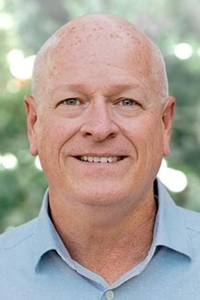
Kevin Thompson

Like many Arizonans, this Arizona Corporation Commission is tightening utility spending. Like a family cutting extra expenses to prioritize necessities, commissioners are tasked with regularly assessing unnecessary costs that impact ratepayer bills and cutting the fluff. Whether it’s eliminating outdated mandates, reducing surcharges, or prioritizing policies that keep the lights on and electricity affordable, this commission has consistently acted.

You may have heard that the commission recently voted to repeal both the Renewable Energy Standards and Tariffs (REST) and the Demand Side Management/Energy Efficiency (DSM/EE) mandates, which were established over 15 years ago. Unsurprisingly, there’s been a lot of doom and gloom from some.

REST and DSM/EE set baseline standards and deadlines for major regulated utilities to deploy renewable sources and promote energy efficiency, which have been exceeded. They have also cost Arizona ratepayers over $3.6 billion in extra fees since their implementation. It turns out you’ve been helping pay for your neighbors’ “free” shade trees, thermostats, light bulbs, EV garage chargers, and rebates for weatherization and solar water heaters. One utility collects $10 million in annual fees alone to provide incentives to homebuilders to install energy efficient appliances in new homes.

But that’s just the tip of the iceberg. We recently learned that REST mandates pushed APS into a 30-year contract requiring them to pay over-market prices for the solar energy generated at the Solana plant in Casa Grande. APS continues to pay about $0.15 per kWh for this energy, with more than a decade remaining in the contract. That same equivalent energy can be procured today for between $0.025 and $0.030 per kWh. With a facility that produces more than 700,000 MWh of electricity each year, that’s hundreds of millions in unnecessary additional customer costs each year. 

Fortunately, this commission makes decisions based on affordability and reliability. It’s not surprising that many of the groups fighting the REST and DSM/EE mandate repeal also pushed the 50% renewable mandate. That’s important because the late August dust storm had a huge impact on solar production in our state. APS lost about 50% of its utility solar fleet, and SRP lost 45% of its fleet between the hours of 3 p.m. and 5 pm. Roughly 1,600 MWs dropped offline in the dead of summer because of dust. That’s one nuclear reactor at Palo Verde, or approximately enough electricity to power 350,000 homes. 

Thankfully, our utilities were able to quickly pivot and dispatch natural gas generators to make up for the electricity loss. But imagine if 50% of our power was dependent upon renewables. We could have faced real possibilities of rolling brownouts or even catastrophic grid failure due to a dust storm. 

Unsurprisingly, the usual hyperbole about Arizona turning its back on renewables has resurfaced, seemingly implying renewables can’t survive without subsidies and the forceful hand of government. Nevermind that large scale private equity funded renewable projects that sell power to our utilities are often the cheapest form of new generation. Thankfully, this commission requires utilities to issue all source RFPs when they procure new generation so customers pay the lowest rate available and aren’t stuck with inflated costs.

The commission must now conduct the required public hearings and follow the rulemaking process. But if history has taught us anything, the rhetoric will ramp up. The attorney general is already threatening to sue. That’s not surprising, as she played a pivotal role in originally forcing these costly mandates onto utilities and ratepayers. But that’s not going to deter our resolve to do what’s right for ratepayers and our grid. 

Critics view repealing the mandates as a backslide — a threat to an industry apparently dependent on subsidies. If you believe their hyperbole, renewables will seemingly come to a screeching halt in Arizona. But I see it as removing perverse financial incentives for utilities, taking the government’s hand off the scale, enabling all generation technologies to stand on their own., and pragmatically pursuing projects that prioritize affordability and grid reliability. 

The initial policy objectives were achieved. It’s time to eliminate cost shifts from ratepayer bills and focus on necessary expenses that will actually keep the lights on and reduce bills. 

Kevin Thompson is chairman of the Arizona Corporation Commission.

Kevin Thompson: Still smiling as chair of the Arizona Corporation Commission

After two years on the Arizona Corporation Commission, Kevin Thompson stepped into the chair role this year. He sat down with the Arizona Capitol Times to talk about what he’s learned so far and why he wants four more years at the ACC.

Answers have been slightly edited for clarity. 

What led you to run for the Commission?

I started out (at Southwest Gas) in operations as an engineer, worked my way up to regional manager over the new business department, moved over to government relations, did that for about five years, and then fell in love with local government. (At Southwest Gas) I was the liaison between local government and the company. And so that’s where I really started working with local governments, and fell in love with how cities operate and how close they were to the people. So I decided to run for Mesa City Council, and got elected in 2015 as a council member, and served for eight years on the City Council. I was coming off of the City Council and thought I was done with politics. I was sure I was done with politics. And then a couple of legislators asked me if I would run for this seat because of my utility background and how I voted on the city council. They thought that I had made some really good votes. They wanted me to bring that to this position and asked if I would run. And then Nick (Myers) recruited me to run with him – and the rest is history.

How did your roles with Southwest Gas and the Mesa City Council prepare you for this role? 

Working on the gas side, I understood test years, I knew the operations, and I knew what the Corporation Commission was responsible for. So I didn’t come in completely blind. I came in with eyes wide open, so I knew sort of what was expected of me. I didn’t know necessarily the ratemaking process as the commission does it. I knew the ratemaking process as the city does it. And the City of Mesa owns its own gas, electric, water, wastewater, totally night and day different from how we do ratemaking. So it was new for me in that respect, and the level of intensity and the depth of the ratemaking and how technical it is. And when I came in, electricity was new to me. I knew the water side, I knew the natural gas side, but the electric side is so complex.

What do you wish people knew about the Corporation Commission?

I wish they knew more about what the Commission does and how we do it. When you go out and talk to people, they don’t even know what the Commission does. So you’re constantly reminding people … The other thing is, people don’t realize that the utilities are allowed to recover their costs by the (Arizona) Constitution. It’s written into the Constitution and people just think that, as a commissioner, you have the ability to say, “We’re not going to give you a rate increase this year.” So anytime that they’re putting money into poles, wires, pipelines, fuel, just inflation alone, it’s going to increase their cost. And the Constitution says that they’re allowed a just and reasonable return on that investment. So what we tell people is, if you don’t like the fact that the utilities are getting an increase, then rewrite the Constitution. Because we’re following the Constitution, we’re following the law, and our job is to make sure that it’s just and reasonable. 

You’re up for reelection next year. What about your time in this role made you want to serve for another four years?

I’m still smiling. I love this job. At the end of the day, I love serving the people. I did eight years in the Air Force. I served for eight years on a city council. I’ve done four years in this position. And to me, it’s about serving the people, and I enjoy doing that. So long as I’m smiling, I’ll continue to try to serve the people, as long as the people want me here serving them. I like to say that God gave you two ears and one mouth, so you should be listening twice as much as you speak. So listen to what’s going on, listen to your constituents and be a better person and try to follow the law and do what’s right. And that’s what I’m about.

You stepped into the chair position at the Commission this year. How has that changed your work?

It’s funny, because people would ask me, “So what’s it like being the chair?” And I was like, it’s the same as being a commissioner, but they paint a larger target on you. I look at the chairmanship differently than I look at just being a commissioner. Because as the chair, you’re the face of the organization. So I think it’s my job to defend this organization, to protect this organization, and to really help steer this organization. We have phenomenal employees who are here every single day to do the best that they can do. We’re trying to make Arizona a better place and trying to help people live that American dream. So in this position, I know (my staff’s) workload went up by three times because we have to put the agendas together, and you’re meeting with all the different offices and so forth. But I think what we do on a day-to-day basis is really try to represent this organization in the best light that we can.

What do you do in your free time to unwind so you’re able to continue doing this work?

I got into this again knowing what was going to be asked of me. It always upsets my wife, but I always tell her I’ll rest when I die. She’s like, “Well, you don’t have to get there early.” But for me, my disconnect is I ride dirt bikes on the weekend when it cools off. I do a lot of dirt bike riding because it really clears your mind when you’re in your zone. When I get on a dirt bike, as soon as the engine starts, I don’t think about work, I don’t think about family. I’m listening to my bike, and I’m looking at the trail 50 feet ahead trying to pick my lines. And then, as soon as you’re done, all of that comes rushing back because, at the end of the day, you still have a job to do. 

What legacy do you hope to leave on the commission?

My goal is to leave the organization and the state in a better position than it was when I found it. I tried to do the same thing in Mesa. I’d like to say that I left district six, and I left Mesa in a better position than it was when I found it. And that’s all I want to do with this. When you run for office, you should not be doing it to get rich, because you don’t, and you shouldn’t be doing it to get famous. You should be doing it because you love your community, you love your state, you love your county, and you want to leave it better at the end of the day. I just want to be remembered as the guy who tried his best to make Arizona a better place for everyone.

Freedom Caucus announces primary challengers for Arizona Corporation Commission

Key Points:
  • Reps. David Marshall and Ralph Heap are running for the Corporation Commission
  • They will challenge Republican  incumbents Kevin Thompson and Nick Myers
  • Challengers are latest in Freedom Caucus bids for statewide offices

Two Republican state representatives announced their plans to challenge two incumbent Corporation Commissioners in 2026, saying the two commissioners have not done enough to support President Donald Trump’s energy agenda and protect ratepayers. 

Reps. David Marshall, R-Snowflake, and Ralph Heap, R-Mesa, were recruited by Arizona Freedom Caucus Chair and state Senator Jake Hoffman to run against Republican commissioners Kevin Thompson and Nick Myers. The two commissioners were first elected in 2022 and are eligible to run for a second term next year.

“The American people in November 2024 gave President Donald Trump a mandate, and this mandate translates down to the city, translates down to the states, with the expectation that President Trump’s agenda, especially regarding energy, will be implemented here in Arizona,” Marshall said during a press conference on Tuesday. “Unfortunately, President Trump’s agenda is not being implemented right now through the Corporation Commission.”

The Corporation Commission oversees the state’s public utility companies, business and security registrations, railroads and transmission lines. It is composed of five commissioners who are elected statewide to serve two four-year terms, and it currently has an all-Republican majority, with Thompson serving as chair and Myers as vice chair. 

Neither Marshall nor Heap have utility-specific experience. Marshall is a retired cop turned pastor who lives in Snowflake, while Heap is an orthopedic surgeon based in Mesa. 

“I think it’s actually an advantage, not a disadvantage, to be a little bit disconnected,” Heap said. “And so I think we’re excited about that part of it, and we’re very capable of learning whatever we need to do the jobs.”

Thompson and Myers have denied they are standing in the way of Trump’s energy agenda or harming ratepayers by approving utility rate increases. 

“The beauty of our electoral process is voters have a choice,” Thompson and Myers said in a joint statement. “And that choice will be between incumbents who have kept their campaign promises of ensuring we have one of the most reliable grids in the country while maintaining affordability for ratepayers, and special interest proxies who have been recruited to return politics to ratemaking.” 

Thompson is a former Mesa City Council member and president of the Arizona Municipal Water Users Association, where he dealt with city utilities. He spent 12 years working in business development at Southwest Gas, a utility company regulated by the Corporation Commission. 

Myers previously worked as a software engineer for various companies before starting his own company in 2013. He previously owned and operated a dog boarding facility with his wife. 

Prior to becoming a commissioner, Myers worked as a policy advisor at the commission between 2021 and 2023, while he was running for office. 

In recent weeks, the Freedom Caucus and Turning Point USA have accused the all-Republican Corporation Commission of not upholding Trump’s plans to reinvigorate the nation’s coal industry. The commission faced criticism for allowing Arizona Public Service to close its Cholla Power Plant on March 17.

Thompson and Myers doubled down on the closure, explaining in both a public hearing and a statement that it was too late to reopen Cholla because Trump’s executive order deregulating the coal industry came weeks after the plant had closed. They noted that the executive order was a step in the right direction, but too many environmental protections prevented Cholla from being profitable.

Thompson said in a statement on May 30 that it would cost ratepayers almost $2 billion to reopen the coal plant. He criticized lawmakers who signed onto a letter encouraging the U.S. Secretary of the Interior to reactivate the plant, saying, “This demonstrates just how far they are removed from the realities of ratemaking.”

The two have also been criticized for not pushing back against environmental, social, governance and diversity, equity and inclusion policies implemented by utility companies. Both commissioners have said they do not believe the Corporation Commission has the authority to govern the internal policies of public service companies. 

Republican public relations consultant Barrett Marson said that, despite the criticism from the Freedom Caucus, Myers and Thompson are “certainly among the most conservative Corporation Commissioners that have ever been elected.”

However, Marson also noted that the “power of incumbency” is not as strong for an office like the Corporation Commission, where candidates often have to explain what the commission does before making their pitch to voters. None of that necessarily gives Marshall and Heap a leg up in the election. 

“I think Heap and Marshall are just going to find it a very difficult slog,” Marson said. “Running a legislative race is one thing, running a statewide race for an office that no one’s really ever heard of? It’s gonna be pretty difficult.” 

Myers and Thompson are only the latest statewide Republican elected officials to get the Freedom Caucus primary treatment. Superintendent of Public Instruction Tom Horne will face a challenge from term-limited state Treasurer Kimberly Yee. 

The Freedom Caucus is also running candidates for governor and secretary of state, U.S. Rep. Andy Biggs and state Rep. Alex Kolodin, R-Scottsdale, respectively. Hoffman told reporters on June 10 that he isn’t concerned about how Freedom Caucus candidates would fare in a general election if they succeed in their primaries. 

“The grassroots are on fire for these candidates, the grassroots are on fire for Congressman Biggs to be the next governor of Arizona, they’re on fire for Kimberly Yee to be the next superintendent of public instruction, they’re on fire for Alex Kolodin to be the next secretary of state,” Hoffman said.

While the stage is set for the Republican primary, it remains unclear whether any major Democratic challengers will step up to the plate. Three Democrats have filed statements of interest with the secretary of state: 2024 candidate Jonathon Hill, Tucson business owner Derrick Espadas and Phoenix marketing consultant Vincent Salazar.

Corp Comm elects Kevin Thompson as chair, votes to add vice chair position

The members of the new, all-Republican Corporation Commission unanimously elected Commissioner Kevin Thompson chair of the body at its swearing-in ceremony on Monday. 

Returning Commissioner Nick Myers nominated Thompson for the chair position of the utility regulation body, saying it was something commissioners discussed prior to Monday’s ceremony.

“We’ve had lots of conversations, long-term planning discussions, I’ve given it a lot of prayer, and I believe that the correct course of action at this point of time is to move to nominate Commissioner Thompson to be the chair,” Myers said during the meeting. 

For the first time since 2018, the ACC has an entirely Republican majority, which commissioners highlighted in their remarks on Monday. The commission oversees the state’s utility companies, business incorporations, securities regulations, railroads and pipelines. Ithas not seen a Democratic majority since 2010.

“When I look at my fellow Commissioners, I am optimistic that this group collectively shares the same goals,” newly-elected Chair Thompson said. “We all have different strengths, but I believe we have the same commitment.”

After two new commissioners, Rachel Walden and Rene Lopez, were sworn in and returning Commissioner Lea Marquez Peterson was sworn in for her second term, the five Republicans added a vice chair position to the body. Thompson introduced the idea, which passed unanimously. 

The commission has not previously had a vice chair position, but the commissioners acknowledged that other bodies in the state like legislative committees and school boards utilize the position. Thompson nominated Myers for vice chair, which was also agreed to unanimously.

Outgoing Chairman Jim O’Connor gave remarks at the beginning of the ceremony, but outgoing Democratic Commissioner Anna Tovar was not present. O’Connor, Myers and Thompson voted to censure Tovar at the commission’s final meeting in 2024 for alleged violations of executive session confidentiality and the commission’s code of ethics. 

In his closing remarks, Thompson said he would refrain from outlining “a long list of priorities” or “dramatically upending the way we function as an agency.” He said he wants to build on the success of the previous commission, which was focused on reducing regulatory lag for utilities and making it easier for businesses to operate in the state. 

Thompson did take an opportunity to jab at stakeholder groups who opposed many of the Commission’s decisions over the last year. 

“There are a handful of groups and individuals who don’t want this commission to succeed unless it benefits their own pursuits or advances their belief systems,” Thompson said. “The endless politics and theater from certain outside groups and individuals can be tiresome, but you have to recognize it for what it is, and it’s an unfortunate side effect of our modern political system. But we press on.” 

Marquez Peterson said she wants to focus on “keeping energy reliable at the most affordable rates.” Newcomers Walden and Lopez both spoke about small government and allowing business to thrive without elected officials getting in the way. 

“We’re both very energized to come here and make a difference to make sure that this commission is as effective, efficient, and run as well as possible,” Lopez said of himself and Walden. 

Lopez is a former Chandler City Council member and U.S. Navy veteran, while Walden is a current member of the Mesa Public Schools Governing Board and previously worked for an investment management firm. Marquez Peterson, Walden and Lopez will all serve four-year terms, while Myers and Thompson will be up for reelection in 2026. 

The new commission will hold its first open meeting on Jan. 15, during which commissioners are expected to hear several issues related to water utilities, railroads and securities. 

Republicans take lead in race for 3 seats on Corporation Commission

The Republicans are leading in the race to fill three open seats on the Arizona Corporation Commission, the state’s utility regulating group. 

Republicans Rachel Walden, Rene Lopez and incumbent Commissioner Lea Marquez Peterson are hoping to create a supermajority on the commission and join Republican incumbents Kevin Thompson and Nick Meyers. The three have campaigned on maintaining the current course of the commission and letting the free market decide whether a shift to clean energy is feasible.

Democrats Ylenia Aguilar, Jonathon Hill and Joshua Polacheck, are trailing behind despite hopes to flip the partisan slant of the commission. The three have campaigned on issues like climate change, clean energy expansion and reduced utility rates. 

Walden, who currently has the highest votes of any candidates, has a 1% lead over the fourth-highest vote getter Aguilar. Votes are being split between three Republicans, three Democrats and two Green Party candidates. 

The commission oversees several issues, including utility rates, securities, business licenses and railroads – but its regulation of utility companies and their environmental impact is widely viewed as its most important role. It hasn’t seen a majority shift favoring Democrats in recent memory.

The two candidate slates have battled over the best way to reduce utility bills for ratepayers and whether clean energy sources like solar should be a priority. The current commission has been scrutinized for recent votes that have increased utility costs, walked back renewable energy goals and exempted a power plant expansion from environmental review. 

Current Commissioners Jim O’Connor, a Republican, and Anna Tovar, a Democrat, both decided not to run for re-election to the commission. Tovar told the Arizona Capitol Times in September that she believes the regulatory body needs “new leadership entirely.” 

The results of the race will have far-reaching impacts on pocketbooks and the environment for decades to come.

Primaries 1-year away, races taking shape

A poll observer stretches outside a polling station on Election Day, early, Tuesday, Nov. 3, 2020, in Glendale, Ariz. (AP Photo/Matt York) With just less a year to...

Get 24/7 political news coverage and access to events honoring top political professionals

You don't have credit card details available. You will be redirected to update payment method page. Click OK to continue.




