Please ensure Javascript is enabled for purposes of website accessibility

René Guillen: From intern to advocate for cities and towns

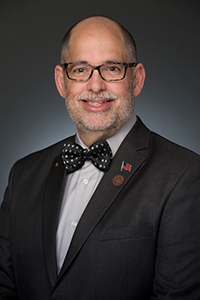
The League of Arizona Cities and Towns will be wishing its Executive Director Tom Belshe a happy retirement at the end of the year. Belshe’s incoming successor, the league’s Deputy Director René Guillen, recently sat down with the Arizona Capitol Times for a Q&A interview about his upcoming position and his experience in public policy both at the Legislature and in the Arizona Governor’s Office.

The questions and answers have been lightly edited for style and clarity.

Tell me about how you got your start in public policy.

The real start was like many people around the Capitol. I started out as an intern at the Legislature. I was an intern back in 2003. I’m a Wildcat. I’m born and raised in Tucson, and I went to the University of Arizona, where I found out about the legislative internship program. I really didn’t have an interest in politics or public policy and it was frankly more of an opportunity to get out of Tucson. And it was paid, which really wasn’t that common. I was a House majority research intern and my analyst was Todd Sanders, who is now the CEO of the Greater Phoenix Chamber of Commerce. So that shows you we all hang around the Capitol in one way or another.

How valuable would you say your internship was? 

It was huge. I am a huge proponent of the legislative internship. At the time, I wanted to be a forensic pathologist, so I wanted to do the judicial internship. Initially, I was disappointed, but once I started the internship, I fell in love with it, and I think it’s a great opportunity. I will admit that I have a bias for any applicant, whether they’re for our internship or any of our positions, if they have experience as a page. There’s nowhere you can go that teaches you the Arizona legislative process — so knowing that process firsthand is really invaluable. 

How was it working for Gov. Doug Ducey’s administration?

That was great. I actually left the league to go to the Ducey administration. I really saw that as a great opportunity because I had worked with the Legislature and saw the legislative perspective, but I just knew of others who, like Scott Smith, Doug Cole and Barry Aarons, had gone through the governor’s office and became known as experts in policy and are well-respected around the Capitol. So, I saw it was a tremendous opportunity. It’s hard work, but I think everyone should have that experience if they’re at the Capitol because there’s really no other job like it. I used to warn people who took a job on the Eighth or Ninth Floor that, if they were coming from a legislative background, they would have to run the whole state government all year round. It can be a lot of work, but also it can be very rewarding. I think some of the bonds I forged working those hard hours and working on those hard issues are among my best memories. 

What does the executive director of the league do?

When somebody asks me that and they’re within earshot of my wife, she just laughs and she says,“Well how much time do you have?” Outside of the Capitol, most people don’t know what the League of Arizona Cities and Towns is. It’s kind of a weird name and they think something like the Justice League, so we are kind of a niche organization. The executive director for the league wears a lot of hats and here at the league, we sort of have an unofficial slogan that “everybody carries boxes.” We all try to chip in and help where help is needed. I think that one role I see for the executive director is making sure that other staff can be successful. Of course, a big piece of it is that the league is governed by a 25-member executive board, currently composed of 25 mayors. That board needs to know what the league is doing on their behalf, but, let’s be realistic, a big reason for the league’s creation is legislative affairs. 

What have been the most significant policy advancements for cities since you’ve been here?

I’ve been around the league for the last 15 years but directly employed by the league for about 10 of those years, so I’ll give you two major ones from each era. 

During the legislative director era, I think a great advancement was tax simplification under the Brewer Administration. That was a huge lift. The big piece of that was a desire to move to a point of sale for essentially construction materials, which is an issue. It’s easier said than done. The reason why I think that was a big policy advancement is that because of those discussions, that kicked off a years-long process where the model city tax code, which is the tax code that governs the local TPT sales tax for cities and towns, underwent its most significant revisions in decades. And those revisions were all tied to simplification, which made it easier for the taxpayer. 

From the deputy director era, I think, the one I’d have to point to is the Wayfair deal. The taxation of online commerce is a big deal. We have to recognize that businesses that locate in Arizona, specifically in cities and towns, are the ones creating jobs in our cities and towns. The way Arizona and the country had been operating up until then was giving an advantage to online retailers, even though they weren’t having the same effect in our cities and towns. With Wayfair, you finally could give equal footing to the job creators who are actually investing in our local communities, so getting that Wayfair decision at the Supreme Court level was huge.

Now as executive director, what could be a significant accomplishment in that era as we head into the late 2020s?

Maybe I’m an optimist, but I would like to think that we have a lot of opportunity to change the nature of the conversation with the Legislature in restoring local decision-making, particularly restoring local authority with short-term rentals to make sure our folks have the tools they need to go after bad actors in a way that is viable and actually make sure that bad actors aren’t allowed to continue. Maybe looking at density caps or a spacing requirement, it could reduce the proliferation of short-term rentals in certain communities. I’ll be blunt, the loss of residential rental tax was big. For cities that have it, it can be a significant source of revenue, and we seem to be losing revenue options. The state economy is not the economy of Thatcher. It’s not the economy of Wilcox. Many of my members just don’t have the diverse economy that the state as a whole has. Nobody but Phoenix has a TSMC coming their way, right? Having a broad tax base and having a robust tax portfolio is vital for some of these communities.

How would you describe the league’s relationship with the Legislature?

The more things change the more they stay the same. I think one of the challenges we face, whether it’s back then or now, is being viewed as a left-leaning organization by members of the majority. I would argue they say that because they see us opposing their bills. If someone opposes a Republican bill, they must not be a Republican. Therefore, they must be a Democrat, right? Well, I would argue that’s not the case. We are very much a nonpartisan organization. I worked for the House Republican majority research staff. I worked for Ducey, a Republican governor. We have a saying: There are no Republican potholes. There are no Democrat potholes. They’re just potholes. Cities and towns are in the service delivery business. Our issue is that the Legislature is trying to move the decision point from the city and council. That decision point should stay at that local level with the mayor and the council. They live in Jerome, they live in Globe, they live in Superior, they live in Bisbee. They’re the ones running into their residents at church, at the supermarket, and at the local burger shop. They’re the ones who are closer to their residents and connect with them daily. You look at where the majority of the population is and where the majority of tax revenue is generated — it’s in cities and towns. The answer to all those questions is cities and towns. The cities and towns are the economic engines of Arizona, so when they thrive, the state thrives. 

Any final thoughts?

When I look at the Legislature and my mayors, and cities and towns, I truly believe the main motivator is that we want what’s best for Arizona. If that’s truly the case, then let’s work together. For my organization, it truly doesn’t matter who’s in control of the Ninth Floor or the House or the Senate, because we’re nonpartisan and ready to work with you. But that means true collaboration. That doesn’t mean that cities and towns should just move out of the way.

 

Proposed bill aims to restrict short-term rentals in Arizona cities

Key Points:
  • Cities seek update to law restricting short-term rental licenses
  • Previous bills to regulate short-term rentals have largely gone unheard
  • Airbnb contributed $3.5 billion to Arizona’s economy through its hosts

Arizona is approaching the 10-year mark since the Legislature prevented local governments from banning short-term rentals and city leaders are hoping enough time has passed for an update to the law. 

Officials from the League of Arizona Cities and Towns say they will be running a bill in the upcoming legislative session to restrict the number of short-term rental licenses that are issued within a municipality’s jurisdiction. 

Similar legislation has been filed in previous years, but those bills have been unheard in committees while some cities like Sedona have seen as much as 20% of their housing stock converted into short-term rentals.

“Over the 10 years of this experiment, we’ve seen that this law has not lived up to how it was sold originally in 2016,” said Tom Savage, legislative director for the League of Arizona Cities and Towns.

The 2016 law, Senate Bill 1350, established that residential properties can be used for short-term and vacation rentals, but city leaders say large developers have been purchasing units on a large scale and eliminating housing stock for Arizonans looking to buy homes in the state.

Capitol Media Services reported in November that the Arizona Court of Appeals recently ruled that the city of Sedona could not prohibit a 59-acre mobile home park from renting out its units for short-term rentals, reversing a Yavapai Superior Court ruling that upheld the city’s decision to not issue a short-term rental license to the company that owns the park, Oak Creek Hospitality. 

The 2016 law also defined vacation rentals as any single-family or one-to-four family house or dwelling unit. Nick Ponder, a lobbyist who represents multiple cities at the Capitol, said he believes the appeals ruling is ignoring the definition of a short-term rental by allowing up to the entire mobile home park to be converted into vacation units.

“Sedona has to appeal this case to the Supreme Court saying not only do we not have enough housing for our own residents, but now you’re kicking the least fortunate of our residents out of their homes in favor of short-term rentals because you’re willing to ignore this specific language in the statute,” Ponder said.

No bill has been filed yet for the 2026 session, but the league is proposing legislation that would allow cities to cap the number of short-term rental licenses issued in oversaturated areas, limit the number of total licenses issued and impose minimum distance requirements for short-term rental units. 

In a statement to the Arizona Capitol Times, Airbnb noted that less than .035% of reservations booked through the site resulted in a party allegation in 2024. In addition, it stated that the company has worked to implement several safeguards to reduce the number of disruptive parties, such as machine learning technology that prevents people from booking a reservation if Airbnb detects a person might be attempting to book a property for a large house party. 

According to the company, Airbnb hosts contributed about $3.5 billion in economic activity to the state in 2024 which helped support more than 42,000 jobs. 

“We are proud of the work we’ve done unparalleled in our industry to promote responsible tourism and reduce the risk of disruptive parties – all the while providing a critical economic opportunity for everyday Arizonans at a time of rising costs,” said Lauren Bouton, the policy lead for Airbnb. “It would be a mistake for legislators to not seek input from everyday hosts as they look toward future policymaking, which as of now, is the case.”

A survey among Airbnb hosts conducted by the company also found that 80% of hosts share just one home and 40% say renting out their property or a room at their residence has helped them afford to stay in their homes. 

Next year is the first time that the league can try to change state law for the regulation of short-term rentals after it signed an agreement with AIrbnb and Expedia Group in 2022 that prohibited the league from lobbying for regulations for three years. That agreement also keeps the league from trying to repeal the 2016 law through 2027 in exchange for a state law that allows cities to revoke short-term rental licenses for properties withthree nuisance violations that occur in less than 12 months.

Ponder said the issue with the 2022 law is that the court process moves slowly and he’s unsure if any city has even been able to revoke a short-term rental license for a repeat nuisance offender since it can take up to seven months for a court to fully adjudicate a non-felonious nuisance violation. The league’s proposal would give cities greater flexibility in revoking nuisance offenders’ licenses. 

While lawmakers have done little to regulate short-term rentals in previous sessions, a bipartisan mix of Republicans and Democrats have introduced bills on the issue, including Senate Majority Leader John Kavanagh, R-Fountain Hills; Rep. Selina Bliss, R-Prescott; Rep. John Gillette, R-Kingman; and Rep. Stephanie Simacek, D-Phoenix.


Arizona cities to seek legislation limiting short-term rentals

Key Points:
  • League of Arizona Cities and Towns seeks legislation to regulate short-term rentals
  • Municipalities want to limit short-term rental licenses to address housing challenges
  • Short-term rentals make up 10% of local housing stock in some areas

In the next session, the League of Arizona Cities and Towns will pursue legislation that allows municipalities to further regulate short-term rentals.

Members of the league’s resolutions committee approved seven policy goals to pursue as legislation for the 2026 legislative session during the organization’s annual conference Aug. 19-22, including an item that would allow cities to limit the number of short-term rental licenses issued in their jurisdictions.

“The focus will be on addressing the continued growth of investor-owned short-term rentals, which have contributed to housing challenges in many communities,” said Tom Savage, the league’s legislative director. 

According to a resolution prepared by the league, municipal leaders are seeking legislation that would allow them to cap the number of short-term rentals in an oversaturated area and reduce the threshold for license revocation to take action against properties that have repeat violations of city ordinances. 

The resolution states that short-term rentals have greatly impacted housing affordability and availability in some areas of the state, particularly small communities. Some areas with high tourism visitation are seeing short-term rentals make up as much as 10% of the local housing stock. 

One area of the state that’s been affected greatly by short-term rentals is Sedona. A 2024 community report from the city notes that 18% of the city’s housing stock was comprised of short-term rentals, leading the City Council to declare a housing shortage emergency and designate a parking lot for workers in the city to sleep in their vehicles if they’re experiencing homelessness through the Safe Place to Park program. 

Efforts to change state law for short-term rentals have gone unheard in recent legislative sessions. Republican and Democratic lawmakers introduced legislation related to short-term rentals in the 2025 legislative session, but no bill was heard in any committee despite Gov. Katie Hobbs urging the Legislature to address the issue in her State of the State Address at the beginning of session.

Sen. John Kavanagh, R-Fountain Hills, sponsored Senate Bill 1141 during the session, which would have shortened the threshold for cities to suspend a short-term rental license. Kavanagh was recently named Senate majority leader following the end of the recent legislative session.

The league has stayed away from lobbying efforts against short-term rentals at the Capitol as part of a 2022 moratorium league officials agreed to with Airbnb and Expedia Group that prevented the group from lobbying for local regulation for three years. That deal was a result of a 2022 law that allowed municipalities to issue short-term rental licenses.

That moratorium also prevents the league from attempting to repeal a 2016 law that prohibits cities and towns from banning short-term rentals until 2027, although individual cities have lobbied for changes to the statute individually. 

Counties are also seeking changes to short-term rental policy. Mohave County Assessor Jeanne Kentch hoped for legislation last session that would codify assessing properties that are used for renting for periods of less than 30 days in the same classification as hotels and motels. 

Rep. John Gillette, R-Kingman, sponsored the legislation with House Bill 2316, which was among the short-term rental bills that didn’t get a hearing. 

“When nobody likes it, it goes in a drawer,” Kentch said. “That’s what happened to my bill.”

Kentch said she believes her bill would create a more equitable environment for hotels and motels and make it easier for assessors in the state to determine their assessments for properties that are operating as short-term rentals.

HB2316 would have specifically applied to properties with transient renters. Kentch said she’s not looking to include a primary property that rents out an accessory dwelling unit to long-term renters with the bill. 

“I’m not fair to my hotels right now because I’m classifying them as commercial but I’m not classifying the house down the street that’s doing the exact same thing as commercial,” she said. 

According to data collected by the Arizona Neighborhood Alliance, a statewide organization of neighborhood leaders, there were more than 70,000 short-term rental units across the state in 2024, but there were only about 5,550 short-term rental transaction privilege tax licenses accounts established that year.

A July report from AirDNA, a vacation rental and analytics company, indicates about a quarter of short-term rentals in the state are “professionally managed” by a company that has at least 21 listings in the state. 

AirDNA didn’t have data about ownership of vacation properties, but the company shared with the Arizona Capitol Times that the two companies that manage the most properties in the state, Evolve and Vacasa, typically don’t own the assets they manage. 

Compromise in the works on banning tax on food

Republicans in the Legislature are bouncing back a vetoed proposal from 2023 that would cut “essential” food items from being taxed by cities, but a potential amendment to the measure may gain the support of cities and towns. 

The House Ways and Means Committee passed HCR2021 on Feb. 12 that would prohibit cities and other taxing jurisdictions from imposing a sales tax on food items intended for consumption at home, such as bread and eggs from grocery stores.

Leo Biasiucci
Leo Biasiucci

“These are things that families need to survive,” said the sponsor of the resolution, Rep. Leo Biasiucci, R-Lake Havasu City. “This is the right thing to do. The fact that we are taxing people on eggs and milk and bread is insane.”

A 2023 version of the measure made it to Gov. Katie Hobbs, but she vetoed it after leaders of municipalities said they would likely have to cut city services like police and fire departments if the measure went into effect. 

“It’s clear that this bill doesn’t actually eliminate costs for our residents. It simply moves those costs around,” Hobbs wrote in her veto letter of the 2023 bill. 

But a potential compromise is in the works. Rep. David Livingston, R-Peoria, said he and other lawmakers are working on an amendment with Peoria Mayor Jason Beck. The amendment would freeze current tax rates for food, but any attempts to increase the rate would have to get voter approval. 

About 20 mayors attended the House Ways and Means Committee meeting on Feb. 12. Each one asked by Livingston if they would support that potential amendment said they would as long it was worded as Livingston described. 

“There’s devils in all the details but with Mr. Beck working with (Livingston), I’m pretty confident that we’ll go to a place that makes everybody happy,” said Yuma Mayor Douglas Nicholls.

Livingston, Prop 400, transportation tax
Rep. David Livingston, R-Peoria

A fiscal note from the Joint Legislative Budget Committee estimates that cities would lose about $227 million of revenue from a sales tax on grocery foods by fiscal year 2028. 

Data from the Department of Revenue indicates 70 of Arizona’s 91 cities and towns taxed grocery foods in fiscal year 2024 for more than $196 million. Budget analysts are projecting about a 16% increase in food and beverage items at grocery stores over the next four years. 

Among those 70 cities, 40 of them don’t levy property taxes. 

Now, as a concurrent resolution, Hobbs won’t have the opportunity to weigh in on the matter if it gets through the House and Senate. 

Voters would decide if the measure should be law instead, but Nick Ponder, a lobbyist who testified on behalf of the League of Arizona Cities and Towns, said that 58% of Arizona voters don’t live in a city that has a food tax.

“I might naturally vote no,” Ponder said of those voters should the measure make it to the ballot. 

Shawn Palmer, mayor of the town of Taylor, testified  that the town heavily relies on the food tax. About 30% of the city’s revenue comes from the food tax, which tourists and visitors pay when they purchase food at a grocery store in town.

“A little bit of taxation is not despicable. That’s what the state of Arizona runs on,” Taylor said. “A 3% food tax is a lot more equitable than adding a property tax and concentrating that tax on 4,500 people.”

Rep. Neal Carter, R-San Tan Valley, cited increases in municipal sales tax revenue from online sales tax revenue following the U.S. Supreme Court decision of South Dakota v. Wayfair, a case that allowed states to collect online sales tax from businesses that  are located outside of the state

Between 2019 and 2024, cities and towns have received more than a 60% increase in sales tax revenue. Carter said he was concerned that city expenses have risen to the point where cities would consider cuts to services with the elimination of the food tax.

“This is a terribly regressive tax. This is the most regressive tax I could possibly dream up,” Carter said. “If I was going to dream up a regressive tax, I would tax the one thing that you literally have to have to live. You don’t even, in a sense, have to have a home to live, but you have to have food.”


‘Starter home’ bill to be heard in committee

A sweeping proposal for more affordable houses that Gov. Katie Hobbs vetoed last year is back with only minor changes. 

Rep. Leo Biasiucci’s effort to address Arizona’s housing crisis is to spur the construction of smaller and cheaper “starter homes” has only one tweak from last year’s version: the exclusion of areas around military airports that Hobbs pointed to as a major issue in her veto letter. But Hobbs cited larger concerns as well, calling the proposal filled with “unexplored, unintended consequences that are of great concern” because they placed such major limits on what could be required for new housing. 

Leo Biasiucci
Leo Biasiucci

The proposal from the Lake Havasu City Republican, set for discussion Tuesday at the House Commerce Committee, is one of many expected to be debated this legislative session as the state’s housing crisis continues unabated.

Four major housing bills were adopted last year, including ones allowing backyard casitas in many areas, the redevelopment of commercial buildings into apartments and a requirement for large cities to allow duplexes and triplexes in central parts of larger cities now zoned for single-family homes. 

But those are just the start of what’s needed, according to backers of a statewide housing overhaul. At a news conference two weeks ago at the Capitol, Democratic and Republican lawmakers gathered to announce they would band together to craft bills to address the problem.

“Affordable housing is not a right,” said Rep. Walt Blackman. “However it’s a responsibility as legislators that we provide our next generation with the opportunity to have the type of opportunity that we had, the opportunity that I had, to buy an affordable home.” 

Blackman said the issue is bipartisan. 

Sen. Analise Ortiz, D-Phoenix, said the new housing caucus would have regular lunchtime meetings to discuss what kinds of new laws are needed with anyone who wants to attend – Hobbs included.

“There are so many different layers to this crisis and it’s not just one bill,” Ortiz said.

“Not one bill is ever going to be the magic bullet for this crisis,” she said. “It’s going to be a lot of pieces of legislation working together, and that’s what our bipartisan housing caucus is going to be focused on.”

The state’s shortage of housing can be tied to the mortgage and foreclosure crisis that began in 2007 and that saw metro Phoenix with the highest rate of foreclosures in the nation. That led builders to cut the number of homes they were building for many years even as Arizona’s population continued to increase.

The rise of the short-term rental industry has also been a major factor, with homes that were formally rented out on long-term leases being converted to short-term rentals marketed on Airbnb and Vrbo websites. And soaring home prices in the past five years have kept pressure on regular rentals, with those prices soaring as well.

But in an interview with Capitol Media Services, Biasiucci said that he’s also convinced Arizona’s housing crisis needs a rules reset to prompt the development of smaller, cheaper homes that are affordable. And that means requiring cities and towns to approve new developments that are vastly different from the standard tract homes developed over decades across the state by allowing builders to construct cheaper homes.

His “starter homes” proposal sets minimum lot sizes at just 1,500 feet for any development covering 5 acres or more – the actual size of an average home in the 1960s – and bars cities from requiring that homes be set further than 10 feet from the front and 5 feet from the sides of the home. Cities could not require tile roofs or block walls or any other design element like paint colors. 

“I think if you remove those kind of silly requirements that belong maybe in an HOA, not in a city, that’s going to keep the cost down.” Biasiucci said. “Because when you’re requiring a tile roof or you’re requiring a brick wall, or you’re requiring certain paints, or you’re requiring an enclosed garage, I think this is the city overstepping their authority.”

He said property owners should be making those decisions, not cities and towns. But he expects opposition from the League of Arizona Cities and Towns again this year.

“I know that there’s only going to be pushback from the League and in these cities and towns because they want to have that control,” he said. “But we just feel like it’s gone to a point where it’s not even making it affordable anymore for people to buy a starter home.”

It was the League, which represents Arizona’s 91 municipalities, that led the charge against the major overhaul of zoning regulations last year.”

As a compromise, the measure applied only to those with populations over 70,000, cutting out all but the 19 largest cities. Even at that, it barely passed the Senate last year and had only two votes to spare in the House, although both votes were bipartisan.

Hobbs’ veto killed the plan.

League Executive Director Tom Belshe called last year’s proposal one that “effectively gets rid of single-family zoning and deregulates the standards for development.” And he said the limits on set-back requirements would lead to neighbors “high-fiving from one window to the next between houses.”

The starter home bill is just one of many that have been filed this year as Democrats and Republicans vow to enact legislation designed to address the state’s shortage of housing of all kinds. And more are in the works. 

Those already filed include a measure that would allow churches to develop parts of their properties into apartments if some are reserved for low-income tenants.

A similar measure was introduced by a Democratic lawmaker that passed the House last year but never made it out of the Senate. This year, it’s sponsored by Republican Rep. David Livingston of Peoria, who chairs the appropriations committee. 

Two measures by Rep. John Gillette, R-Kingman, take aim at the housing problem from a different perspective.

One would require cities to accept any building material in a home if it is allowed in other construction. The other is squarely aimed at vacation rentals by reclassifying many of them for tax purposes as commercial properties. 

Biasiucci said that measure would make it “a whole new ballgame” for big investors who now buy up homes to turn them into vacation rentals.

“You would hope that when you reclassify them from a residential property to an actual commercial business, that’s going to stop some of this stuff,” he said.

And Sen. Catherine Miranda, D-Phoenix, has a measure designed to address the homeless crisis by requiring every city over 75,000 in population to have enough shelter space for a quarter of the people living on their streets and establish a judicial diversion program for homeless people. A new state grant program would help offset the cost, although the dollar amount is not specified.

Despite being in the minority party, Miranda said she believes her proposal can get enough support to pass.

“There’s so many different layers, and it’s such a complex issue that each of us kind of grab a layer, a piece of this problem,” Miranda said.

“The last two years, I’ve been working on homelessness,” she said. “This effort here is homeless prevention, which will stop the madness that I’m seeing working with the current homelessness on the street.”

Biasiucci said he’d give it a look. And even if he can’t support her proposal other Republicans might.

“The whole point is, let’s start somewhere. Let’s get the conversation rolling,” he said.

The alternative, Biasiucci said, is to do nothing. And that, he said, is unacceptable.

“We can’t get to a situation that’s happening now in Sedona,” he said.

“Sedona’s solution was we’re going to let you sleep in your car at the park as a place to live for the workers,” Biasiucci said. “That is absolutely insane.”


Affordable housing bills pass – 3 signed, 1 vetoed

After a major bipartisan housing legislation package fell through in the 2023 legislative session, affordable housing advocates were hoping the 2024 session would prove different. While there are some affordable...

Get 24/7 political news coverage and access to events honoring top political professionals

Hobbs signs bipartisan housing bills

Gov. Katie Hobbs signed two housing bills Tuesday that supporters say will increase affordable housing options for Arizona residents. The governor signed HB 2720 and HB2721. The former will require...

Get 24/7 political news coverage and access to events honoring top political professionals

Gov. Hobbs getting pressure to veto housing bills

Cities and neighborhood groups are urging Gov. Katie Hobbs to veto a bipartisan measure that pre-empts city authority to regulate construction of backyard casitas. City officials from Scottsdale to Casa...

Get 24/7 political news coverage and access to events honoring top political professionals

House sends housing bills to Gov. Hobbs

Older neighborhoods of single-family homes near the downtowns of large Arizona cities could see major makeovers into more dense developments of duplexes, triplexes and even fourplexes and townhomes under a...

Get 24/7 political news coverage and access to events honoring top political professionals

Housing bill near, lawmaker says

Lawmakers aligned with both housing advocates and homebuilders are close to striking a deal with cities on a proposal designed to help address Arizona’s housing shortage by boosting construction of...

Get 24/7 political news coverage and access to events honoring top political professionals

After Hobbs’ veto, other housing bills are moving

While Gov. Katie Hobbs vetoed a bipartisan housing measure this week, several other housing bills that she said she supports are moving through the Legislature. The House Government Committee unanimously...

Get 24/7 political news coverage and access to events honoring top political professionals

You don't have credit card details available. You will be redirected to update payment method page. Click OK to continue.