Sign In


 Free Newsletter

Proposed bill aims to restrict short-term rentals in Arizona cities
Jakob Thorington, Arizona Capitol Times//December 20, 2025//
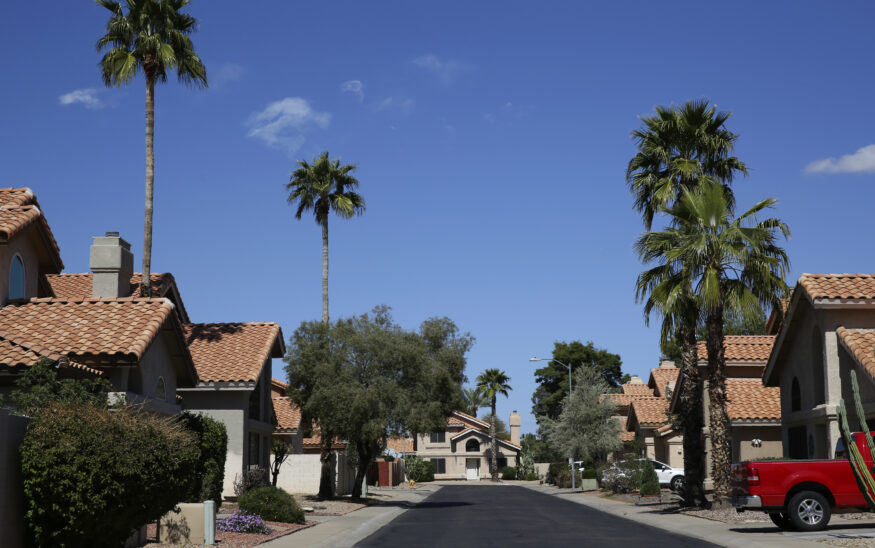
Palm trees line a typical neighborhood at a suburb in Phoenix, Ariz., Sunday, March 9, 2020. (AP Photo/Dario Lopez-MIlls)
Proposed bill aims to restrict short-term rentals in Arizona cities
Jakob Thorington, Arizona Capitol Times//December 20, 2025//


Key Points:
-
Cities seek update to law restricting short-term rental licenses
-
Previous bills to regulate short-term rentals have largely gone unheard
-
Airbnb contributed $3.5 billion to Arizona’s economy through its hosts
Arizona is approaching the 10-year mark since the Legislature prevented local governments from banning short-term rentals and city leaders are hoping enough time has passed for an update to the law.
Officials from the League of Arizona Cities and Towns say they will be running a bill in the upcoming legislative session to restrict the number of short-term rental licenses that are issued within a municipality’s jurisdiction.
Similar legislation has been filed in previous years, but those bills have been unheard in committees while some cities like Sedona have seen as much as 20% of their housing stock converted into short-term rentals.
“Over the 10 years of this experiment, we’ve seen that this law has not lived up to how it was sold originally in 2016,” said Tom Savage, legislative director for the League of Arizona Cities and Towns.
The 2016 law, Senate Bill 1350, established that residential properties can be used for short-term and vacation rentals, but city leaders say large developers have been purchasing units on a large scale and eliminating housing stock for Arizonans looking to buy homes in the state.
Capitol Media Services reported in November that the Arizona Court of Appeals recently ruled that the city of Sedona could not prohibit a 59-acre mobile home park from renting out its units for short-term rentals, reversing a Yavapai Superior Court ruling that upheld the city’s decision to not issue a short-term rental license to the company that owns the park, Oak Creek Hospitality.
The 2016 law also defined vacation rentals as any single-family or one-to-four family house or dwelling unit. Nick Ponder, a lobbyist who represents multiple cities at the Capitol, said he believes the appeals ruling is ignoring the definition of a short-term rental by allowing up to the entire mobile home park to be converted into vacation units.
“Sedona has to appeal this case to the Supreme Court saying not only do we not have enough housing for our own residents, but now you’re kicking the least fortunate of our residents out of their homes in favor of short-term rentals because you’re willing to ignore this specific language in the statute,” Ponder said.
No bill has been filed yet for the 2026 session, but the league is proposing legislation that would allow cities to cap the number of short-term rental licenses issued in oversaturated areas, limit the number of total licenses issued and impose minimum distance requirements for short-term rental units.
In a statement to the Arizona Capitol Times, Airbnb noted that less than .035% of reservations booked through the site resulted in a party allegation in 2024. In addition, it stated that the company has worked to implement several safeguards to reduce the number of disruptive parties, such as machine learning technology that prevents people from booking a reservation if Airbnb detects a person might be attempting to book a property for a large house party.
According to the company, Airbnb hosts contributed about $3.5 billion in economic activity to the state in 2024 which helped support more than 42,000 jobs.
“We are proud of the work we’ve done unparalleled in our industry to promote responsible tourism and reduce the risk of disruptive parties – all the while providing a critical economic opportunity for everyday Arizonans at a time of rising costs,” said Lauren Bouton, the policy lead for Airbnb. “It would be a mistake for legislators to not seek input from everyday hosts as they look toward future policymaking, which as of now, is the case.”
A survey among Airbnb hosts conducted by the company also found that 80% of hosts share just one home and 40% say renting out their property or a room at their residence has helped them afford to stay in their homes.
Next year is the first time that the league can try to change state law for the regulation of short-term rentals after it signed an agreement with AIrbnb and Expedia Group in 2022 that prohibited the league from lobbying for regulations for three years. That agreement also keeps the league from trying to repeal the 2016 law through 2027 in exchange for a state law that allows cities to revoke short-term rental licenses for properties withthree nuisance violations that occur in less than 12 months.
Ponder said the issue with the 2022 law is that the court process moves slowly and he’s unsure if any city has even been able to revoke a short-term rental license for a repeat nuisance offender since it can take up to seven months for a court to fully adjudicate a non-felonious nuisance violation. The league’s proposal would give cities greater flexibility in revoking nuisance offenders’ licenses.
While lawmakers have done little to regulate short-term rentals in previous sessions, a bipartisan mix of Republicans and Democrats have introduced bills on the issue, including Senate Majority Leader John Kavanagh, R-Fountain Hills; Rep. Selina Bliss, R-Prescott; Rep. John Gillette, R-Kingman; and Rep. Stephanie Simacek, D-Phoenix.